

Colorado Supreme Court accepts Weld County criminal appeal
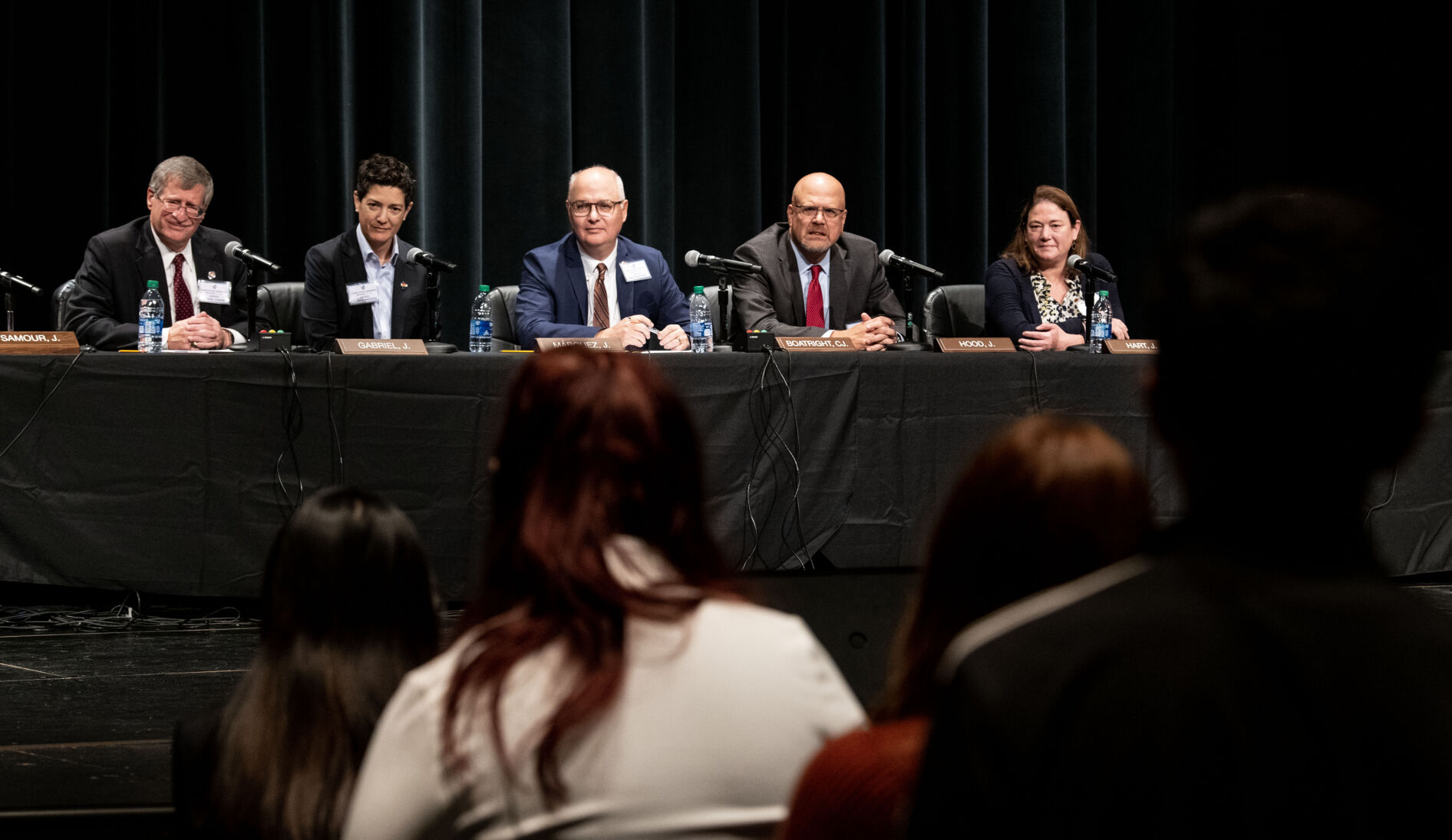
The Colorado Supreme Court announced on Tuesday that it will review a criminal case out of Weld County in which the jury instructions used to convict a man differed from the offense prosecutors charged him with.
At least three of the court’s seven members must consent to take up an appeal.
The justices also signaled they may intervene in an ongoing criminal prosecution in El Paso County, where the defendant alleges the district attorney’s office delayed her case with a meritless appeal and, in doing so, violated her right to a speedy trial.
The switch-up
Jamie Edward Bock is serving 20 years in prison after a Weld County jury convicted the contractor in 2019 of taking money from clients without performing work.
Prosecutors charged Bock under the portion of Colorado law that criminalizes intentionally obtaining something of value from another person through deception. But at trial, the prosecution offered jury instructions cobbled together from a different part of the law that permits “aggregation” of theft offenses into a single charge with a more serious penalty.
Then-District Court Judge Thomas J. Quammen gave the instruction and the defense did not object.
After Bock’s conviction, a three-judge panel of the Court of Appeals considered whether the change in instructions, known as a “constructive amendment,” compromised the fundamental fairness of his trial. By 2-1, the panel said it did not.
“It’s obvious that a constructive amendment occurred,” wrote Judge Craig R. Welling for the majority, but prosecutors provided Bock notice two months before trial that it was aggregating the theft charges. The jury instructions aligned with that plan.
Judge Timothy J. Schutz, however, was unconvinced. Specifically, he observed the jury instructions contradicted themselves – referencing a six month window for the thefts, but also inviting jurors to consider Bock’s actions in a much wider timeframe. More broadly, aggregating the charged offenses would have affected Bock’s defense strategy in ways the appellate court could not predict.
Bock appealed to the Supreme Court to review the appellate panel’s conclusions.
“Constructive amendments always result in fundamental unfairness because they always deprive the defendant of the fundamental constitutional right to notice of the charges,” wrote public defender Chelsea E. Mowrer. “Additionally, constructive amendments result in the jury convicting a defendant of an uncharged offense.”
The Supreme Court will consider whether the error requires reversal of Bock’s convictions.
The case is Bock v. People.
The mid-trial delay
Khristina Phillips stands accused of a misdemeanor child abuse offense in El Paso County. Originally, the trial judge agreed law enforcement interrogated Phillips in custody without providing a Miranda warning and ordered her statements excluded from trial. The prosecution filed an interlocutory, or mid-case, appeal and won reversal of the ruling.
In Colorado, the government generally must bring criminal defendants to trial within six months of a not guilty plea as part of the constitutional right to a speedy trial. In Phillips’ case, the court excluded 161 days from her speedy trial deadline on account of the appeal, with no objection from the defense.
On the morning of trial earlier this year, the prosecution reportedly said it would play Phillips’ entire interrogation video. County Court Judge Steven Katzman balked, ordering that only certain relevant clips be played, with Phillips’ remaining statements coming in through other witnesses. In the middle of jury selection, the prosecution filed another interlocutory appeal, forcing Katzman to declare a mistrial.
A district court judge, hearing the appeal, ultimately dismissed it. By that time, the speedy trial deadline had passed.
The legislature has imposed one consequence for speedy trial violations: dismissal of the charges and a prohibition on further prosecution.
Katzman, however, found the time consumed by the prosecution’s second interlocutory appeal did not count toward the deadline. Phillips then appealed directly to the Supreme Court, arguing prosecutors should pay the price for meritless appeals.
“Otherwise, the prosecution can file a baseless appeal without consequence,” wrote attorney Erin Wigglesworth, “resulting in a defendant bearing the negative consequence of an extension of the speedy trial deadline and a violation of the defendant’s speedy trial and due process rights.”
The Supreme Court ordered the government to respond to Phillips’ allegations.
The case is People v. Phillips.


Federal judge partially allows second World Cup trafficking lawsuit to move forward
Michael Karlik
michael.karlik@coloradopolitics.com
Updated 11 hours ago
A federal judge allowed some claims to move forward last month against companies operating out of Colorado that allegedly participated in a human trafficking venture involving Filipino laborers who constructed facilities for the 2022 World Cup in Qatar. There are...
Federal judge dismisses lawsuit seeking to force Colorado secretary of state to screen out scam filings
Michael Karlik
michael.karlik@coloradopolitics.com
Updated 6 hours ago
A federal judge dismissed a lawsuit last week that sought to require Colorado’s secretary of state to verify corporate filings in the state’s database to reduce the risk of future fraud. Bernard Butts of Florida, who was 83 when he...
Federal judge finds no constitutional violation by Huerfano County well inspectors
Michael Karlik
michael.karlik@coloradopolitics.com
Updated 9 hours ago
A federal judge concluded last month that two Huerfano County employees did not engage in an unconstitutional search when they approached the plaintiffs’ camper within 40 feet to investigate a potential code violation. In July 2021, the county’s building inspector,...

Federal judge warns of increasingly inadequate immigration bond hearings
Michael Karlik
michael.karlik@coloradopolitics.com
Updated 1 day ago
A federal judge ordered the immediate release of a man in immigration custody last week and, seemingly for the first time in Colorado, warned that the government is increasingly conducting inadequate bond hearings for detainees. Colorado’s federal trial court is facing...

10th Circuit upholds dismissal of Barry Morphew’s civil lawsuit against prosecutors, investigators
Michael Karlik
michael.karlik@coloradopolitics.com
Updated 1 day ago
The Denver-based federal appeals court agreed on Monday that Barry Morphew, who now stands accused for a second time of murdering his wife, failed to state viable claims against the government officials involved in his first, unsuccessful prosecution. Morphew was...
Federal judge blocks evidence from Aurora police’s unconstitutional search
Michael Karlik
michael.karlik@coloradopolitics.com
Updated 1 day ago
A federal judge ruled last month that prosecutors cannot use firearm evidence against a defendant because Aurora police searched him without having any reasonable basis to believe he was armed and dangerous. In evaluating the constitutionality of the search, U.S....

Colorado justices confirm lawyers may ‘borrow’ allegations from elsewhere
Michael Karlik
michael.karlik@coloradopolitics.com
Updated 2 days ago
The Colorado Supreme Court ruled on Monday that plaintiffs’ lawyers can use allegations made elsewhere to bolster their own clients’ claims, so long as the attorney first performs some degree of investigation into the “borrowed” assertions. Under Colorado’s rules for...
Appeals Court rules Douglas County violated open meeting laws
Nicholas Fogleman
nicholas.fogleman@denvergazette.com
Updated 2 days ago
The Colorado Court of Appeals ruled that Douglas County Commissioners violated Colorado open meeting laws in a series of closed meetings leading up to the county’s failed home rule special election. The Thursday ruling reversed a trial court’s denial of...

Colorado justices restore RTD subcontractor’s award, reject ‘drastic’ view of public works law
Michael Karlik
michael.karlik@coloradopolitics.com
Updated 2 days ago
The Colorado Supreme Court on Monday restored a $5.7 million award to a company that helped build a commuter rail line and, in doing so, rejected a view of state law that would nullify a subcontractor’s entitlement to any compensation...
El Paso County defendant’s speedy trial rights violated, Colorado justices find in overturning convictions
Michael Karlik
michael.karlik@coloradopolitics.com
Updated 2 days ago
The Colorado Supreme Court concluded on Monday that an El Paso County prosecutor made an unjustified decision to file a mid-case appeal, pushing the trial beyond the legal deadline and requiring that the defendant’s convictions be overturned. In Colorado, the...
PREV
PREVIOUS

Regulatory burdens top concerns of Colorado business leaders: Poll
The primary concern of business leaders in Colorado has shifted from a lack of workers to an excess of regulations, a new poll found. Of 156 business leaders from across the state, 48% identified regulations as their most important issue, according to the Colorado Chamber of Commerce’s 2023 Business Leaders Survey released on Wednesday. Last […]

Polis issues executive order to expand apprenticeships in state agencies
Gov. Jared Polis signed an executive order Thursday to expand apprenticeship programs within state agencies, a move he hopes will help address staffing shortages. While there are two unemployed Coloradans for every open job in the state, the skills of applicants often don’t align with the skills needed for the jobs, Polis said. By offering more […]