

Douglas County judge wrongly let man represent self at trial, appeals court finds
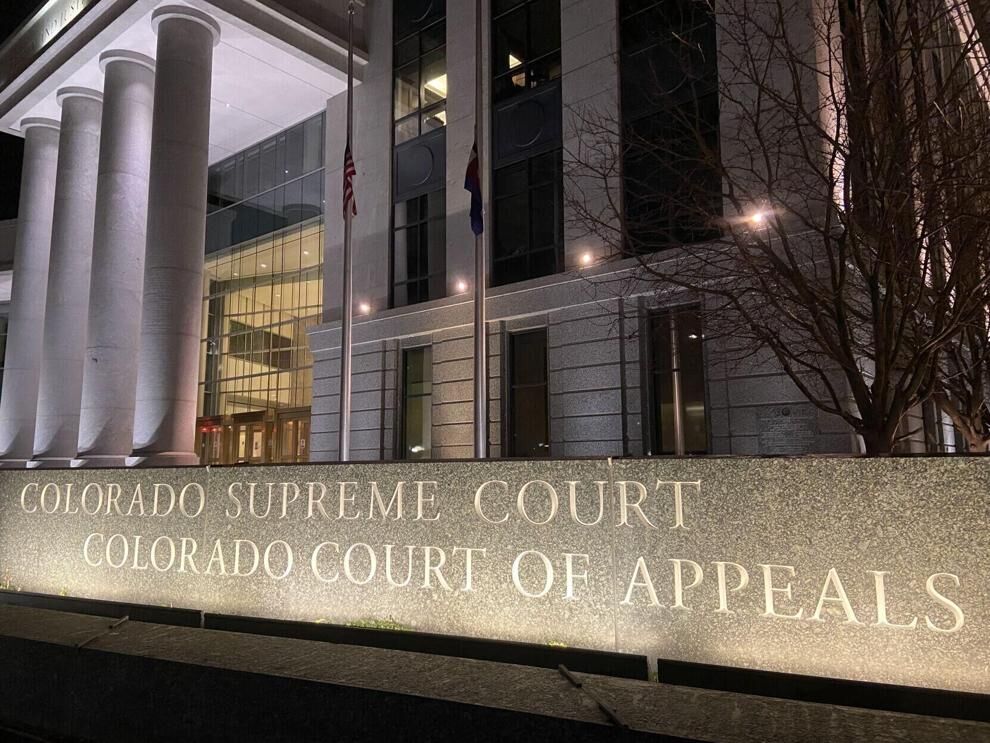
A Douglas County judge failed to ensure a defendant understood the charges against him and the consequences of proceeding without a lawyer before she allowed him to represent himself at trial, Colorado’s second-highest court ruled on Thursday.
Criminal defendants may give up their constitutional right to counsel, but the decision must be voluntary, intelligent and knowing. A three-judge panel for the Court of Appeals acknowledged that John Robert Tesar may have volunteered to proceed alone, but he lacked a clear understanding of what was going on – including that he was entitled to a lawyer in the first place.
“Tesar’s actions and comments,” wrote Judge Jerry N. Jones in the Aug. 24 opinion, “indicate that he didn’t understand that he had an unconditional right to be represented by counsel or that the court would appoint counsel for him if he were indigent.”
Case: People v. Tesar
Decided: August 24, 2023
Jurisdiction: Douglas County
Ruling: 3-0
Judges: Jerry N. Jones (author)
Stephanie Dunn
Katharine E. Lum
Background: Appeals court finds Arapahoe judge mistakenly allowed man to represent self at trial
To determine if a defendant is validly giving up his right to an attorney, judges in Colorado provide an “Arguello advisement,” named after a 1989 state Supreme Court case. Although judges do not have to recite the list verbatim, there are more than a dozen questions they should ask, covering the defendant’s understanding of legal procedure, knowledge of his rights, and the specific charges and penalties he faces.
Tesar stood accused of stalking, harassment and violating a protection order, also known as a restraining order. In August 2020, his lawyer withdrew and Tesar applied for a public defender. However, the public defender’s office determined his financial status rendered him ineligible for representation.
At a conference with District Court Judge Patricia Herron, Tesar indicated that if the public defender could not represent him, he would proceed without a lawyer. The prosecutor asked Herron to give Tesar an Arguello advisement.
Herron said she would mail Tesar an advisement for him to sign, which “tells you, essentially, it is very hard to represent yourself and that it’s not advisable.” There was no indication Tesar ever received or signed a document.
Herron also did not review Tesar’s understanding of the case with him personally, despite many signs Tesar was confused about the process. For example, Tesar said, incorrectly, that his harassment charge was a felony, and did not comprehend the elements the prosecution had to prove. Tesar also arrived at trial without having received key evidence, to which Herron responded it was “your job” to obtain it.
At various points, Herron did stress to Tesar it was far preferable to have an attorney. She was also surprised that Tesar did not qualify for a public defender, as he was unemployed at the time. Tesar responded he understood the judge’s warnings and his “faith is in the jurors.”
At the same time, Tesar communicated to Herron that he was unable to obtain a private or public defense lawyer, not that he was refusing representation altogether.
A jury found Tesar guilty on most of the charges and he received 18 months in jail. The public defender’s office provided Tesar an attorney for sentencing only.
On appeal, Tesar argued that trial judges have the responsibility to review the public defender’s denial of representation and appoint counsel themselves if they find it warranted. Herron reportedly made no attempt to do so, nor did she ensure Tesar received the information contained in the Arguello advisement, including his right to compel witnesses to testify.
“Mr. Tesar consistently indicated that he did not want counsel to represent him in this case,” countered Assistant Attorney General Jaclyn M. Calicchio, arguing for the Court of Appeals to uphold his convictions.
The appellate panel agreed with Tesar. Herron had clearly explained to Tesar that it would be far better to have an attorney, Jones wrote, but she did not address Tesar’s impression that he had to proceed by himself because the public defender’s office had turned him down.
Also, “the facts in the record don’t ‘clearly show’ that Tesar understood the charges against him, the elements of those charges, or the range of possible penalties,” Jones added.
The panel ordered a new trial.
The case is People v. Tesar.


Federal judge dismisses claims against medical contractor for Eagle County jail suicide
Michael Karlik
michael.karlik@coloradopolitics.com
Updated 34 minutes ago
A federal judge dismissed the claims against a medical contractor for the Eagle County jail and its employees earlier this month, concluding there were insufficient allegations that they violated the constitutional rights of a man who died by suicide in...
Federal judge advances lawsuit seeking overtime compensation for Aurora firefighter trainees
Michael Karlik
michael.karlik@coloradopolitics.com
Updated 6 hours ago
A federal judge gave preliminary approval earlier this month to a class of Aurora firefighter trainees who may sue the city over allegations that they were denied overtime pay in violation of federal law. Joseph Elias, who attended Aurora’s fire...
Appeals court says jury not obligated to apply discounts to determine value of stolen merch
Michael Karlik
michael.karlik@coloradopolitics.com
Updated 7 hours ago
Colorado’s second-highest court concluded on Thursday that it was up to a Douglas County jury to determine the value of stolen merchandise at a defendant’s theft trial, after both sides presented different estimates of the items’ value. Under state law,...
Public figures have limited path to sue over accusations of criminality, says appeals court
Michael Karlik
michael.karlik@coloradopolitics.com
Updated 9 hours ago
Colorado’s second-highest court ruled last week that a public figure cannot sue for defamation solely because a person publicly accuses them of committing a crime, as the statement may be constitutionally protected opinion. A three-judge Court of Appeals panel narrowed...
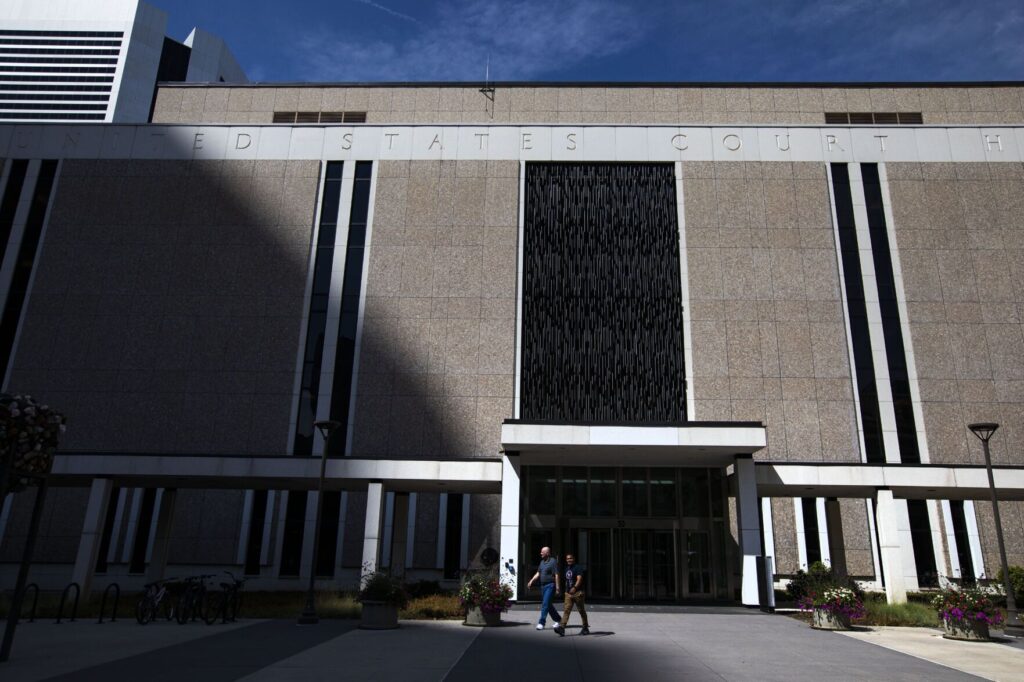
Federal judge to consider sanctioning ex-Colorado judicial discipline director
Michael Karlik
michael.karlik@coloradopolitics.com
Updated 24 hours ago
A federal judge ordered Colorado’s former head of judicial discipline on Wednesday to explain why she should not sanction him for making inaccurate statements about the defendants in his lawsuit against the Colorado Supreme Court and related entities. U.S. District...

Federal judge green-lights trial against Denver officer over race-based enforcement
Michael Karlik
michael.karlik@coloradopolitics.com
Updated 1 minute ago
A federal judge green-lit a jury trial last week on a man’s claim that a Denver police officer engaged in racially selective enforcement of the law by arresting him for video recording at a police station, while not arresting a...
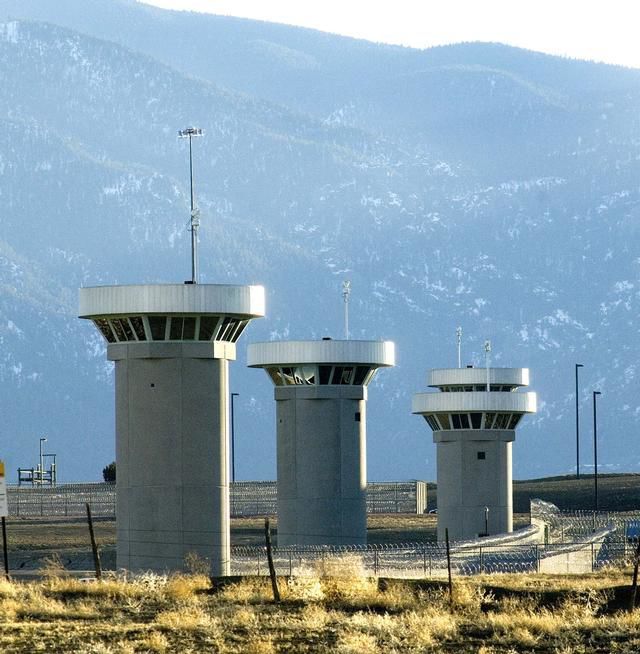
Federal judge says 8 years in solitary confinement not grounds to reduce man’s sentence
Michael Karlik
michael.karlik@coloradopolitics.com
Updated 2 days ago
A federal judge concluded earlier this month that a man’s eight years allegedly spent in solitary confinement did not justify granting his request for a sentence reduction. However, U.S. District Court Senior Judge William J. Martínez signaled his willingness to...

10th Circuit rejects ‘potential for violence’ when police arrest vehicle occupant’s romantic partner
Michael Karlik
michael.karlik@coloradopolitics.com
Updated 22 hours ago
The Denver-based federal appeals court rejected the idea on Tuesday that a vehicle occupant poses a danger to police solely because they are romantically involved with another occupant who officers are arresting. By 2-1, a three-judge panel of the U.S....

Colorado justices grill debt collector about compliance with law
Michael Karlik
michael.karlik@coloradopolitics.com
Updated 2 days ago
The Colorado Supreme Court repeatedly pressed a debt collection company last week to explain how its lawsuit against a Boulder woman for an unpaid credit card balance complied with the specific requirements that state lawmakers have created. Portfolio Recovery Associates,...
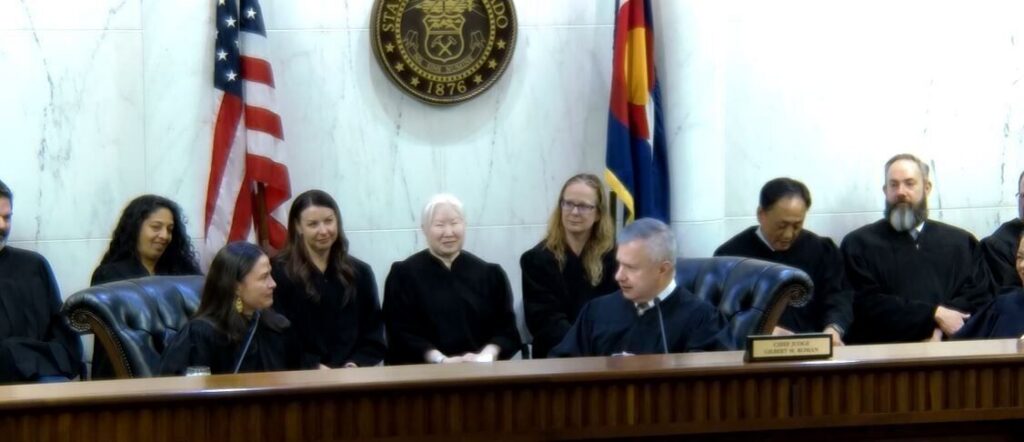
Appeals court agrees defendant’s speech constitutionally protected against El Paso County judge
Michael Karlik
michael.karlik@coloradopolitics.com
Updated 2 days ago
Colorado’s second-highest court agreed last week that a defendant’s critical statements toward an El Paso County judge were constitutionally protected and could not form the basis of a retaliation charge. A three-judge Court of Appeals panel concluded that, in context,...
PREV
PREVIOUS
Arapahoe County prosecutors' misconduct prompts appeals court to reverse convictions
Misconduct from Arapahoe County prosecutors and a trial judge’s refusal to provide a key jury instruction prompted Colorado’s second-highest court on Thursday to overturn a man’s bank robbery convictions. In 2019, jurors convicted Steven Dudley Smith of robbery, menacing and kidnapping charges related to four bank robberies. Although police caught Smith at the scene of […]

Biden issues disaster declaration for Colorado after summer storms, flooding
The Biden administration on Friday issued a disaster declaration for Colorado, freeing up funding to help the state following a spate of storms, flooding and tornadoes that hit the state this summer. In a news release, Biden directed a Federal Emergency Management Agency official to coordinate recovery operations for affected areas. Under the declaration, funding […]