

Appeals court orders prison riot charges reinstated against Fremont County inmate
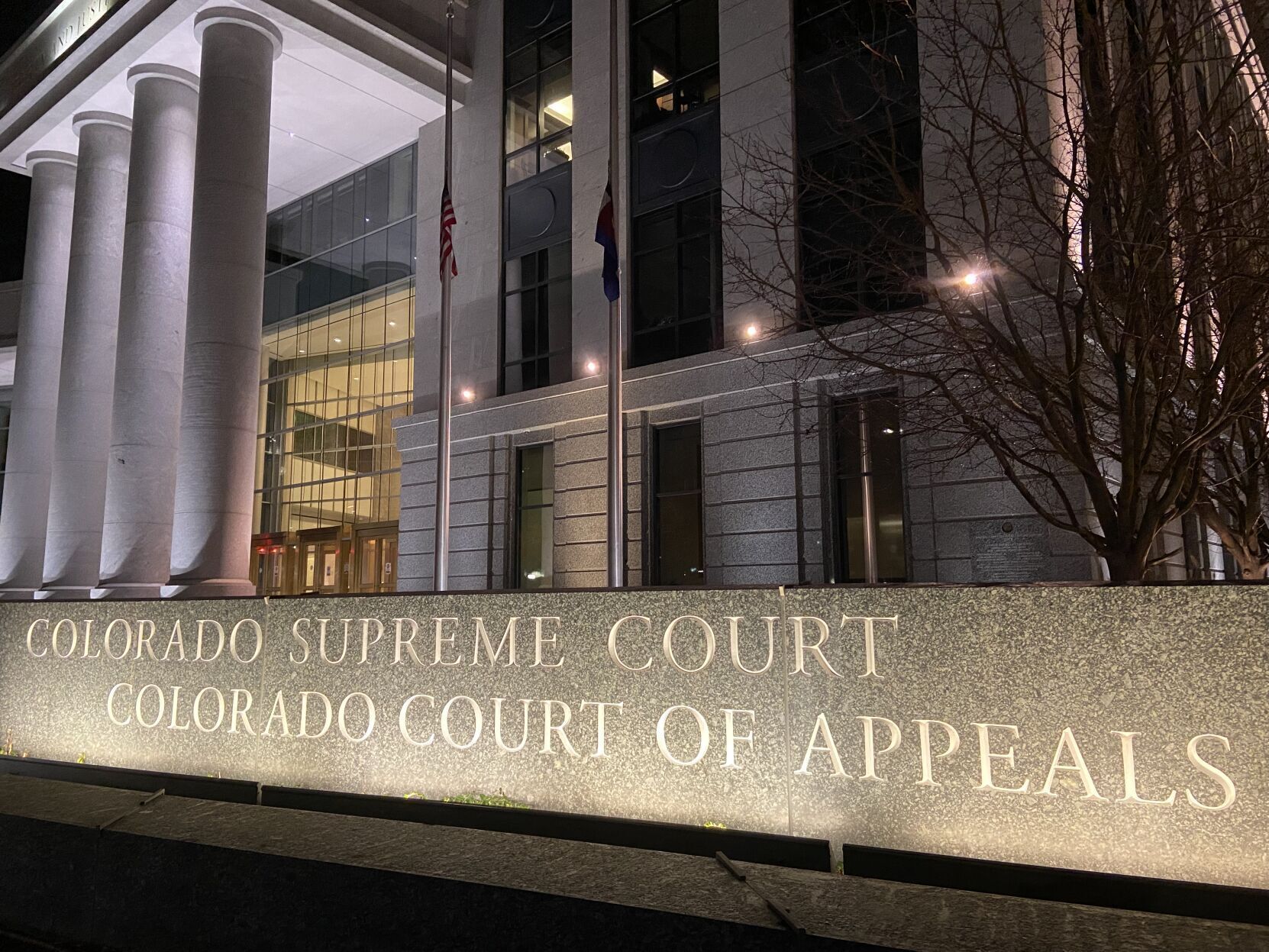
Colorado’s second-highest court on Thursday concluded a trial judge and a magistrate in Fremont County both mistakenly dismissed prison rioting charges against an incarcerated man when they should have found probable cause existed to proceed to trial.
During a preliminary hearing in the case of Dreion M. Dearing, where the prosecution needed to demonstrate probable cause existed for two counts related to prison rioting, a magistrate watched a video of the brawl and concluded Dearing was actually the victim. A district court judge agreed Dearing did not actively participate in the fight.
But a three-judge panel for the Court of Appeals determined the evidence did show Dearing participated, at least initially, in the prison melee. While a jury could find Dearing was not guilty of the charges because he acted in self-defense, that was not something the trial court judges needed to address.
“These conclusions seem to reflect the court’s view that Dearing acted to defend himself from others’ attacks,” wrote Judge Anthony J. Navarro in the Aug. 10 opinion. “A defendant’s potential affirmative defense, however, is ‘not relevant to the issue of probable cause.'”
Case: People v. Dearing
Decided: August 10, 2023
Jurisdiction: Fremont County
Ruling: 3-0
Judges: Anthony J. Navarro (author)
Jaclyn Casey Brown
David H. Yun
Dearing was incarcerated in July 2021 when he began to argue with another inmate. A prison investigator narrated the video in court, as the footage did not have audio. Dearing and the other man, identified as “Davis,” were close to each other and Dearing shoved Davis. They continued to argue, with others standing around to watch.
Davis “initiated contact with Mr. Dearing by head butting,” the investigator said. The fight “was started by Mr. Davis.” A brawl ensued. At one point, Dearing pulled one inmate off of another, only to be attacked by a third man. Prison staff ordered inmates to “lock down,” to no immediate effect. Twelve minutes after Davis headbutted Dearing, the rioters dispersed.
Prosecutors charged Dearing with two felonies of rioting and disobeying the order to disperse. At the probable cause hearing, Magistrate Michael W. Meyrick found there was insufficient evidence to proceed to trial because Dearing was not the culpable one.
“Mr. Dearing’s participation in the violent conduct was limited to that of a victim,” Meyrick wrote. “He was punched, kicked and held down on the floor as he was assaulted by multiple persons. There was no evidence that Mr. Dearing was a participant in that conduct other than being a victim of it.”
The district attorney’s office appealed Meyrick’s decision to Fremont County District Court, but Chief Judge Patrick W. Murphy agreed that the “balance of the video” showed Dearing reacting to assaults from others. Murphy also found Dearing could not be guilty of failing to disperse upon command when he was under attack.
“To conclude otherwise,” Murphy explained, “one would have to find that inmates have a duty to obey an order to lock down immediately upon command, regardless of the danger compliance would pose to their physical safety and regardless of the actions of other inmates which impeded the ability of the inmate to comply.”
The prosecution turned to the Court of Appeals, arguing the video did not portray Dearing as a victim. The government only had to show Dearing was an active participant, which it did. Dearing’s attorney acknowledged there “may have been a nano-moment” where Dearing could have disengaged, but it did not appear possible to do so in the moment.
The appellate panel concluded Meyrick and Murphy wrongly dismissed the charges. The video showed Dearing in an argument with Davis, after which Dearing “threw punches” and “scuffled with others.”
Meyrick’s statements that Dearing was a victim “seem to invoke the concepts that Dearing was acting in self-defense and that his failure to immediately comply with the lockdown orders was reasonable and necessary under the circumstances,” Navarro wrote.
While a jury might agree with a self-defense argument, it was not appropriate for a probable cause hearing. The panel ordered the trial to proceed.
The case is People v. Dearing.


Colorado Supreme Court clarifies restraining order violations can always support burglary charge
Michael Karlik
michael.karlik@coloradopolitics.com
Updated 10 hours ago
The Colorado Supreme Court’s majority ruled on Monday that a violation of a restraining order can also serve as a basis for finding a defendant guilty of burglary. Under state law, a person commits second-degree burglary by unlawfully entering or...

10th Circuit judge creates vacancy, district court gets new chief judge | COURT CRAWL
Michael Karlik
michael.karlik@coloradopolitics.com
Updated 14 hours ago
Welcome to Court Crawl, Colorado Politics’ roundup of news from the third branch of government. A longtime member of the Denver-based federal appeals court will give the president a vacancy to fill, plus Colorado’s federal trial court will see a...
Gov. Jared Polis moves to end ICE subpoena fight over Colorado workers’ personal data
Marianne Goodland
marianne.goodland@coloradopolitics.com
Updated 3 days ago
The effort by Gov. Jared Polis to comply with an administrative subpoena from U.S. Immigration and Customs Enforcement for information held by several state agencies is over. Polis, in a motion filed Feb. 20, asked for a permanent injunction and...

Ex-Colorado Sen. Sonya Jaquez Lewis avoids prison, gets probation for forged ethics letters
Marianne Goodland
marianne.goodland@coloradopolitics.com
Updated 3 days ago
Former state Sen. Sonya Jaquez Lewis, D-Longmont, was sentenced Friday to two years of supervised probation and 150 hours of community service, and a $3,000 fine, to be waived if she completes an additional 100 hours of community service. The...

Toll to sexual assault survivors rises if they feel blamed and disbelieved
Jenny Deam
jenny-deam@coloradopolitics.com
Updated 4 days ago
Natalie, a single mother, dropped off her son at daycare, went to therapy and then returned home. She swallowed a fistful of pills, washing them down with a six-pack of beer. She was ready to end her life. “I just...
Colorado rape cases rarely result in an arrest and prosecution
Evan Wyloge
evan-wyloge@coloradopolitics.com
Updated 11 hours ago
Authorities say they are especially difficult cases. In Colorado, most go nowhere. Over the past decade, for every 10 reports of rape, there is only one arrest. Warning: This story contains descriptions of sexual violence. Kiersten May remembered a fuzziness...
10th Circuit upholds finding of no misconduct against Colorado federal judge
Michael Karlik
michael.karlik@coloradopolitics.com
Updated 4 days ago
A judicial committee for the Denver-based federal appeals court upheld the chief judge’s finding last week that a federal judge in Colorado did not engage in misconduct by handling a civil case involving other attorneys and judges in the state....
SCOTUS whisperer? Justice Carlos Samour may get second opportunity to turn state dissent into national precedent
Michael Karlik
michael.karlik@coloradopolitics.com
Updated 4 days ago
For the second time in two years, Justice Carlos A. Samour Jr. occupies an unusual position: Having his dissent in a Colorado Supreme Court case potentially forming the basis of U.S. Supreme Court precedent. Earlier this week, the nation’s highest...
10th Circuit appoints ex-Colorado solicitor general to argue issue after federal government declines
Michael Karlik
michael.karlik@coloradopolitics.com
Updated 3 days ago
The Denver-based federal appeals court took the unusual step earlier this month of appointing an attorney to independently argue a key issue in a criminal sentencing appeal after the government indicated it would not contest the defendant’s view of the...
Daniel Domenico to take over as Colorado’s chief federal judge
Michael Karlik
michael.karlik@coloradopolitics.com
Updated 1 day ago
Daniel D. Domenico will become the new chief judge of Colorado’s federal trial court next week, a role that encompasses the administration of the court as well as a judicial caseload. Under federal law, the chief judge of a U.S....
PREV
PREVIOUS

Colorado Real Estate Alliance objects to proposed large building energy efficiency rule
A proposed state energy reduction rule that could cost large building owners more than $2.5 billion for mandatory building upgrades raised objections from the Colorado Real Estate Alliance. CREA is a coalition of real estate focused organizations with both residential and commercial interests, including associations and businesses that are involved in real estate construction, service, […]

Developer's principals dip into Parker Water election, drawing allegations of 'takeover' attempt
Editor’s note: This report is the third of a series looking into the fight over how best to plan for and secure sustainable water in Douglas County. Elections for the folks who run water districts are usually as low-key as they come. For the five-member Parker Water & Sanitation District board of directors, almost everyone […]