

No Labels: A clash of two imperatives | SONDERMANN
It is a collision of two exigencies.
On one hand, the public revulsion is palpable at the prospect, even the likelihood, of another presidential contest between Biden, the dinosaur, and Trump, the predator. That eventuality has about as much appeal as a root canal, minus the novocaine.
On the flip side, for a huge chunk of the country, the thought of another four-year Oval Office occupancy by Trump, this time even more fueled by rage and retribution, and with the few adults of moderating influence long since kicked to the curb, is unfathomable.
That is where the No Labels effort to present a viable, centrist, third-party alternative enters the equation.
For an upstart operation premised on breaking down political labels, No Labels has become the target of plenty of derisive labels from establishment players, especially those of Democratic mien.
The slurs are coming on a daily basis. No Labels has been accused of naivete and of being a stalking horse for Trump. Just this week, a Washington Post writer ridiculed the whole idea of “common sense.”
Here 16 months before the election, and a full year before Republicans convene in Milwaukee and Democrats in Chicago for their nominating conventions, there is a No Labels-induced panic in the air.
Even Third Way, a left-leaning think tank that, one imagines, might be amenable to a “third way,” openly acknowledges its intention of delegitimizing No Labels before it gets off the ground.
The numbers don’t lie. Nearly 70% of voters, including a majority of his own Democrats, would prefer that Joe Biden calls it good and steps aside after one term. His public approval rating languishes in the low 40s, danger territory for any incumbent.
Donald Trump, though, is hardly some polling colossus. Time and again, he exerts his magnetism over his unshakeable base. But the reality – not Kellyanne Conway’s “alternative facts” – is that Biden beat him handily in 2020. Further, the Trump-led GOP was crushed in 2018 and underperformed badly in 2022. Losing has become his specialty, no matter the denials.
Early polls in advance of 2024 are underwhelming for Trump. While he laps his GOP competitors, he struggles to keep pace with an aging, slowing Biden. Trump’s core challenge, beyond staying out of jail, is to attract new voters. Speaking anecdotally, I have yet to meet a single person who did not support Trump in 2020 but is eager to now do so.
No Labels reads the moment and sees the potential for a large swath of the American electorate to reject the tired and stale, describing Biden and Trump as well as their two polarizing parties, in favor of something fresh, different and unifying.
Democratic strategists read those same indicators and recognize that their surest path to is to make this a dreary but ultimately one-sided choice between their frail, boring candidate and the impeached, indicted, injurious menace on the other side.
Biden does little to generate confidence, but Democrats feel rather secure that he can again beat Trump one on one. They have little interest in introducing a wildcard or seeing what is behind Door No. 3.
In a way, this premature upset about No Labels is another function of Trump. Absent him, but with public opinion being what it is with respect to politics writ large, a moderate, less partisan, third path could rally the country. But, for many, the threat of Trump subsumes all and makes the risk too high.
With a good deal of fanfare this past week, No Labels released a broad statement of principles. Sure, it lacked details. But it begins to have the makings of a platform. Before others get too bothered by the generalities, let’s recall that a platform is something Republicans in 2020 decided to totally forego.
The No Labels principles include an “all of the above” approach to energy production; full access to abortion during the early months or pregnancy but some restrictions in later months; price transparency on hospital bills; and, a bipartisan deficit reduction commission to develop a plan on which Congress would have to vote up or down without amendment.
There is more than a little resonance to such ideas. I’d suggest more than a little responsibility to them, as well.
The leaders of No Labels pledge that this will not be a futile or sacrificial effort, and that they will only move forward next year if there is a clearly viable path to success.
Perhaps we should take them at their word until proven otherwise. Ultimately, that viability will come down to No Labels’ choice of a presidential ticket and whether it can attract top-tier, bipartisan talent.
Serious names are bandied about. Included among them are Joe Manchin, Jon Huntsman, Larry Hogan, Joe Lieberman, Susan Collins, Liz Cheney, even Mitt Romney and Chris Sununu. The fact that most of those are Republicans of solid bearing and a commitment to governance might allay a bit of the exaggerated Democratic angst.
Manchin has, indeed, become a bogeyman for many true believers of leftward bent. Even if they might consider that there used to be another word applied to all those West Virginia voters who continue to send Manchin to Washington. That description from years past is Democrats. He clearly speaks to a constituency that the Democratic Party used to represent, but has long since forgotten.
It is still a long, windy road from here to the 2024 election. Who even knows if Biden and Trump will be there at the end of that journey?
What if we were to awake to a very diverse contest between Kamala Harris and Tim Scott? Or a faceoff among Gavin Newsom and Glenn Youngkin, a couple of governors with trouble masking their ambition?
Certainly, the history of third-party candidacies is that they fade. But history is made by those who reject the notion that “it can’t be done.” Across the political landscape, there is immense kindling for 2024 to take a different course. Disgust with the process and both parties is boundless. The fastest growing share of voters are those unaffiliated with either party. To go along with the vast numbers of those dissatisfied with both presumptive candidates.
For now, wise counsel would urge that we take a collective breath and see what might unfold. Third parties are spoilers until one day they become trendsetters and history-makers.
Eric Sondermann is a Colorado-based independent political commentator. He writes regularly for Colorado Politics and the Gazette newspapers. Reach him at?EWS@EricSondermann.com; follow him at @EricSondermann

10th Circuit grants immunity to officers for fatal Manitou Springs shooting
Michael Karlik
michael.karlik@coloradopolitics.com
Updated 4 hours ago
The Denver-based federal appeals court ruled on Wednesday that responding officers from Manitou Springs and El Paso County cannot be held constitutionally liable for shooting and killing a man after a 20-minute standoff. Wilford Deweese allegedly pulled out a gun...
10th Circuit rejects invitation for full-court review of tax-avoidance case
Michael Karlik
michael.karlik@coloradopolitics.com
Updated 1 hour ago
The Denver-based federal appeals court declined to reconsider the standards for holding entities liable for their tax-avoidance schemes, with a majority of judges voting against full-court review on Monday. In April, a three-judge panel of the U.S. Court of Appeals...
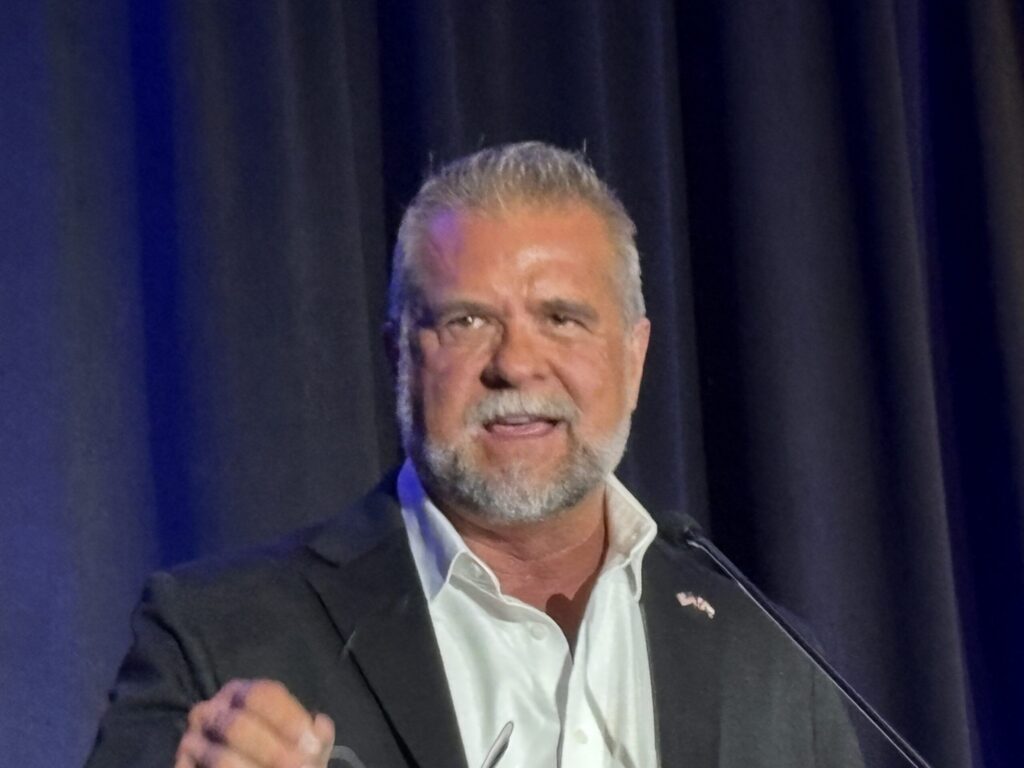
GOP gubernatorial candidate Victor Marx pushes aggressive water-storage expansion at Colorado Water Congress
Marianne Goodland
marianne.goodland@coloradopolitics.com
Updated 4 hours ago
Victor Marx, the Republican nominee for governor, took the spotlight Wednesday during the opening day of the Colorado Water Congress, laying out how he says the state should approach its water future. Marx told the standing-room-only audience in Steamboat Springs...
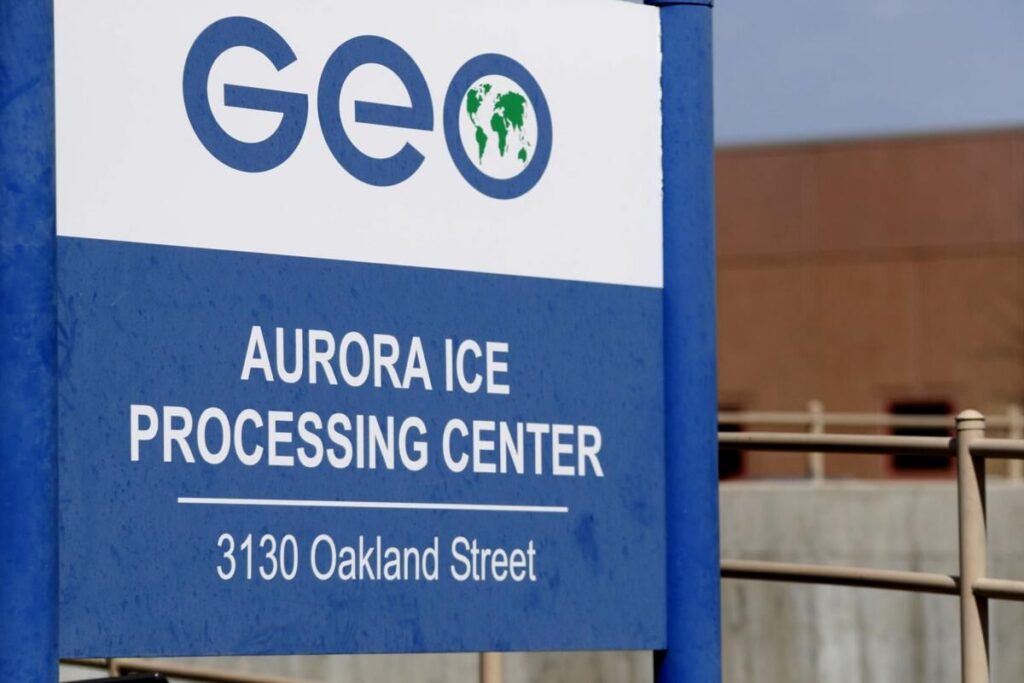
Colorado AG sues GEO Group over noncompliance with tuberculosis investigation
Kyla Pearce
kyla.pearce@gazette.com
Updated 3 hours ago
The Colorado Attorney General’s Office on Wednesday filed a lawsuit against GEO Group, which operates the Aurora ICE Processing Center, alleging the company failed to comply with a state tuberculosis investigation. Weiser’s lawsuit demands that GEO provide “critical information” needed...

U.S. Rep. Lauren Boebert stresses storage, forest health and Upper Basin rights at Colorado Water Congress
Marianne Goodland
marianne.goodland@coloradopolitics.com
Updated 4 hours ago
Republican U.S. Rep. Lauren Boebert used her brief Wednesday appearance at Colorado Water Congress to tout her record on delivering water projects for the state and her district. Boebert, who is running for her second term representing Colorado’s 4th Congressional...
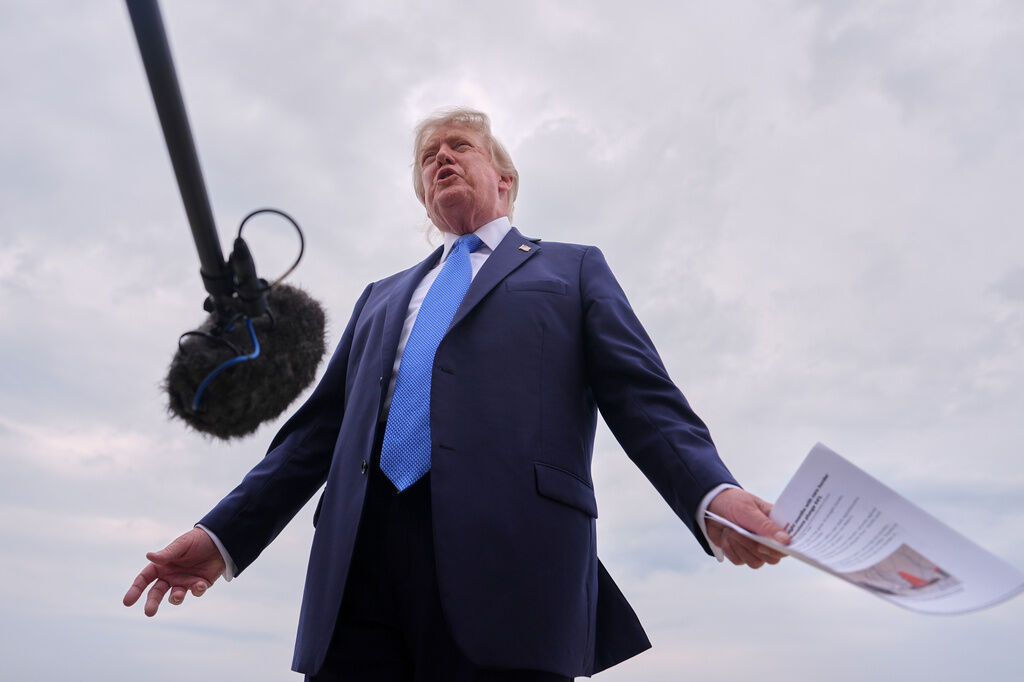
Trump has a 96% endorsement success rate. Here are the Republicans he’s backed who have lost
Mabinty Quarshie
mabinty-quarshie@coloradopolitics.com
Updated 7 hours ago
President Donald Trump’s 2026 primary endorsement success rate remains staggeringly high, but the president has seen a growing number of losses stack up in recent weeks. According to Ballotpedia, Trump has endorsed in 313 U.S. Senate, U.S. House, and state...
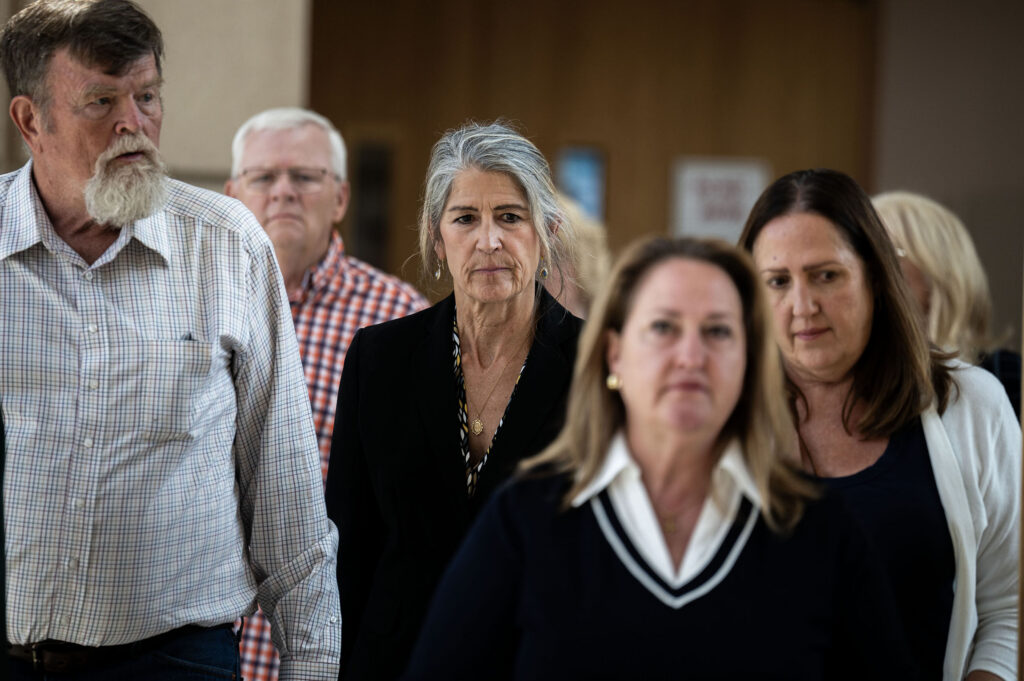
Colorado judge blasts state forensics lab in dismissing child sex case
Jenny Deam
jenny.deam@gazette.com
Updated 1 hour ago
In a potentially widely consequential action, a Weld County district judge dismissed a child sexual assault case, citing the ongoing scandal at the Colorado Bureau of Investigation’s forensic lab that “has left a dark mark on the history of Colorado...

Colorado officials urge stronger water safety after 8 drownings and multiple Front Range rescues
Elizabeth Pond
elizabeth.pond@denvergazette.com
Updated 1 hour ago
At least eight people have drowned in Front Range waters since mid-March, including two at Eleven Mile Reservoir, three at Cherry Creek Reservoir, one at Rockbridge Lake and two at Lake Pueblo State Park. In the wake of these deaths,...

Vehicle registration crackdown across Front Range starts next week
Nick Smith
nick-smith@coloradopolitics.com
Updated 8 hours ago
Colorado drivers with expired tags or unregistered vehicles still have time to get registered before a scheduled enforcement crackdown starts next week. According to an announcement from the Colorado Springs Police Department, a multi-agency enforcement effort will happen across the...
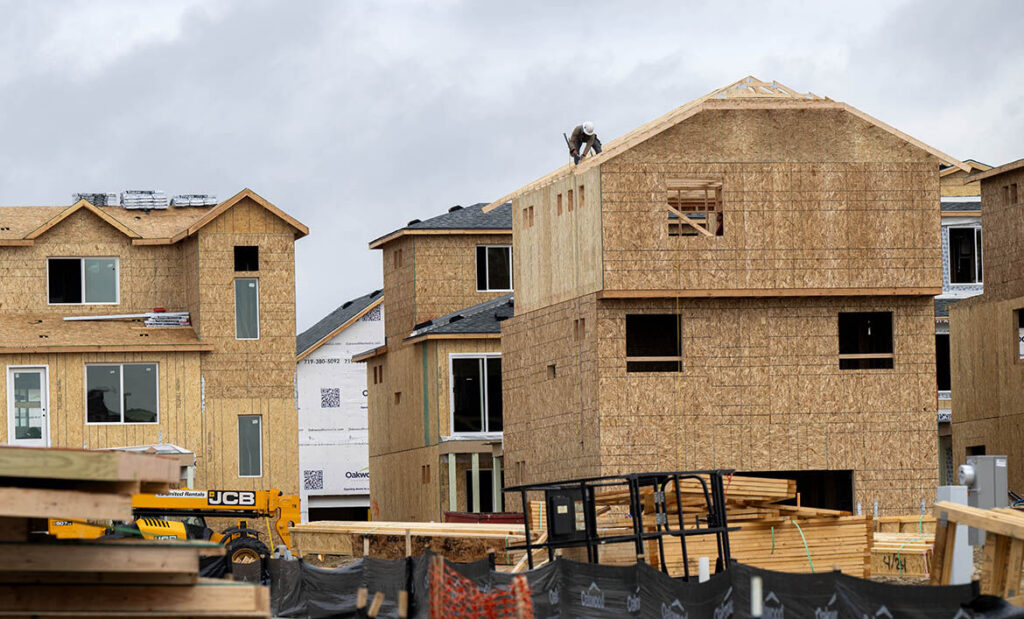
Aurora grapples with affordable housing needs, deficits
Kyla Pearce
kyla.pearce@gazette.com
Updated 9 hours ago
Aurora is grappling with affordable housing needs as demand for project funding increases and the state cuts grant money. Currently, the city needs about 12,000 affordable housing units, Martin Petrov at Aurora Housing Authority told members of the Housing, Neighborhood...
PREV
PREVIOUS

Martin Drake Power Plant demolition underway, study of 'once-in-a-century opportunity' takes shape
In the coming weeks – slowly, deliberately, piece by piece – the dominant smokestacks of the now-closed Martin Drake Power Plant that pepper the skyline of Colorado Springs’ downtown will be no more. Demolition efforts at one of the last remaining urban power plants in the country began in May, with crews conducting asbestos abatement work […]

Emergency? It’s crime, not homelessness | CALDARA
072323-cp-web-oped-caldara-1 Attention. Attention. Now hear this. The City of Denver is operating under a Declaration of Emergency! Mayor Michael Johnston has invoked his constitutional authority to declare a state of disaster emergency. In doing so, he has granted himself extraordinary officious authority to circumvent normal checks and balances of due process to address the crisis […]