

Interior Department moves to expand Endangered Species Act
The U.S. Department of the Interior is reacting to climate change by proposing an expansion of the Endangered Species Act. The final rule, published in the Federal Register on Monday, would allow it to establish experimental populations of endangered species in places outside of their normal historical range.
The department claims that because climate change may make habitat unsuitable for a species, the department can establish new experimental populations in habitat that it believes is suitable for conservation of the species – even though the land lies outside the species historic range.
Secretary of the Interior Deb Haaland and Assistant Secretary for Fish and Wildlife and Parks Shannon Estenoz discussed the new action and the significance of the Endangered Species Act (ESA) with service staff from Hakalau Forest National Wildlife Refuge in Hilo, Hawaii, Tuesday, according to a news release.
Injured bald eagle rescued by Colorado Parks and Wildlife on July 4
“The impacts of climate change on species habitat are forcing some wildlife to new areas to survive, while squeezing other species closer to extinction. The Interior Department is committed to using all of the tools available to help halt declines and stabilize populations of the species most at-risk,” Haaland said in the release. “As we celebrate the 50th anniversary of the Endangered Species Act, these new revisions will help strengthen our efforts to conserve and recover imperiled species now and for generations to come.”
The ESA is credited with saving 99% of listed species from extinction, according to the department. More than 100 species of plants and animals have been delisted based on recovery, or down-listed from endangered to threatened based on improved conservation status.
Hundreds more species are stable or improving, thanks to the collaborative actions of tribes, federal agencies, state and local governments, conservation organizations and private citizens, according to the release.
Updating the rule will allow the service to keep pace with corresponding science, department officials said, which has shown that climate change and invasive species are pushing plants and animals into completely new geographic areas.
“(I)n 1984, when our regulations pertaining to section 10(j) of the ESA were first written, climate change and invasive species were not recognized as the significant threats they are today. As an agency, we need to adapt our regulations and policies to address changing threats to species,” according to the final rule.
First Colorado firefly to be raised in captivity emerges at Butterfly Pavilion
The existing regulations restrict the reintroduction of experimental populations to only the species’ historical range, except under extreme conditions.
Objectors to the rule change said the department cannot designate as “critical habitat” a place where the species has never been found, because it’s never been that species’ habitat. They are concerned that this change gives the department more regulatory authority than Congress authorizes in the act.
There is a foundation for skepticism about the proper extent of the department’s regulatory authority.
A 2018 decision by the U.S. Supreme Court about the endangered dusky gopher frog – found only in a few places in Mississippi – considered an attempt by the department to designate a 1,544-acre site in St. Tammany Parish, La., valued at as much as $33 million as “unoccupied critical habitat” for the frog.
Landowners cited existing regulations prohibiting establishing experimental populations outside of the species’ historic range when they challenged the designation.
The court held that while the regulations defined “critical habitat,” they never defined whether a place where the species never existed can be “habitat.”
Before critical habitat can be designated, the court reasoned, it first has to be habitat, which means that the species must occupy or have once occupied the property. It remanded the case for further proceedings to clear up the ambiguity. The case eventually ended up back at the U.S. District Court for the Eastern District of Louisiana where it began.
The final rule, published in the Federal Register Monday, becomes effective Aug. 2.


Tiered or capped? Battle over Colorado’s income taxes might come down to one number
Marianne Goodland
marianne.goodland@coloradopolitics.com
Updated 3 hours ago
The battle between two competing ballot measures — one seeking to cap Colorado’s income tax rate, the other pushing for a tiered system depending on income levels — might come down to whichever ballot proposal gets one more vote. The...
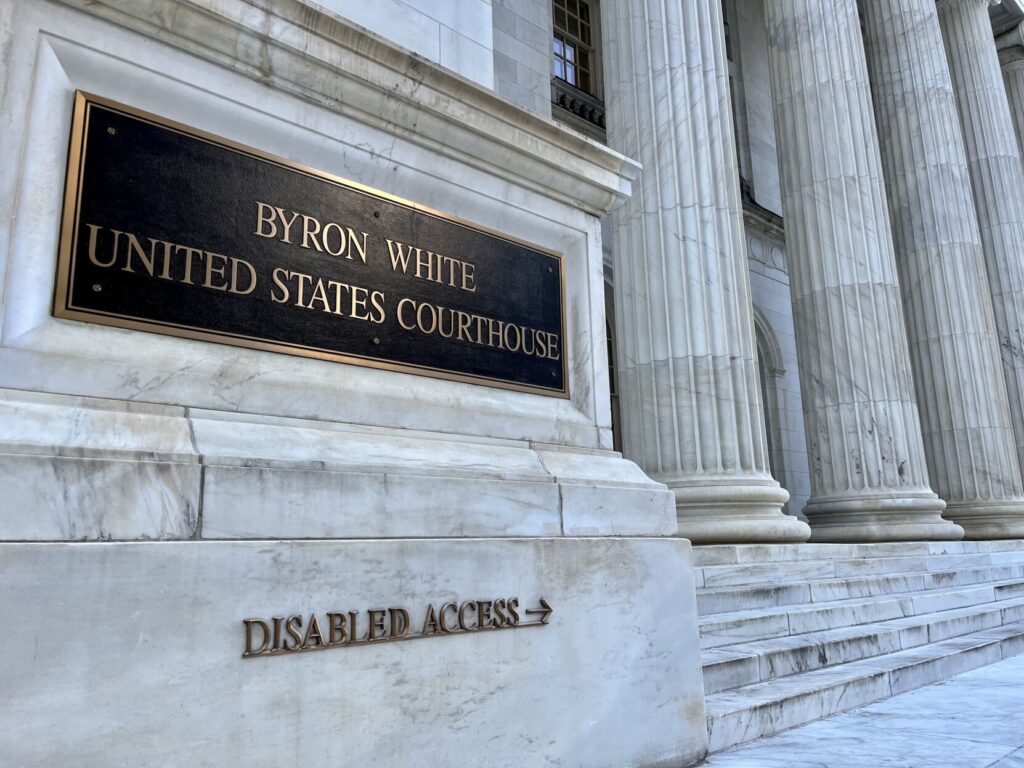
10th Circuit says landowner cannot sue ex-Routt County judge for statements in decision
Michael Karlik
michael.karlik@coloradopolitics.com
Updated 5 hours ago
A Routt County landowner cannot sue a former judge for his allegedly inaccurate statements in a case where the landowner was not a party, the Denver-based federal appeals court decided on Wednesday. Anne Fitzsimmons, who lives in Germany, owns a...

Rubio crushes Vance in Western Conservative Summit 2028 straw poll
Kiara Moore
kiara.moore@washingtonexaminer.com
Updated 8 hours ago
Secretary of State Marco Rubio came out on top in this past weekend’s nonpartisan straw poll at the Western Conservative Summit, outpacing a packed field of would-be 2028 presidential hopefuls. Hosted by the Centennial Institute, Colorado Christian University’s public policy...

Supreme Court to open next term with major climate change case
Jack Birle
jack-birle@coloradopolitics.com
Updated 8 hours ago
The Supreme Court’s next term will begin in October with major cases about costly climate change lawsuits and immigration. The high court announced the cases it will hear in the first month of its upcoming term, as the justices remain...

New Colorado laws going into effect cover AI disclosures, medical marijuana access and gambling limits
Marissa Ventrelli
marissa.ventrelli@coloradopolitics.com
Updated 9 hours ago
More than 100 new Colorado laws take effect Aug. 12, bringing changes to chatbot safety rules, psychedelic research, campus wellness checks and sports betting restrictions. Here is a look at some of those laws set to take effect. The law:...

National House Democrats add Colorado seats held by Lauren Boebert, Jeff Hurd to target list
Ernest Luning
ernest.luning@coloradopolitics.com
Updated 7 hours ago
The national House Democrats’ campaign arm on Wednesday added the Colorado congressional district held by Republican U.S. Reps. Jeff Hurd and Lauren Boebert to the list of targeted seats the party believes are vulnerable in this year’s midterms. The Democratic...
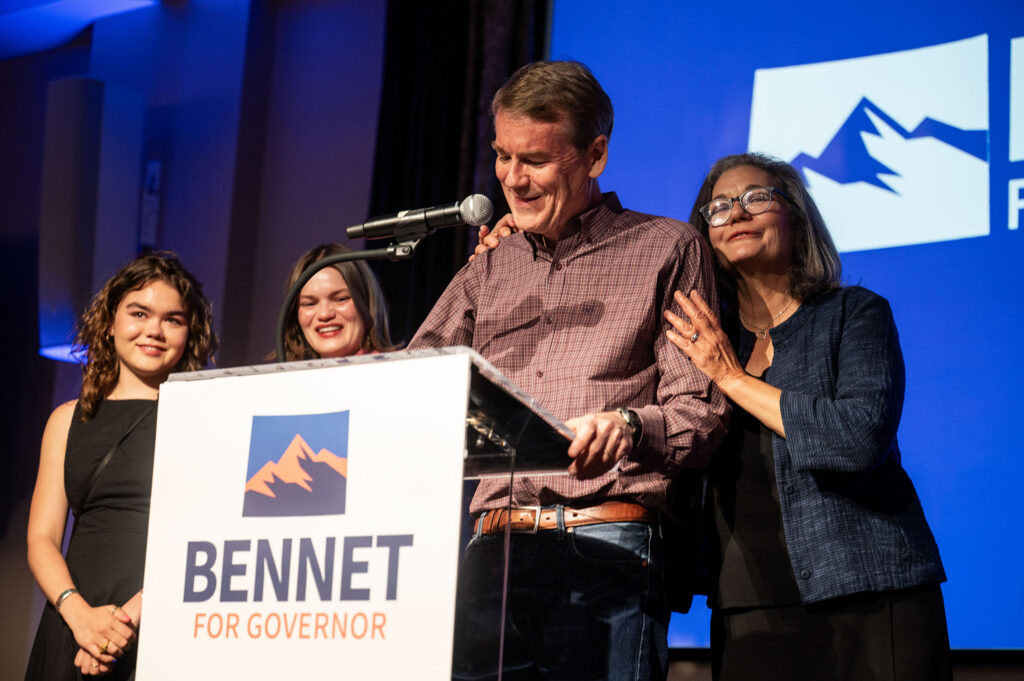
Bennet settles campaign finance complaints, admits violating state law
Marianne Goodland
marianne.goodland@coloradopolitics.com
Updated 5 hours ago
U.S. Sen. Michael Bennet’s gubernatorial campaign has agreed to pay a $7,433 fine for using his Senate campaign account to pay for gubernatorial campaign travel expenses. The July 31 settlement includes an admission by Bennet and his campaign that they...

Colorado to implement new laws on jail standards, safe haven rules, and agricultural labeling
Marissa Ventrelli
marissa.ventrelli@coloradopolitics.com
Updated 10 hours ago
In mid-August every year, a slew of recently passed laws in Colorado go into effect 90 days after the end of the legislative session. This year, all bills without a specified effective date or safety clause — a provision stating...
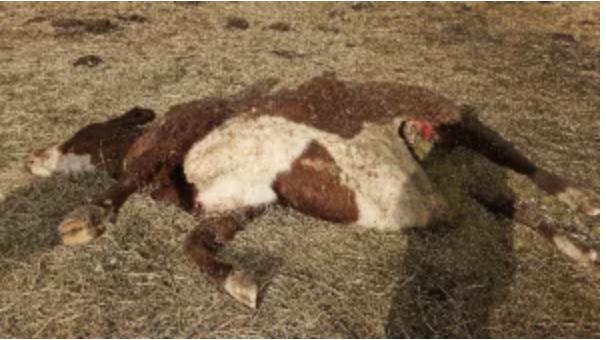
Colorado records 17th wolf death, a yearling tied to livestock losses
Marianne Goodland
marianne.goodland@coloradopolitics.com
Updated 6 hours ago
A yearling male wolf in Grand County has become the 17th wolf to die in Colorado in the past two years. Colorado Parks and Wildlife announced that its staff killed the wolf on Aug. 4 because it was believed to...
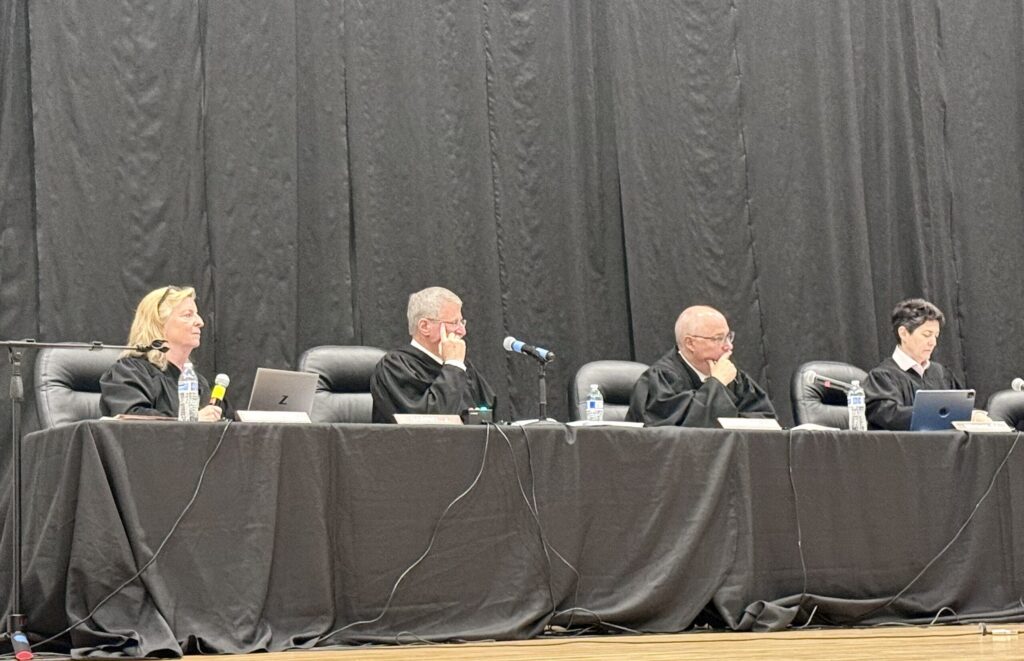
Parole, appeals deadlines and restitution: Colorado justices accept cases
Michael Karlik
michael.karlik@coloradopolitics.com
Updated 1 day ago
The Colorado Supreme Court announced on Monday that it will determine how a defendant’s parole-eligibility date should be calculated in instances where a new trial results in a sentence being imposed retroactively to the date of the original, since-overturned sentence....
PREV
PREVIOUS

10th Circuit grants immunity to Douglas County deputies who entered home over man's objection, used force
Douglas County sheriff’s deputies cannot be held liable for entering a man’s home without a warrant, over his objection, and forcibly arresting him on suspicion of domestic violence, the federal appeals court based in Denver ruled last month. Bryce Watkins sued three deputies for violating his Fourth Amendment right against unreasonable searches and seizures by […]

10th Circuit moves out front of Colorado Supreme Court, answers injured-motorist question
Shortly after the Colorado Supreme Court agreed to address whether state law allows certain injured motorists to receive both workers’ compensation benefits and payments from their employer’s auto insurer, the federal appeals court based in Denver chose to answer the question without waiting for the Supreme Court’s interpretation. By 2-1, a three-judge panel of the […]