

Colorado caught in U.S. federalism’s present polarization | CRONIN & LOEVY

America, since 1787, has had a distinctive system of federalism. A number of responsibilities, such as national defense, are clearly given to the national government, but a substantial number of policy decisions rest with the 50 states.
Governors and state legislatures have been especially active in the past year. In many states, public policies have been enacted that push states politically to the far right or far left.
Colorado is just one example. Democrats took advantage of favorable gerrymandering and pushed through “progressive” legislation by raising the age limit to buy a gun. They acted on transgender rights by requiring gender-neutral bathrooms in new public buildings. They protected the right to abortion in most circumstances.
According to reports in The New York Times, what was happening in Colorado also happened in about 16 other states where Democrats dominated both houses of the legislature and controlled the governor’s office.
Stay up to speed: Sign-up for daily opinion in your inbox Monday-Friday
Such a situation, where all three major power points – state House of Representatives, state Senate, and governor – are controlled by one political party is nicknamed a “trifecta.”
Meanwhile, Republicans in at least 22 states, where they are in control of both the legislature and the governorship, were using their power to legislate on similar subjects but to push in a different direction – a decidedly conservative direction.
Republican trifectas pushed for enacting strict anti-abortion laws, putting curriculum restrictions in public schools, enacting gay and lesbian rights regulations, and a doubling down on gun rights.
Or put it this way: Democratic legislatures and governors limited guns, but Republican legislatures and governors made it easier to carry guns in public places. Democratic legislatures and governors expanded transgender rights, while Republican legislatures and governors limited them. Democratic legislatures and governors facilitated abortions, but Republicans legislatures and governors made abortions harder to get.
The New York Times report used the term “bulldozed” to describe how the dominant party, whether Democratic or Republican, forced its legislation on the other political party. It also theorized the taking of strong stands on the nation’s thorniest social issues left significant portions of a state’s electorate, particularly moderate and unaffiliated voters, unrepresented.
States listed in the report as single-party control Democratic included California, Illinois, Maryland, Massachusetts, Michigan, Minnesota, New York, and Washington state, as well as Colorado.
Some of the states listed as Republican dominated were Florida, Iowa, Mississippi, Montana, North Carolina, North Dakota, South Carolina, Tennessee, Texas and Wyoming.
What is the meaning of this for Colorado?
Our state legislature is gerrymandered to favor the Democrats. They have 30 safe seats in the State House of Representatives compared to 19 safe seats for the Republicans. In the Colorado state Senate, the tally is 15 safe-Democratic seats and nine safe-Republican. The Democrats also hold the governor’s office.
But Colorado is not exceptional in this regard. In fact, it is normal. Add 17 states dominated by Democrats to 22 states dominated by Republicans, and you get 39 out of 50 states where one political party or the other has a clear advantage.
In only the remaining 11 states are both the Republicans and the Democrats able to compete evenly for state legislative and gubernatorial power, Only in those 11 states can the laws produced have a chance of being moderate and middle-of-the-road, neither far left or far right.
It presents a confusing future world in which, as one travels from state to state, abortion laws can change from permissive to strict, transgender rights can be strong or nonexistent, and automatic weapons can be legal on one side of a state boundary line and illegal on the other.
Coloradans should be aware of what is happening with state legislatures and governors in the United States. We are seeing more political polarization in the United States, with 17 liberal and progressive Democratic state governments on one side and 22 arch-conservative Republican state governments on the other.
But this is American federalism at work. At the U.S. Constitutional Convention in Philadelphia in 1787, a compromise was reached that gave some powers to the national government (now in Washington, D.C.) and reserved others to the 50 states, That compromise is still with us.
We do not want a heavily centralized top-down governmental system. But the price we pay for that is both diversity and complexity within our individual states. And right now, many of our states are tacking strongly left or decidedly right depending on their ideological leanings.
The bottom line is a “patchworky” system that is likely to remain this way for a significant time to come.
Tom Cronin and Bob Loevy write about Colorado and national political issues.

It’s time to let unaffiliated voters caucus | Vince Bzdek
Vince Bzdek
vince.bzdek@gazette.com
Updated 23 minutes ago
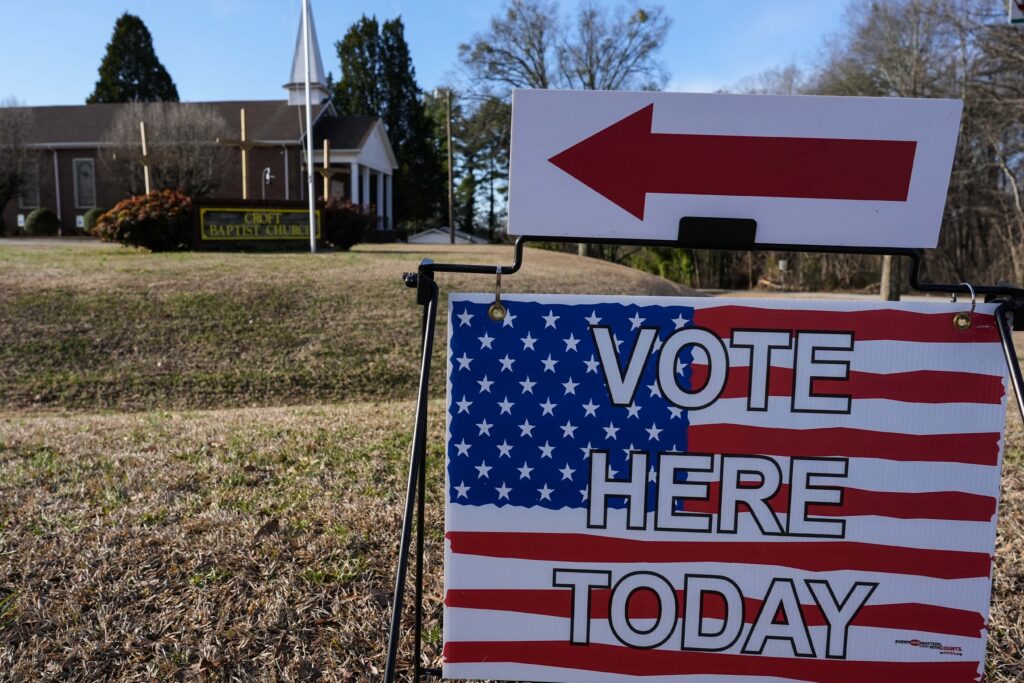
There’s no getting around it: Colorado’s 3,000 county caucuses, which just wrapped up recently, left half the electorate out in the cold. Since unaffiliated voters now make up 51% of all Colorado voters, a majority of Colorado electors are barred...
A Mile High, again: Capitol M | Week of March 21, 2026
Marianne Goodland
marianne.goodland@coloradopolitics.com
Updated 3 days ago
The lighter side of the Capitol, usually…. Local Journalism Day, except they forgot their very own local journalists. The state Senate on Thursday, March 19, passed a resolution recognizing Local Journalism Day. Everyone voted for it, which is good, because...

The insular bubble of caucuses and assemblies | SONDERMANN
Eric Sondermann
eric-sondermann@coloradopolitics.com
Updated 2 days ago
Nearly 30 years ago, then-Federal Reserve Chairman Alan Greenspan coined the term “irrational exuberance” to describe the overheated stock market. That descriptive phrase could also apply to much of the political realm. The hype in politics often grossly exceeds the...

Set appropriate state guidelines for critical surveillance technology | OPINION
Colorado Politics
colorado-politics@coloradopolitics.com
Updated 1 day ago
I admit it: I’m worried. I’m hearing a lot about surveillance in the public arena. I hear cameras are capturing my car’s license plate wherever I drive, my face as I go in and out of stores and health facilities,...

Puppy trafficking bill promotes inhumane breeding | OPINION
Colorado Politics
colorado-politics@coloradopolitics.com
Updated 1 day ago
By Patti Strand When Justice Thurgood Marshall wrote “The Constitution does not prohibit legislatures from enacting stupid laws,” he wasn’t wrong. He was referring to a political process sometimes ill-equipped to deal with complex issues that require subject-matter knowledge and a...
Penny wise but foolish by pounds | Paula Noonan
Paula Noonan
paula-noonan@coloradopolitics.com
Updated 2 days ago
Leadership of Colorado’s General Assembly introduced the Fiscal Year 2026-2027 Legislative Appropriation bill, HB26-1333, at $75.72 million. That will be the budget to run the state legislature next year. About $74 million comes out of the general fund and the...

Proposed evictions bill fails to improve housing stability while threatening higher rents | OPINION
Colorado Politics
colorado-politics@coloradopolitics.com
Updated 2 days ago
No landlord wants to evict a tenant for non-payment of rent. That is true for large housing providers, small “mom-and-pop” owners and nonprofit housing rental providers alike. Evictions are financially and emotionally costly for everyone involved. But when rent goes unpaid, eviction...

Prevention works — invest in conflict prevention with wolves | FEEDBACK
Colorado Politics
colorado-politics@coloradopolitics.com
Updated 2 days ago
The recent reporting on Colorado’s wolf depredation payouts exceeding $700,000 highlights a critical problem with the current approach to wolf recovery: current mainstream systems focus on compensation and ineffective reactive non-lethals. These systems are not designed to prevent conflict but attempts...
Colorado’s clean-energy future must be affordable for older adults | PODIUM
Colorado Politics
colorado-politics@coloradopolitics.com
Updated 2 days ago
By Jason DeaBueno Last winter, one of the older adults we serve at Silver Key shared something that has stayed with me. She begun turning her heat down at night — not because she wanted to, but because she was...
Why Denver should care about conservation easements — even if you’ve never set foot on a ranch | OPINION
Colorado Politics
colorado-politics@coloradopolitics.com
Updated 3 days ago
By Jason Swann I live in Denver. I drink tap water from my kitchen sink, hike close to home when I can, worry about wildfire smoke every summer, and try, like many families, to keep up with the rising cost...
PREV
PREVIOUS

Let’s welcome a colorblind Colorado | Colorado Springs Gazette
Thursday’s landmark U.S. Supreme Court ruling striking down race-based college admissions prompted a predictable flinch and yet also implicit acceptance from higher ed in Colorado. It is that latter reaction – a willingness, however grudging, to move forward in heeding the high court’s groundbreaking and long-overdue decision – that will best serve college-bound kids. The […]

Legislature lies on the ballot, again | CALDARA
Jon Caldara There are two old axioms that perfectly fit the property tax rip-off going on right now in Colorado. The first, “Fool me once, shame on you. Fool me twice, shame on me.” That’s because voters got conned into repealing the Gallagher Amendment two years ago, realizing only now our property taxes are going […]