

Colorado Supreme Court rules undefined phrase in murder law needs no definition
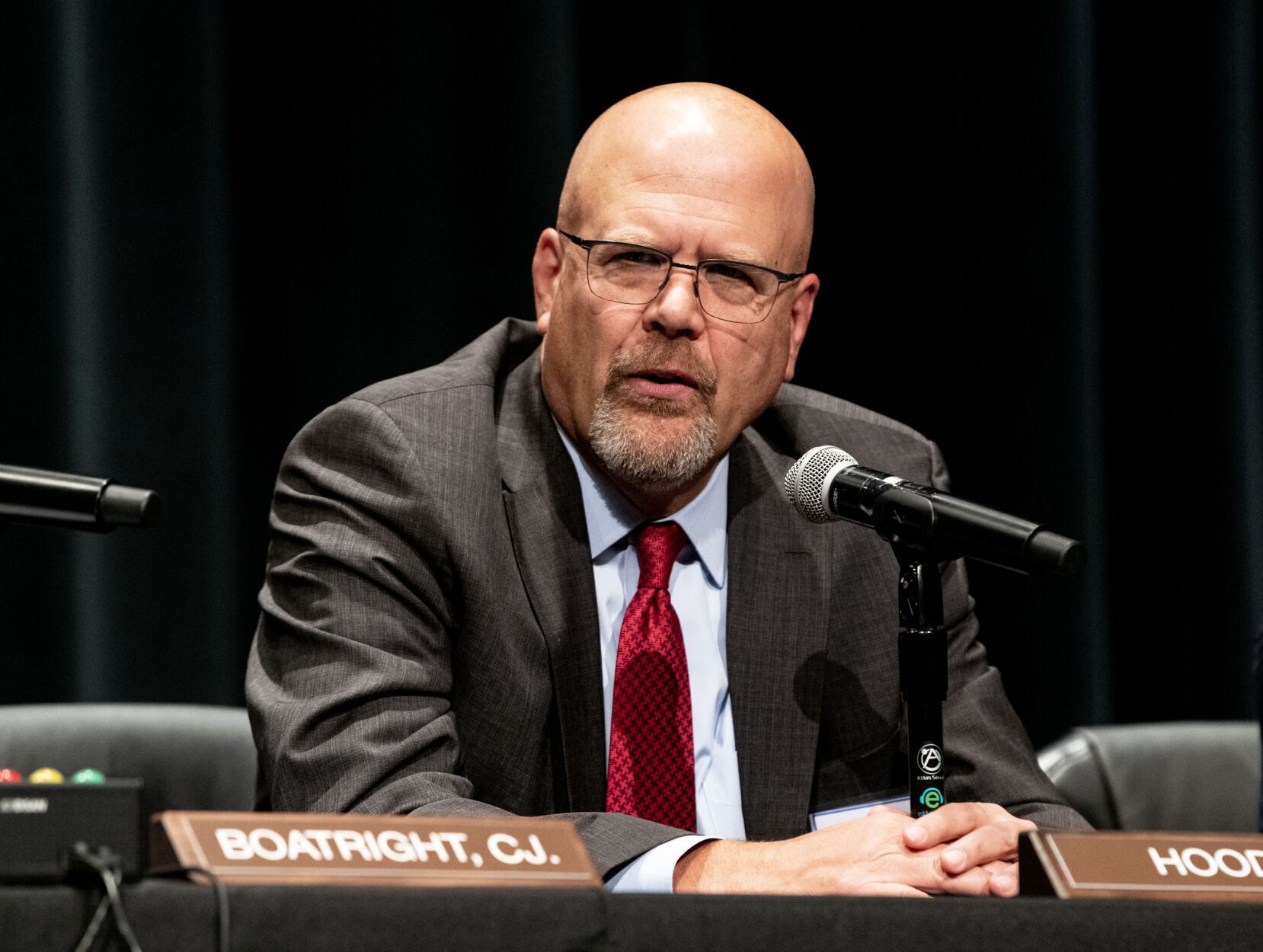
An Adams County judge did not make a mistake when he left jurors without a definition of “universal malice” – a phrase state law does not define and that no other state apparently uses in its own murder laws, the Colorado Supreme Court ruled on Monday.
The jury that convicted Cristobal Fernando Garcia of attempted extreme indifference murder needed to find Garcia acted with “an attitude of universal malice,” showing extreme indifference to the value of human life. The Supreme Court believed universal malice is not a “technical term” that automatically needs a definition and, in context, jurors would understand what it meant.
At the same time, Justice William W. Hood III quietly suggested a definition of the phrase, should trial judges in the future find it necessary.
“Instead, if a trial court does provide a definition of ‘universal malice,’ the better practice would be to define the term to include ‘a willingness to take life indiscriminately’,” he wrote in the June 5 opinion.

In Garcia’s underlying case, he fired a gun in the direction of his girlfriend and her sister in public. Neither woman was injured. At trial, Garcia’s lawyers asked Chief Judge Don Quick to tell jurors that universal malice was “that depravity of the human heart which determines to take life upon slight or insufficient provocation,” without caring who might get hurt.
Quick declined to provide the definition. Garcia’s jurors never asked the judge to clarify the meaning of universal malice before their guilty verdict.
The Court of Appeals agreed that because the jury instructions accurately stated Colorado law, and essentially told jurors that Garcia needed to act with a willingness to do unjustified harm, Quick’s choice not to define the phrase was reasonable.
On appeal to the Supreme Court, Garcia argued jurors’ precise understanding of the elements of a crime is necessary to sustain a conviction beyond a reasonable doubt. Had jurors received a definition, they might have found Garcia guilty of a less serious crime than attempted murder. Moreover, no other state’s murder laws talk about universal malice.
“Common sense dictates that the term ‘universal malice’ does not have a common understanding among the general population,” argued Deputy Public Defender Joseph P. Hough. “Without going to the case law, there’s no way I could recite a proper, accurate and full definition of the term ‘universal malice,’ and it’s unreasonable to expect lay jurors to be able to do so.”
The Colorado Attorney General’s Office responded that judges should not define universal malice unless jurors indicate they are confused.
The Supreme Court recognized the outcome might be different had Garcia’s jurors asked about the meaning of universal malice. However, Hood wrote, the court has never required trial judges to give an automatic definition. With the understanding that universal malice means “a willingness to take life indiscriminately,” the instructions for Garcia’s jury gave enough context to communicate that idea.
“Thus, even if there could be confusion about ‘universal malice’ as a standalone term, the complete statutory phrase lends clarity,” Hood wrote.
The case is Garcia v. People.


Appeals court agrees defendant’s speech constitutionally protected against El Paso County judge
Michael Karlik
michael.karlik@coloradopolitics.com
Updated 57 minutes ago
Colorado’s second-highest court agreed last week that a defendant’s critical statements toward a 4th Judicial District judge were constitutionally protected and could not form the basis of a retaliation charge. A three-judge Court of Appeals panel concluded that, in context,...
Colorado justices, 4-3, order new murder trial due to wrongfully excluded evidence
Michael Karlik
michael.karlik@coloradopolitics.com
Updated 8 hours ago
The Colorado Supreme Court agreed on Monday that a trial judge incorrectly faulted a defendant for refusing to cooperate in a mental health examination, even though the state’s hospital was the entity that botched its responsibility to evaluate her during...
Overdose deaths from opioids dip in America — but not in Colorado, study says
Jacob Mauk
jacob.mauk@denvergazette.com
Updated 8 hours ago
Overdose deaths from opioids rose in Colorado, diverging from the national trend, which has been decreasing, according to a new study from a think tank. In its new report, the Common Sense Institute said synthetic opioid overdose deaths in Colorado...
Error-prone Douglas County judge triggers another reversal of criminal convictions
Michael Karlik
michael.karlik@coloradopolitics.com
Updated 1 day ago
Colorado’s second-highest court overturned a defendant’s Douglas County convictions on Thursday due to the error of a judge whose actions have triggered a disproportionate number of reversals to convictions and sentences in recent years. Since 2021, the Court of Appeals...

Federal judge formalizes injunction blocking USDA’s ‘pilot project’ for Colorado food assistance
Michael Karlik
michael.karlik@coloradopolitics.com
Updated 1 day ago
A federal judge formalized his order on Monday to prevent the U.S. Department of Agriculture from requiring Colorado to participate in a food assistance “pilot project,” finding that it violates the law, the U.S. Constitution, and “the bounds of reasoned...

Colorado justices speak about inner workings of court, analysis of appellate opinions | COURT CRAWL
Michael Karlik
michael.karlik@coloradopolitics.com
Updated 1 day ago
Welcome to Court Crawl, Colorado Politics’ roundup of news from the third branch of government. Members of the state Supreme Court provided an inside look at the workings of their institution, and a Colorado Politics analysis found that some appellate...
Appeals court finds no requirement for different judge to handle attorney-client conflict hearings
Michael Karlik
michael.karlik@coloradopolitics.com
Updated 1 day ago
Colorado’s second-highest court rejected a defendant’s argument on Thursday that a judge improperly heard about a potential conflict between himself and his lawyer right before sentencing, and the man’s reaction could have “tainted” the sentencing decision. In September 2023, Anthony...
The influencers? Some Colorado appeals judges outpace colleagues in setting legal precedent
Michael Karlik
michael.karlik@coloradopolitics.com
Updated 1 day ago
A handful of judges on Colorado’s second-highest court are producing substantially more precedent-setting opinions than their colleagues, which create binding interpretations of the law that reach beyond individual cases. The Court of Appeals issues approximately 1,700 opinions each year. A...
Colorado justices weigh fairness concerns after defendant prevailed despite ghosting case
Michael Karlik
michael.karlik@coloradopolitics.com
Updated 2 days ago
Members of the Colorado Supreme Court struggled on Tuesday to balance the need for one defendant to shield itself against a plaintiff’s claim that its employee sexually assaulted her child, and the fact that the employee legally admitted the allegations...
Colorado justices skeptical of appellate court’s limitation on prosecution’s appeal
Michael Karlik
michael.karlik@coloradopolitics.com
Updated 5 days ago
The Colorado Supreme Court seemed skeptical on Tuesday that Denver prosecutors should be barred from appealing a trial judge’s permanent dismissal of a criminal case, based upon the sequence of events after the original ruling. Prosecutors charged Quinn M. Jebe...
PREV
PREVIOUS

Colorado Supreme Court rules prosecutors entitled to drunk driving suspect's medical records
Because a woman accused of driving drunk planned to argue that any intoxication she experienced was involuntary, the Colorado Supreme Court agreed on Monday that Arapahoe County prosecutors are entitled to see her post-accident medical records. Noelle Dawn Kelley appealed directly to the state’s highest court after a trial judge ruled Kelley had “injected her […]

Advocates call for unconstitutional gun ban from Polis at Capitol sit-in
It wasn’t the symbolic 25,000 women organizers touted in the lead-up to Monday’s protest at the state Capitol. Still, more than 1,000 mostly White women are staging a sit-in on the Capitol grounds Monday – and plan to do so through the rest of the week – to advocate for dismantling the Second Amendment. They say Colorado […]