

Colorado Supreme Court rules prosecutors entitled to drunk driving suspect’s medical records
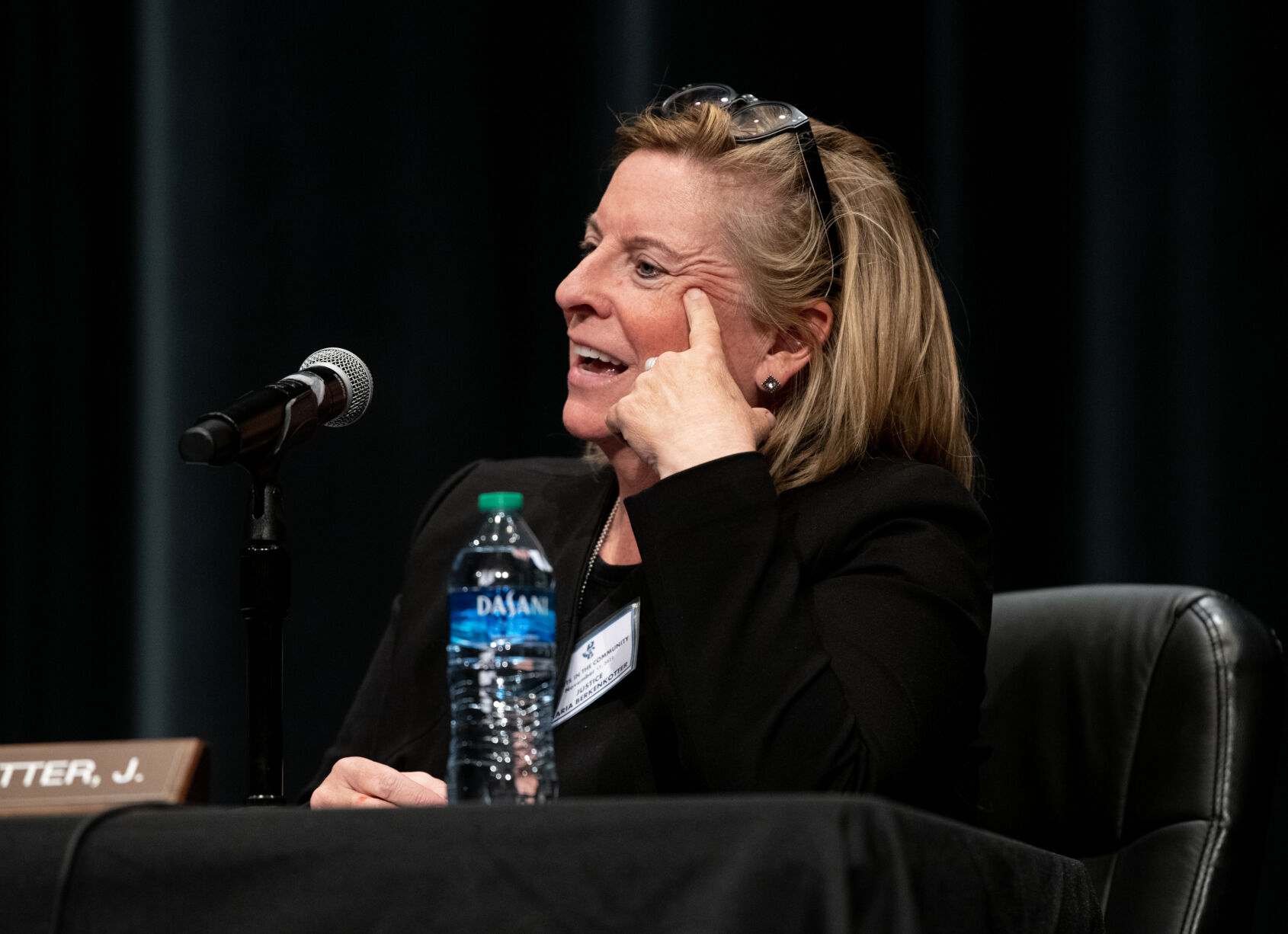
Because a woman accused of driving drunk planned to argue that any intoxication she experienced was involuntary, the Colorado Supreme Court agreed on Monday that Arapahoe County prosecutors are entitled to see her post-accident medical records.
Noelle Dawn Kelley appealed directly to the state’s highest court after a trial judge ruled Kelley had “injected her physical condition” into the case by raising involuntary intoxication as a defense to her DUI and vehicular assault charges. Kelley claimed prosecutors would gain confidential doctor-patient information about her, simply for exercising her right to plead not guilty.
The Supreme Court saw otherwise. Kelley was not simply denying guilt, but asserting an affirmative defense that would justify the charged crimes. Consequently, Kelley’s claims about her physical or mental state meant she relinquished any confidentiality she had in the post-accident documentation.
“We acknowledge,” wrote Justice Maria E. Berkenkotter on June 5, “that our conclusion leaves Kelley with a difficult choice – whether to assert the affirmative defense of involuntary intoxication and disclose her records related to involuntary intoxication or, instead, to protect her physician-patient privilege by foregoing the affirmative defense.”

Although the Supreme Court handed the prosecution a potential tool for proving Kelley’s guilt, it declined to weigh in on a second question Kelley presented: Whether jurors could learn Kelley also refused an officer’s request that she release her medical records.
Officer Lloyd Johnson responded to a two-vehicle crash in Aurora on Sept. 7, 2021. Kelley was the at-fault driver, and Johnson first encountered her receiving treatment in an ambulance. He did not notice anything amiss about her condition.
At the hospital, Johnson spoke with Kelley again and noticed the odor of a “fruity-type substance” along with Kelley’s slurred speech. The signs were “consistent with what you might expect to see from somebody who was intoxicated,” he later testified.
Kelley mentioned she wanted a lawyer. Johnson then asked if Kelley would sign a form to release her medical records to Aurora police. She refused.
The prosecution charged Kelley with four counts related to driving under the influence. At a hearing, District Court Judge Eric White found Kelley’s statements to Johnson were voluntary, but ruled that jurors would not hear about Kelley’s refusal to release her records. He believed Johnson’s question, after Kelley invoked her constitutional right to counsel, was more than an “administrative” matter and was instead “improperly asked.”
The district attorney’s office requested that White reconsider, and they succeeded. In November, White issued an order siding with the prosecution on two key matters. First, he now agreed Johnson’s question about Kelley’s medical records was not an “interrogation” that is generally prohibited when a suspect invokes her constitutional right to counsel. Consequently, a jury could hear that Kelley withheld her consent.
Second, because Kelley was planning to raise involuntary intoxication – meaning an intoxicating substance was introduced into her body, affecting her capabilities, against her knowledge or pursuant to medical treatment – she could not shield relevant evidence from the hospital.
“Her own medical records following the accident are almost certainly a source of that information,” White wrote.
Kelley appealed directly to the Supreme Court. She claimed the legislature never authorized a forfeiture of doctor-patient confidentiality simply when a defendant claims they were involuntarily intoxicated. Further, just as prosecutors may not suggest defendants are guilty for exercising their constitutional rights to silence or to counsel, nor may they imply a defendant’s refusal to allow a warrantless search of their medical records means they are guilty.
The prosecution responded that any evidence supporting or rebutting the idea that Kelley was involuntarily intoxicated lies in her hospital records, so it was imperative that they be disclosed. As for the brief exchange in which Johnson asked Kelley for her records, there is “no misconduct in merely requesting a suspect’s consent to a search.”
The Supreme Court agreed with the prosecution that it was entitled to Kelley’s medical records that directly related to her potential involuntary intoxication. However, it did not consider the second issue relating to the propriety of Johnson’s further questioning after Kelley said she wanted a lawyer.
While prior precedent “might suggest that this type of evidence is inadmissible,” Berkenkotter wrote, White needed to address the defense’s precise argument first.
The case is People v. Kelley.


Federal judge green-lights civil trial against ex-Fort Collins DUI officer
Michael Karlik
michael.karlik@coloradopolitics.com
Updated 2 days ago
A federal judge ruled on Thursday that Fort Collins’ former “DUI officer” will face a civil trial for allegedly investigating a motorist for impaired driving without any reasonable suspicion to do so. In recent years, several people arrested by Officer...

Colorado Supreme Court suspends Mesa County judge pending misconduct investigation
Michael Karlik
michael.karlik@coloradopolitics.com
Updated 1 day ago
The Colorado Supreme Court suspended Mesa County Court Judge Michael J. Grattan on Thursday amid a misconduct investigation. The court’s Sept. 10 order gave Grattan 21 days to explain why his paid suspension should not continue through the end of...
Colorado Supreme Court changes course, dismisses case about special district bonds
Michael Karlik
michael.karlik@coloradopolitics.com
Updated 1 day ago
The Colorado Supreme Court declined on Friday to decide a dispute between a large-scale Commerce City development and the various districts financing it, after initially showing interest in the ongoing case. Colorado has roughly 2,800 special districts, which are local...
10th Circuit tosses GEO Group’s pretrial appeal in human trafficking lawsuit
Michael Karlik
michael.karlik@coloradopolitics.com
Updated 3 days ago
The Denver-based federal appeals court dismissed an attempt by The GEO Group on Wednesday to appeal a trial judge’s non-existent decision two months before the company is scheduled to face a civil trial over alleged trafficking violations at the Aurora...
Denver sues Trump to block armed ICE agents from polling sites
Deborah Grigsby
deborah.smith@denvergazette.com
Updated 3 days ago
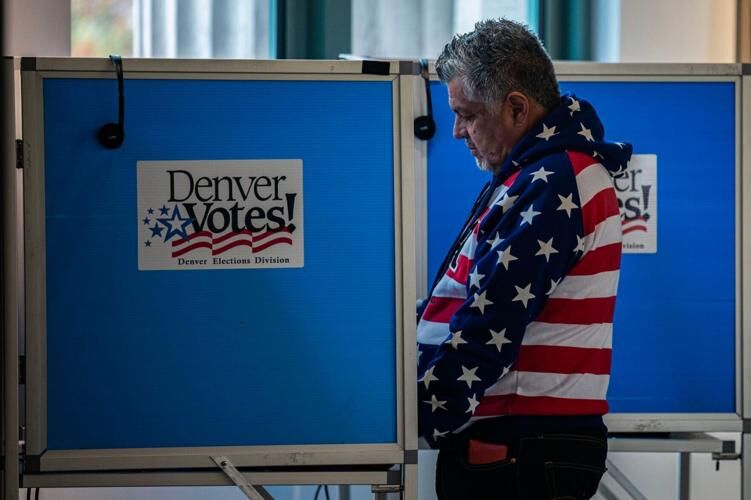
The city of Denver, along with several groups, sued the Trump administration Thursday, seeking to block U.S. Immigration and Customs Enforcement officers who are armed from polling sites during the upcoming midterm elections. In fact, there are no official orders...
Federal judge takes no action against ICE in Colorado after hearing about mistakes, not ‘blatant violations’
Michael Karlik
michael.karlik@coloradopolitics.com
Updated 22 hours ago
A federal judge declined to take action against U.S. Immigration and Customs Enforcement on Thursday after hearing that a pattern of alleged lawbreaking amounted to mistakes and a misunderstanding of the government’s position in court. For nearly a year, Colorado’s...
Colorado doctors, dentists challenge state law on gender‑transition services in new federal lawsuit
Marissa Ventrelli
marissa.ventrelli@coloradopolitics.com
Updated 19 hours ago
A group of Christian doctors and dentists has filed a federal lawsuit challenging a Colorado law they say requires them to provide gender‑transition services that conflict with their religious and ethical beliefs. The lawsuit, filed by the Christian Medical and...
Federal judge directs plaintiff to revise complaint alleging Denver officers’ constitutional violations
Michael Karlik
michael.karlik@coloradopolitics.com
Updated 22 hours ago
A federal judge directed a plaintiff to revise his allegations on Wednesday to more precisely state what two Denver officers and the city itself allegedly did to violate his constitutional rights by facilitating his prosecution for murder until prosecutors dropped...

Lawsuit challenges Douglas County commissioners’ ballot actions
Nicholas Fogleman
nicholas.fogleman@denvergazette.com
Updated 3 days ago
A new lawsuit against Douglas County commissioners seeks to invalidate the board’s intervention in efforts to expand the commission from three members to five and restore the original ballot language approved by more than 20,000 petition signers. The suit marks...
Federal judge explores new sanctions against ex-Colorado judicial discipline director
Michael Karlik
michael.karlik@coloradopolitics.com
Updated 1 day ago
A federal judge on Wednesday directed Colorado’s former judicial discipline director, for the third time this year, to explain why she should not sanction him for his latest conduct in his litigation against the state’s judiciary. Christopher S.P. Gregory, who served...
PREV
PREVIOUS

A look at Biden's first four judicial appointees, state Supreme Court answers lingering COVID question | COURT CRAWL
Welcome to Court Crawl, Colorado Politics’ roundup of news from the third branch of government. A recent cover story examined the tenures to date of the four women the Biden administration has appointed to the federal bench in Colorado, plus the state Supreme Court rejected an attempt to use the pandemic to justify a wholesale […]

Colorado Supreme Court rules undefined phrase in murder law needs no definition
An Adams County judge did not make a mistake when he left jurors without a definition of “universal malice” – a phrase state law does not define and that no other state apparently uses in its own murder laws, the Colorado Supreme Court ruled on Monday. The jury that convicted Cristobal Fernando Garcia of attempted extreme […]