

Federal judge rejects union request to block King Soopers from using contractors on garden displays
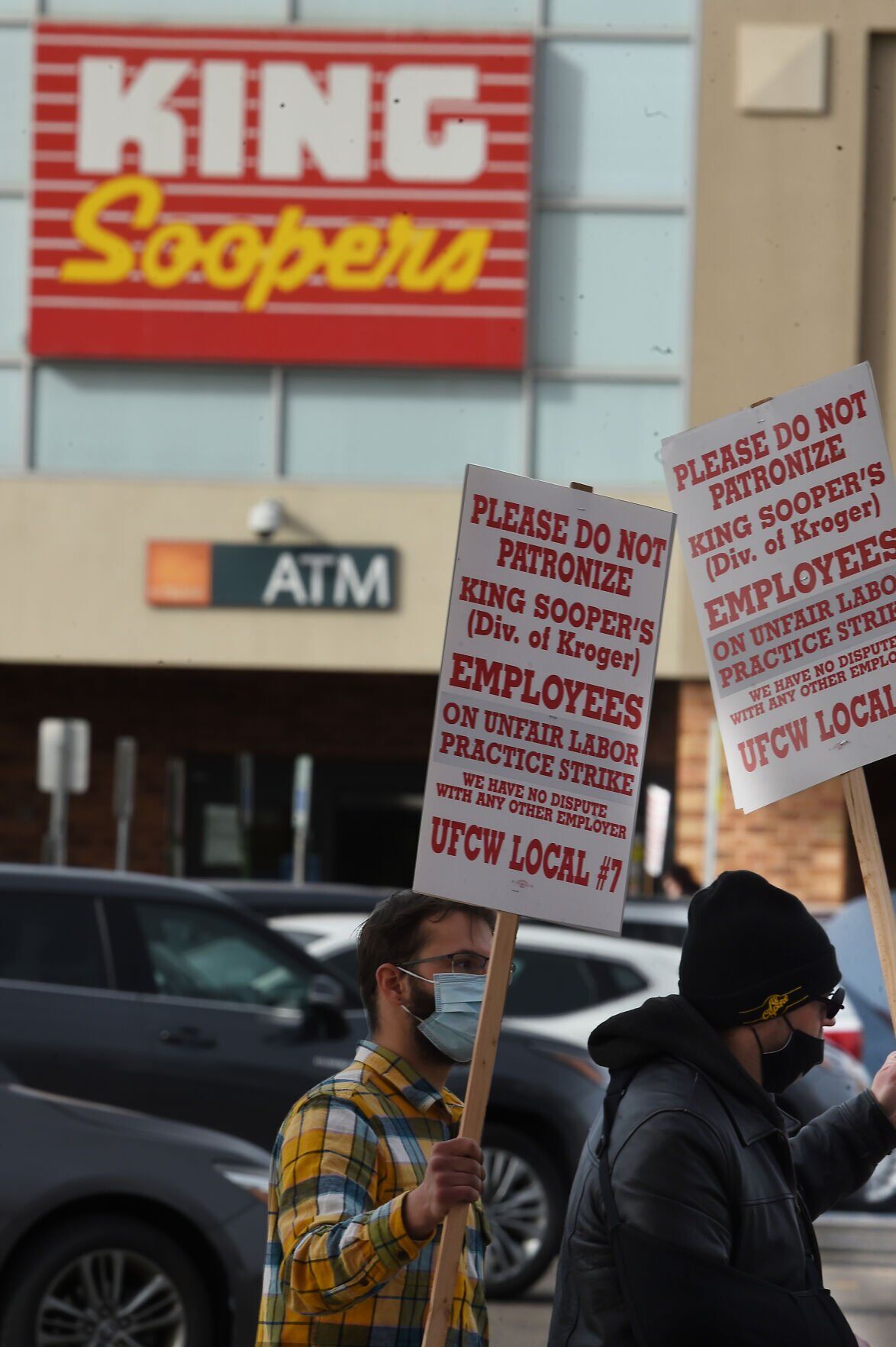
A federal judge on Wednesday rejected a request to block King Soopers and City Market from using contractors to perform certain tasks on outdoor plant displays – a practice the union representing retail workers alleged is in violation of their collective bargaining agreement.
U.S. District Court Judge Gordon P. Gallagher decided the United Food and Commercial Workers Local 7 failed to show how it would experience “irreparable harm” if the grocery chain’s parent organization, Dillon Companies, continued to allow non-union labor to tend in limited fashion to the bedding plants that will be on display until the fall.
At the same time, Gallagher acknowledged his ruling was in large part due to King Soopers’ directive, issued only after UFCW filed its lawsuit, clarifying that contractors would not be performing work traditionally reserved for union employees. He also observed UFCW and King Soopers harbored noticeable “animosity” toward each other.
“It may be that, in time, the Union may develop evidence of large-scale or systemic violations of the policy, at which point the Court would be amenable to reopening this matter,” Gallagher wrote in his May 3 order.
Spokespersons for King Soopers and UFCW did not immediately respond to a request for comment.
In mid-April, UFCW moved for a preliminary injunction after King Soopers and City Market began bringing employees of National Garden Services into stores to assist with plant and flower displays. The union argued King Soopers intended to use the contractors for watering, handling merchandise and cleaning outdoor areas, which were previously the tasks of store employees. During the peak season, there are an additional 20-40 hours per store per week, on average, available to union workers for those responsibilities.
However, the collective bargaining agreement does not allow employees to receive back pay for work that is improperly assigned to contractors. Instead, employees have a right to make up the hours within four weeks. The union argued that, by the time an arbitrator hears the dispute, the season will be over and the extra hours will have evaporated, making a judge’s intervention necessary.
“As of now, no floral department employee has received additional hours since the start of the bedding plant season even though the season began more than two weeks ago and thus sales have begun in earnest,” the union’s lawyers wrote. “As we are now in late April, hours should have already increased but have not.”
On Friday, Gallagher held a hearing to review documents and listen to testimony. The judge learned that, in the past, King Soopers and City Market would purchase plants from a supplier and sell them at a profit. If the products ended up damaged or unsellable, the stores would take the loss. This year, the supplier is retaining ownership of the plants and National Garden Services’ role is effectively to perform quality control onsite.
On March 4, floral department managers received an email notifying them National Garden Services workers would be coming in to assist with watering and handling plants. Eugene Wright, a longtime manager currently at a King Soopers in Colorado Springs, said a woman named Marcia soon arrived at his store and was “not very clear” about her job title.
“She’s been in my department since April and she’s been there every day. Double checking, watering, double checking the product quality,” Wright said.
He added that he has seen no increase in his part-time workers’ hours, unlike years past.
Anthony Cox, a floral department manager in Highlands Ranch, similarly testified to “a lot of confusion” about the work National Garden Services workers are supposed to be doing.
On April 24, four days before the court hearing, King Soopers sent guidance clarifying that store employees, not contractors, are responsible for watering and maintaining plants and monitoring the displays. A representative from the company testified he did not personally witness the tasks that contractors were performing between March 4 and April 24, but he alleged King Soopers would lose $2 million if it was prevented from using National Garden Services workers.
King Soopers argued the collaboration was meant to increase sales and provide more hours of work for union employees. Instead, the company was met with over 60 union grievances.
“Truly, no good deed goes unpunished,” wrote King Soopers’ lawyers after the hearing. UFCW is “determined to destroy what is most certainly a felicitous and legitimate business move for all concerned.”
Gallagher agreed that an arbitrator might not be able to make the union whole if the ultimate finding is that King Soopers improperly assigned hundreds of hours of union work to contractors at each store. But the April 24 clarification of National Garden Services’ role made it significantly less likely the union would be harmed, given the limited duties now in place for contractors.
“The April 24 document, delayed as it may have been, clearly reflects Dillon’s current policy that work traditionally performed by bargaining unit employees on bedding plants (e.g., watering, trimming, merchandising, etc.) will continue to be assigned to bargaining unit members and that such work will not be performed by NGS employees,” Gallagher wrote.
He added in closing that the relationship between the union and the grocery giant was “particularly acrimonious,” which may have prevented them from resolving the dispute out of court.
The case is United Food and Commercial Workers, Local 7 v. Dillon Companies, LLC.


Federal judge hears ICE agents’ confusion about law, injunction on warrantless arrests
Michael Karlik
michael.karlik@coloradopolitics.com
Updated 15 hours ago
A federal judge heard testimony on Tuesday from U.S. Customs and Immigration Enforcement agents in Colorado, who had trouble describing the requirements of his recent injunction and the training they received on making warrantless arrests pursuant to the law. On...

10th Circuit dismisses challenge to Colorado legislature’s decorum rules
Michael Karlik
michael.karlik@coloradopolitics.com
Updated 3 hours ago
The Denver-based federal appeals court concluded on Tuesday that Colorado lawmakers cannot be sued for creating and enforcing rules of decorum that circumscribe the public commentary allowed at legislative committee hearings. A three-judge panel of the U.S. Court of Appeals...
Colorado Supreme Court blocks ballot initiative defining ‘fees’
Michael Karlik
michael.karlik@coloradopolitics.com
Updated 2 days ago
The Colorado Supreme Court blocked a proposed ballot initiative on Monday that would have required voter approval for new fees above a certain threshold, while also enshrining a definition of “fee” into the state constitution for the first time. Chief...
Colorado justices, by 5-2, say Longmont detective did not violate suspect’s Miranda rights
Michael Karlik
michael.karlik@coloradopolitics.com
Updated 2 days ago
The Colorado Supreme Court’s majority ruled on Monday that a Longmont detective did not coerce a suspect into talking by making references to how a judge would look at his character, and by suggesting he may get out of prison...
Colorado justices find Fort Collins police lacked probable cause to arrest suspect in park
Michael Karlik
michael.karlik@coloradopolitics.com
Updated 2 days ago
The Colorado Supreme Court agreed on Monday that Fort Collins police lacked probable cause to arrest a man for a child sex offense based on his presence in a public park around the time they intended to meet with their...

Supreme Court to hold oral arguments, discipline commission releases report | COURT CRAWL
Michael Karlik
michael.karlik@coloradopolitics.com
Updated 2 days ago
Welcome to Court Crawl, Colorado Politics’ roundup of news from the third branch of government. The state Supreme Court is holding oral arguments this week, plus Colorado’s judicial discipline commission released its annual report. Colorado Supreme Court news • The Supreme...

Federal judge dismisses developer’s challenge to Denver affordable housing ordinances
Michael Karlik
michael.karlik@coloradopolitics.com
Updated 5 days ago
A federal judge dismissed a homebuilder’s constitutional challenge on Tuesday to a pair of Denver ordinances that impose obligations on developers related to the affordable housing demands created by new construction. Two related companies, redT Homes and redT Capital Partners,...

10th Circuit distances itself from prior decision making it easier to toss prisoner lawsuits
Michael Karlik
michael.karlik@coloradopolitics.com
Updated 5 days ago
The Denver-based federal appeals court distanced itself on Wednesday from its own recent decision that made it easier for prison officials to end civil lawsuits by transferring incarcerated plaintiffs between facilities. A three-judge panel of the U.S. Court of Appeals...

Appeals court overturns Douglas County vehicular homicide conviction due to faulty jury instructions
Michael Karlik
michael.karlik@coloradopolitics.com
Updated 3 days ago
Colorado’s second-highest court overturned a defendant’s vehicular homicide conviction and 12-year prison sentence on Thursday after determining a Douglas County judge omitted key language from the jury instructions that could have resulted in a different outcome. James Paul McDonald was...

Federal judge dismisses malicious prosecution claim against former Denver prosecutor
Michael Karlik
michael.karlik@coloradopolitics.com
Updated 5 days ago
A federal judge concluded on Monday that a former Denver prosecutor could not be sued for allegedly causing the arrests of two plaintiffs after they failed to appear for trial on the scheduled date, even though the trial had been...
PREV
PREVIOUS

Colorado moves to limit use of four-point restraints in prisons
In Colorado prisons, inmates deemed to be a threat to themselves or others are often strapped to a bed by their arms and legs with metal restraints, left alone for hours or even days in this position. In at least one instance, a person was kept in these restraints for 39 days straight in the Colorado […]

Colorado Springs mayoral candidates continue fundraising push ahead of runoff
Colorado Springs mayoral candidates continue their fundraising pushes with just under two weeks to go before the May 16 runoff, raking in the largest donations from local political action committees, businesses and business professionals. Campaign finance reports filed with the city on Monday show Wayne Williams raised $357,525 in the period between April 11-25 while […]