

Federal judge declines to block Facebook from showing Loveland man ‘pornographic ads’

A federal judge last week declined a Loveland man’s request to block Facebook from showing him advertisements he deemed pornographic, and which left him feeling traumatized and sexually harassed.
Alfred P. Reaud filed a lawsuit earlier this year against Meta Platforms, Inc., which owns Facebook. Reaud documented 93 “unwanted gross and offensive pornographic ads” he has seen on Facebook since 2021, and he seeks more than $1.5 million in damages against the company.
On March 21, Reaud requested a preliminary injunction to block Facebook from showing him pornographic ads that allegedly violate its own policies. Reaud attached screenshots of ads he considered offensive, one of which depicted a woman placing a carrot in her underwear and another showed a woman with a white substance on her face.
“This unwanted pornographic content leaves Reaud feeling as if a sexual predator or molester is reaching out and touching him, and he is unable to defend himself,” wrote Reaud, who is representing himself in court.
But U.S. District Court Judge Nina Y. Wang denied his request for a preliminary injunction. She noted that Reaud needed to demonstrate how he would likely succeed on the merits of his case, that he would suffer “irreparable harm” without court intervention and that an injunction would be in the public’s interest.
“Mr. Reaud fails to discuss any of the factors in the PI Motion,” Wang wrote in a brief order on April 13.
Reaud’s underlying lawsuit seeks to hold Meta liable for sexual harassment and intentionally inflicting emotional distress. Reaud alleged he is “forced to view” pornographic content while he browses Facebook, and the trauma inflicted by his exposure to “unwanted gross pornography is not measurable.”
Meta advanced several arguments in urging Wang to deny the preliminary injunction and dismiss Reaud’s case. First, it noted Facebook’s terms require users to file claims in the Northern District of California or in state court in San Mateo County. Second, the company contended “sexual harassment” is not a proper legal claim under California law.
Meta also cited Section 230 of the Communications Decency Act, a hotly-contested federal provision that provides immunity to certain online platforms that publish third-party content. Currently, the U.S. Supreme Court is considering the scope of that immunity as applied to the use of algorithms.
Finally, Meta suggested if Reaud did not want to see offensive content, he should log off.
“Plaintiff has not and cannot establish that he would suffer irreparable harm,” wrote the company’s lawyers, “because, to the extent Plaintiff has concerns about the advertisements he is seeing on Facebook, he can simply stop using the Facebook service.”
The case is Reaud v. Facebook, Inc.


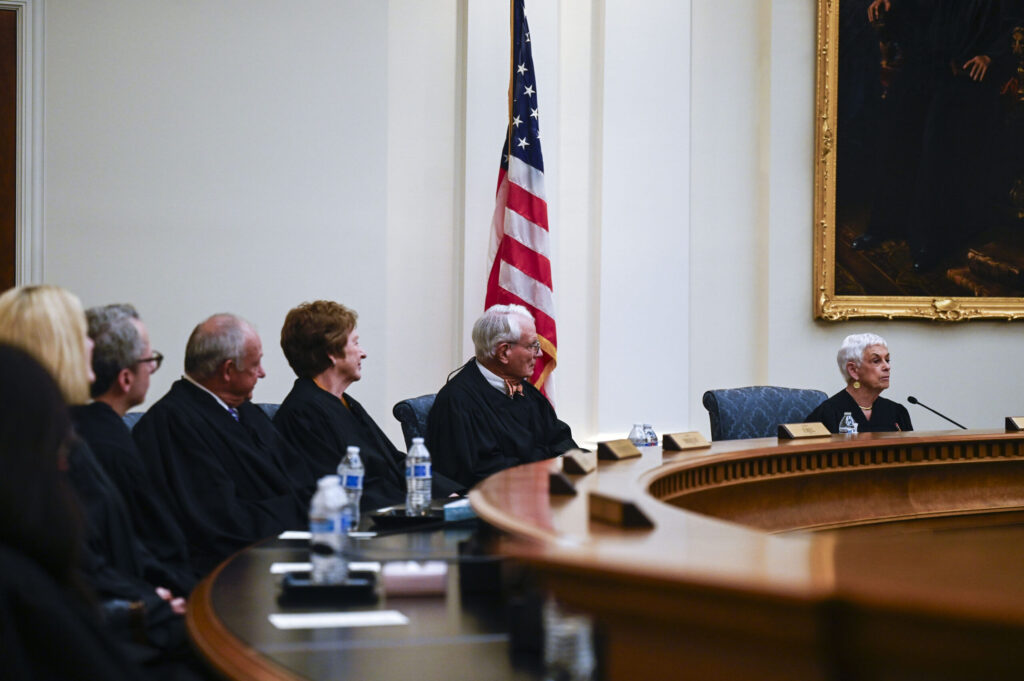
10th Circuit to address resentencing of probation violators in rare all-judges hearing
Michael Karlik
michael.karlik@coloradopolitics.com
Updated 5 hours ago
The Denver-based federal appeals court agreed on Thursday to hold a rare all-judges hearing to determine the proper procedure for resentencing a criminal defendant who has violated the terms of his probation. In the federal appellate courts, the vast majority...
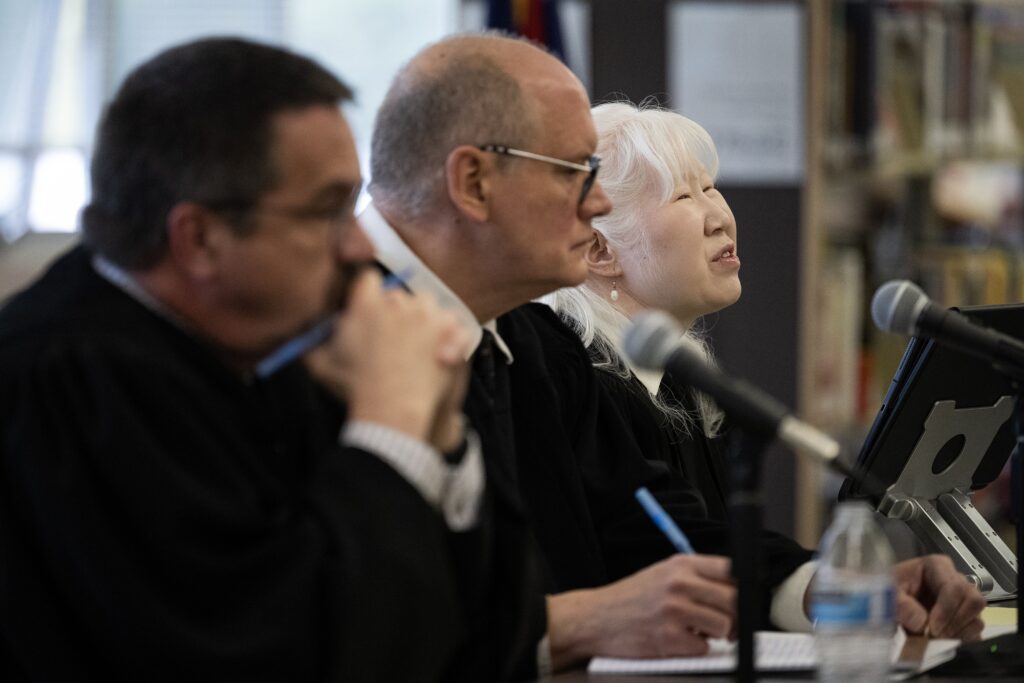
Appeals court overturns Adams County sex offense convictions due to prosecutor’s misconduct
Michael Karlik
michael.karlik@coloradopolitics.com
Updated 9 hours ago
Colorado’s second-highest court reversed multiple child sex assault convictions on Thursday after concluding an Adams County prosecutor committed misconduct while cross-examining the defendant. A three-judge Court of Appeals panel observed the charges against Daniel Michael Boerner depended on the jury...

Fort Carson soldier’s wife could be deported
Carol McKinley
carol-mckinley@coloradopolitics.com
Updated 1 day ago
As the country’s largest immigration enforcement crackdown continues in Minnesota’s Twin Cities, a Fort Carson sergeant is fighting a personal immigration crisis — one that may implode his family. Sgt. Tyler Garza’s wife, Jennifer Maradiaga Baca, is not a legal...
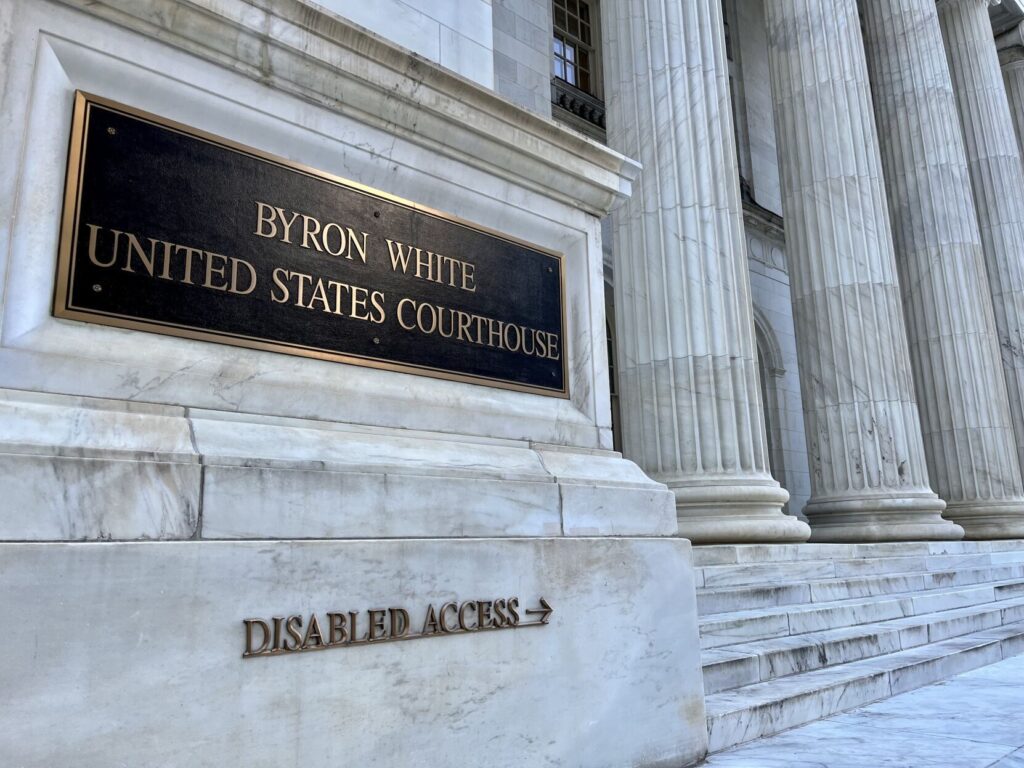
Elizabeth School District dismisses challenge to book-ban injunction on eve of appellate arguments
Michael Karlik
michael.karlik@coloradopolitics.com
Updated 10 hours ago
An Elbert County school district has dismissed its challenge to a judge’s injunction ordering it to return banned books to library shelves, days before the Denver-based federal appeals court was set to hear oral arguments this week. Although a three-judge...

Colorado Supreme Court to hear cases on insurance coverage for COVID, witness credibility
Michael Karlik
michael.karlik@coloradopolitics.com
Updated 2 days ago
The Colorado Supreme Court announced on Tuesday that it will decide the degree to which a virus or other hazard must affect a commercial property before it can trigger loss-or-damage coverage under an insurance policy. At least three of the...
Federal judge says prisoner cannot sue for dog-bite injury
Michael Karlik
michael.karlik@coloradopolitics.com
Updated 2 days ago
A federal judge concluded last week that a man cannot sue the government for injuries he sustained when a dog allegedly attacked him while he participated in a prison program. Kenneth M. Chandler, representing himself, was participating in the “FIDOS”...

Federal judge recommends dismissing trans athletics lawsuit by area school districts
Eric Young
eric.young@gazette.com
Updated 2 days ago
A judge has recommended dismissing a federal lawsuit filed by multiple school districts against the Colorado Attorney General’s and Civil Rights Offices over their policies dictating students’ participation in athletics and activities based on their biological sex rather than gender...
Appeals judge asks Colorado Supreme Court to once again clarify magistrate rules
Michael Karlik
michael.karlik@coloradopolitics.com
Updated 3 days ago
A member of Colorado’s second-highest court urged the state Supreme Court last week to revise confusing language in the rules governing magistrates, less than two weeks after an attempted cleanup of the rules took effect. Magistrates are judicial employees who are...
10th Circuit dismisses paralyzed man’s claims against Colorado Springs, officer
Michael Karlik
michael.karlik@coloradopolitics.com
Updated 32 minutes ago
The Denver-based federal appeals court upheld the dismissal last week of a man’s excessive force claims against the city of Colorado Springs and the officer who tased him, causing him to fall down a sloped surface and break his neck....
Colorado justices weigh overlap between child prostitution offenses
Michael Karlik
michael.karlik@coloradopolitics.com
Updated 3 days ago
Members of the Colorado Supreme Court last week appeared willing to uphold a man’s conviction for an attempted child prostitution offense, which the state’s second-highest court previously found to be a violation of his right to equal protection under the...
PREV
PREVIOUS

Colorado Senate OKs enforcing price transparency for hospitals
Update: The House passed Senate Bill 252 in a 61-3 vote on May 7 without any amendments. The bill will now go to the governor for final approval. The Colorado Senate approved a bill Wednesday to allow the state to enforce federal laws requiring hospitals to publicly post prices online. Under Senate Bill 252, hospitals must […]

Michael Hancock slams Denver school board as 'dysfunctional' and 'immature'
Denver Mayor Michael Hancock isn’t mincing words when it comes to his beef with the Denver Public Schools board. The term-limited outgoing mayor Tuesday took the gloves off during an appearance on the Mandy Connell Show on 850 KOA. “This is a very dysfunctional board and it needs to be corrected,” Hancock said. “And the […]