

Water attorney says tribes should have seat at table in Colorado River discussions

A prominent water expert believes it’s past time for the federal government to bring Native American tribes into the discussion on shaping the response to the Colorado River crisis.
Troy Eid, who served as Colorado’s 40th United States attorney, said the tribes have historically been left out of the discussions. That situation, he said, perpetuates today.
“The tribes are not present (at the table), and I don’t know how else to say it,” said Eid, who also represents the Southern Ute Indian Tribe and Ute Mountain Ute Tribe.
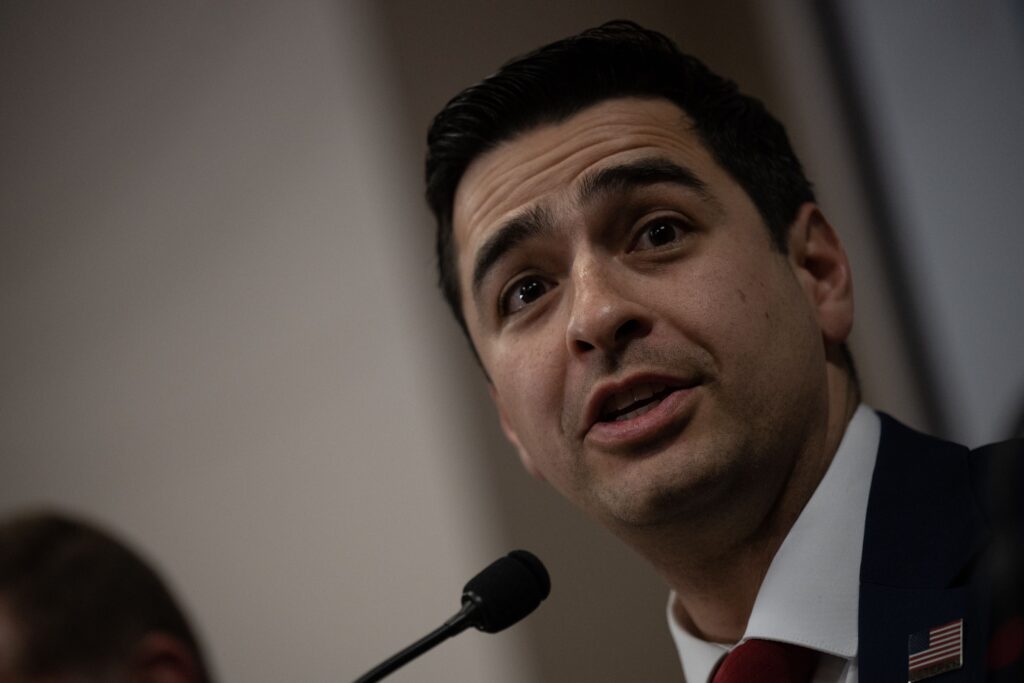
Troy Eid, who served as Colorado’s 40th United States Attorney and an expert on water rights, says tribes, who have been absent at the table, must be a part of Colorado River discussions.
The 30 tribes in the basin need to be able to represent themselves – and not just be represented by the federal government – in discussions that will define the response to dwindling water supply from the Colorado River, Eid told Colorado Politics.
The Colorado River flows through Upper and Lower basins, with the former including Wyoming, Colorado, Utah and New Mexico, and the latter made up of Nevada, Arizona and California.
But the water is overallocated, and the river is suffering from more than two decades of drought.
The seven basin states have missed multiple deadlines to formulate a plan they can all agree on for reducing water usage. The most recent came earlier this year when six of the states reached an accord but California offered a competing proposal. That led the Department of Interior’s Bureau of Reclamation to come up with its own set of alternatives.
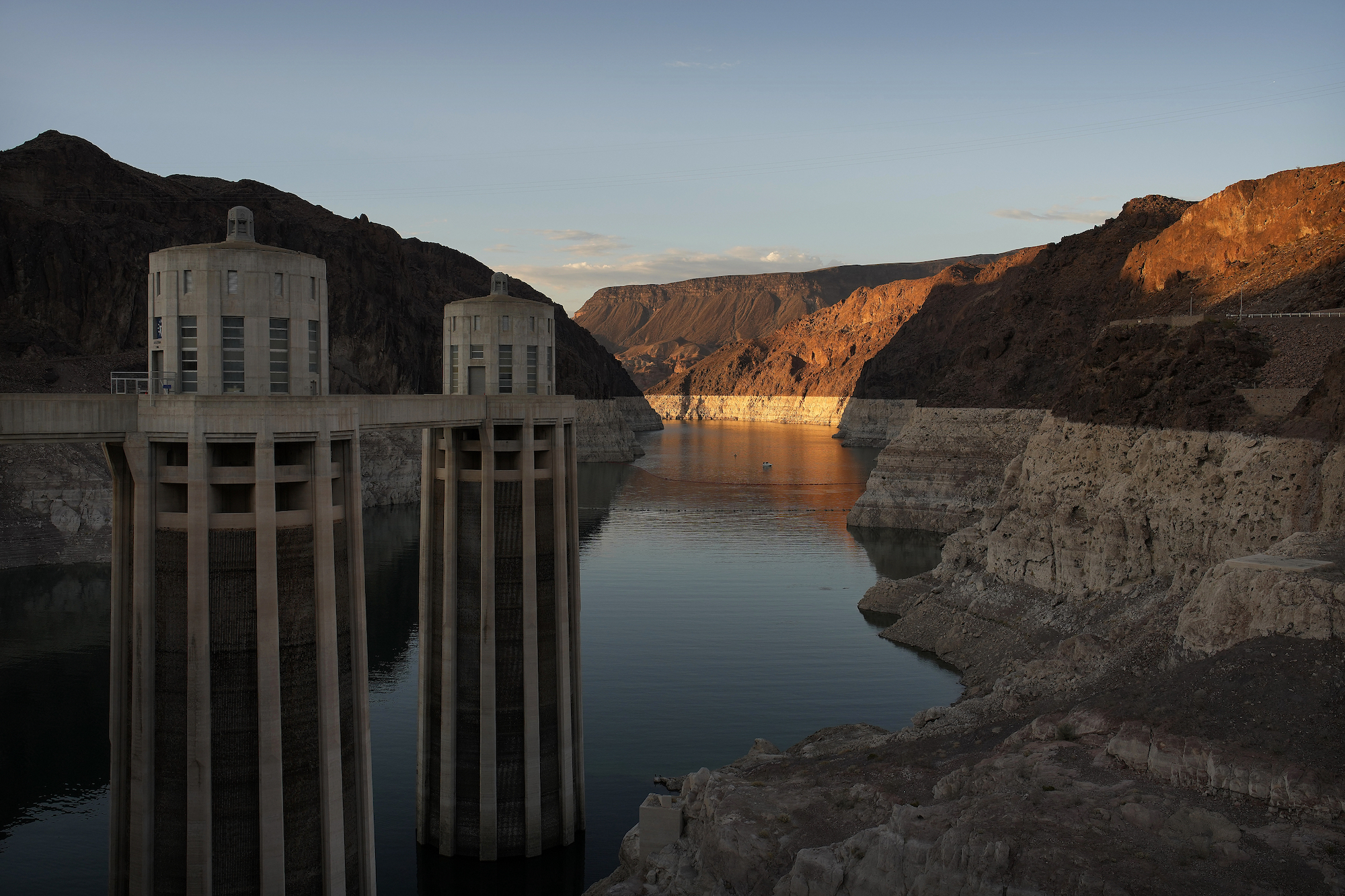
The Interior analysis released this week lays out three options to address potential shortages in order to protect the operation of Glen Canyon and Hoover dams, which provide electrical power for millions of households, in addition to regulating the flow of water to downstream communities.
The first option, to maintain the status quo, won’t work, the document concludes. That leaves two “action alternatives” – one that would distribute cuts among Lower Basin states based on historic water rights priorities, which would favor senior rights-holder California and disadvantage Arizona, and another that would spread the reductions equally across the Lower Basin states.
Eid, an attorney with Greenberg Traurig, said for the tribes to have a seat at the negotiating table, the White House needs to get involved.
“There needs to be a decision that Interior and the Department of Justice no longer disagree on these issues. Interior is trying to an advocate for the tribes to be at the table,” he said. “The Justice Department is not.”
“So, the president’s office needs to be able to make the call, and, at the end of the day, I think the right move would be to get the president to support the idea that the Justice Department will start to represent the tribes,” he added.
Eid sees the federal government’s analysis as a step in the right direction, largely because he views the Interior Department as the entity influential enough to get the parties to work toward a compromise.
“It’s a positive step for the supreme governmental power in the country to step up and say – for environmental reasons, this is their legal basis – and for resource and energy reasons, we have to lead here,” Eid said. “And leading doesn’t mean being dictatorial. It means getting everyone to the table and trying to work out a compromise.”
Eid echoed what others have articulated following the release of the federal plan, notably that it’s time for the states and other parties to act.
James Eklund, an attorney at Sherman & Howard and the author of Colorado’s first water plan, said: “We really are running out of time on this.”
“We have the tools to control our own destiny and make this pain and this disruption – we can mitigate those. But we do have to act. If we don’t, that’s where we’re going to get in trouble,” Eklund said.
Eklund said the draft Supplemental Environmental Impact Statement released Tuesday by the bureau removes any doubt that the federal government is prepared to step in if the river’s Upper and Lower Basin states can’t figure out how to share what are likely to be drastic reductions in available water in the coming years.
In this interview, attorney James Eklund, who leads the water and natural resources practice at Sherman & Howard, said the federal government’s water analysis means the basin states need to come up with a plan they can all agree on. This time, he said, the federal government showed it, indeed, carries a big stick. James served as Colorado’s lead negotiator and signatory on the Colorado River Drought Contingency Plan. He was also the director of the Colorado Water Conservation Board.
The draft proposal is open for public comment for 45 days, and a final version is expected this summer, the Interior Department said.
Colorado’s two U.S. senators hailed the plan as an important step toward grappling with the drought and its ramifications. Both also cautioned against taking comfort from this year’s heavy snows.
“This year’s good snowpack can’t be an excuse to kick the can down the road,” said U.S. Sen. Michael Bennet in a statement. “This SEIS is a constructive step toward sustaining the Colorado River system for the long term, and I continue to urge all seven Basin states to come to an agreement. We have no time to lose.”
His fellow Democrat, U.S. Sen. John Hickenlooper, made a similar point.
“Today’s announcement marks an important step in planning for a drier West,” Hickenlooper said Tuesday in a statement. “As the Colorado River Basin faces the stresses of climate-driven drought, states and stakeholders must work towards a collaborative, seven-state solution for managing water scarcity that honors our communities, the sovereignty of Tribes, and the concerns of agricultural producers. No matter how promising this year’s snowpack is, we must prepare for less water in the river on which we rely.”
U.S. Rep. Lauren Boebert, the Silt Republican whose congressional district contains the Colorado River from just downstream from its headwaters to the Utah border, told Colorado Politics in an email that she will continue fighting for Coloradans.
“The Colorado River is called the Colorado River for a reason,” Boebert said. “I will keep working to put the people of Colorado and our interests first as we work to find solutions to western drought. Six states representing millions of people came together to produce a solution, but California failed to show up to the table and negotiate in good faith. Now, millions of people are being held hostage by California’s willful incompetence.”
Boebert noted that she recently invited Andy Mueller, general manager of the Colorado River Conservation District, to testify before a key House subcommittee, where he called for more active forest management and water storage to meet some of the challenges.
“These two approaches have to be a part of the solution,” Boebert said.
Reporter Ernest Luning contributed to this story. Ernest can be reached at ernest.luning@coloradopolitics.com

Democrat Michael Bennet turns in petitions for Colorado’s gubernatorial primary, plans to skip caucuses
Ernest Luning
ernest.luning@coloradopolitics.com
Updated 2 hours ago
U.S. Sen. Michael Bennet, a Democratic candidate for governor, submitted nominating petitions for Colorado’s June primary ballot on Friday, his campaign and the Colorado Secretary of State’s Office said. Bennet plans to rely on his petitions to get on the...

Israeli officials say Iran’s Supreme Leader Khamenei is dead. No word from US or Iran
Aamer Madhani
aamer.madhani@associatedpress.com
Updated 5 hours ago
DUBAI, United Arab Emirates (AP) — Supreme Leader Ayatollah Ali Khamenei has died in a major attack on Iran launched by Israel and the United States, Israeli officials told The Associated Press on Saturday. There was no immediate comment from...
Colorado Reps. Jason Crow, Gabe Evans clash over Trump’s Iran military operation
Thelma Grimes
thelma.grimes@coloradopolitics.com
Updated 5 hours ago
Colorado’s congressional delegation split sharply along party lines Saturday after the U.S. and Israel attacked Iran, triggering fresh debate in America over presidential war powers. Republicans, notably U.S. Rep. Gabe Evans, called the strikes a necessary move to counter Iran’s...

What to know about U.S.-Israel attacks on Iran
The Associated Press
the-associated-press@coloradopolitics.com
Updated 4 hours ago
The attack The U.S. and Israel attacked Iran on Saturday in what President Donald Trump said was a massive operation to destroy the country’s military capabilities and eliminate the threat of it creating a nuclear weapon. Iran’s Foreign Ministry said it would...

World leaders react cautiously to US and Israeli strikes on Iran
The Associated Press
the-associated-press@coloradopolitics.com
Updated 4 hours ago
BRUSSELS • World leaders reacted warily to U.S. and Israeli strikes on Iran on Saturday that triggered worries of a broader conflict. European leaders held emergency meetings and took measures to protect their citizens in the Middle East, with key leaders calling...

US and Israel launch a major attack on Iran and Trump urges Iranians to ‘take over your government’
The Associated
the-associated@gazette.com
Updated 12 hours ago
The U.S. and Israel launched a major attack on Iran on Saturday, and President Donald Trump called on the Iranian public to “seize control of your destiny” by rising up against the Islamic leadership that has ruled the nation since 1979. Some of the first...
Additional thoughts on State of the Union address/rally | Cronin and Loevy
Tom Cronin Bob Loevy
tom-cronin-bob-loevy@coloradopolitics.com
Updated 11 hours ago
The U.S. Constitution’s Article II states that “He (the president) shall from time to time give to the Congress Information of the State of the Union, and recommend to their Consideration such Measures as he shall judge necessary and expedient...

Colorado Politics Calendar Mar. 2-9
Rachael Wright, Special to Colorado Politics
rachael.wright@coloradopolitics.com
Updated 3 days ago
CoPo’s weekly political calendar will help you find political and public-policy events throughout Colorado. It includes candidate and issue campaign events, public policy meetings, court hearings, state and local party conventions, assemblies, debates, rallies, parades, speaking engagements, traveling dignitary appearances,...

First reapportionment commission meeting held after passage of Amendment 9 | A LOOK BACK
Rachael Wright, Special to Colorado Politics
rachael.wright@coloradopolitics.com
Updated 3 days ago
Forty-Five Years Ago This Week: 1981 marked the first year, following the passage of Amendment 9 years earlier, that the newly formed reapportionment commission would meet. According to the amendment, the commission had to hold its first meeting no later...
A cynical import Colorado doesn’t need | SONDERMANN
By Eric Sondermann
by-eric-sondermann@coloradopolitics.com
Updated 9 hours ago
“But mommy, he started it.” Every parent, definitely those with more than one kid, has heard this instinctively defensive reaction to the point of exhaustion. It is the ultimate deflection or shifting of the blame. A similar rationale, often about...
PREV
PREVIOUS

Polis' housing bill to face stern test in Colorado Senate committee review
Gov. Jared Polis’ housing proposal faces what could be its most difficult day yet in the state Senate, where the chamber’s Local Government and Housing Committee is set to on Tuesday afternoon review more than 50 pages of amendments to the 105-page bill. Municipalities and resort communities all over the state have lined up to […]

House passes caps for candidate contributions in Colorado's local elections
The Colorado House on Tuesday approved a bill to establish a statewide limit on donations made to candidates in local elections, sending the proposal to the Senate for further consideration. If made law, House Bill 1245 would cap donations from individuals and political parties at $400 and donations from small-donor committees at $4,000 in municipal elections, among […]