

New Mexico governor signs bill to provide free meals for all students | OUT WEST ROUNDUP

NEW MEXICO
State to provide free meals for all students
ALBUQUERQUE – Gov. Michelle Lujan Grisham on March 27 signed legislation to provide free school meals to all students regardless of family income, as New Mexico and several other states look to fill the gap left by lapsed federal pandemic-era benefit programs and address the strain to family budgets caused by food prices.
The bill cleared the Legislature during the recent 60-day session, with lawmakers setting aside more than $22 million in the state budget to help pay for the program. Additional money will be used to improve school kitchens so healthier meals can be prepared.
About 67% – or 309,000 New Mexico students – are eligible to receive free and reduced-price lunches through the National School Lunch Program, according to the New Mexico Public Education Department.
Signing of the legislation could impact nearly 70,000 students who normally would have had to pay for school meals, with department officials expecting a 5% to 10% increase in participation in districts that operate national school lunch programs.
Legislative analysts have estimated that providing meals at no costs to students at participating schools could total between $27 million and $40 million in recurring funding from the state’s general fund.
The new law aims to boost the amount of food that comes from local growers through farm-to-table grants. Currently, about 168 farmers, ranchers and food businesses sell locally produced products to schools in 19 of the state’s 33 counties.
Supporters also hope the new law will lead to less food waste by requiring kindergarten through sixth grade students to have more time to sit down and eat, and by collecting unused food for use by food pantries, students and other charitable organizations.
Police agency returns to village after 3 years
QUESTA – Residents of a small northern New Mexico community will soon see police officers patrolling the streets in vehicles marked with the village’s name for the first time in three years.
The Questa Police Department is scheduled to reopen April 1 with four police officers led by the village’s new police chief, Ronald Montez Jr. The Taos News was the first to report the police department’s expected return.
Home to about 1,700 residents, Questa is about a 30-minute drive north of the popular tourist destination of Taos and serves as the gateway for the Rio Grande del Norte National Monument.
Questa has been without a police department since 2020, when then-police Chief Nicolas Lamendola and all three of the village’s officers resigned for still-unknown reasons.
To fill the gap, the Taos County Sheriff’s Office has been providing police services to the village under a contract that ends next month. Residents have said sheriff’s deputies were sometimes slow to respond.
Questa Mayor John Anthony Ortega began rebuilding the village’s police force soon after he was sworn in last April, fulfilling a promise he had made on the campaign trail.
UTAH
Social media law means kids need approval from parents
SALT LAKE CITY – Children and teens in Utah would lose access to social media apps such as TikTok if they don’t have parental consent and face other restrictions under a first-in-the-nation law designed to shield young people from the addictive platforms.
Two laws signed by Republican Gov. Spencer Cox on March 23 prohibit kids under 18 from using social media between the hours of 10:30 p.m. and 6:30 a.m., require age verification for anyone who wants to use social media in the state and open the door to lawsuits on behalf of children claiming social media harmed them. Collectively, they seek to prevent children from being lured to apps by addictive features and from having ads promoted to them.
The companies are expected to sue before the laws take effect in March 2024.
The crusade against social media in Utah’s Republican-supermajority Legislature is the latest reflection of how politicians’ perceptions of technology companies has changed, including among typically pro-business Republicans.
The new laws also require that parents be given access to their child’s accounts. They outline rules for people who want to sue over harms they claim the apps cause. If implemented, lawsuits against social media companies involving kids under 16 will shift the burden of proof and require social media companies show their products weren’t harmful – not the other way around.
Social media companies could have to design new features to comply with parts of the laws that prohibit promoting ads to minors and showing them in search results. Tech companies like TikTok, Snapchat and Meta, which owns Facebook and Instagram, make most of their money by targeting advertising to their users.
Tech industry lobbyists decried the laws as unconstitutional, saying they infringe on people’s right to exercise the First Amendment online.
WYOMING
State bans transgender youth from girls’ sports teams
CHEYENNE – Wyoming has become the 19th state to ban transgender athletes from playing on girls or women’s sports teams after the Republican governor opted not to veto the legislation.
Gov. Mark Gordon allowed the bill to become law without his signature on March 17, saying he supports and agrees with the overall goal of fairness in competitive female sports. But he also said in a decision letter that the ban “is overly draconian, is discriminatory without attention to individual circumstances or mitigating factors, and pays little attention to fundamental principles of equality.”
The law, which takes effect July 1, will prohibit “students of the male sex from competing on a team designated for students of the female sex.” It’s among dozens of Republican proposals pushing back against transgender rights in statehouses across the U.S., including measures to ban gender-affirming care for minors, restrict drag shows, and prevent transgender people from using restrooms, locker rooms and other facilities associated with their gender identities.
Antonio Serrano, advocacy director for the American Civil Liberties Union of Wyoming, said the latest development was shameful because it codifies discrimination.
The ACLU statement said the new law is unconstitutional and violates the Civil Rights Act, but the group has not indicated if it plans to file a lawsuit. Meanwhile, Sara Burlingame, director of Wyoming Equality, the state’s largest LGBTQ advocacy organization, told the Casper Star-Tribune that a lawsuit is planned.
The law applies to public school students in grades 7 through 12 who participate in interscholastic sports. Gordon noted in his decision letter that there are only four known transgender students competing in school athletics in the state.
?ARIZONA
New hotline sees few calls about race-based lessons
PHOENIX – Only a handful of complaints out of hundreds of calls to a new state hotline for reporting race-based lessons have warranted investigation, Arizona’s top education official said on March 17.
State Superintendent of Public Instruction Tom Horne told radio station KTAR News that the Arizona Department of Education found half a dozen complaints to be credible. The majority have been prank calls, he said, but vowed that won’t dissuade officials.
The Arizona Empower Hotline has been in operation since March 7. It was set up specifically for allegations of teachers teaching so-called critical race theory or any lessons that evoke race and ethnicity. State education officials say the hotline so far has received 2,000 emails and 600 calls and voicemails.
There has been a social media campaign to flood the tip line with either prank calls or messages praising teachers.
Many education groups have accused Horne of politicizing their jobs. A group of teachers marched in protest to Horne’s office on March 15.
The Arizona Education Association recently went on Twitter and called on Horne to eliminate the hotline.



The through line from Donald Trump to Victor Marx | SONDERMANN
By Eric Sondermann
by-eric-sondermann@coloradopolitics.com
Updated 3 days ago
Over 10 years ago, before Donald Trump could ever defeat Hillary Rodham Clinton, he had to first engineer a hostile takeover of the Republican Party. Prior to his descent of that golden escalator, the previous seven Republican presidential nominees had...

Colorado districts prepare for school year amid mental health cuts. But will less cellphone distractions help?
Marissa Ventrelli
marissa.ventrelli@coloradopolitics.com
Updated 2 days ago
The signs of a new school year are everywhere — buses in the shop, teachers unpacking boxes, families ticking through supply lists — but behind the familiar rituals, Colorado districts are preparing for a year defined less by routine than...

Armstrong staffer considers congressional bid, DeGette angers rural communities with wilderness act | A LOOK BACK
Rachael Wright, Special to Colorado Politics
rachael.wright@coloradopolitics.com
Updated 2 days ago
Forty-five years ago this week: If the lines were drawn just right, Republican Sen. Bill Armstrong stood the chance of losing his office manager, Ruth Fountain. Fountain admitted she was seriously thinking about running for Colorado’s new congressional seat in...
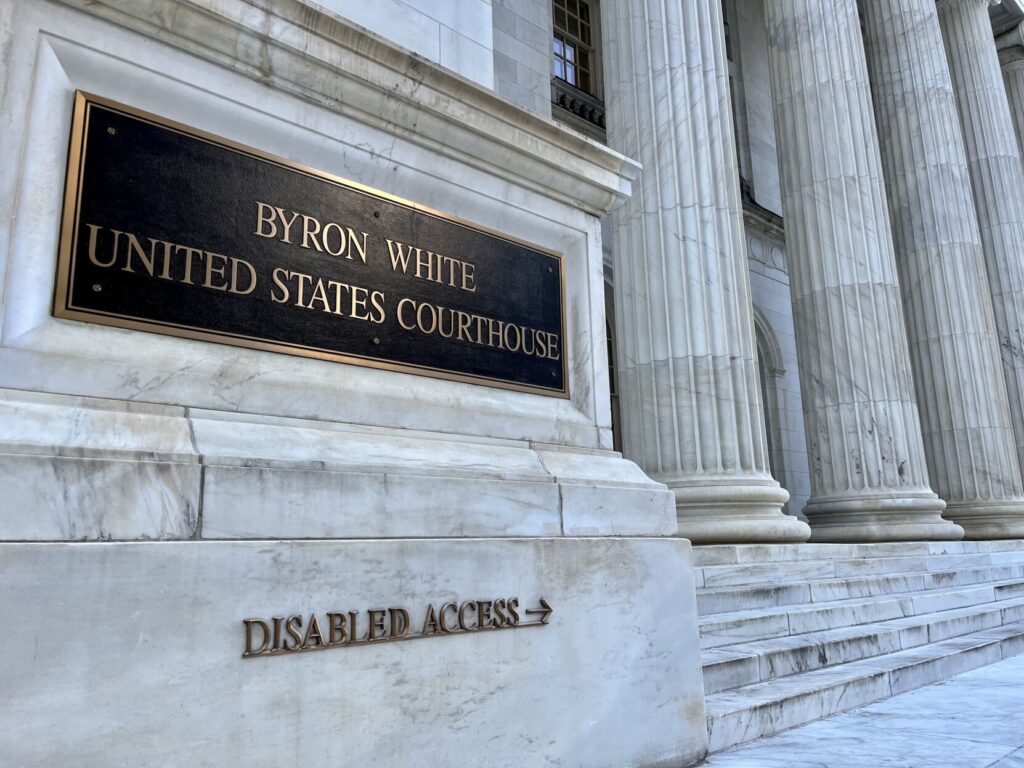
10th Circuit dismisses woman’s lawsuit following 10-year attempt to undo restraining order
Michael Karlik
michael.karlik@coloradopolitics.com
Updated 1 day ago
The Denver-based federal appeals court rejected a woman’s challenge on Friday to a restraining order imposed on her more than a decade ago, finding that she cannot credibly claim she will be prosecuted for violating the restraining order through her...
10th Circuit dismisses woman’s lawsuit following 10-year attempt to undo restraining order
Michael Karlik
michael.karlik@coloradopolitics.com
Updated 1 day ago
The Denver-based federal appeals court rejected a woman’s challenge on Friday to a restraining order imposed on her more than a decade ago, finding that she cannot credibly claim she will be prosecuted for violating the restraining order through her...
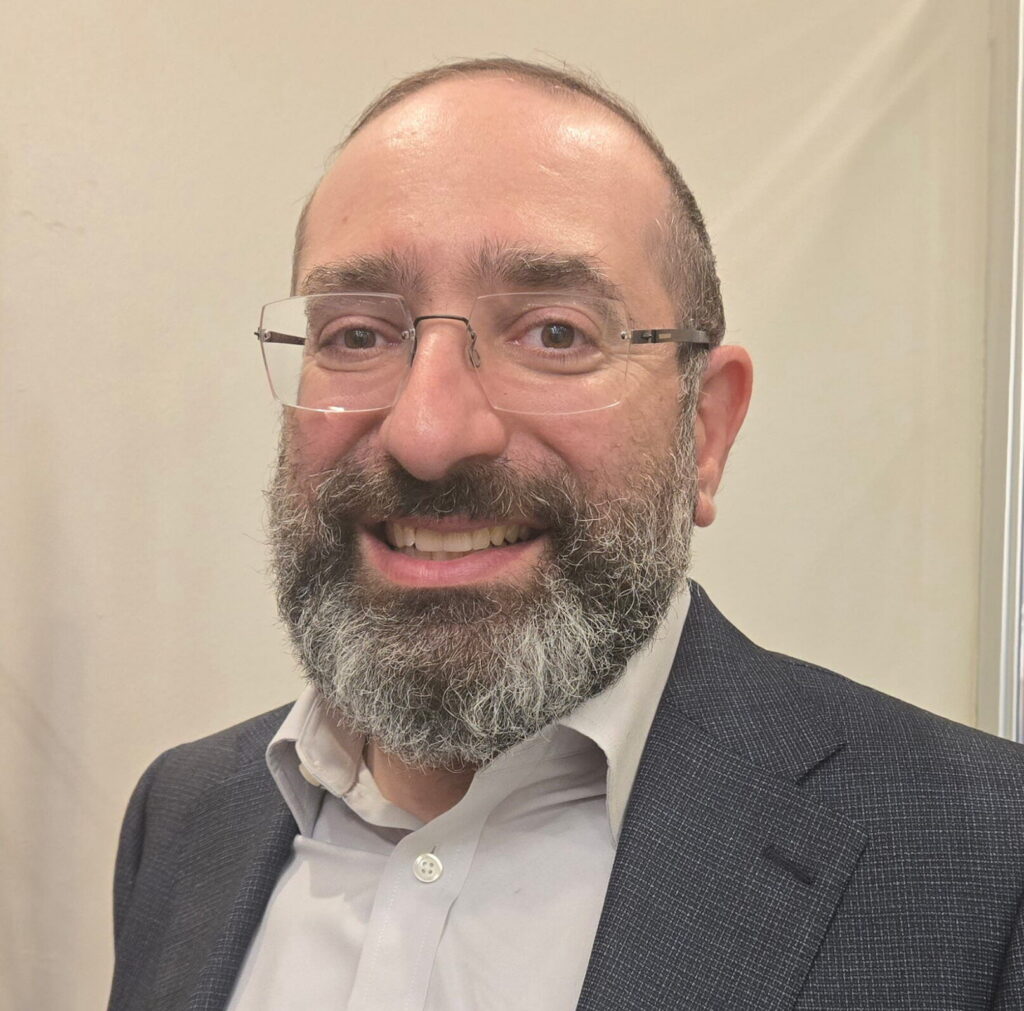
Surprise candidate Shimon Blau cleared to face off against Melat Kiros in November
Ernest Luning
ernest.luning@coloradopolitics.com
Updated 1 day ago
Unaffiliated congressional candidate Shimon Blau, a Denver doctor, has qualified by petition for the general election in Colorado’s 1st District, where Democrat Melat Kiros defeated 15-term U.S. Rep. Diana DeGette in last month’s primary, the Colorado Secretary of State’s Office...

Colorado produce not tied to nationwide cyclospora outbreak, agriculture officials say
Marissa Ventrelli
marissa.ventrelli@coloradopolitics.com
Updated 13 hours ago
There is no indication that the recent outbreak of cyclospora, a fecal parasite that has contaminated food and water across nearly every state, can be linked to produce grown in Colorado, according to the state’s Department of Agriculture. “Colorado growers...

UNC opens College of Osteopathic Medicine
Marissa Ventrelli
marissa.ventrelli@coloradopolitics.com
Updated 1 day ago
The University of Northern Colorado held a grand opening for its new College of Osteopathic Medicine on Friday, with Gov. Jared Polis in attendance to celebrate the culmination of a two-year, $127.5 million project. The project was funded through legislation...
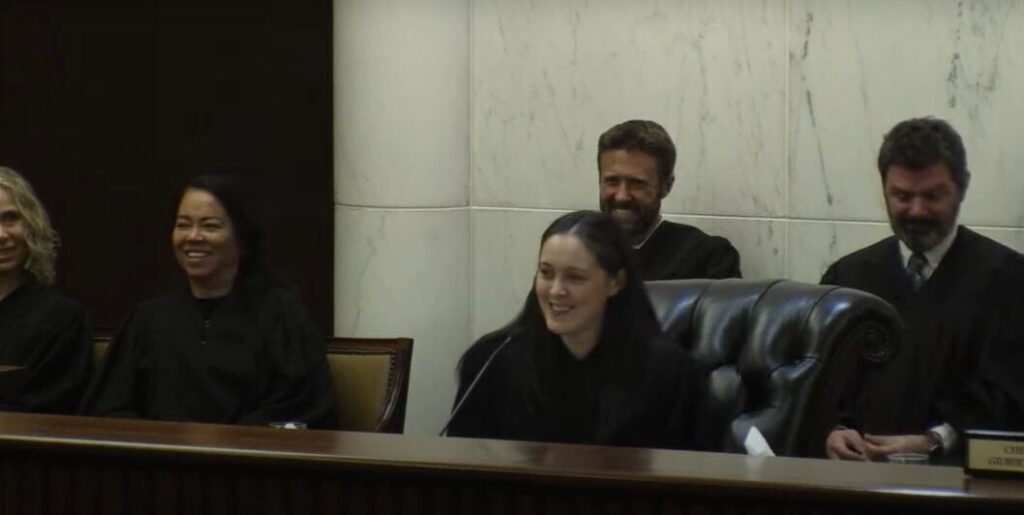
Colorado equal pay law does not require plaintiffs to allege gender-based retaliation, appeals court finds
Michael Karlik
michael.karlik@coloradopolitics.com
Updated 8 hours ago
The 2019 Colorado law aimed at rooting out pay discrimination on the basis of sex does not require a plaintiff to allege their employer retaliated against them for sex- or gender-related reasons, the state’s second-highest court decided on Thursday. Lawmakers...

Planning Commission rejects resident appeals to stop proposed data center
alex-edwards
alex.edwards@gazette.com
Updated 1 day ago
Editor’s note: This story has been updated to reflect comment from District 11 clarifying that it has not conducted a financial review of Project Taurus. The Colorado Springs Planning Commission rejected appeals Thursday night against a proposed artificial-intelligence data center...
PREV
PREVIOUS

English seeks to strengthen child visitation for grandparents | FOCUS ON THE SPRINGS
Rep. Regina English hasn’t seen two of her grandchildren in over six years. English, D-Colorado Springs, said these two of her 10 grandchildren live in Colorado, only a drive away, but a custody dispute between their parents has left English without any access for visitation. Grandparents can petition a court for visitation rights, but the […]

Denver Mayor Michael Hancock's mother passes away, city leaders show support
Denver Mayor Michael B. Hancock shared that his mother, Scharlyne Anita Hancock, passed away via Twitter on Saturday night. Funeral arrangements are still being planned, he said. Hancock asked people to donate to The Rose Andom Center, an organization that improves the lives of those suffering from domestic violence by connecting them with resources, in […]