

‘The history exists’: Colorado historians to research historic Black travel

Visitors to Colorado Springs always have been attracted to the unique landscape.
There’s no shortage of photos dating back to the turn of the century of tourists smiling in front of the city’s landmarks.
But there are some pictures that inspire more questions than answers – like the posed portrait of five African American men in suits and hats on burro-back at Balanced Rock, dated 1900. Or the picture of a grinning Black couple standing in front of a rock formation outside the city in 1929.
Colorado Springs artist’s vivid paintings of Black cowboys are in high demand
These photos give hints into the history of Black travel in Colorado during a time when segregation and racism threatened the safety of African Americans venturing across the state.
Despite the pictures, so many questions remain: Where did they stay? Were they welcomed? Who were they?
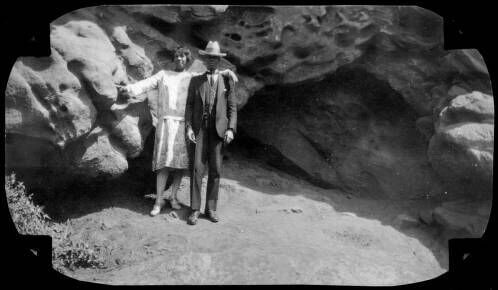
Researchers at Colorado’s State Historic Preservation Office are hoping to learn more about these spaces as part of an ongoing project focused on African American travel and recreational resources in Colorado during the Jim Crow era.
The team will use Black travel guides, which listed safe places for African Americans to visit across the U.S. during segregation, with the goal of nominating at least one Colorado location to the National Register of Historic Places.
As the project moves forward, the team is searching for important locations across the state – including in Colorado Springs.
History
African Americans have been part of Colorado Springs’ natural tourism industry for over a century. But, like other Western cities, the Front Range town was not immune from racism.
“Colorado Springs in particular had a different history than what you would find in other parts of the country,” said Matt Mayberry, director of the Colorado Springs Pioneers Museum. “What was experienced is perhaps different than what was written in the law.”
While Colorado Springs did not have legal segregation in the mid-20th century, the city still had to actively fight against racism. Colorado Springs went from being a town with an active KKK presence in the 1920s to having the third largest share of African American residents in the state by the 1970s.
Coronado Motel in Pueblo recognized for role in African American travel
“I think Colorado Springs opposing the KKK – being really the only major city in Colorado to fully vote out to KKK – is an example of how we were concerned about tourism as a motivation to be seen as welcoming and open to everybody,” Mayberry said.
It’s difficult to know for sure which, if any, formal lodging establishments were open to African Americans in the Springs during that time. A study completed by Colorado College grad student Samuel Goering in 1936 gives some insight into where Black residents were welcome in the city.
“The colored people as a rule are not admitted to the better class hotels and restaurants in the city, which are used almost exclusively by whites. There are occasional exceptions, as in the case of a National YWCA or other convention of an organization of inter-racial character,” the study reads.

“Restaurants were very hit and miss depending on the individual restaurant. We ended up having sit-ins just as you have the South trying to get better access to African Americans,” Mayberry said.
More commonly, travel guides listed “tourist homes” for lodging, which were listed in Black travel guides.
But there are some more formal institutions in Colorado Springs historians are interested in looking into.
YWCA
One place of interest for historians is local YWCAs, which were often a safe place for Black travelers to go and listed often in Black travel guides or Green Books.
YWCAs across the country started to desegregate earlier than other organizations, including the Denver chapter, which desegregated in 1946, said National Register historian Poppie Gullett.

While the Colorado Springs’ YWCA building is already listed on the National Register for its architectural and humanitarian history, Gullet hopes to highlight its role as a place safe for African Americans.
“The history exists. It’s not that nobody knows about this or nobody’s talking about it. It’s that nobody’s connecting it directly to this place,” she said.
“It is not mentioned in the same breath as why we should preserve the YWCA, why this is an important site, why this place matters.”
To add that piece of history to the listing, Gullet said researchers would have to file for an amendment on the original nomination, which was made in 1979.
“What we wanted to do is amend that administrative record and help people in the future who are looking at why the building matters, see this as part of that story,” she said. “So very much so that’s something we want to do.”

While the 1979 nomination neglects to mention the impact on Black Americans, it does highlight the building’s social history during the 1918 flu epidemic and both world wars.
“Over the years the YWCA building provided a cornerstone for community planning,” the nomination reads. “During the influenza epidemic of 1918-1919, the Red Cross used the structure as a hospital. Between World Wars I and II, the building continued to serve the ever-increasing needs of the YWCA.”
Why was there no mention of the institution’s role in helping Black Americans? Gullet said the wound of segregation was still fresh.
A Colorado Springs woman sees her quilting dream come true | Glimpses
“It was written in 1979. A lot of this, like the Jim Crow era, was very much not cold in the ground. This was still very recent history,” she said.
The building was constructed in 1913 after the local YWCA chapter raised money to build on a lot downtown. The five-and-a-half-story building is noted for its Mediterranean style, made of brick with a flat roof. In general, YWCAs would provide a place to get warmed up, occasionally as a place to stay, as well as social programs like youth sports and outdoor recreation programs.
“One of the things we are hoping to do is kind of get ahold of some of those old pamphlets if they exist,” Gullet said. “What we do know about it is that it’s listed in the Green Book, so it’s listed as a safe place to be.”
Looking forward
While History Colorado’s Green Book project is still in its preliminary phase, many community members have come forward with interest, Gullet said.
“We have had a lot of community members who are interested or excited about this,” she said. “So we’re getting a lot of interest and a lot of buzz. We’re excited about that.”
In addition to preserving buildings with historical significance, Gullet also hopes to eventually document sites that no longer exist, like the former Cotton Club in Colorado Springs, she said.
“One of our very early conversations that we might be having about this is if there are social memories left of this place, and we’d love to kind of talk with people in the community about what they remember about the Cotton Club,” she said.
“This is a really broad reaching project. Maybe this is something for the future and not necessarily for this grant. But we’re really interested also in some of these spaces that are gone, and preserving the memory,” she continued.
Gullet also hopes to find out more about those early African American travelers, like those pictured at Balanced Rock in Garden of the Gods.
“What really that means to us as historians, is that we know there are people of color, black travelers enjoying themselves and recreating very early in the historical record in the 1900s, which is exciting,” she said.
“That’s a curiosity sparker. Who are these people? We’re not really sure, but it tells us something.”
A resurgence of polo in the Pikes Peak Region: Broadmoor hosts inaugural Winter Polo Classic
Each Sunday this month, The Gazette will look at a Green Book location – some that have made it on the National Register of Historic Places and others vying for a nomination.


Fifty years later, women reflect on first coed class at the Air Force Academy, struggle for equality
Mary Shinn
mary-shinn@coloradopolitics.com
Updated 1 day ago
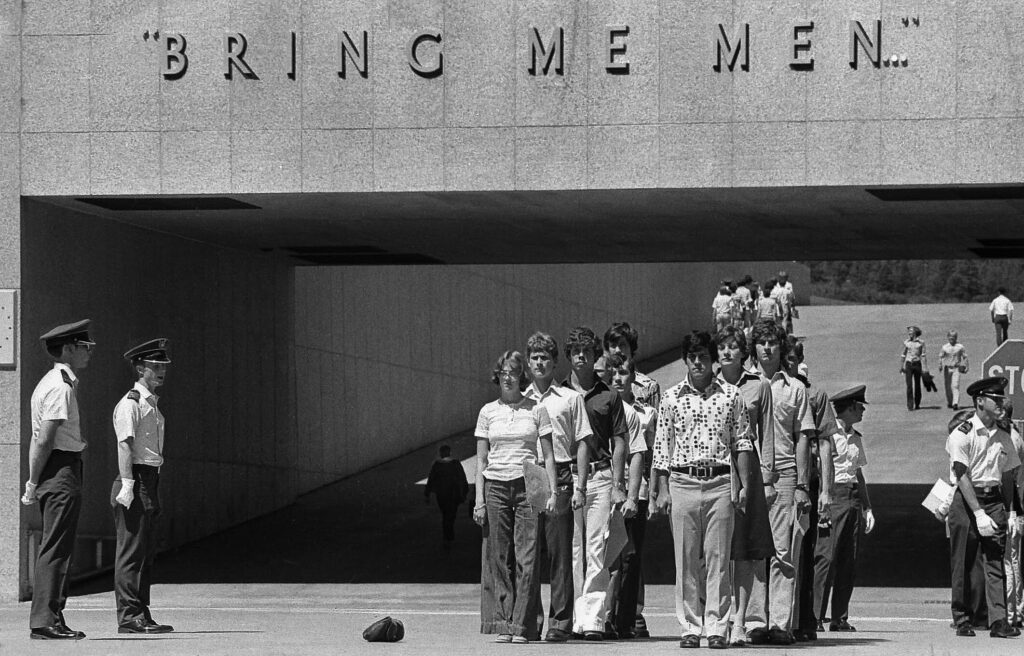
When the first female Air Force Academy cadets arrived 50 years ago this summer, they stood in front of an enormous sign on campus that read “Bring me men.” In the shadow of that sign, Kathleen Utley Kornahrens, one of...

Colorado Democrats, your time is coming | Jon Caldara
Jon Caldara
jon-caldara@coloradopolitics.com
Updated 1 day ago
Hey, Colorado Democrats! All the fun you’ve had watching Republican dysfunction in Colorado for the last 20 years was just a preview of what is about to happen to you. The Colorado Republican Party no longer exists as a competitive...

A new day? Colorado’s troubled guardianship office pursues ‘cultural reset’
Marianne Goodland
marianne.goodland@coloradopolitics.com
Updated 3 days ago
Colorado’s guardianship program, long criticized for mismanagement and high staff attrition, is undergoing a “cultural reset,” as its new director works to repair partnerships and prepare for a major expansion under recent legislation. Created by lawmakers in 2017, the Office...
As Lake Powell shrinks, marinas are having to adapt to dwindling water levels | OUT WEST ROUNDUP
The Associated Press
the-associated-press@coloradopolitics.com
Updated 4 days ago
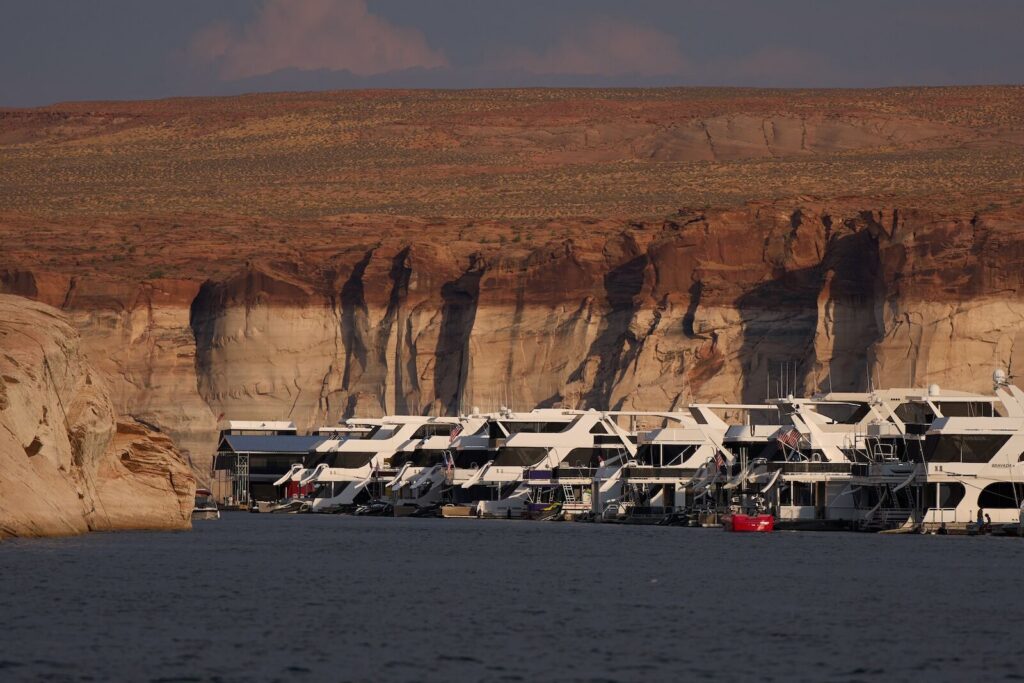
ARIZONA Reservoirs near record lows PAGE — The Colorado River’s Lake Powell, the second largest reservoir in the U.S., is shrinking. A record-dry winter and extreme heat — as well as decades of overuse, chronic drought and climate change —...
U.S. Senate OKs funding bill to avoid government shutdown
Wire Services
wire-services@coloradopolitics.com
Updated 1 day ago
Hemp provision became point of contention WASHINGTON • The U.S. Senate in an overnight vote Saturday approved a short-term measure to fund federal agencies into early December and avoid a government shutdown during the middle of campaign season. The late-summer...

Colorado Politics Calendar Aug. 10-16
Rachael Wright, Special to Colorado Politics
rachael.wright@coloradopolitics.com
Updated 3 days ago
CoPo’s weekly political calendar will help you find political and public-policy events throughout Colorado. It includes candidate and issue campaign events, public policy meetings, court hearings, state and local party conventions, assemblies, debates, rallies, parades, speaking engagements, traveling dignitary appearances,...

Wirth downplays Social Security disaster talk | A LOOK BACK
Rachael Wright, Special to Colorado Politics
rachael.wright@coloradopolitics.com
Updated 3 days ago
Forty-five years ago this week: “As time goes on,” said Democratic U.S. Rep. Tim Wirth, of the 2nd Congressional District, “we are finding that the safety net, which was proposed earlier this year, has some very large holes in it,”...
The relevance of Watergate more than a half-century later | SONDERMANN
By Eric Sondermann
by-eric-sondermann@coloradopolitics.com
Updated 4 days ago
It was the scandal for which all other scandals are now named. In June 1972, a small group of Cuban burglars with high-level connections broke into the headquarters of the Democratic National Committee. Those headquarters were located in the Watergate...

Democratic group aims Spanish-language TV ad at Gabe Evans in Colorado’s battleground 8th CD
Ernest Luning
ernest.luning@coloradopolitics.com
Updated 2 days ago
A national group tied to House Democratic leadership launched a six-figure Spanish-language TV ad in Colorado this week targeting Republican U.S. Rep. Gabe Evans and the GOP’s signature budget legislation. The 30-second spot is part of $15 million in new...
Colorado School of Mines lands major share in Trump’s $100M mining-education plan
Thelma Grimes
thelma.grimes@coloradopolitics.com
Updated 2 days ago
President Donald Trump on Friday named the Colorado School of Mines among roughly a dozen institutions that will share in a $100 million commitment “to train the next generation of American miners.” Paul Johnson, the university’s president, said he is...