

Colorado Parks and Wildlife Commission holds final public input session on wolf recovery plan
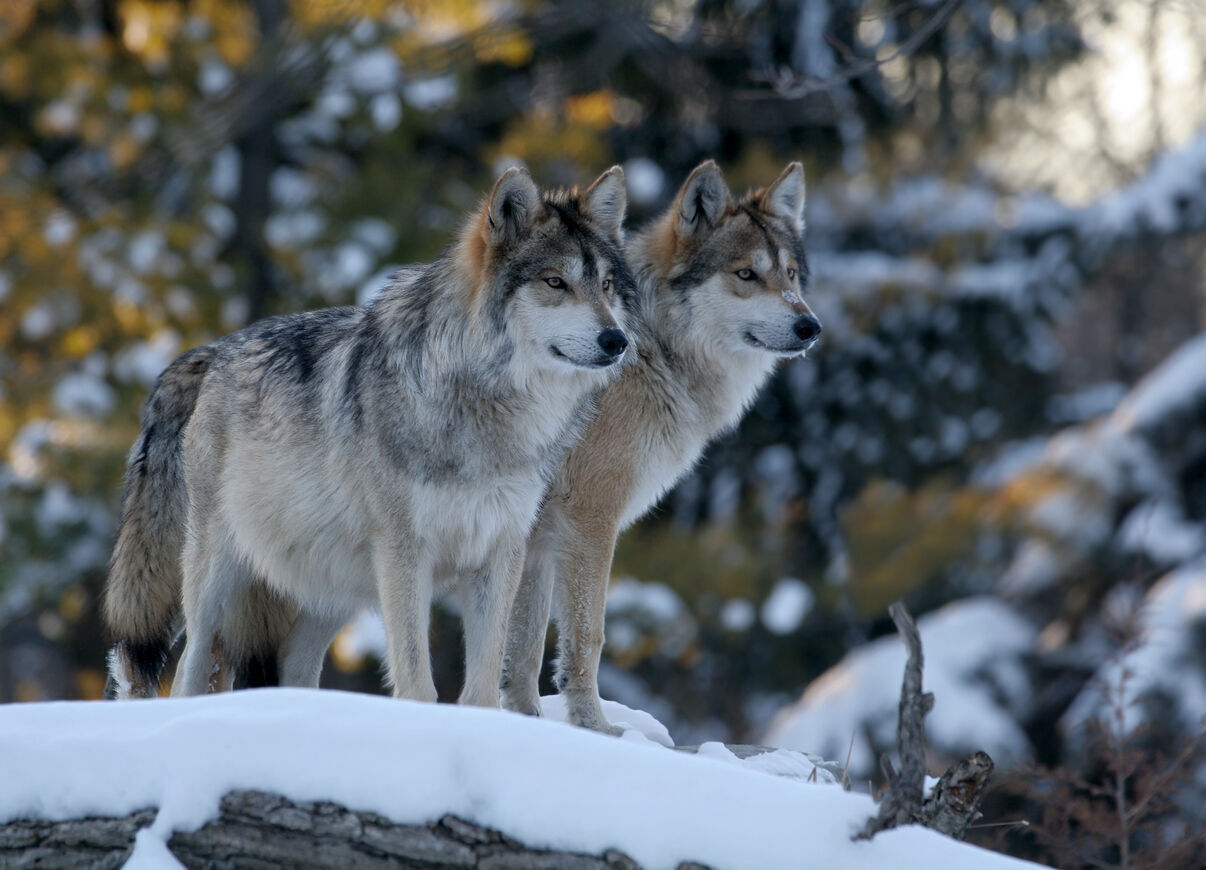
A stark divide between wolf reintroduction proponents and West Slope ranchers manifested again during the final public input session on the Gray Wolf Restoration and Management Plan being considered by the Colorado Parks and Wildlife Commission Wednesday.
The mention in the plan of possible future wolf hunting angered wolf proponents, who cite a provision in the law classifying wolves as a “non-game species,” which they believe precludes wolves from ever being hunted.
The law states that gray wolves are classified as non-game wildlife. However, the statute also says the commission must manage wolves.
Both citizen speakers and commission members had concerns about the hunting provisions in Phase Four of the plan – with proponents objecting to any mention of future hunting and commissioners not wishing to “tie the hands” of future commissions.
In the end, commissioners agreed to modify the language of the plan to leave long-term management decisions to future wildlife commissions and to the state General Assembly, which can amend the law based on conditions at the time. Unlike many citizen initiatives, Proposition 114 was not a change to the state constitution, it was enacted as a statute, meaning the legislature can amend it.
U.S. Forest Service criticized for not banning wolf hunting in Wyoming
CPW officials expect to transfer a total of 30 to 50 wolves over three-to-five years and is working toward a minimum population of 150 to 200 wolves.
“I think 150 animals is just too small,” said Adam Kreger, speaking on behalf of Friends of Animals. “The best available science shows that that might not even be enough to sustain a population in our state. Furthermore, the carrying capacity of the Rockies is far more than that – as high as 750 or more.”
“The effective population rule of conservation biology calls for at least 500 breeding pairs of a species to best avoid inbreeding and extinction,” said Emily Golden Beam, a wildlife biology graduate student at CU Boulder. “This is an essential consideration in Colorado where land inhabited by wolves is disconnected from the rest of the northern rocky mountain wolf population and thus must be self-sustaining.”
Some 3,800 written public comments have been received and more than 250 people spoke at live and online public input sessions, according to Julie Shapiro of the Keystone Policy Center. That’s the organization hired by CPW to facilitate the public input sessions. According to Travis Duncan, spokesperson for the Department of Natural Resources, about 150 people attended Wednesday’s meeting and 66 members of the public spoke.
Critics of the new law say urban Front Range voters determined the election while rural voters to the west will suffer the brunt of the negative impacts of wolf reintroduction. The law requires that wolves be released only west of the Continental Divide and at least 60 miles from Colorado borders as well as the Southern Ute sovereign tribal lands in southwestern Colorado.
Proposition 114 passed by 56,986 votes, or 1.8% in the 2020 election. The bulk of the votes came from Front Range counties including Denver, Douglas, El Paso, Jefferson, Arapahoe, Boulder, Adams, Larimer counties. These eight counties provided 1,260,782 of the 1,590,299 winning “yes” votes.
One controversial aspect of the plan is the use of lethal control. Stockgrowers say that wolves very quickly adapt to non-lethal control methods and even human presence with livestock herds, so lethal control options are essential to the future of their operations.
Colorado wolf importation hasn’t started yet, but one rancher feels he’s already at the epicenter
Janie Van Winkle, a fourth-generation livestock producer from Western Colorado, told the commission that some ranch families are on the brink of financial insolvency. The reintroduction of wolves without allowing livestock owners to prevent them from killing their animals may be “the straw that breaks the camel’s back,” Van Winkle said.
“I implore you to follow the SAG (Stakeholders Advisory Group) recommendations regarding lethal control,” said Van Winkle. “I need to know there’s a way to deal with problem wolves so that I can sleep at night. If there are no problems, it won’t matter, But I need to know. I have tools available that work. Our counterparts in the northern states tell us this is a critical tool in the toolbox. All the other conflict minimization feels good but works only for a short time.”
Walden rancher Don Gittleson, who has been at the epicenter of wolf predation by wolves that migrated here naturally, told the commission in a previous meeting of the many long, sleepless nights he and his son have spent in their pickup trucks in the pastures with their herd, only to have wolves attack when he was only 400 yards away from them.
“So, they were getting pretty brave the last time they came in the pasture when I was there. They attacked a cow and a calf. I had the lights on, and I was about 400 yards away from them. I started the truck back up, drove right at them with the horn honking because I was afraid they’d kill that calf before I got there. They were still there fighting with that cow when I got there. I ran two of the pups off. But as soon as I saw the male, I quit chasing them and I chased him the length of the field.”
Proponents believe that lethal control shouldn’t be allowed at all, and that non-lethal methods are effective.
“We have a 16-year demonstration study of the non-lethal tools and methods that have been used to protect 20,000 sheep across a pretty rugged terrain, much like most of Colorado, at least a good part of it,” said Suzanne Aha Stone, executive director of the International Wildlife Coexistence Network. “We’ve been doing this for 16 years now using only non-lethal methods and we’ve lost less than five sheep a year on average to wolves.”
“Opponents of Proposition 114 are practically salivating over this draft plan, and it’s not because they belatedly appreciate that wolves will restore a balance in nature,” said Michael Robinson, a senior conservation advocate at the Center for Biological Diversity in a press release. “Colorado Parks and Wildlife is hoodwinking the public by not revealing that endangered wolves will be gunned down on a regular basis, so ranchers won’t have to lift a finger to prevent conflicts. Coloradans voted for science-based approaches to wolf restoration, not shooting wolves from helicopters.”
The commission will vote on the final wolf plan at their meeting in Glenwood Springs on May 3 and 4.


House will vote to denounce socialism
Lauren Green
lauren-green@coloradopolitics.com
Updated 2 hours ago
The House of Representatives is set to vote next week when lawmakers return to condemn and denounce “socialism in all its forms,” specifically pointing to the growing Democratic Socialists of America organization. The House voted to condemn socialism last year,...
Healthcare freefall: UNC’s new medical school aims to tackle Colorado’s rural doctor shortage
Hap Fry, Special to The Gazette
hap-fry@gazette.com
Updated 2 days ago
Editor’s Note: Colorado’s healthcare system is entering a period of accelerating instability — a “tsunami,” as multiple leaders describe it — driven by collapsing hospital finances, shrinking Medicaid reimbursements, disappearing services and a political fight over who is responsible for...

Healthcare freefall: Economic ripple effects grow as Colorado hospitals face financial strain
Thelma Grimes
thelma.grimes@coloradopolitics.com
Updated 26 minutes ago
Colorado’s hospital systems aren’t just a network of clinics and emergency rooms — they are also one of the state’s largest economic engines. So some 10 hospitals identified at any given time as vulnerable to closure, the alarm extends far...
Gubernatorial candidates Phil Weiser, Greg Lopez spar, as Marx skips debate
Deborah Grigsby
deborah.smith@denvergazette.com
Updated 3 hours ago
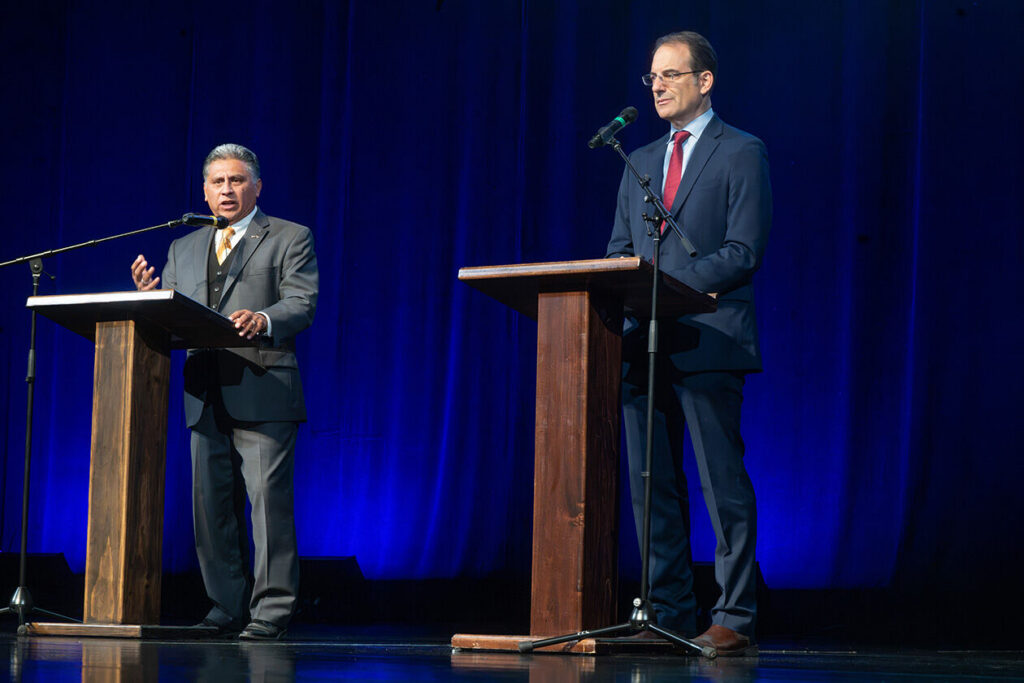
Two of the candidates for Colorado governor squared off in a televised debate on Thursday night, when Attorney General Phil Weiser, the Democratic nominee, and former U.S. Rep. Greg Lopez, an unaffiliated candidate, delved into issues of affordability, data center...

Troops, taxes, war dominate Colorado’s 5th CD debate between Jeff Crank, Jessica Killin
Deborah Grigsby
deborah.smith@denvergazette.com
Updated 3 hours ago
Republican U.S. Rep. Jeff Crank and Democratic challenger Jessica Killin on Thursday night clashed over the war in Iran, the federal budget and healthcare when they took the stage in Colorado Springs for a sold-out debate in the race to...

5th Congressional debate watchers hope for civility, truthfulness
Cleo Westin
cleo-westin@coloradopolitics.com
Updated 3 hours ago
A few hundred people watched Rep. Jeff Crank and veteran Jessica Killin square off in a debate for the 5th Congressional District at the Pikes Peak Center for the Performing Arts on Thursday evening. Many of them sported campaign insignia...

WATCH: Republican US Rep. Jeff Crank, Democratic challenger Jessica Killin debate in Colorado’s 5th CD
Ernest Luning
ernest.luning@coloradopolitics.com
Updated 17 hours ago
Republican U.S. Rep. Jeff Crank and Jessica Killin, his Democratic challenger, are scheduled to meet for a televised debate in the race to represent Colorado’s 5th Congressional District on Thursday night. The candidates are set to take the stage at...

Colorado gubernatorial candidates Phil Weiser, Greg Lopez to face off Thursday in televised debate
Ernest Luning
ernest.luning@coloradopolitics.com
Updated 2 hours ago
Two of the candidates for governor of Colorado are set to square off in a televised debate for the first time Thursday night, when Attorney General Phil Weiser, the Democratic nominee, and former U.S. Rep. Greg Lopez, an unaffiliated candidate,...
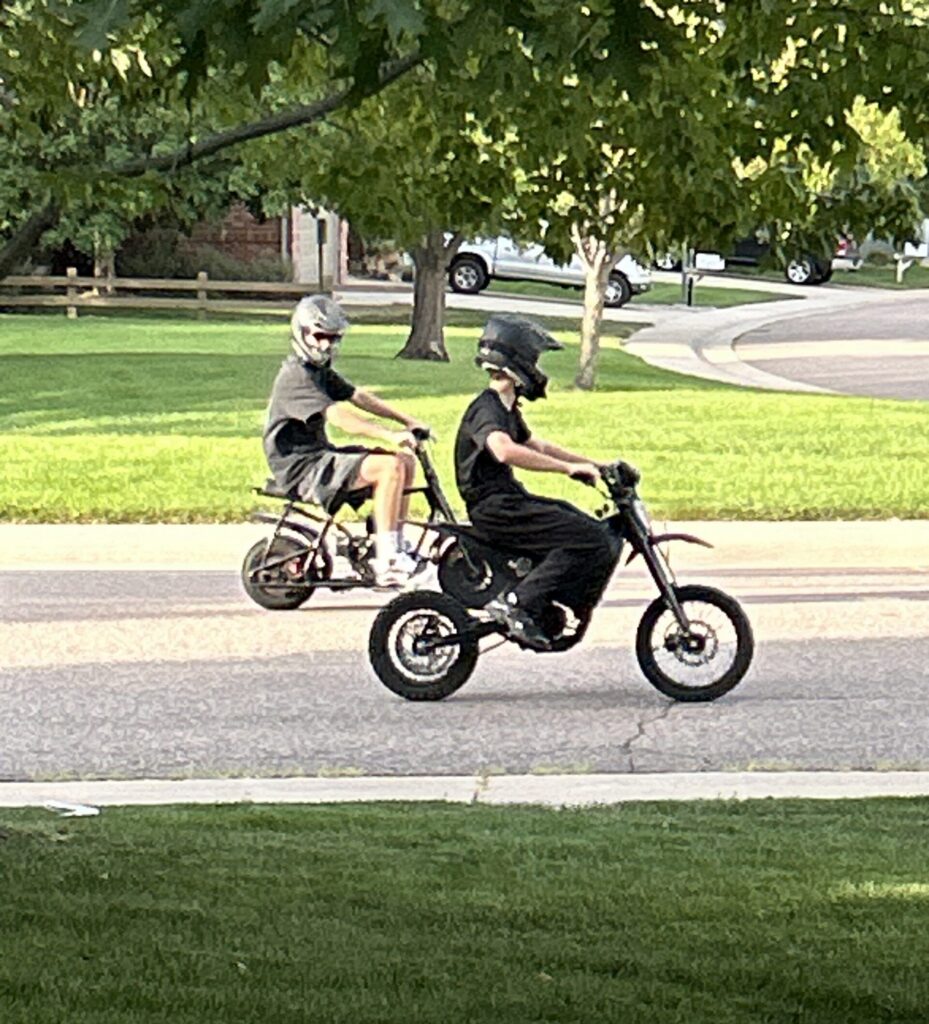
Colorado officials warn of e-bike safety amid increase in serious youth injuries
Matt Kyle
matt.kyle@denvergazette.com
Updated 13 hours ago
Serious injuries involving e-bikes, e-scooters and children have risen significantly in Colorado over the past year and a half. Traumatic injuries involving e-bikes have risen 184%, according to Alicia Melven, Colorado injury prevention and outreach specialist for Children’s Hospital Colorado’s...

Colorado State Fair youth golf tournament celebrates 11 years
Marianne Goodland
marianne.goodland@coloradopolitics.com
Updated 19 hours ago
Twenty-eight teams tee off Friday at Walking Stick Golf Course in Pueblo for a tournament supporting 4-H, Future Farmers of America and capital improvements at the Colorado State Fair. Now in its 11th year, the Partners of Youth in Ag...
PREV
PREVIOUS

New CU Boulder research warns excess body weight means shorter life span
Excess weight boosts mortality risk more than previously believed, while the mortality risk of being slightly underweight has likely been overestimated, according to new research from the University of Colorado Boulder. Obesity boosts the risk of death by anywhere from 22% to 91%, the research findings, which were published Feb. 9 in the Population Studies […]

Polis signs proposal adding dozens of drinking water projects funded by state
Gov. Jared Polis on Friday signed legislation to add roughly 60 drinking water projects across Colorado to the list of those receiving financial assistance from the state. It’s the first bill the governor has signed this year, and it a came at a time when the states that rely on the Colorado River, along with […]