

Divided appeals court finds Gilpin County juror not biased against defendant

In a divided ruling on Thursday, Colorado’s second-highest court determined a Gilpin County judge acted appropriately by keeping a woman on a criminal jury after her admission that she “would need to hear that reason why” the defendant did not take the witness stand.
A three-judge panel for the Court of Appeals acknowledged a quirk in Joseph Simon Boyer’s case, in which the trial judge had apparently confused two members of the jury pool and, as a result, neglected to ensure that Juror M would ultimately respect Boyer’s right to silence. But a majority of the panel concluded Juror M’s doubts about a defendant who declines to testify did not equate to bias against Boyer.
“Juror M never stated that she could not follow the law or the court’s instructions, but merely explained that she would have continuing doubts as to why Boyer would choose not to testify,” wrote Judge Janice B. Davidson for herself and Judge David H. Yun in the Feb. 23 opinion. “These are very different statements – one indicates an inability to be impartial, while the other is a reasonable desire to ‘hear both sides.'”
Judge Neeti V. Pawar disagreed. She believed Juror M’s service affected the fundamental fairness of Boyer’s trial, in that Juror M had suggested she would factor Boyer’s silence into the verdict.
“I conclude that the only reasonable reading of the record is that Juror M expressed an inability to follow the law on a defendant’s decision not to testify,” Pawar wrote.
Boyer stood trial in November 2019 for intentionally hitting a man with his car. A jury convicted him of felony menacing and assault, for which he received five years in community corrections. Juror M served on the jury.
During voir dire, which is the part of jury selection when the parties question members of the jury pool, Boyer’s attorney asked what people would think if Boyer exercised his constitutional right not to testify. Juror M responded that she would have difficulty setting it aside.
“I would have doubt as to why they didn’t get up if they were that adamant about not (committing the offense). Why would they not get up and say that in front of the jurors?” she explained.
The defense attorney asked if she would be able to follow an instruction to not hold Boyer’s silence against him.
“You can’t use it against him, but I would still question why,” she replied. “I would need to hear that reason why.”
Juror M further acknowledged there were “lots of good reasons” for not testifying and that she would “have to hear the rest” of the evidence. But, she said, “I would have a question” about the defendant’s choice not to testify.
Boyer attempted to remove five people, including Juror M, for cause, meaning they would not decide the case fairly and impartially. Boyer’s attorney claimed Juror M’s issue was that “she would need to hear additional evidence in order to justify the lack of hearing from the defendant.”
District Court Judge Todd L. Vriesman then attempted to rehabilitate the jurors with purported bias, a process that aims to get jurors to commit to deciding the case based on the evidence and the law. Vriesman explained a defendant’s silence cannot be used as evidence of guilt and, while it is natural to seek an explanation from an accused person, that is not the standard in a criminal case.
Vriesman then talked to four of the five challenged jurors individually. In an apparent mistake, he bypassed questioning Juror M and instead spoke to a juror who was not involved in the challenge. Vriesman dismissed two of the jurors, but kept Juror M.
On appeal, Boyer raised Juror M’s participation in his case. The government countered that Juror M had acknowledged what the law requires and did not say she would have a problem after Vriesman admonished the entire jury about a defendant’s silence.
The appellate panel indicated it must uphold Vriesman’s handling of Juror M as long as some facts could justify retaining her on the jury. The majority believed Juror M had never outright refused to follow the law, nor did she raise any concerns once Vriesman explained the constitutional right to silence.
“And while she comfortably voiced serious doubt about the rule that she could not consider the failure to testify, she acknowledged the rule,” wrote Davidson, a retired judge who sat on the panel at the chief justice’s assignment. “This is further evidence in support of the trial court’s determination that she would follow the law.”
Pawar countered that Juror M’s initial statements suggested she would hold Boyer’s choice not to testify against him, and Juror M’s own silence after Vriesman’s explanation of the law did not make her rehabilitated.
“Juror M had made clear that she would infer something negative about a defendant based on his decision not to testify, even in the face of a rule prohibiting her from doing so,” Pawar wrote.
The case is People v. Boyer.


Federal judge directs plaintiff to revise complaint alleging Denver officers’ constitutional violations
Michael Karlik
michael.karlik@coloradopolitics.com
Updated 11 hours ago
A federal judge directed a plaintiff to revise his allegations on Wednesday to more precisely state what two Denver officers and the city itself allegedly did to violate his constitutional rights by facilitating his prosecution for murder until prosecutors dropped...
Federal judge explores new sanctions against ex-Colorado judicial discipline director
Michael Karlik
michael.karlik@coloradopolitics.com
Updated 15 hours ago
A federal judge on Wednesday directed Colorado’s former judicial discipline director, for the third time this year, to explain why she should not sanction him for his latest conduct in his litigation against the state’s judiciary. Christopher S.P. Gregory, who served...
Colorado joins lawsuit challenging changes to Endangered Species Act
Marissa Ventrelli
marissa.ventrelli@coloradopolitics.com
Updated 14 hours ago
Colorado once more joined a coalition of states challenging the Trump administration — this time on proposed rules regarding the Endangered Species Act. The pair of lawsuits challenge new rules made under Interior Secretary Doug Burgum, who earlier said the...
10th Circuit orders second look at immunity for Kiowa County deputy over fatal vehicle crash
Michael Karlik
michael.karlik@coloradopolitics.com
Updated 13 hours ago
The Denver-based federal appeals court directed a trial judge on Tuesday to further analyze whether a Kiowa County deputy and the sheriff’s office may be sued for a fatal vehicle collision. The Colorado Governmental Immunity Act generally shields government entities and public...
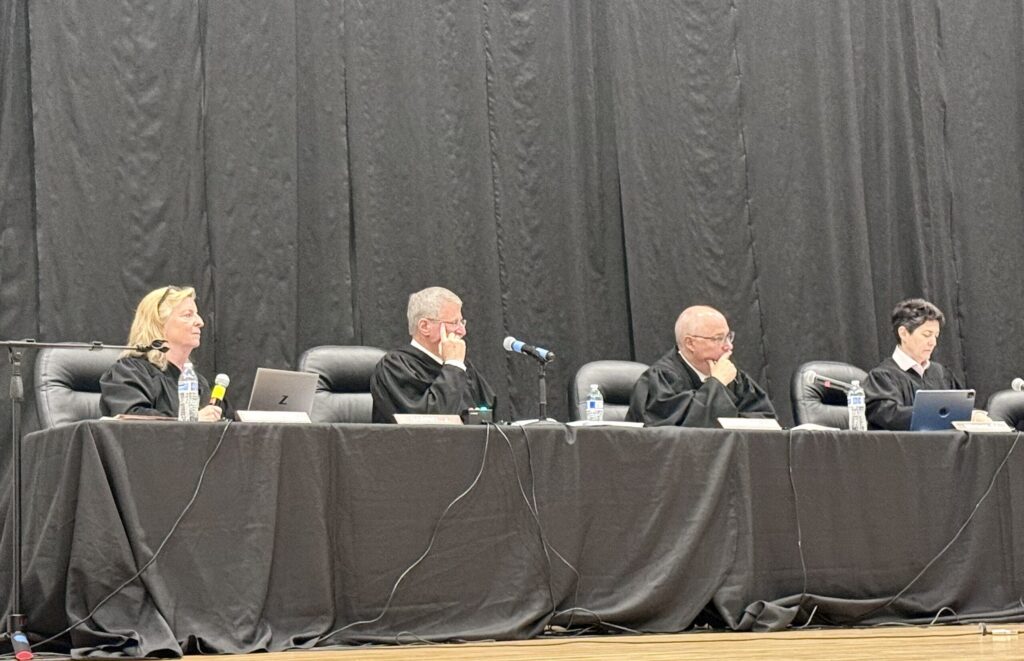
Colorado justices to hear appeal in Kendrick Castillo death lawsuit, ‘fugitive’ rule
Michael Karlik
michael.karlik@coloradopolitics.com
Updated 13 hours ago
The Colorado Supreme Court announced on Tuesday that it will decide whether it was proper to dismiss a lawsuit over the 2019 shooting death of Kendrick Castillo after the defendants paid the maximum amount of damages available to Castillo’s parents,...
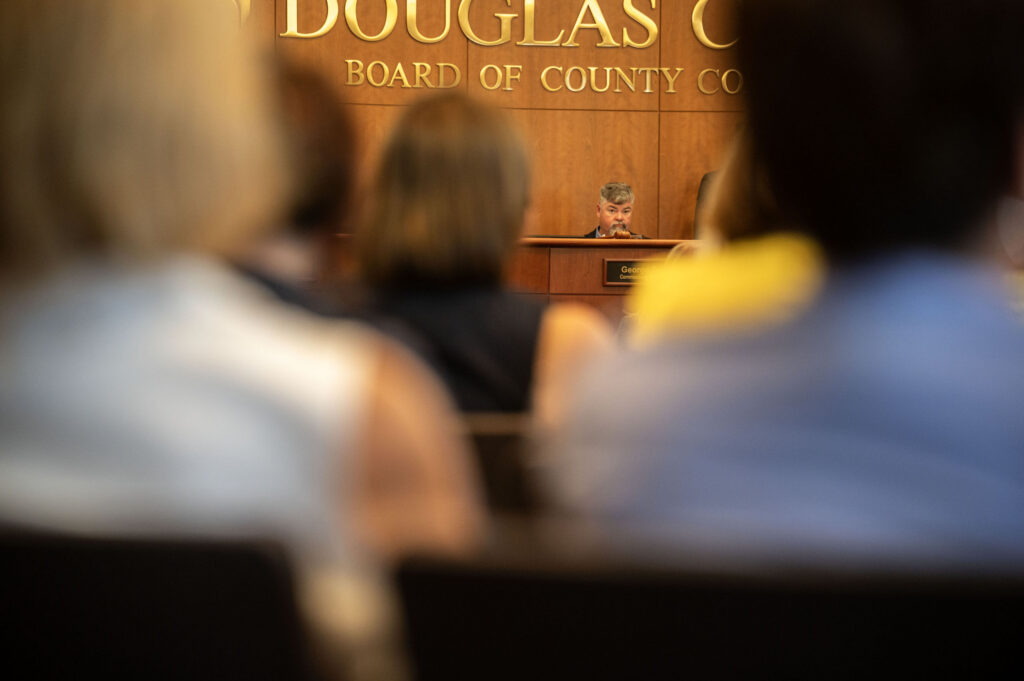
Federal judge dismisses Douglas County’s challenge to collective bargaining law
Nicholas Fogleman
nicholas.fogleman@denvergazette.com
Updated 22 hours ago
A federal judge dismissed claims brought by the Douglas County Board of Commissioners alleging that a state law granting county employees the right to organize and join labor unions violates free speech protections and conflicts with federal labor law. Douglas...
Arapahoe County judge’s frustration with defense lawyer not grounds for new trial
Michael Karlik
michael.karlik@coloradopolitics.com
Updated 2 days ago
Colorado’s second-highest court decided last week that an Arapahoe County judge’s repeated rebukes of a defense attorney and orders to “be quiet” did not rise to the level of bias or a violation of the defendant’s due process rights. A...
Divided appeals court upholds vehicle theft conviction despite unclear origin of car’s value
Michael Karlik
michael.karlik@coloradopolitics.com
Updated 1 day ago
Colorado’s second-highest court upheld a defendant’s conviction for aggravated motor vehicle theft last week, even though it was unclear how the Thornton Police Department estimated the value of the stolen car. Officer Marc Faivre encountered Ashley Shelee Gibbens-Martinez in a...
Disgraced ex-CBI analyst Missy Woods sentenced to prison in DNA scandal
Jenny Deam
jenny.deam@gazette.com
Updated 2 days ago
A Jefferson County district court judge on Tuesday sentenced a disgraced former Colorado Bureau of Investigation DNA analyst to a decade in prison for altering and deleting data in scores of criminal cases over several years. Jefferson County District Judge...
Parenting from prison: Inmates hope to be present in their children’s lives, while physically absent
Marianne Goodland
marianne.goodland@coloradopolitics.com
Updated 2 days ago
The room was decorated with balloons, the tables sparking bright with colors as the smell of pizza and cake wafted through the air. As did music. This was, after all, a father-daughter dance. Except this was not a typical father-daughter...
PREV
PREVIOUS
Colorado Democratic lawmakers roll out four bills they say will rein in gun violence
One day after a dozen Colorado high schools went on lockdown because of fake threats that included audible sounds of gunfire, Democrats at the state Capitol announced the introduction of a package of bills they say would address gun violence. In a noon press conference that was halted midway by a fire alarm, Democratic lawmakers […]

Colorado legislature OKs allowing psychologists to prescribe medication
A bill to certify psychologists to prescribe and administer psychotropic medications passed the Colorado legislature Thursday, now only needing the governor’s approval to go into law. Currently, if a psychologist providing therapy or counseling decides their patient needs medication such as antidepressants, they must refer the patient to a psychiatrist or medical doctor to get […]