

What does public defender office do with all that cash? | BRAUCHLER
Colorado’s Office of the State Public Defender (OSPD) is seeking to expand one of the fastest growing budgets in all of state government by an additional $17.7 million in taxpayer funds – and legislators would be wise to scrutinize the request and say “no.” OSPD’s budget has exploded over the past decade, but the funds have not been spent in the courtrooms on the hard-chargers who toil daily in the justice system trenches fighting for their clients’ constitutional rights. Instead, an analysis of their budgets reveals monies have gone to – stop me if this sounds familiar to teachers – the administration.
OSPD’s budget appears to be fact-proof and common-sense proof. On the heels of receiving a more than 9% increase in their budget last year, the state’s public defender, Megan Ring, is now asking for a budget in excess of $152 million. Its 2013-14 budget was $74.7 million – less than half of what Ring seeks today.
What possible justification can there be for this ballooning state agency?
Perspective matters. OSPD’s budget has grown by 104% over the past 10 years. That outpaces the growth in: Colorado’s population (12%), sex offenses (5%), robberies (34%), domestic violence (35%), burglaries (-15%), DUIs (-49%) and nearly every other crime category (except motor vehicle theft – we are alone at the top of that medal podium). It does not look like the budget explosion can be blamed on crime.
More comparative perspective is even better. The District Attorney’s Office for the 18th Judicial District – my old office and the largest in the state (1.1 million Coloradans) – filed 4,258 felony cases last year. In 2013, that number was 3,418. That is a 25% increase over 10 years, but the number has been on a downward trajectory since 2017. The rest of the state’s 21 judicial districts are relatively comparable with some variation. It does not appear to be a surge in the number of felony cases filed by prosecutors. Remember that public defenders appear on about 55 percent-ish of felony cases; DA’s appear on 100%.
Perhaps the overall growth in state criminal justice agencies is a possible justification? Nope. OSPD’s budgetary growth far outpaces that of other criminal justice departments, including the Colorado Department of Corrections (CDOC), which has seen its prison population decrease from roughly 17,000 inmates a decade ago to 15,000 last year. You may be wondering if a decreasing prison population in a state with recently increasing crime are related. That is a question for Gov. Jared Polis.
So, where is all that money going? First, OSPD’s staff has multiplied like rabbits. In 2013, they were budgeted for 656.4 FTEs (full time employees). This year, they would like 1,098, a 67% increase in FTEs. That is a mere 130 FTEs from the total staff of the entire Colorado State Patrol (CSP) which has seen its numbers grow by less than 9% over the same period. The public defender’s office growing 750% faster than CSP. Huh? For the 18th JD DA’s office, the 241 FTE staff of 2013 has mushroomed to… 244 FTEs this year.
There’s another explanation worthy of scrutiny by the Joint Budget Committee (JBC), if only they would inquire. The reason it must come from the JBC is because the Public Defender’s Office claims the same exemption from the Colorado Open Records Act that its parent state agency – our judicial branch – claims. So, you and I have no way to compel OSPD to produce year-to-year changes in salary information for its staff, including the very lucky and highly paid hand-picked chief deputies. There are public websites that have culled information about such salaries, but they are limited and provide only information through 2019. To be clear, I did not research the hundreds of dedicated worker-bee public defenders who perform the day-to-day heavy-lifting of representing indigent clients across the state. Their salaries have grown anemically when compared to those of the corner-office. I could not find salary information since 2019. Here is what those publicly available sites reveal about the only three positions within the administration I found: the assistant state public defender and chief deputy positions.
In one year, from 2018-2019, the assistant PD was given a $16,000 raise. One chief deputy received a $19,000 raise from 2018 to 2019, going from $167,000 to $186,000. Neither of them holds a candle to one chief deputy, who received $39,000 in raises in only two years between 2017 and 2019. Each of them is paid tens of thousands more dollars than 14 of Colorado’s 22 elected district attorneys and about 250% of what the average pay for a regular ol’ deputy state public defender (the courtroom gladiators) makes.
OSPD does not need more taxpayer money. It needs to answer for what is has done with hundreds of millions of dollars over the past decade. But those answers will only come if the JBC asks the questions. Will they?
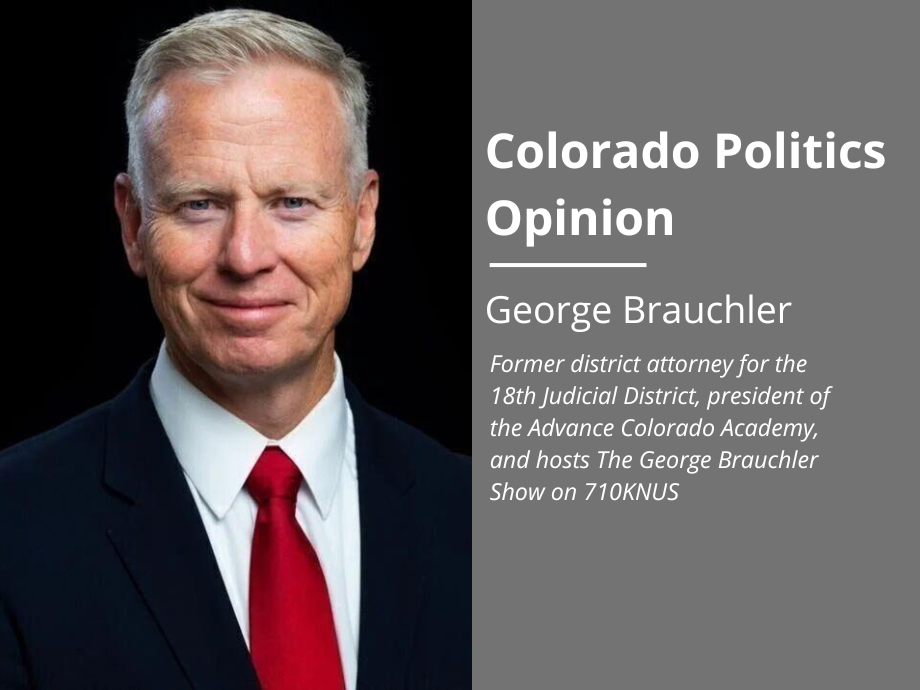
George Brauchler is the former district attorney for the 18th Judicial District. He also is an Owens Early Criminal Justice Fellow at the Common Sense Institute and president of the Advance Colorado Academy, which identifies, trains and connects conservative leaders in Colorado. He hosts The George Brauchler Show on 710KNUS Monday through Friday from 6 a.m. to 10 a.m. Follow him on Twitter: @GeorgeBrauchler.

Were the primaries a preview for consequential general election? | Paula Noonan
Paula Noonan
paula-noonan@coloradopolitics.com
Updated 9 hours ago
Colorado’s political future will go the way of this election. Historically, the state has not had both chambers controlled by a supermajority. This election may change that. The primaries suggest how the general election may play out. Democrats had solid...
Disagreement doesn’t have to mean disrespect | GUEST COLUMN
Colorado Politics
colorado-politics@coloradopolitics.com
Updated 9 hours ago
By Vincent Atchity These days, it doesn’t take long to feel overwhelmed by politics. Turn on the news, scroll through social media or read the comments on almost any political post and you’ll find anger, outrage and personal attacks. For...

Keeping Colorado’s kids’ trust online | PODIUM
Colorado Politics
colorado-politics@coloradopolitics.com
Updated 1 day ago
By Stuart Jenkins Almost every day, the kids and teens we serve across Colorado are introduced to new generative artificial intelligence and other emerging technology, including conversational AI systems designed to simulate human conversation. These tools are no longer a...

Marx’s ‘through line’ predates Trump, connects to Maes | FEEDBACK
Colorado Politics
colorado-politics@coloradopolitics.com
Updated 1 day ago
Eric Sondermann is of course correct Victor Marx is an unserious, unelectable, embarrassing Republican nominee for governor of Colorado. But I respectfully submit that the “through line,” as Mr. Sondermann describes it, is not from Trump to Marx, despite their...

Cedric Pride’s blueprint for opportunity through the trades | The OpEdge Podcast
Tony Olivero
tony.olivero@gazette.com
Updated 2 days ago
Cedric Pride, CEO of the nonprofit Pride Initiative in Denver, joins The OpEdge with a blueprint for workforce development, skilled trades, and economic opportunity. Pride tells host and investigative columnist Jimmy Sengenberger why he believes the trades offer a path...
Colorado’s No. 1 education ranking should raise our ambition | GUEST COLUMN
Colorado Politics
colorado-politics@coloradopolitics.com
Updated 2 days ago
By Scott Laband Colorado has earned the right to celebrate its new No. 1 ranking in education from U.S. News & World Report. Gov. Jared Polis called it “one of the proudest moments” of his time in office and shared the...

Colorado’s No. 1 education ranking reflects the power of school choice | GUEST COLUMN
Colorado Politics
colorado-politics@coloradopolitics.com
Updated 2 days ago
By Peter Mason Colorado is now the No. 1 state in the nation for education, according to the 2026 U.S. News & World Report Best States rankings. That is a distinction worth celebrating. It is also a distinction worth understanding....

Courageous Colorado bucks Trump’s federal stupidity | Miller Hudson
Miller Hudson
miller-hudson@coloradopolitics.com
Updated 3 days ago
There are several theories regarding the rhythm of American politics. The most frequently cited is the pendulum hypothesis — positing that episodes of liberal dominance are then interrupted by spans of conservative control. Since Ronald Reagan’s presidential election in 1980,...
A historic moment during another major drought | Rachel Gabel
Rachel Gabel
rachel-gabel@coloradopolitics.com
Updated 5 days ago
Gustav Sumnick emigrated from Germany, traveled to Oklahoma and decided rather than be a Sooner, he wanted to be a farmer. He moved north to Nebraska and married an Irish immigrant farmer’s daughter. They farmed near Fremont, Nebraska, where the...

Colorado can’t forget the lessons of COVID | Jon Caldara
Jon Caldara
jon-caldara@coloradopolitics.com
Updated 3 days ago
We are finally getting a clearer picture of what happened during COVID. Not because the people who locked us up, masked our faces and forced unproven chemicals into our bodies have suddenly become transparent, but because Anthony Fauci’s COVID-era diary...
PREV
PREVIOUS

Killed bill exposed Dems' disingenuousness on TABOR | OPINION
Ben Murrey Citing record inflation, Colorado Democrats passed legislation last year that sent out TABOR refunds early. Last week Democrats voted along party lines to kill a bill that would have had the same effect. Their about-face opposition to the bill gives new life to previous allegations that Democrats sent out last year’s refunds early, […]

What’s next for the El Paso County GOP? | OPINION
Kristi Burton Brown El Paso County is a vital Republican stronghold in Colorado. It’s essential that Republicans work together if we want high voter turnout, community connections for our candidates, and effective messaging. I’ve been in state party leadership for the last four years, and El Paso County Republicans have been in the news for […]