

Polis, legislators playing with energy, restaurants | SENGENBERGER

On Monday, Jared Polis finally acknowledged how difficult it is for Coloradans to afford our high energy bills. The governor declared it’s “all-hands-on-deck,” calling on state agencies “to work collaboratively with the state’s utilities and others to develop responses that can help reduce the energy cost burden.”
The Democrat listed a number of purported solutions – except a single one that would substantively help. As Colorado Politics reported, Polis’s list includes several short-term asks of the Public Utilities Commission that mostly center on hiding costs through financial-aid programs, particularly tapping into federal funds and expanding bill pay assistance programs to help low-income consumers afford short-term energy bills.
Polis is also pressing the Colorado Energy Office to expedite getting federally-funded home energy rebates and other programs off the ground to take some of the edge off. Beyond that, he’s pushing longer-term steps such as changing regulatory approaches and rate structures, implementing Colorado’s building performance standards and looking into new building codes.
Let’s be real: These actions won’t help most Coloradans afford their energy bills. In fact, they will push costs even higher. Implementing new building energy codes and performance standards, for example, isn’t cheap. They may yield some long-term benefits, but getting there is a significant and expensive undertaking.
It’s one thing to propose ways to conceal costs for some while appearing to act decisively. It’s another to do what works. Polis is simply taking advantage of an energy crunch to promote his Green Little Deal – while dressing it up as “saving people money.”
When the problem comes down to supply and demand – Colorado’s natural gas supplies are rather low, while demand has been higher amid the cold spell – the obvious solution is to boost supply. Where is Polis’s call for energy producers to increase production? How about his supply-side policies to incentivize more production?
Here’s Polis’s real problem: if he did what must be done, it would undercut his entire first term of office.
In 2019, after voters resoundingly rejected the Polis-funded, anti-fracking Proposition 120, the governor rammed SB19-181 through the legislature. That law established a considerably more restrictive regulatory regime for an already hyper-regulated industry – and SB181 was just the beginning.
Let’s be clear: Oil and gas companies make investment decisions projecting five to 10 years. If the regulatory and political environment disfavors the massive, long-term investment needed to boost production, it won’t happen. We are eating the fruits of that poisonous tree in real-time.
This is why Democrats are trying to hide their own culpability in sparking energy cost hikes – something they’ve attempted for a while. Deep down, they must know the economics just don’t work. Yet who are they to let economic reality get in the way of an agenda?
On Jan. 25, I explored the tremendous risks of the “Fair Workweek Employment Standards Act.” The legislation – authored by Democratic state Rep. Emily Sirota – would mandate “predictability pay” in the service sector. Though well-intentioned, this bill will be a gut punch to every restaurant in Colorado – many of which are still struggling to come back from the brink of COVID-19 shutdowns.
According to Sonia Riggs, CEO of the Colorado Restaurant Association, 69% of restaurants are independently owned and operated. Colorado’s restaurants are facing on average $180,000 of pandemic-related debt. With costs so high, their profit margins are now just 3-5 cents for every dollar they earn before taxes.
“I’ve spoken to a number of restauranteurs,” Riggs said on my 710KNUS radio show Saturday. “Their revenue might be up but their profit margins are down because you can’t pass all of that onto the consumer. There’s only so much somebody will pay for a hamburger or a burrito.”
Riggs pointed out the legislature provided sales tax relief to restaurants last year “in recognition of the fact that they were suffering,” yet HB1118 shockingly counteracts that. “There’s only one other state in the country where this has been implemented, and that’s Oregon,” Riggs noted. “And theirs is far less restrictive than the version we’re seeing here.”
These days, it’s harder for families to afford skiing, afford taking a vacation or afford going to the movies. For many families, this bill would make eating out cost-prohibitive while “biting employees in ways they might not expect.”
If it feels like Colorado’s restaurant industry wasn’t even consulted on this bill it’s because they weren’t. “A bill of this magnitude and size would normally see a one-year stakeholder process with all interest parties, where you can go through section-by-section,” Riggs explained. “That never happened.”
The restaurant industry first saw the bill on Jan. 3 and was given 24 hours’ notice to give initial feedback to its sponsors. Who did get advanced notice? “We heard directly from the proponents that they have been working with union groups to put this thing together for two to three years,” Riggs said.
Just as Polis and his legislative allies have repeatedly disregarded energy industry concerns, they’re doing the same with restaurants now. From energy to the service industry, how hard is it to consider the potential harm of your policies before they start doing damage – and to be honest about the sordid economic reality?
Jimmy Sengenberger is an investigative journalist, public speaker, and host of “The Jimmy Sengenberger Show” Saturdays from 6 a.m. to 9 a.m. on News/Talk 710 KNUS. Reach Jimmy online at JimmySengenberger.com or on Twitter @SengCenter.


The primary political reform and precondition for all others | SONDERMANN
Eric Sondermann
eric-sondermann@coloradopolitics.com
Updated 3 days ago
In its current state, the American political system has no end of ailments. Far too many factors accelerate polarization and work against moderation and narrowing the differences. Media, and the way so many citizens limit themselves to agreeable, reinforcing sources,...
Pueblo mayor, council concoct Trumpian Texas Two-Step | Dennis Maes
Dennis Maes
dennis-maes@coloradopolitics.com
Updated 2 days ago
Several weeks ago, an article was published positing Pueblo Mayor Heather Graham is a disciple of the calamitous Donald Trump school of governance — specifically as it related to questionable ethical practices and the misuse of public funds. Recently, Graham...

Colorado can’t afford to turn its back on proven public safety technology | GUEST COLUMN
Colorado Politics
colorado-politics@coloradopolitics.com
Updated 2 days ago
By Samuel G. Michael I recently saw a report that said Colorado is leading the way in artificial intelligence adoption for businesses. Across our state, more business owners and employees than ever before use AI for their everyday functions —...

As education conflicts abound across Colorado, who puts the kids first? | Paula Noonan
Paula Noonan
paula-noonan@coloradopolitics.com
Updated 3 days ago
Elected school boards and the Colorado Department of Education (CDE) have hit the headlines with fired superintendents, superintendent resignations, failures of oversight, and misdirected dollars. Cherry Creek School District’s superintendent was fired. Jefferson County Schools’ superintendent found a less stressful...

Clock is ticking on Colorado’s new AI rules | PODIUM
Colorado Politics
colorado-politics@coloradopolitics.com
Updated 3 days ago
By Aashis Luitel On Jan. 1, organizations using covered automated systems must begin complying with Senate Bill 26-189, Colorado’s new Automated Decision-Making Technology Act. They can identify those systems and start building the processes the statute clearly requires. What they...
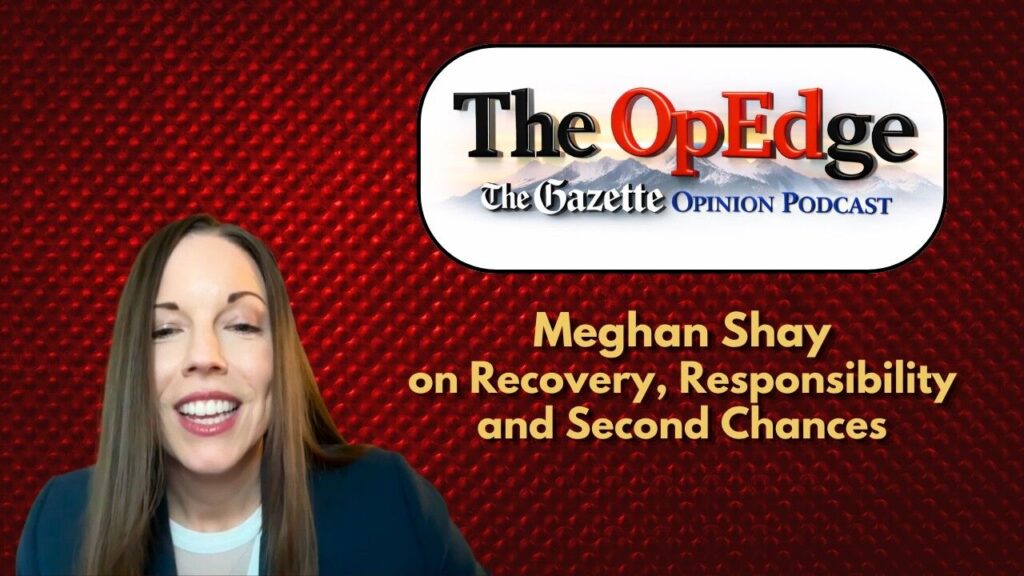
Meghan Shay on recovery, responsibility and second chances | The OpEdge Podcast
Tony Olivero
tony.olivero@gazette.com
Updated 4 days ago
Step Denver and Step Springs CEO Meghan Shay joins The OpEdge to explore addiction recovery, homelessness, and the role of accountability in lasting change. Shay tells host and investigative columnist Jimmy Sengenberger why she believes recovery is built on personal...
The outrages mount | Hal Bidlack
Hal Bidlack
hal-bidlack@coloradopolitics.com
Updated 4 days ago
My kindly and forgiving editors understand that, from time to time, I can’t help myself from leaping atop my rickety soapbox to vent. And, like many other political commentators have already done, I could easily fill this entire missive with...

Rural Colorado deserves a tax holiday | GUEST COLUMN
Eric Mulder
jstooksberry@gmail.com
Updated 5 days ago
Spend enough time in Colorado’s Eastern Plains, the San Luis Valley, or the Western Slope, and you’ll see boarded-up storefronts, schools consolidating classrooms, and small rural communities stretching every dollar to keep basic services afloat. Once the backbone of Colorado’s...
Weiser’s leadership crucial for rural win-win | Rachel Gabel
Rachel Gabel
rachel-gabel@coloradopolitics.com
Updated 1 week ago
Attorney General Phil Weiser is going to win the gubernatorial election. That said, Colorado agriculture and rural communities have a 30-year track record of finding the win-win be it for species or industries or habitat. Former Governor Roy Romer possessed...

A Colorado history lesson for Victor Marx | Dick Wadhams
Dick Wadhams
dick-wadhams@coloradopolitics.com
Updated 1 week ago
Victor Marx, who narrowly won the Republican nomination for governor by one half 1% after boasting of a massive 44-point lead, is just as misguided on Colorado political history. During the primary, Marx made a clumsy attempt to denigrate his...
PREV
PREVIOUS

Where is legislature’s high-potency pot report? | PODIUM
Luke Niforatos Two years ago, crowds of parents traveled from across the state to share heartbreaking stories of how high-potency marijuana had inflicted loss and hardship on their children. In direct response, the General Assembly passed HB1317, which funded a council to study the risks of these extreme products. The council was also tasked with […]

Gov. Polis keeps calling COVID a crisis | Colorado Springs Gazette
Mayday. We have a crisis, right here in Colorado. It is not the matter of young adults and children dying from fentanyl poisoning. It is not Colorado’s soaring murder rate or the flood of illegal immigrants overwhelming social services. The “disaster emergency,” as Gov. Jared Polis declares it, is not the ever-growing dilemma of tents, […]