

Denver mayoral candidate Mike Johnston pledges to end homelessness in first term
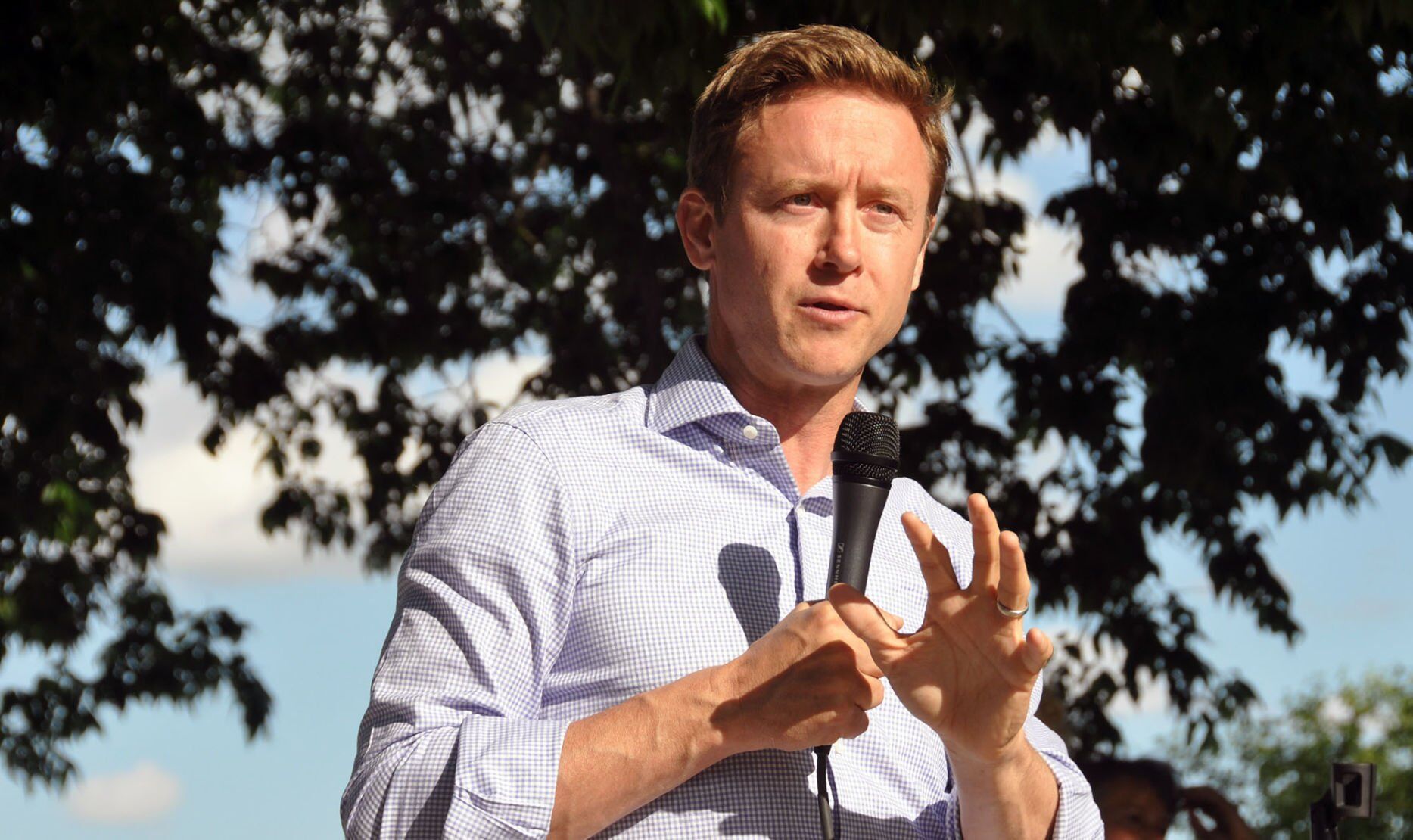
In an ambitious promise, Denver mayoral candidate Mike Johnston pledged to end homelessness by the end of his first term.
Accomplishing that goal, he said, is contingent on a coordinated attack on overlapping challenges that are fueling homelessness.
Homelessness has spiraled out of control in Colorado in the last several years. Today, almost 7,000 people are homeless in metro Denver, and the debate over what caused that explosion and how to address it rages on. What’s clear is that local governments, notably Denver, have poured significant resources into the crisis, which shows no signs of abating.
Denver mayor wants to close emergency shelters for immigrants – but with no clear timeline
“Denver needs a mayor who will make solving homelessness a top priority and align every department of city government to ensure results,” Johnston said. “As mayor, my office will be front and center of the fight against homelessness.”
In a policy proposal his campaign outlined on Wednesday, Johnston, one of more than two dozen aspirants to the city’s top post, laid out four core pillars, along with a budget, for his proposed solutions.
Johnston said that, in order to solve the homelessness crisis, the city needs to address three overlapping crises – the lack of affordable housing, the absence of available mental health support and an explosion in the severity of addictive drugs.
Johnston’s four core policy pillars are:
- Build 10-20 micro communities with 1,400 additional housing units. These will include hotel conversions and small clusters of tiny homes.
- Provide centralized “wrap-around” services in every micro community to connect residents with mental health and addiction treatment programs, as well as workforce training. Johnston said the new micro communities would partner with existing community resources, such as local churches, civic groups and neighborhood associations.
- Keep communities together when moving them to housing. By opening micro communities with 40 to 60 units, Johnston plans to move entire encampments together.
- Stop eviction and displacement by investing in prevention to reduce the number of residents who become homeless.
“Wrap-around” services are comprehensive and individualized support system and resources aimed at helping people confront and overcome the often very complex issues that lead to homelessness.
Denver Clarion Hotel to become transitional housing for homeless residents
In other cities, comprehensive “wrap-around” services, such as the ones he pledges to implement, have resulted in up to an 80% reduction of homelessness, Johnston said.
The candidate said he would use one-time federal stimulus money to fund the permanent supportive housing. He said Denver is eligible to receive up to $138 million in funding, which, at $25,000 per unit, can support all 1,400 homes without affecting Denver’s budget.
Funding for the “wrap-around” services would come from Denver’s Homelessness Resolution Fund, the money Denver projects to receive from Proposition 123, and $50 million in federal funds that Denver received to construct a campus providing these services.
As expensive housing moves in, Aurora residents fear displacement
Along with his plan to build micro-communities, Johnston said he will appoint a senior homelessness advisor who will oversee the city’s efforts to combat the crisis.
Denver Mayor Michael B. Hancock, who has been in office for a dozen years, is term limited.
The election for Denver’s new mayor is April 4.
Johnston, a member of the Colorado state Senate from 2009 to 2017, is a former teacher and school principal. He previously served as CEO of Gary Community Ventures.


Fauci’s private COVID-19 diaries: Six takeaways on fame, prize money and the lab leak debate
The Washington Examiner
the-washington-examiner@coloradopolitics.com
Updated 42 seconds ago
Anthony Fauci’s private writings from 2020 and beyond portray a public health official who was fixated on his growing celebrity while privately grappling with a pandemic response he believed was chaotic, leaderless and consumed by internal rivalries. The writings of...

The outrages mount | Hal Bidlack
Hal Bidlack
hal-bidlack@coloradopolitics.com
Updated 40 minutes ago
My kindly and forgiving editors understand that, from time to time, I can’t help myself from leaping atop my rickety soapbox to vent. And, like many other political commentators have already done, I could easily fill this entire missive with...
Rural Colorado deserves a tax holiday | GUEST COLUMN
Eric Mulder
jstooksberry@gmail.com
Updated 11 hours ago
Spend enough time in Colorado’s Eastern Plains, the San Luis Valley, or the Western Slope, and you’ll see boarded-up storefronts, schools consolidating classrooms, and small rural communities stretching every dollar to keep basic services afloat. Once the backbone of Colorado’s...
Colorado board permits state to appeal injunction against arthritis drug price cap
Marissa Ventrelli
marissa.ventrelli@coloradopolitics.com
Updated 15 hours ago
A Colorado board voted Friday to allow the Attorney General’s Office to fight an injunction against a price cap on a drug that treats arthritis. A U.S. district court judge had granted the company Amgen a preliminary injunction, temporarily blocking...
Federal judge rejects constitutional claims, ‘expressions of hatred’ by Club Q defendant
Michael Karlik
michael.karlik@coloradopolitics.com
Updated 15 hours ago
A federal judge rejected a defendant’s claims that he received constitutionally ineffective assistance of counsel while facing federal hate crime and firearms charges for murdering five people at a Colorado Springs LGBTQ nightclub in 2022. Anderson Lee Aldrich is serving...

Divided 10th Circuit upholds Colorado congestion fee on car rentals
Michael Karlik
michael.karlik@coloradopolitics.com
Updated 11 hours ago
The Denver-based federal appeals court concluded on Monday that a 2024 “congestion impact fee” that lawmakers imposed on short-term vehicle rentals did not conflict with a federal prohibition on certain airport-related charges. Beginning in the 1970s, Congress began limiting the...

Chamber names its Top 25 Most Powerful Women in Business | NONPROFIT REGISTER
Joanne Davidson Special to Colorado Politics
joanne-davidson-special-to-colorado-politics@coloradopolitics.com
Updated 17 hours ago
COLORADO WOMEN’S CHAMBER OF COMMERCE Denver News: Marielena DeSanctis, chancellor of the Colorado Community College System; Terri Jackson, executive director and co-founder of the African American Trade Association and Emily Trujillo, chief operating officer at HCA HealthONE Centennial, are among the 2026 Top 25 Most Powerful Women...

Space Force should measure workforce needs as it prepares to double in size, GAO report says
Mary Shinn
mary-shinn@coloradopolitics.com
Updated 20 hours ago
The Space Force needs more people. It’s just not precisely sure how many more. A Government Accountability Office report released earlier this month found that the youngest and smallest military branch does not have a process to consistently or accurately...

Colorado schools receive $24 million for free meals program
Marissa Ventrelli
marissa.ventrelli@coloradopolitics.com
Updated 15 hours ago
The Colorado Department of Education is providing Colorado schools with nearly $24 million in grant funding to implement a free lunch program. Approved by voters in 2022, the Healthy School Meals for All provides free breakfast and lunch to all...

Secret Service agent placed on administrative leave after arrest for near-deadly hazing ritual
Claire Carter
claire.carter@washingtonexaminer.com
Updated 22 hours ago
A Miami Secret Service agent in Florida was placed on administrative leave following his arrest on Sunday in connection with a near-deadly hazing incident at a University of Miami fraternity. Marquez Christopher Pinder, 29, was arrested alongside two other individuals...