

Federal money drives outdoor employment opportunities, more stories | A LOOK BACK

Fifty Years Ago This Week: Editors at the Grand Junction Daily Sentinel told The Denver Democrat that they were absolutely opposed to laws that would force businesses to close on Sunday and stated the laws were as “silly and pointless as the idea of legislating holiness.”
Opponents of the Sunday blue laws argued that although the laws were usually unenforced or unenforceable, they still, at least in spirit, penalized and handicapped businesses that depended heavily on tourism or Sunday sales for their livelihood.
“The unwary are stabbing their own freedoms in the back to save dollars for somebody else,” Sentinel editors said. “If they succeed, it will be a long, expensive business to re-establish the freedom they have relinquished – and we’ll all pay the bill.”
In other news, under President Richard Nixon’s administration, federally orchestrated outdoor programs were helping to put unemployed people back to work while also helping landowners earn extra income. Nearly 5,000 unemployed people in Colorado and around the nation were going back to work on new state projects, including clearing land for camping and picnicking, installing campfire grates and working on building tables and chairs, thanks to the Department of Agriculture’s Forest Service Accelerated Public Works Program being given the green light.
Through conservation projects, the Department of the Interior had already created more than 1,700 new jobs under the program, coordinated with the Department of Commerce and the Rural Areas Development program.
Additionally, loans available from the Farmers Home Administration were allowing farmers and rural residents to convert some of their land into different recreational uses including campgrounds, riding stables, vacation cottages, nature trails and hunting preserves.
A representative from the FHA said the programs were a win-win with many farmers happy they were able to aiding the public while at the same time earning them extra income from fees for the use of their land and facilities.
Twenty-Five Years Ago: After announcing that she was interested in seeking the office of state treasurer, which was about to be vacated by Gov.-elect Bill Owens, state Rep. Jeanne Adkins, R-Parker, had mysteriously all but dropped off of the political radar.
After much searching, reporters located Adkins at nearly the very end of the year, and she told The Colorado Statesman that she had held a large fundraiser in December and was planning an official campaign kickoff bash in the first week of January.
Adkins told The Statesman that she hadn’t been very active in the metro Denver area but that she’d spent the time touring other parts of the state. Adkins, then state House Judiciary Committee chair, said that she’d just returned from a road-trip that included El Paso, Weld and Larimer counties. The visits, according to Adkins, were well-received by local Republicans. She’d also had the chance to do initial work organizing her campaign in those communities.
In the race for the Republican nomination, Adkins was set to face a tough challenge from fellow Republican state Sen. Mike Coffman of Aurora, who was chair of the Senate Finance Committee. Coffman had already returned from visiting every county in the state as a part of his effort to review welfare reform efforts.
Other candidates rumored to be exploring bids for Colorado treasurer were state Rep. Paul Schauer, R-Littleton, and Westminster City Councilman Glen Scott.
The Democrats, in contrast, were approaching the race with the view that less was more; Jim Polsfut, former aide to Denver Mayor Federico Peña and head of GE Capital’s Colorado office, was the Democrats only announced candidate.
Meanwhile, a contentious 1998 legislative session seemed all but guaranteed as Senate President Tom Norton, R-Greeley, and House Speaker Chuck Berry, R-Colorado Springs, broke with tradition to hold separate press conferences to discuss their diverging priorities for the upcoming session of the General Assembly.
In addition to the dual press conferences, statements by Democratic legislators prompted Gov. Roy Romer to say that he might have to serve as the arbiter of many legislative disputes in the coming year.
But Berry and Norton agreed on one thing, that Romer – with his record of 27 vetoes the previous year – could prove himself the source of a few political conflicts himself in the upcoming legislative battles.
Rachael Wright is the author of the Captain Savva Mystery series, with degrees in Political Science and History from Colorado Mesa University and is a contributing writer to Colorado Politics and The Gazette.



Colorado Supreme Court signals intervention in dispute over treatment for trans children
Michael Karlik
michael.karlik@coloradopolitics.com
Updated 14 hours ago
The Colorado Supreme Court ordered Children’s Hospital Colorado on Tuesday to explain why it should not direct the organization to resume providing certain types of services to transgender children in compliance with the state’s non-discrimination law. Last month, a Denver...

Trump faces first domestic test on Iran conflict with Senate war powers vote
Ramsey Touchberry, Washington Examiner
ramsey.touchberry.washington.examiner@gazetteedit.wpenginepowered.com
Updated 16 hours ago
Administration officials are scrambling to sell members of Congress on President Donald Trump’s military operations in Iran ahead of bipartisan attempts to limit his war powers in the Middle East without approval from lawmakers. The Senate and House are set...
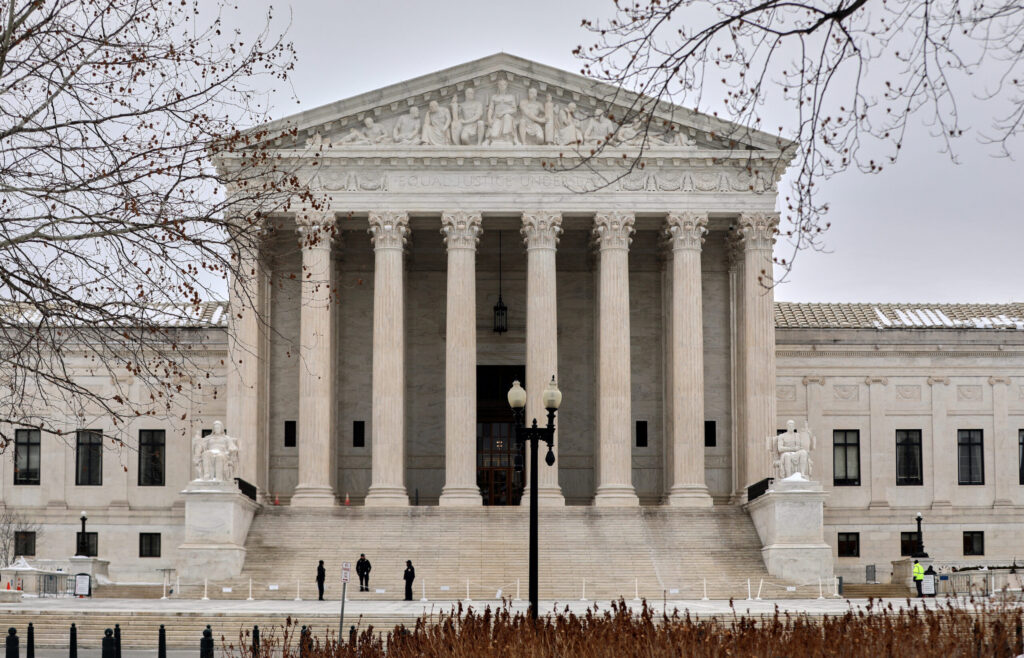
Supreme Court hands California parents win over secret gender transition policy
Jack Birle, Washington Examiner
jack.birle.washington.examiner@gazetteedit.wpenginepowered.com
Updated 16 hours ago
The Supreme Court gave California parents a significant victory late Monday when it kept in place a lower court’s block of the Golden State’s public school policy hiding students’ gender identity and preferred pronouns from parents. A 6-3 majority on...

Judge nixes latest policy requiring 7 days’ notice for Congress members to visit ICE facilities
Michael Kunzelman
michael.kunzelman@associatedpress.com
Updated 16 hours ago
WASHINGTON (AP) — A federal judge agreed on Monday to temporarily suspend the latest version of a Trump administration policy that requires members of Congress to provide a week’s notice before they can visit immigration detention facilities. U.S. District Judge...
Judge nixes latest policy requiring 7 days’ notice for Congress members to visit ICE facilities
Michael Kunzelman
michael.kunzelman@associatedpress.com
Updated 13 hours ago
WASHINGTON • A federal judge agreed on Monday to temporarily suspend the latest version of a Trump administration policy that requires members of Congress to provide a week’s notice before they can visit immigration detention facilities. U.S. District Judge Jia...

Gov. Polis, Upper Basin states criticize federal draft plan for managing the Colorado River
Marianne Goodland
marianne.goodland@coloradopolitics.com
Updated 16 hours ago
With no agreement among the seven Colorado River states and federal deadlines now passed, the Upper Colorado River Commission on Monday sharply criticized the U.S. Department of the Interior’s draft plan for managing the river after current guidelines expire this...

Ballot access, dual-office ban bills move swiftly through Colorado legislature
Marianne Goodland
marianne.goodland@coloradopolitics.com
Updated 17 hours ago
With an eye on the 2026 election cycle and mounting tensions with the Trump administration, Colorado lawmakers are fast-tracking a pair of election bills they say will protect the state’s mail ballot system and tighten rules for elected officials. The...

Colorado GOP chair Brita Horn loses ‘no-confidence’ vote, vows to refocus on ‘mending that divide’
Ernest Luning
ernest.luning@coloradopolitics.com
Updated 1 hour ago
The Colorado Republican Party’s state central committee approved a resolution expressing “no confidence” in state chair Brita Horn in a landslide late Monday night near the end of an online meeting marked by rancor and confusion. Almost 80% of the...

Trump to attend White House Correspondents’ Dinner for first time as president
Washington Examiner Staff, Washington Examiner
washington.examiner.staff.washington.examiner@gazetteedit.wpenginepowered.com
Updated 20 hours ago
President Donald Trump announced on Monday that he accepted an invitation to this year’s White House Correspondents’ Dinner. It would mark the first time Trump has attended the dinner, in either term, since he’s been president. Trump announced the decision...
Primary rival sues to prevent Democrat Eileen Laubacher from going through assembly in Colorado’s 4th CD
Ernest Luning
ernest.luning@coloradopolitics.com
Updated 22 hours ago
Democratic congressional candidate Trish Calvarese on Monday asked a judge to prevent one of her primary rivals, Eileen Laubacher, from participating in the caucus and assembly process to seek the nomination to challenge Republican U.S. Rep. Lauren Boebert in Colorado’s...
PREV
PREVIOUS

In memoriam | 2022 IN REVIEW
The year 2022 was bookended by the deaths of two major political figures whose lives touched many at the state Capitol and beyond: Department of Labor and Employment lobbyist Pat Teegarden,who died on Feb. 5, and House Minority Leader Hugh McKean, 55, of Loveland, who passed away on Oct. 30. Both were sudden and unexpected, their deaths […]

Colorado Politics recalls stories that defined an unusual midterm | 2022 IN REVIEW
Bookended by tragedies and buffeted by fiercely partisan battles as the midterm elections approached, 2022 saw Colorado begin to move beyond the COVID-19 pandemic and the shattered lives, economy and customs in its wake. The state’s political year was framed by bombshell events outside its borders – from Russia’s invasion of Ukraine to the Supreme […]