

Electric semi-tractor trucks on the menu at Air Quality Control Commission
Colorado government officials started the process this week to require semi-tractor truck manufacturers and dealers to start pushing low-emission diesel trucks to Colorado customers.
The rules would apply to all large trucks, like garbage or delivery vehicles.
The Colorado Air Quality Control Commission heard a presentation Tuesday from a Colorado Air Pollution Control Division representative about what those new rules could look like.
Xcel’s natural gas line upgrade in Denver Highlands area can proceed despite objections
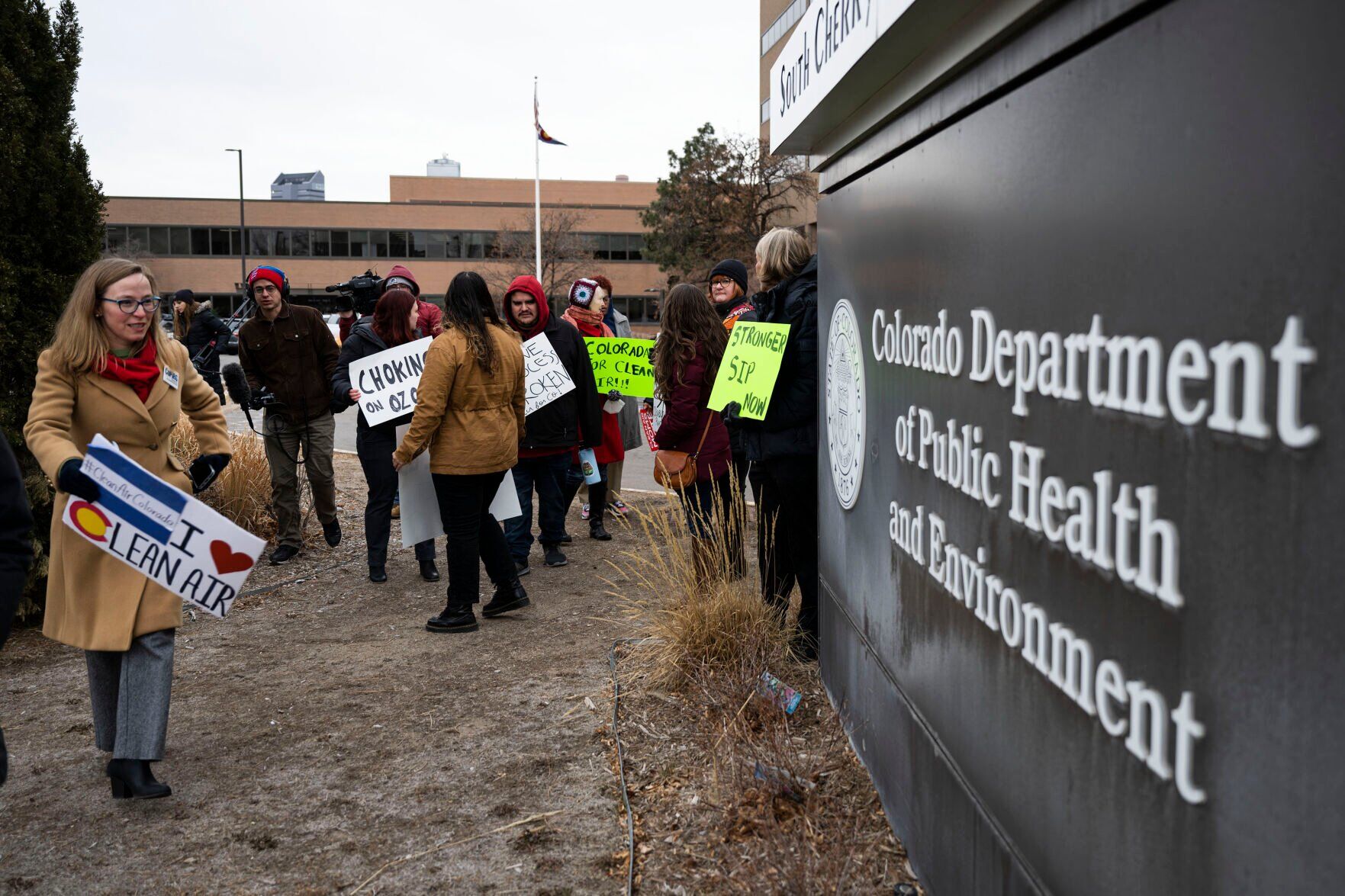
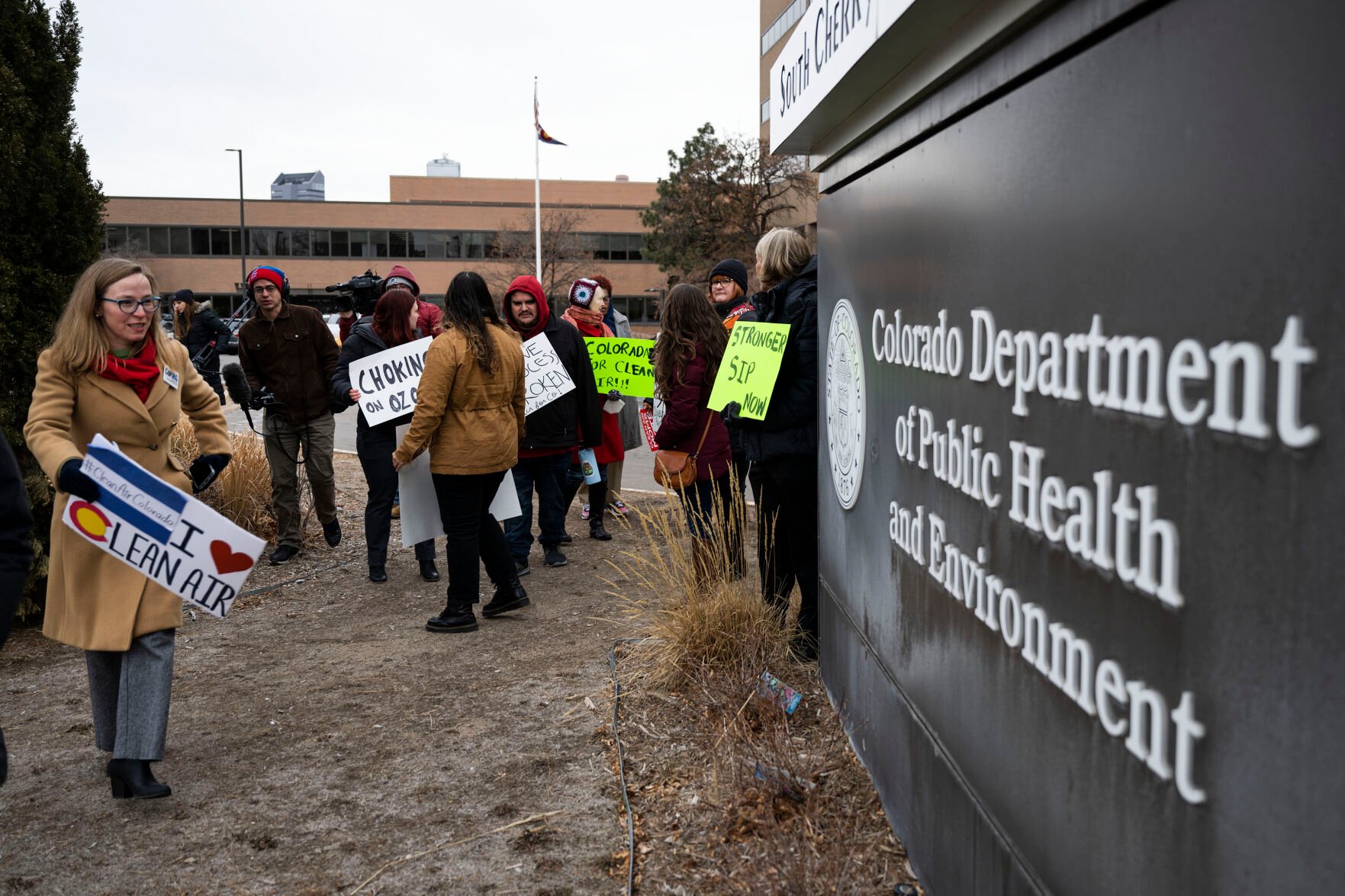
A small group of clean-air advocates from Clean Energy Action held a rally outside the Commission’s Denver headquarters Tuesday.
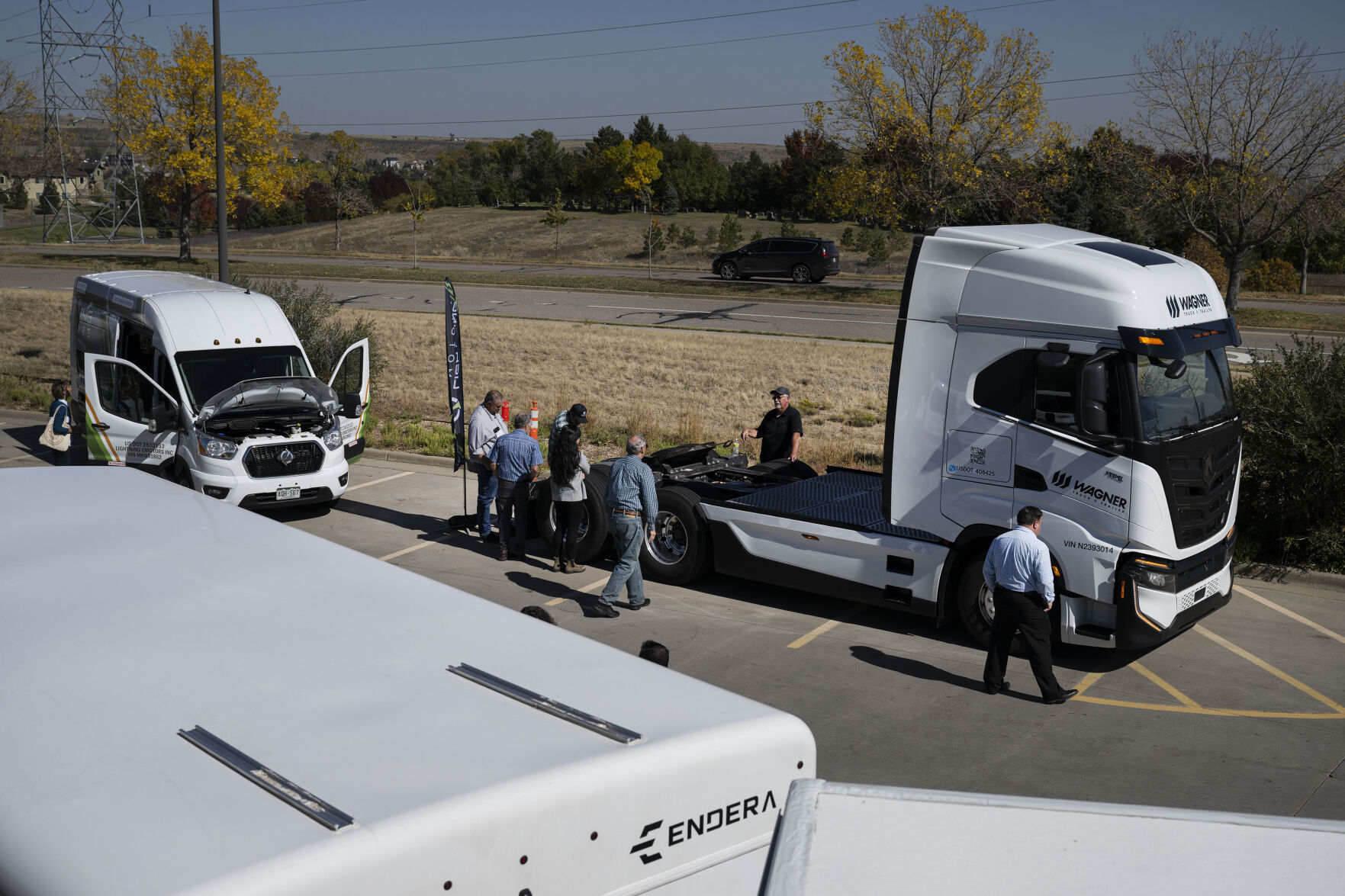
The rulemaking effort would require large truck dealers to market a certain percentage of their stock as low-emissions diesel engines starting in 2027, and zero-emission medium and heavy-duty electric trucks starting in model year 2035.
The proposed program applies not only to heavy-duty trucks, it can also apply to “larger pickups and Sprinter vans” weighing more than 8,500 pounds gross vehicle weight, according to state air quality officials.
Garry Kaufman, director of the Colorado Air Pollution Control Division, asked the commission to begin the process of making rules that comply with legislative directions in Senate Bill 21-260, called the Sustainability of The Transportation System, and the Colorado Clean Truck Strategy.
The program would “ramp up” marketing requirements through 2035 to “significantly reduce greenhouse gas emissions and other emissions that contribute to ozone pollution,” with the goal of a 100% zero-emissions truck fleet by 2050, Kaufman said.
There are no requirements proposed that truck buyers purchase only low-emissions or electric trucks.
Unsealed investigation shows excessive speed caused RTD R-Line derailment in Aurora
Asked by commissioners about the effects of truck-buyer’s preferences, Kaufman said: “Well I mean there’s a lot they (truck manufacturers) can do to make sure those trucks get sold. They can make them attractive to the consumer and that’s what really pushes it to make sure that they manufacture a vehicle that people want and then price it appropriately.
“I do want to be clear this is not a mandate on consumers.”
Colorado vehicle emissions standards are linked to California’s vehicle emissions rules, though not absolutely.
By 8 to 1 commission members voted to adopt California’s zero-emission vehicle program on August 15, 2019. Gov. Jared Polis signed a memorandum of understanding with 15 states and the District of Columbia to pursue “widespread electrification of medium-and heavy-duty vehicles” June 29, 2020.
The California Air Resources Board enacted a policy in August to require all new cars, trucks and SUVs sold in the state to run on electricity or hydrogen by 2035.
According to Kaufman, the federal Clean Air Act has a preemption against state vehicle emissions standards for new vehicles, meaning states cannot set their own vehicle emissions standards differently than the federal regulations.
However provisions added to the Act allow other states to adopt California’s emissions control laws so long as such standards “are identical to the California standards for which a waiver has been granted for such model year,” Kaufman said.
According to an economic analysis by the air pollution control division, the new rules could save Coloradans $15.6 billion through 2050 from reduced maintenance costs, fuel costs, avoided health impacts, and avoided climate impacts – including avoiding 24 million tons of greenhouse gasses and 58,000 tons of nitrogen oxide.
Marshall Fire lawsuit against Xcel Energy can proceed, judge rules
Through 2050, according to the analysis, a projected total of 722,000 vehicles will be subject to the Advanced Clean Trucks requirements.
“For Colorado it is expected to affect 28,266 engines and vehicles beginning at the start of the program with the 2027 model year,” according to the analysis. “This is expected to grow to 43,995 engines and vehicles in model year 2050. Through this time span, a projected total of 722,000 vehicles will be subject to the proposed low NOx standards rule.”
The formal rule making process, which has not yet been started, provides opportunities for the public to give feedback through meetings and a written comment period. For more information, including links to the proposed rules, visit the Air Quality Control Commission website cdphe.colorado.gov/aqcc.


Fifty years later, women reflect on first coed class at the Air Force Academy, struggle for equality
Mary Shinn
mary-shinn@coloradopolitics.com
Updated 23 hours ago
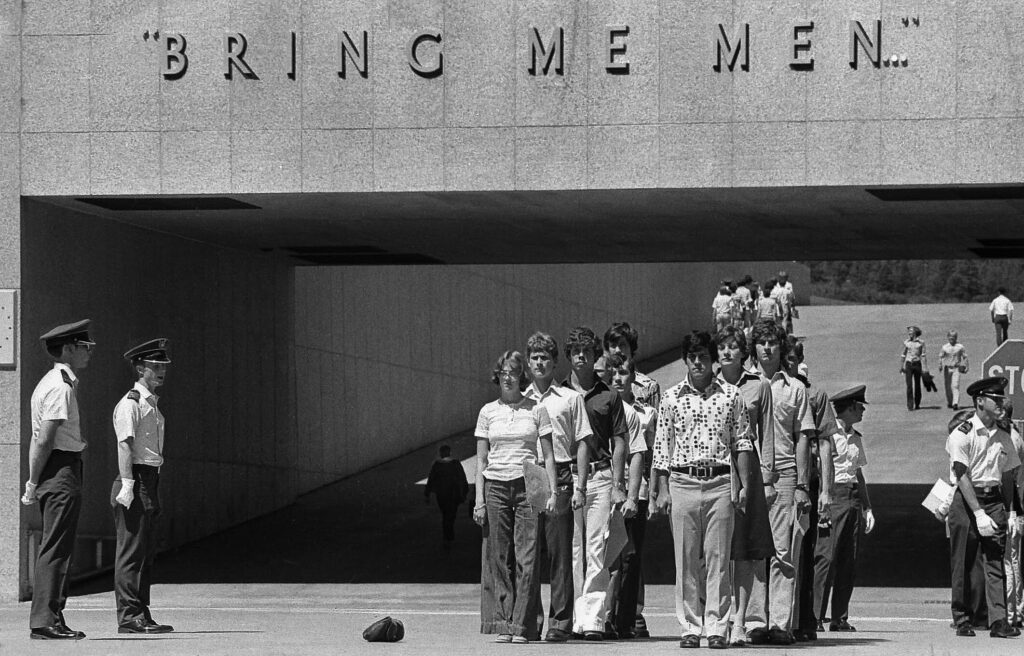
When the first female Air Force Academy cadets arrived 50 years ago this summer, they stood in front of an enormous sign on campus that read “Bring me men.” In the shadow of that sign, Kathleen Utley Kornahrens, one of...

As Lake Powell shrinks, marinas are having to adapt to dwindling water levels | OUT WEST ROUNDUP
The Associated Press
the-associated-press@coloradopolitics.com
Updated 4 days ago
ARIZONA Reservoirs near record lows PAGE — The Colorado River’s Lake Powell, the second largest reservoir in the U.S., is shrinking. A record-dry winter and extreme heat — as well as decades of overuse, chronic drought and climate change —...

A new day? Colorado’s troubled guardianship office pursues ‘cultural reset’
Marianne Goodland
marianne.goodland@coloradopolitics.com
Updated 3 days ago
Colorado’s guardianship program, long criticized for mismanagement and high staff attrition, is undergoing a “cultural reset,” as its new director works to repair partnerships and prepare for a major expansion under recent legislation. Created by lawmakers in 2017, the Office...
U.S. Senate OKs funding bill to avoid government shutdown
Wire Services
wire-services@coloradopolitics.com
Updated 1 day ago
Hemp provision became point of contention WASHINGTON • The U.S. Senate in an overnight vote Saturday approved a short-term measure to fund federal agencies into early December and avoid a government shutdown during the middle of campaign season. The late-summer...
The relevance of Watergate more than a half-century later | SONDERMANN
By Eric Sondermann
by-eric-sondermann@coloradopolitics.com
Updated 4 days ago
It was the scandal for which all other scandals are now named. In June 1972, a small group of Cuban burglars with high-level connections broke into the headquarters of the Democratic National Committee. Those headquarters were located in the Watergate...

Wirth downplays Social Security disaster talk | A LOOK BACK
Rachael Wright, Special to Colorado Politics
rachael.wright@coloradopolitics.com
Updated 3 days ago
Forty-five years ago this week: “As time goes on,” said Democratic U.S. Rep. Tim Wirth, of the 2nd Congressional District, “we are finding that the safety net, which was proposed earlier this year, has some very large holes in it,”...

Colorado Politics Calendar Aug. 10-16
Rachael Wright, Special to Colorado Politics
rachael.wright@coloradopolitics.com
Updated 3 days ago
CoPo’s weekly political calendar will help you find political and public-policy events throughout Colorado. It includes candidate and issue campaign events, public policy meetings, court hearings, state and local party conventions, assemblies, debates, rallies, parades, speaking engagements, traveling dignitary appearances,...

Democratic group aims Spanish-language TV ad at Gabe Evans in Colorado’s battleground 8th CD
Ernest Luning
ernest.luning@coloradopolitics.com
Updated 2 days ago
A national group tied to House Democratic leadership launched a six-figure Spanish-language TV ad in Colorado this week targeting Republican U.S. Rep. Gabe Evans and the GOP’s signature budget legislation. The 30-second spot is part of $15 million in new...
Colorado School of Mines lands major share in Trump’s $100M mining-education plan
Thelma Grimes
thelma.grimes@coloradopolitics.com
Updated 2 days ago
President Donald Trump on Friday named the Colorado School of Mines among roughly a dozen institutions that will share in a $100 million commitment “to train the next generation of American miners.” Paul Johnson, the university’s president, said he is...
Local party leaders, incoming judge among members of judicial performance commission that violated law
Michael Karlik
michael.karlik@coloradopolitics.com
Updated 22 hours ago
A local Democratic leader and 2024 presidential elector. A legislative aide and leader in the Young Republicans. An incoming county court judge freshly appointed by the governor. They are among the eight members of the northeastern Colorado judicial performance commission...
PREV
PREVIOUS

Colorado Sen. Michael Bennet names former BLM director Neil Kornze as chief of staff
U.S. Sen. Michael Bennet this week announced that he has named former Bureau of Land Management director and Capitol Hill veteran Neil Kornze as his chief of staff. Kornze, who headed the public lands agency under President Barack Obama from 2014 to 2017, is the youngest person to be confirmed as BLM chief. Prior to […]

How did Colorado community colleges double their graduation rate? By better meeting student needs
Colorado’s community colleges more than doubled their graduation rates from 2015 to 2020 by focusing on student support in and out of the classroom, according to a study released Tuesday. The Colorado Community College System’s graduation rates rose to 31% from 15% five years earlier, according to the report by Complete College America that details […]