

Health exchange malpractice | SLOAN

It’s that special time of year again – no, not Christmas, but open enrollment, when our thoughts turn again to the eternal, and apparently insoluble, problem of rising health care costs.
Now the problem itself seems to coincide strongly with the advent of government in medical expenses. State Sen. Jim Smallwood reminds us, in an op-ed published in the Gazette last week, that Colorado’s government took a bold step last year to inject itself into the health insurance market with the much ballyhooed “Colorado Option,” which established a public, government-run health insurance plan and demanded that private insurance carriers reduce their premiums, just like that, by 5% a year over three years. The idea, as it was presented, was that a public insurance option would inject competition, and we all know competition is good for lowering prices, and if that didn’t work – well, it required that prices be lowered anyway.
Sen. Smallwood, being something of an economist, had some questions and concerns about all this at the time, and he reiterated those in his column. Jim is not a man to say “I told you so,” so I’ll say it for him: far from reducing the cost of health insurance in the state, the Colorado Option has made the problem worse, evidenced by a 10% increase in small group health plan premiums, and a 7 percent-and-change increase in premiums for the individual market. He told you so.
It is not difficult to figure out what happened. Rate setting in the health insurance market is no more effective than price setting in any other market. Artificially mandating rates to be lower does not magically make medical care cost less, it merely shuffles the cost around. And if those costs get shuffled to where an insurer cannot recover them, that insurer will start looking for an exit. That is precisely what happened in Colorado, with several health insurance companies leaving the state in the past few months. So much for “increasing competition.”
The State’s Department of Insurance responded to this in the least helpful way possible. What they did was institute a program euphemistically called “mapping,” ostensibly an elaborate data-driven scheme to discover the “best” of the few remaining health insurance plans for people based on where they live and directing them conveniently there. In a stroke of grand cosmic coincidence, the “suggested plan” – which pops up front and center on your computer screen and requires only two clicks and PRESTO! you are enrolled – happens, almost invariably, to be the Colorado Option plan, whether or not it is the least expensive plan available (spoiler: it usually isn’t).
Ah, but say you are a savvy purchaser of health insurance who chooses to shop around, and are not so easily drawn by the click-bait of the “suggested plan?” Well, the state’s website will begrudgingly let you do so, but first you must go through a full financial application (despite already being pre-qualified), and wind yourself through a labyrinth of web pages and questions and forms. The less gullible among us might interpret that to be a way for the Division of Insurance to drive enrollment in the Colorado Option, which otherwise most consumers would avoid like an expensive hornet’s nest.
Believe it or not, it actually gets worse. Remember all those health insurance companies that left Colorado? Given that the pool was already rather small, there is a pretty good chance that your carrier was among them. Yet nowhere on the state health exchange website does it mention anything like “your current carrier is no longer active in the state. Be aware you need to find a new carrier and a new plan.” See, that is the sort of information that would be rather helpful to a consumer. Instead, one finds simply the super-convenient 2-click “Suggested Plan” leading you by the hand to the Colorado Option. Incidentally, if you happen to live in the Denver Metro Area and this happens to you, there is a high likelihood that that the new “suggested plan” you are spoon-fed comes with a whole new network, requiring different doctors, a different office and different pharmacy.
It is not a stretch of logic to conclude that perhaps this entire government-created insurance mess is a deliberate attempt to smuggle a single-payer health system past a rightly-suspicious voting public. On the other hand, the key lesson here is that consumers ought to take it upon themselves to shop for health plans, rather than just click; the extra time could save a great deal of money and frustration.
Kelly Sloan is a political and public affairs consultant and a recovering journalist based in Denver.


Add Lynn Bartels to Colorado’s roll call of legends | Dick Wadhams
Dick Wadhams
dick-wadhams@coloradopolitics.com
Updated 22 hours ago
A few weeks after the Rocky Mountain News shut its doors forever in 2009, more than 600 Republicans gathered for the state party’s annual Centennial Dinner. Lamenting the historic significance of the loss of one of Colorado’s great daily newspapers,...

Conservation efforts emphasize the lesser prairie chicken | Rachel Gabel
Rachel Gabel
rachel-gabel@coloradopolitics.com
Updated 22 hours ago
Reid DeWalt, deputy director of Colorado Parks and Wildlife, spoke to the Water Resources and Agriculture Review Committee about the Lesser Prairie Chicken and moving conservation forward. He said in 2026, CPW staff counted 77 males on 13 leks, a...

Colorado’s regulations should address policy challenges only as truly needed | Miller Hudson
Miller Hudson
miller-hudson@coloradopolitics.com
Updated 20 hours ago
As Colorado approaches its 150th birthday, we should remember its first 100 years were characterized by repeated boom-and-bust economic cycles. Dependence on mineral extraction and agricultural commodity prices was subject to the volatility of these markets. In 1972, as I...

The last, best hope for the Colorado GOP | Kelly Sloan
Kelly Sloan
kelly-sloan@coloradopolitics.com
Updated 20 hours ago
If the Colorado Republican Party desires to retain any relevancy, let alone wrest back any of the levers of political control in the state, it needs to elect Barb Kirkmeyer in the June 30 primary. To be sure, Kirkmeyer would...
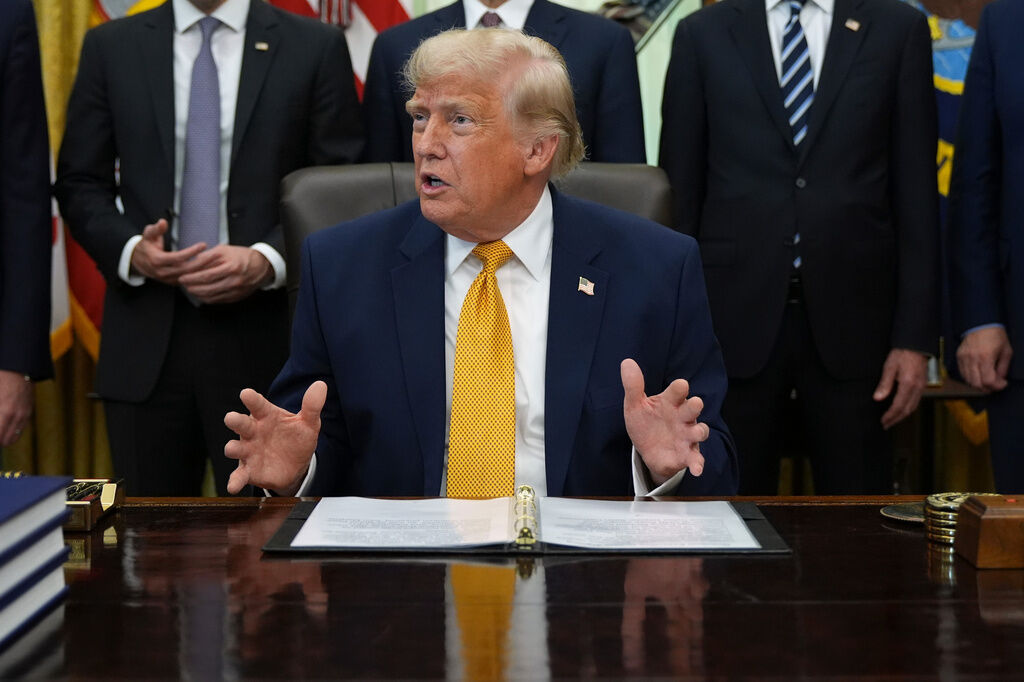
Understanding Trump’s remarkable political comeback in 2024 | Cronin and Loevy
Tom Cronin Bob Loevy
tom-cronin-bob-loevy@coloradopolitics.com
Updated 22 hours ago
President Donald Trump lost the 2020 presidential election. He inspired a riot at the U.S. Capitol to try to overthrow the results of that election. He was impeached by the U.S. House of Representatives and later was indicted for several...

Read Michener’s ‘Centennial’ | Jon Caldara
Jon Caldara
jon-caldara@coloradopolitics.com
Updated 4 days ago
If you’ve been reading my columns, you’ve noticed I’m basically illiterate. I blame my dyslexia and public education, but my Olympic-level laziness could be the driving factor. Anyway, I basically can’t read (and, still, I graduated from CU Boulder, so...

Giving credit to Polis where credit is due | SONDERMANN
Eric Sondermann
eric-sondermann@coloradopolitics.com
Updated 5 days ago
It is an understatement to suggest that Gov. Jared Polis has had a tough couple of months. The bloom was already off the rose and Coloradans were paying far more attention to the choice of his replacement than they were...

Will one unqualified AG replace another? | George Brauchler
George Brauchler
george-brauchler@gazette.com
Updated 4 days ago
Colorado Democrats are poised to nominate another attorney general candidate with de minimis relevant credentials or experience. Far from disqualifying, Colorado’s recent voting history mirrors that of America in favoring biography over experience, partisanship over policy, and emphasizing what divides...

Pueblo’s mayor keeps stirring the pot | Dennis Maes
Dennis Maes
dennis-maes@coloradopolitics.com
Updated 4 days ago
Pueblo Mayor, Heather Graham, has clearly proven to be a disciple of the Donald Trump school of governance. And, like her mentor, she is experiencing the same catastrophic results. The format is to ignore what the electorate approved and expects...

The perils of Colorado’s unregulated abortions | GUEST COLUMN
Colorado Politics
colorado-politics@coloradopolitics.com
Updated 4 days ago
By Tom Perille How did the movement which grew out of a genuine concern for the health and safety of women become the same movement that undermines women’s health and safety today? Despite good intentions, it was a long route...
PREV
PREVIOUS

Eliminating tariffs gives everyone a fair chance | OPINION
Shannon Bird Hard work pays off in America. But an unbalanced playing field can mean not everyone has a fair chance. Unnecessary trade barriers, for instance, distort our economy by increasing the price of raw materials. Aluminum is a prime example of how these tariff-induced price increases impact small businesses across the country. As part […]

The University of Colorado engorges its bureaucracy | Denver Gazette
The optics – as they say in the political world – couldn’t be worse for CU. No, we’re not talking about the miserable season the Buffs are having on the gridiron. We’re talking about the headline-making blunder by the university’s front office this week. As reported by our news affiliate Colorado Politics, which broke the […]