

Dem gerrymander fuels state legislature domination | CRONIN & LOEVY


It was supposed to be a horse race. With predictions of a Republican red wave sweeping the nation prior to Election Day 2022, the Republicans in Colorado were hoping to improve their numbers in the Colorado state House of Representatives and perhaps even gain a majority in the Colorado state Senate.
But the political horse race for the state legislature never happened. As a Democratic blue wave swept across the nation as well as Colorado on election night, it was more like a runaway than a horse race. The Democrats increased their numbers in both houses of the Colorado legislature.
The state House of Representatives ended up with 46 Democrats and only 19 Republicans. In the state Senate, where only 17 of 35 seats were up for election, the results were 11 Democrats and a mere six Republicans.
The 2022 general election in Colorado on Nov. 8 offered the first opportunity to have a state legislative election using the new redistricted boundary lines established by a special legislative redistricting committee using 2021 census data. The outcome of the election suggested that the 2021 redistricting had indeed been gerrymandered to favor the Democrats.
In the case of the Colorado State House of Representatives, we added up the total number of votes cast for all the Democratic candidates as well as the total vote for all the Republican candidates. We then figured the percentages. The Democrats received 53% of the total votes cast and the Republicans polled 47%. We then compared those overall figures with the actual numbers of Democrats and Republicans elected through the redistricting.
Thus it was the Democrats polled 53% of the total votes in the state House races but succeeded in electing 71% of the representatives (46 out of 65). Concomitantly, the Republicans polled 47% of the total votes but only elected 29% of the Representatives (19 of 65).
It was a perfect illustration of the way in which gerrymandering – drawing legislative district lines to favor one political party over the other – can distort the results of an election.
There were other lessons about redistricting as well. The redistricting process had designated 30 seats in the Colorado House of Representatives as safe Democratic. That meant that the Democrats, no matter how the overall vote might be trending, would always win that seat. And that is exactly what happened. All 30 safe Democratic seats in the state House of Representatives were won by Democratic candidates.
In the same manner, the redistricting process created 19 safe Republican seats in the state House of Representatives. Here also, all 19 seats did what they were designed to do and voted the Republican candidate into the state House of Representatives.
We think that all 19 safe Republican seats delivering for the Republicans in this election is significant. The Democratic sweep taking place across the nation and in Colorado did not succeed in swaying even one of the 19 safe Republican seats in the Colorado House of Representatives to the Democratic side. It proved that a safe Republican seat is just that – a legislative seat that has been districted so skillfully that the Republican always wins even on a big Democratic night.
And if these safe Republican seats are really safe, as illustrated here, the same applies to the safe Democratic seats. No matter how well things might be going for the Republicans in an election, the safe Democratic seats will stay Democratic.
What is most significant here is that the redistricting process in Colorado fashioned a permanent bias in favor of the Democrats in the Colorado House of Representatives by creating 30 safe Democratic seats and only 19 safe Republican seats. That gives the Democrats a permanent 30 to 19 vote lead in the Colorado House before citizen voting in an election even begins.
In addition to creating 30 safe Democratic seats and 19 safe Republican seats in the Colorado House, the redistricting process designated 16 seats as competitive. A competitive seat is one in which the voting is close between the Democratic and the Republican candidates. A competitive seat can go Democratic in one election but swing over to the Republicans in the next. Competitive seats are often referred to as bellwether seats or battleground seats.
To us the stunning result of the 2022 general election was that all 16 competitive seats in the Colorado House of Representatives were won by Democrats. Instead of dividing more or less evenly between the two major political parties, the competitive seats all went to the Democrats.
It could be argued that nothing represented the great extent of the Democratic sweep in the 2022 elections as much as the election of all 16 Democratic candidates in the 16 House competitive seats.
Some of the races were fairly close, but none were real close (fewer than 100 votes separating the two candidates).
In one sense, it is not surprising that the Democrats won all 16 competitive seats in the Colorado House in the 2022 election. The function of competitive seats is to measure which party is winning in that particular election, and there is no question the Democrats were winning on that Tuesday night.
The results in the Colorado state Senate were similar to those in the Colorado state House of Representatives. The redistricting process created five safe Democratic seats and all five voted Democratic. The six safe Republican seats all voted Republican. The six competitive seats up for election that night all went to the Democrats, just as in the Colorado House.
Amazingly in the 17 state Senate contests, the Republicans actually received more of the total votes cast (51% Republican) than the Democrats did (49% Democratic). Once those votes went through the mill of the Democratic Party gerrymander, however, the Democrats won 65% of the state Senate seats (11) and the Republicans only took 35% (six).
Our overall conclusion is that the state House of Representatives and the state Senate do not accurately represent the interests and intentions of most Colorado voters. The 2022 election results highlighted the extent to which the Colorado legislature is gerrymandered in favor of the Democratic Party and will continue to be that way for the next decade until the new legislative redistricting following the 2030 census.
The Democratic Party bias created by the gerrymandering of Colorado’s state legislature makes the legislature more liberal and progressive than most of the voters in Colorado. We expect this partisan bias to continue into the near future.
Tom Cronin and Bob Loevy are news columnists who write about national and Colorado politics.

Founding documents reconnect us to our shared American roots – and rebelliousness | Vince Bzdek
Vince Bzdek
vince.bzdek@gazette.com
Updated 8 hours ago
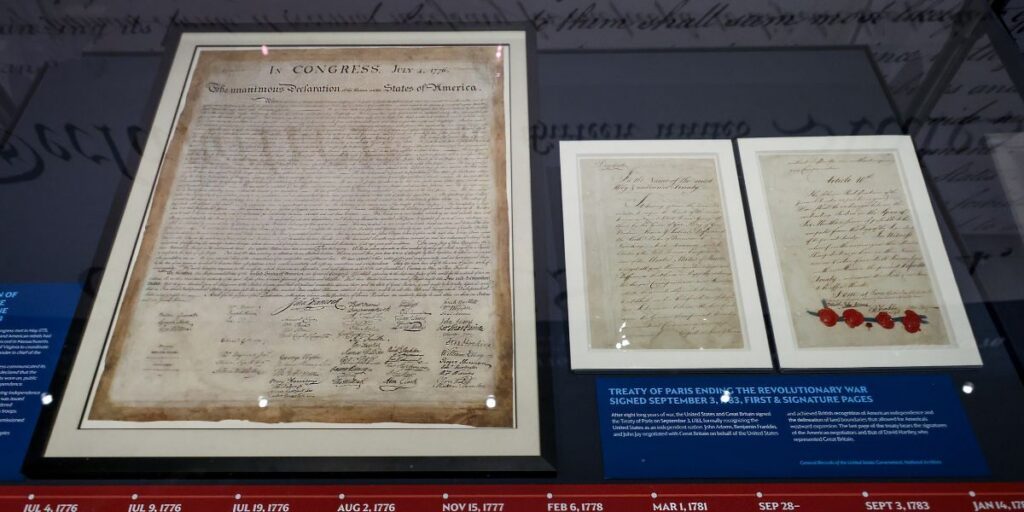
When you first lay eyes on the actual founding documents of our country that, for the first time in history, have traveled together from their gilded cages in Washington to visit us out here in the hinterlands, you’re struck not...

Attorney General Phil Weiser’s underdog campaign for Colorado governor| Cronin and Loevy
Tom Cronin Bob Loevy
tom-cronin-bob-loevy@coloradopolitics.com
Updated 48 minutes ago
Phil Weiser, 58, Colorado’s attorney general, is in a heated race against U.S. Sen. Michael Bennet, 61, for the Democratic nomination for governor. They are friends and share mostly similar progressive, Democratic policy views. Primary election day is June 30....

Would you hire Jena Griswold to handle your case? | SONDERMANN
By Eric Sondermann
by-eric-sondermann@coloradopolitics.com
Updated 4 days ago
If you were in a child custody dispute with a former spouse, would you hire an attorney with experience in family law or would you trust your case to an operative with virtually zero mastery? If you were getting ready...
Trends to track as Colorado’s in precarious position pre-gubernatorial primaries | Paula Noonan
Paula Noonan
paula-noonan@coloradopolitics.com
Updated 3 days ago
As they say on Colorado Public Radio’s Marketplace, let’s do the numbers. April 2026 voter registrations continued a long-term Colorado trend with a large majority of new or changed voter registrations joining the unaffiliated cohort. Total registrations of Democrats, Republicans...

High-potency hemp products are hurting Colorado kids | GUEST COLUMN
Colorado Politics
colorado-politics@coloradopolitics.com
Updated 2 days ago
By Heidi Lawrence Six years ago, my daughter, by most metrics, was a typical overachieving teenager. She was a straight-A, pre-professional ballet dancer. She loved school and art, had lots of friends, and above all else, she was kind, funny...
Michael Fields reviews Colorado’s 2026 legislative session | The OpEdge Podcast
Tony Olivero
tony.olivero@gazette.com
Updated 3 days ago
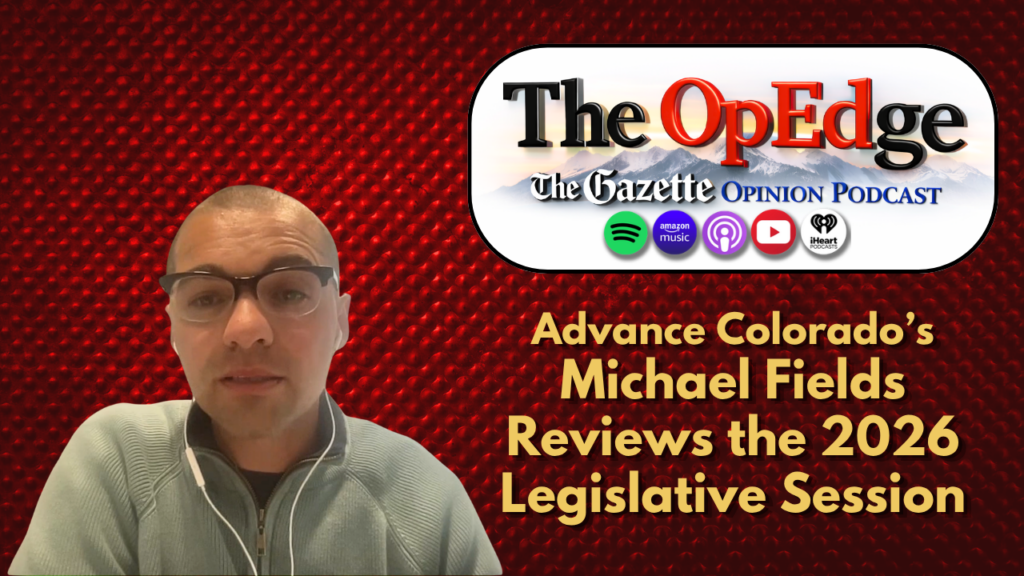
Michael Fields, executive director of Advance Colorado, joins OpEdge host and investigative columnist Jimmy Sengenberger to assess the good, the bad and the ugly of the Colorado General Assembly’s 2026 legislative session. Reflecting on the 120 bills passed in 120...

From secret huddles to Zebulon — the high cost of the Dougco BOCC’s shady governance | PODIUM
Colorado Politics
colorado-politics@coloradopolitics.com
Updated 4 days ago
By Bob Marshall, Lora Thomas and Julie Gooden In Douglas County, a new and dangerous standard of governance has taken root: if the public doesn’t like your plan, simply stop letting the public in the room. During the last year,...

Election must be decided on issues of combating public corruption, restoring integrity in government | FEEDBACK
Colorado Politics
colorado-politics@coloradopolitics.com
Updated 4 days ago
There has been considerable press and outrage regarding Gov. Jared Polis’ commutation of former Mesa County Clerk and Recorder Tina Peters’s remaining prison sentence. The outrage is reinforced by President Donald J. Trump’s creation of a $1.776 billion compensation fund...

Is the ‘penumbra of privacy’ going, going, gone in Colorado? | Hal Bidlack
Hal Bidlack
hal-bidlack@coloradopolitics.com
Updated 5 days ago
Once again, there are too many things in Colorado Politics that are newsworthy and should be written about. Unless my kindly editor will allow me to write a book-length column this week? (Ed: not so much…) First up, I’d like...

Quiet at the state Capitol doesn’t mean silence on energy policy | GUEST COLUMN
Colorado Politics
colorado-politics@coloradopolitics.com
Updated 5 days ago
By Carly West By many accounts, Colorado’s 2026 legislative session was unusually quiet on oil-and-natural-gas policy. There was no sweeping new oil-and-natural-gas package. No major new production restrictions. After years of contentious energy debates dominating the Capitol, the relative quiet...
PREV
PREVIOUS

Sentinel Colorado: With election over, time to address Colorado's problems
There’s no time for partisan praise nor penance in Colorado. The election is over, and Republican candidates were decimated in elections across the state. It wasn’t surprising in any way. GOP hopefuls across the spectrum focused on stoking fears about crime, the economy and assorted conspiracy theories without offering any real or practical solutions. The […]

Spoilers | CALDARA
Jon Caldara As Republicans digest how the last election could be an extinction-level event for their party in Colorado, some of their political grief might well turn to blaming spoilers. When a candidate wins, but doesn’t win by more than 50% of the vote, it means some third-party yahoo entered the race and “spoiled” it […]