

Colorado Springs Gazette: Voters display brilliance of the Pikes Peak region
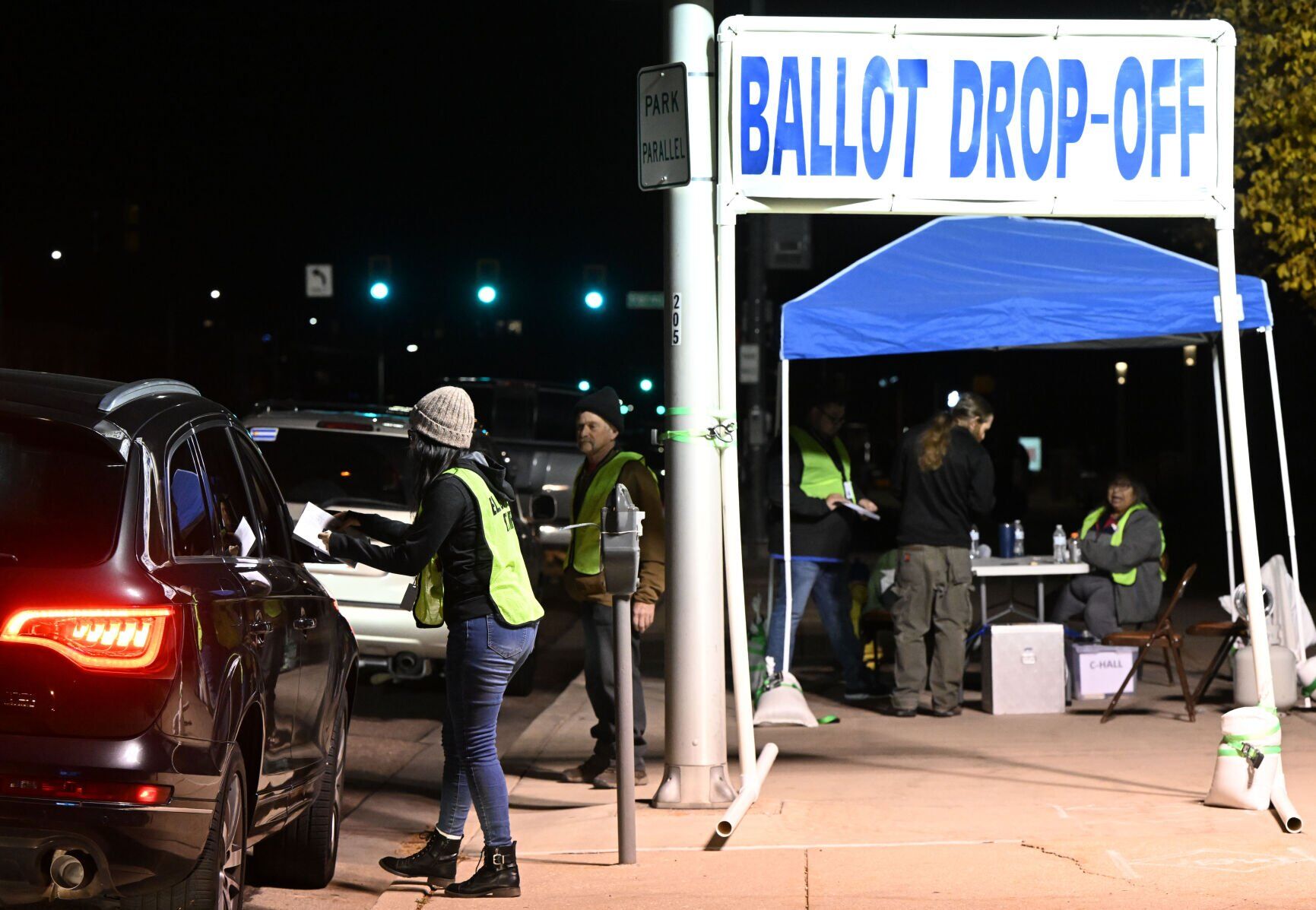
On the same night voters rejected 114 recreational pot stores in Colorado Springs, nearly 80% of voters throughout the region chose to invest in the metro area’s bright future. They voted “no” on pot and associated taxes, and “yes” on the Pikes Peak Rural Transportation Authority sales tax extension. It showcases the wisdom and values of the Pikes Peak region.
Voters said ‘no’ to a destructive proposal and ‘yes’ to one that protects our stature as Olympic City USA, the country’s best host of military operations and veterans, a city of prestigious colleges and universities and America’s “most desirable” city in the annual U.S. News & World Report survey.
Approval of the modest tax nearly guarantees completion of a detailed list of specified projects between now and Dec. 31, 2035. The tax was scheduled to sunset on Dec. 31, 2024. The transportation authority has delivered on promises made in the past, so voters had good reason to trust it.
Fifty-five percent of revenues from the 1-cent tax will pay for one-time capital projects, 35% for maintenance and the remaining 10% goes to transit. The Pikes Peak Rural Transportation Authority will distribute the funds to six governments in the region, with most going to Colorado Springs and El Paso County. The tax will also fund projects in Manitou Springs, Green Mountain Falls, Ramah and Calhan.
As reported in an Oct. 19 Gazette news article, the Colorado Springs City Council endorsed more than 160 projects for the ballot measure. A few examples:
? Midland Trail improvements
? Citywide traffic signal improvements
? Bikeway improvements
? Pikes Peak Greenway improvements
? Patty Jewett Trail construction – Cache la Poudre to Patty Jewett Golf Course
? Bridge improvements
Tax hikes and extensions can bog economies. Tax decreases generally stimulate economies and leave consumers more in control of their hard-earned money. That’s why The Gazette’s editorial board supported a decrease in the state income tax, a measure passed by nearly 65% statewide and 74% in El Paso County.
There’s a reason why voters throughout the Pikes Peak region overwhelmingly supported the income tax reduction while simultaneously supporting a tax extension by nearly 80%. Not all taxes are the same.
The state income tax pays for all assortment of programs without much input from those who pay the tab.
It’s like demanding capital from a group of investors without explaining what they get in return. Politicians trade in the revenues to win votes from special-interest constituencies. Only politicians and those who control state offices and agencies decide where the money goes.
Taxing income penalizes work, which only exacerbates labor shortages and dependency by those who think work doesn’t pay enough. Gov. Jared Polis and his Republican former challenger, Heidi Ganahl, each understand the pitfalls of the income taxes and support reducing it to zero.
The measure to legalize recreational pot stores came paired with one to tax their sales. Fifty-two percent of Springs voters said “no” to the tax, knowing most of the revenues would pay for regulation of the industry and the problems it would cause. It was not likely to boost the economy or our quality of life.
The transportation sales tax – unlike the taxes voters rejected or lowered – makes good sense. It affects only voluntary purchases – and not by much. It pays only for projects promised to voters, in writing, before the election. The taxpayers (investors) know what they will get.
The tax extension will enhance the economy by funding thousands of jobs for employees who will spend throughout the community and fund all conceivable economic activities.
Project payrolls will leave the region with structural assets. The roads, bridges and transportation services will make the country’s most desirable city increasingly attractive to businesses, the military, visitors, state-of-the-art medicine, athletic ventures and more.
Unlike pot taxes and the income tax, logical and fair taxes with pre-determined outcomes ignite economic growth.
Last week, high-minded voters chose a healthy, safe, family-friendly future for Colorado Springs and the surrounding region. They exemplified why the rest of the world loves our city.
As the fruits of our local election become manifest, let’s hope they set examples for the rest of the country.
Colorado Springs Gazette Editorial Board

An April Fool’s Day to remember | Capitol M | Week of April 4, 2026
Marianne Goodland
marianne.goodland@coloradopolitics.com
Updated 2 days ago
The lighter side of the Capitol, and if light were weight, the Capitol would have lifted off better than the Artemis II rocket on April Fool’s Day. There was a plethora of Fools at the Capitol for April Fool’s Day...

Democrats rebounding without learning necessary lessons | SONDERMANN
Thelma Grimes
thelma.grimes@coloradopolitics.com
Updated 2 days ago
“When we fight, we win!” That, reportedly, was the chant heard over and over again at the Colorado Democratic Assembly a week ago. It suggests that pugilism has been the piece missing from the Democratic toolkit. Perhaps it was just...

The Centennial State’s nuclear energy opportunity | OPINION
Michael Hancock
michael-hancock@coloradopolitics.com
Updated 1 day ago
Colorado was given a clear opportunity earlier this year. On Jan. 28, the U.S. Department of Energy issued a Request for Information (RFI) seeking potential hosts for Nuclear Energy Innovation Campuses — an early-stage process designed to identify states serious...

More pain than gain in upending Colorado’s water-access laws | OPINION
Colorado Politics
colorado-politics@coloradopolitics.com
Updated 1 day ago
By Greg Walcher and Mike King Colorado’s long-standing balance between public recreation and private property along rivers is now under renewed pressure. But changing stream access law would impose significant fiscal and legal costs for relatively limited new recreational benefit....

Guardianship is not a homelessness policy | OPINION
Colorado Politics
colorado-politics@coloradopolitics.com
Updated 1 day ago
By Amelia McKeon The federal government’s proposal to expand guardianship for homeless veterans is being framed as compassionate. It is anything but. It is a dangerous shift toward using one of the most restrictive legal tools we have as a...

Ready to build next-gen clean-energy infrastructure — data centers included | OPINION
Colorado Politics
colorado-politics@coloradopolitics.com
Updated 19 hours ago
By Nate Bernstein and Jason Wardrip Colorado has long taken pride in doing things a little differently. We are a state of innovators, entrepreneurs and adventurers, and often lead the nation in new policies and new ideas. For generations, our...
Untraditional education platform makes fool out of state ed department | Paula Noonan
Paula Noonan
paula-noonan@coloradopolitics.com
Updated 2 days ago
It’s April Fool’s week and ERBOCES, Education Re-envisioned BOCES, is one of the state’s biggest jokers. This untraditional education platform authorized through five founding school districts including Falcon School District 49 in El Paso County has played the Colorado Department...

‘Steel for fuel’ — but bill consumers for both | PODIUM
Colorado Politics
colorado-politics@coloradopolitics.com
Updated 2 days ago
By Sarah Montalbano In 2018, Xcel Energy, an investor-owned utility serving millions of customers across eight states, was the first U.S. utility to pledge to deliver 100% carbon-free electricity by 2050. Eight years later, Xcel is pleading with Colorado...

Mental health education for coaches can help young athletes on and off the field | OPINION
Colorado Politics
colorado-politics@coloradopolitics.com
Updated 3 days ago
By Erin Harrop Youth athletics have become significantly more intense and competitive. The physical effects of training or injury can be grueling — but so are the mental health effects, particularly as performance pressure increases. As leaders and mentors, coaches...
Legislature busy sending lots of minor bills for governor’s signature | Hal Bidlack
Hal Bidlack
hal-bidlack@coloradopolitics.com
Updated 4 days ago
One of the benefits of being, well, I guess technically, some type of journalist writing here on Colorado Politics, isI get on interesting mailing lists. A while back, some kind soul in the governor’s office added me to the daily...
PREV
PREVIOUS

Denver Gazette: Accountability for Aurora’s homeless
Aurora City Hall has been putting a lot of effort into its pending plans to tackle homelessness, which bedevils Colorado’s third-largest city as much as it does Denver right next door. The key consideration, as the plan unveiled this week takes shape, will be to distinguish people who are truly in need from habitually “homeless” […]

Time for real reflection in Colorado GOP | FEEDBACK
In his column, Dem victory signals a Colorado in decline, Mr. Dick Wadhams wants the readers to believe his angle that Colorado is in decline. Mr. Wadhams, please show us the things that indicate this other than Democrats trouncing the GOP candidates. He wants us to believe that Democrats have caused a huge increase in […]