

Colorado Springs Gazette: Boulder scientists warn of ‘climate change catastrophism’
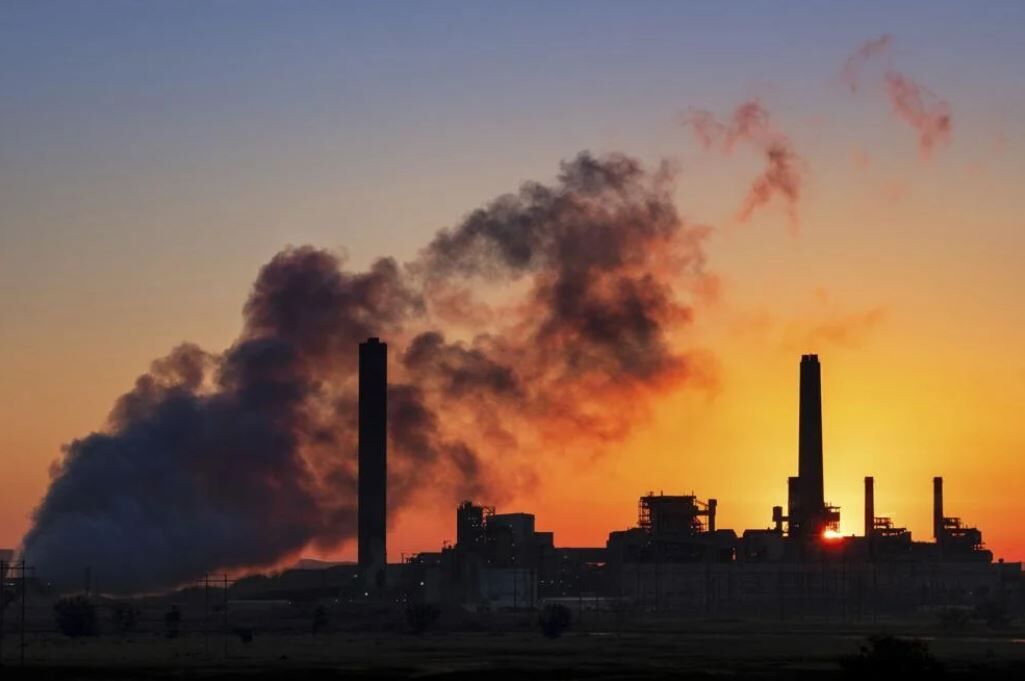
Enough with climate-change scare tactics. They hurt people, possibly more than they will suffer from climate change.
This is our takeaway from a letter written by a climate scientist in Canada and two leading climate scientists in Boulder, which is widely considered in the “Silicon Valley of Environmental Sciences.”
The city is home to the National Center for Atmospheric Research, The National Oceanic and Atmospheric Administration’s Earth System Research Laboratories, the University Corporation for Atmospheric Research, and dozens of scientific non-profits dedicated to studying the climate. Nature magazine listed the University of Colorado-Boulder seventh among the world’s “Top 10 institutions for Earth and environmental sciences in 2018.”
In the Proceedings of the National Academy of Sciences, the scientists warn of too much focus by the scientific community on unlikely worst-case scenarios – including imminent extinction of human life – rather than more plausible outcomes that fall between Armageddon on one extreme and “no worries” on the other. Alarmism, they explain, leads to impossible goals of ending all fossil fuel consumption by mid-century, social disarray and mental health problems.
Perhaps most troubling, scientists warning against alarmism raised concerns about the mental health of young people who believe the world will end soon – long before educations and healthy lifestyles pay off.
“Climate catastrophism may be contributing to the youth mental health crisis,” they wrote. “In a recent international youth survey, 45% reported thoughts of climate change negatively affecting their daily lives and functioning, and 40% reported being hesitant to have children.”
A 2020 survey by the American Psychological Association supports their concern.
“Nearly half of those age 18-34 (47%) say the stress they feel about climate change affects their daily lives,” said Arthur C. Evans Jr., PhD, the Psychological Association’s chief executive officer.
Most people in and around Boulder remember the death of prominent Boulder resident Wynn Bruce who set himself ablaze on Earth Day this year in front of the U.S. Supreme Court. He reportedly killed himself to protest climate change.
“What I do not want to happen is that young people start thinking about self-immolation,” said a close friend of Bruce, as quoted in The New York Times.
Aggressive climate-change policies are also causing low-income Americans to go hungry as the cost of traditional fuels spike and lead to broad-based inflation.
Indeed, the climate is changing. Society needs to address it with real solutions. None of those solutions benefit from needless and counterproductive catastrophizing that harms humanity. We will best address climate change by sticking with the science, embracing achievable policies and avoiding histrionics.
Colorado Springs Gazette Editorial Board

Yet again, when rights are in conflict | Hal Bidlack
Hal Bidlack
hal-bidlack@coloradopolitics.com
Updated 6 hours ago
I admit, it is going to take quite a bit of self-control to not have this entire column end up being yet another screed about a certain president who continues to shock the world in his race to the bottom...

Turn blueprint into action with the Outdoors Opportunities Act | OPINION
Kent Thiry
kent-thiry@gazette.com
Updated 6 hours ago
Nearly a year has passed since Gov. Jared Polis, Colorado Parks and Wildlife, the Colorado Department of Natural Resources, Colorado’s Outdoor Recreation Industry Office and other key partners finalized the visionary Colorado Outdoor Strategy, establishing the framework to ensure Colorado’s...
Let Colorado’s communities govern their own neighborhoods | OPINION
Colorado Politics
colorado-politics@coloradopolitics.com
Updated 6 hours ago
By Jeff Bailey and Cindy Bailey Coloradans have always done things their own way. From how we manage our land to how we build our economies, the instinct to govern locally — to trust mayors, councils and commissioners over distant...
Threats inside and out loom for Colorado’s Republicans | Dick Wadhams
Dick Wadhams
dick-wadhams@coloradopolitics.com
Updated 2 days ago
Colorado Republicans made strides in 2024 despite an insidious state chairman who tried to defeat successful Republican candidates. Newly elected U.S. Reps. Gabe Evans, Jeff Hurd and Jeff Crank fought off unethical opposition from their own state party chairman, making...

Is it time for both parties to bail on Colorado’s political nominating system? | Miller Hudson
Miller Hudson
miller-hudson@coloradopolitics.com
Updated 2 days ago
Cracks are beginning to appear in Colorado’s political nominating system. Recently, Mario Nicolais, a formerly Republican-leaning pundit, and Doug Friednash, former Democratic legislator, have opined regarding the imminent demise of the caucus/assembly framework which controls partisan candidate selection. There has...

Recognizing the value of generational work | Rachel Gabel
Rachel Gabel
rachel-gabel@coloradopolitics.com
Updated 2 days ago
The Lesser Prairie Chicken habitat in southeastern Colorado is a swath of prairie that begins in Cheyenne and far-southeastern Lincoln counties and moves south and east into Kiowa, Prowers and Baca counties. This is cattle country where the short grass...
Why the controversy with mail-in ballots? | Cronin & Loevy
Tom Cronin Bob Loevy
tom-cronin-bob-loevy@coloradopolitics.com
Updated 2 days ago
Most Coloradans enjoy the right to vote “by mail” at election time. Most Americans favor this process. But U.S. President Donald Trump is trying to federalize (nationalize) this practice and shift the supervision of voting from county clerks to the...

Who are the kings being crowned here in Colorado? | Jon Caldara
Jon Caldara
jon-caldara@coloradopolitics.com
Updated 4 days ago
Though most of us celebrate “No Kings Day” on July 4, the Trump-deranged got a head start last weekend with rallies around the state. Attendees bravely fought oppression by blocking traffic for people with jobs. Rally-goers demanded freedom from tyranny,...
An April Fool’s Day to remember | Capitol M | Week of April 4, 2026
Marianne Goodland
marianne.goodland@coloradopolitics.com
Updated 15 hours ago
The lighter side of the Capitol, and if light were weight, the Capitol would have lifted off better than the Artemis II rocket on April Fool’s Day. There was a plethora of Fools at the Capitol for April Fool’s Day...

Democrats rebounding without learning necessary lessons | SONDERMANN
Eric Sondermann
eric-sondermann@coloradopolitics.com
Updated 3 days ago
“When we fight, we win!” That, reportedly, was the chant heard over and over again at the Colorado Democratic Assembly a week ago. It suggests that pugilism has been the piece missing from the Democratic toolkit. Perhaps it was just...
PREV
PREVIOUS

Denver Gazette: New thinking for shrinking schools
What goes up must come down – when it comes to school enrollment, too. No public school district has the same number of students from year to year, and no neighborhood that supplies students to that district stays the same, either. A cul-de-sac teeming with kids on bikes becomes, in seemingly no time, a cul-de-sac […]
BIDLACK | Quality elections take time to count
Hal Bidlack If you, like me, are a political junkie to some degree (likely, given that you are reading Colorado Politics), you have mixed emotions about our almost-done election of 2022. If you are a Democrat like me, you are very happy with the state-wide blue wave. I take particular satisfaction in the wins of […]