

Appeals court orders judge to reconsider drastic reduction to $33 million wrongful death verdict
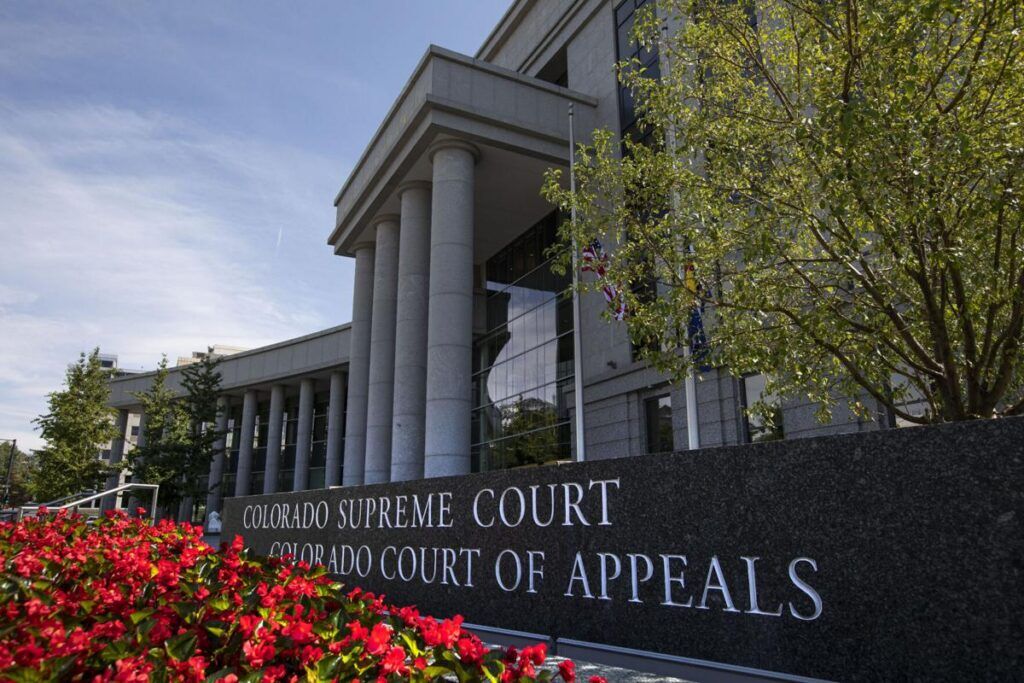
Colorado’s second-highest court has ordered an Arapahoe County judge to reconsider her decision to slash a jury’s $33 million verdict to just $436,070 against a man who was speeding at 99 mph before he ran a red light and killed another motorist.
Although District Court Judge Elizabeth Volz applied the monetary cap on jury awards that exists in state law, she was authorized to lift the cap if defendant Sherozjon Vahobov had committed a “felonious killing” of 30-year-old Justin Gorodess. Last week, a three-judge panel for the Court of Appeals disagreed with Volz’s conclusion that Vahobov’s dangerous driving behavior could not fit the definition of a felonious killing.
“Traffic offenses like excessive speed and failure to obey traffic signals may, depending on the circumstances, support a finding of a substantial and unjustifiable risk,” wrote Judge Christina F. Gomez in the panel’s Oct. 20 opinion.
On Sept. 1, 2019, Vahobov was speeding at 99 mph down Yosemite St. near the border of Denver and Arapahoe County. The speed limit was 35 mph. At the ramp with Interstate 225, Gorodess proceeded into the intersection on a green light. Vahobov, who had managed to slow to around 55 mph, slammed into Gorodess, killing him.
Prosecutors charged Vahobov with vehicular manslaughter, but he reportedly fled to his home country of Uzbekistan during the criminal proceedings. Instead, Gorodess’ mother took Vahobov to trial on a civil claim of wrongful death. Vahobov did not appear at the trial, and the jury found him liable for Gorodess’ death. Jurors awarded Gorodess’ mother $33 million for noneconomic damages, which can include emotional distress and suffering.
Colorado law places a limit on noneconomic damages, but there is an exception if the wrongful death amounts to a felonious killing. To fit that definition, a defendant must have a conviction of murder or manslaughter in a criminal case, which did not apply to Vahobov.
Regardless of any criminal proceedings, however, if a trial judge determines it is more likely than not that a defendant’s behavior amounts to manslaughter, the judge can also deem the wrongful death to be a felonious killing.
The lawyer for Gorodess’ mother requested that Volz find Vahobov committed a felonious killing, asserting there was sufficient evidence Vahobov acted recklessly, as manslaughter requires. But Volz disagreed.
“In this case we have almost no information about what Mr. Vehobov (sic) was aware of at the time of the collision,” she wrote, “although the fact that he substantially reduced his speed just prior to entering the intersection indicates that it is quite possible that Defendant might have been speeding up to ‘make the light’ and then slammed on his brakes when the light turned red.”
If true, that would not mean Vahobov acted recklessly, Volz believed. Speeding and running a red light, she added, could not alone suggest manslaughter was an issue.
“To hold otherwise would mean that every time there is an automobile collision which involves the violation of the traffic laws and that collision results in a death, the incident must be deemed a ‘felonious killing’,” Volz wrote. “Such an analysis would apply in almost every traffic accident case.”
She then refused to reconsider her ruling and hold a hearing on the evidence, insisting she “properly analyzed the facts.”
On appeal, Anthony Viorst, representing the plaintiff, argued Volz was incorrect to conclude the circumstances of Gorodess’ death could not be a felonious killing because they were like “almost every traffic accident.”
“Even if he was ‘gunning it’ and trying to make the red light, so what? He could still be reckless,” Viorst said of the defendant.
The Colorado Trial Lawyers Association wrote to the Court of Appeals to echo Viorst’s position, observing that the act of traveling 99 mph down a 35 mph road was inherently unreasonable and deadly. The Colorado Defense Lawyers Association also submitted a brief, cautioning the court against “expanding” the felonious killing exception to all motor vehicle fatalities.
Judge Elizabeth L. Harris took issue during oral arguments with Volz’s belief that if Gorodess’ killing was reckless, all traffic accidents were reckless. That conclusion, Harris observed, was “not true.”
“No one was saying, ‘Every time somebody drives over the speed limit or runs a red light, that’s reckless conduct.’ Nobody was saying that,” Harris said. “Maybe she needs to reconsider because that second part is not true and it seems to be driving the quasi-factual finding that these things are not a substantial risk.”
The appellate panel ultimately decided Volz should have held a hearing to determine whether the evidence established Vahobov committed a felonious killing. The plaintiff, explained Gomez, was willing to offer several types of testimony, plus an animation of the accident, to show how Vahobov’s behavior amounted to recklessness.
“And, contrary to the trial court’s concern,” she wrote, echoing Harris’ critique, “a finding that this standard is satisfied under the circumstances of a particular case doesn’t signify that the same finding would be required under other circumstances involving more minor infractions.”
The case is Gorodess v. Vahobov.

Appeals court overturns convictions after judge improperly accepted facts as undisputed
Michael Karlik
michael.karlik@coloradopolitics.com
Updated 4 hours ago
Colorado’s second-highest court reversed a defendant’s convictions and 12-year prison sentence earlier this month after an El Paso County judge did not require prosecutors to prove key facts that were, after all, subject to dispute. Prosecutors charged Noel Lavertt King...
Jeffco murder conviction overturned due to improper evidence
Michael Karlik
michael.karlik@coloradopolitics.com
Updated 21 hours ago
Colorado’s second-highest court reversed a defendant’s convictions for murder and aggravated robbery earlier this month, finding that a Jefferson County judge allowed evidence that improperly suggested the man had “bad character” for possessing guns generally. Under the rules for criminal...

Daniel Domenico nominated for 10th Circuit, state Supreme Court hears arguments | COURT CRAWL
Michael Karlik
michael.karlik@coloradopolitics.com
Updated 1 day ago
Welcome to Court Crawl, Colorado Politics’ roundup of news from the third branch of government. Colorado’s chief federal trial judge is the choice for an upcoming vacancy on the Denver-based federal appeals court, plus the state Supreme Court heard oral...
Man who asked mom to lie to parole officer can stand convicted, Colorado Supreme Court decides
Michael Karlik
michael.karlik@coloradopolitics.com
Updated 1 day ago
Attempting to influence a public servant is a crime that can include a defendant’s use of a third party to convey false information, the Colorado Supreme Court decided on Monday. There was no dispute that Michael Thomas Hupke asked his...

Children’s Colorado must resume care to transgender plaintiffs, state Supreme Court rules by 5-2
Michael Karlik
michael.karlik@coloradopolitics.com
Updated 21 hours ago
The Colorado Supreme Court, by a 5-2 vote, ordered Children’s Hospital Colorado on Monday to resume providing certain medical services to a group of transgender plaintiffs, which it had ceased in the face of funding threats from the federal government...
Development fees not limited to brand new construction, Colorado court rules
Michael Karlik
michael.karlik@coloradopolitics.com
Updated 3 days ago
Colorado’s second-highest court ruled last month that local governments’ ability to impose fees on “new development” is not limited solely to construction projects that occur on empty land. Under state law, local governments that issue development permits are empowered to...
Colorado justices consider whether fraud claims belong in corporate dispute
Michael Karlik
michael.karlik@coloradopolitics.com
Updated 21 hours ago
The Colorado Supreme Court considered on Tuesday whether it is possible for a corporate plaintiff to pursue fraud claims over conduct that could be covered by a contract or by a set of interrelated business agreements leading up to the...
Colorado Gov. Jared Polis grants clemency to Tina Peters, makes her eligible for release from prison
Ernest Luning
ernest.luning@coloradopolitics.com
Updated 4 days ago
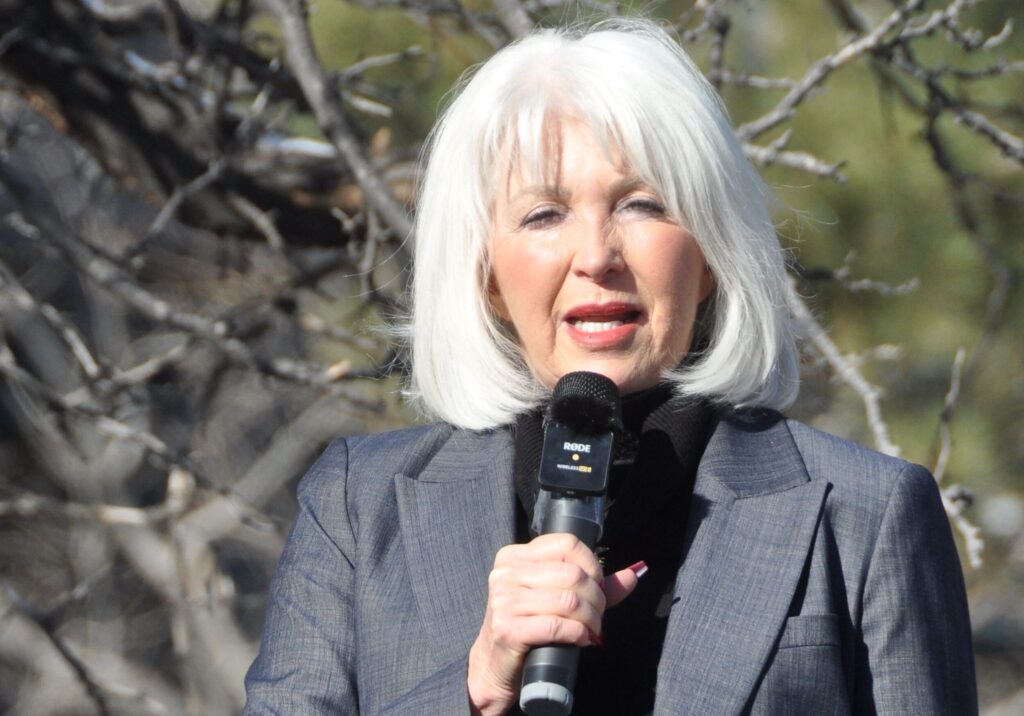
Colorado Gov. Jared Polis on Friday granted clemency to Tina Peters and made the former Republican county clerk eligible for release from state prison as soon as early June, capping months of speculation that the Democratic governor would shorten a...
Grand jury indicts 2 petition circulators in 2024 signature-forgery case
Marissa Ventrelli
marissa.ventrelli@coloradopolitics.com
Updated 4 days ago
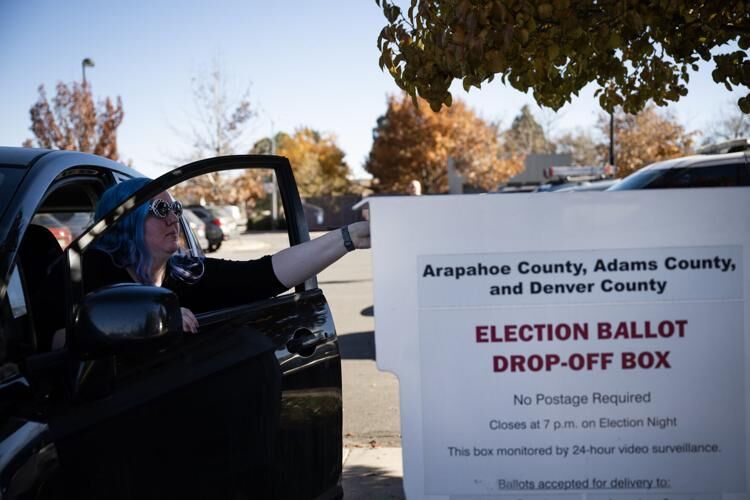
A statewide grand jury has indicted two petition circulators on allegations that they forged signatures while gathering support for a proposed constitutional amendment on the 2024 ballot. The Colorado Attorney General Phil Weiser’s office said the circulators — Cherell Long...
Couple’s notarized agreement did not create common law marriage, appeals court says
Michael Karlik
michael.karlik@coloradopolitics.com
Updated 4 days ago
A Garfield County couple’s signed, notarized document attesting to their common law marriage does not mean they were actually married, Colorado’s second-highest court ruled last week. In contrast to a formal, licensed marriage, Colorado recognizes common law marriages between two...
PREV
PREVIOUS

Race for El Paso County's House District 15 pits pastor against mechanic
Colorado Springs-area pastor and Republican candidate Scott Bottoms is looking to retain the decades-long GOP stronghold in Colorado’s House District 15 in next month’s election. But Democrats say their candidate Alvin Sexton’s chances of winning the seat this year are more promising than in recent memory thanks to redistricting and changing demographics. El Paso County […]

Colorado offers free mammograms to qualifying women
In support of Breast Cancer Awareness Month, the state of Colorado will offer free mammograms to qualifying women. The state of Colorado encourages Coloradans to keep up with mammograms in hopes of catching breast cancer early. Individuals who qualify through the Women’s Wellness Connection program, which operates at more than 100 clinics statewide, can get […]