

SONDERMANN | Sizing up the election in the homestretch
As the candidates round the final turn and enter the homestretch, let’s size up where things stand and the prospects ahead.
This election year began with every expectation of a Republican rout. Rampant inflation and an unpopular president combined with the historical trend of off-year elections spelled a tidal wave that would drown Democratic dreams.
Then June brought the Dobbs decision reversing Roe v. Wade. Democrats mobilized along with others who had taken abortion rights for granted. Inflation, especially at gas pumps, slowed down ever so slightly. President Biden earned points for his handling of the Russian outrage in Ukraine and gained modest political footing. Between congressional hearings, criminal trials of Jan. 6 combatants and his own omnipresence, Donald Trump again filled every news cycle.
All that caused a surge of Democratic hopes. The most optimistic among them prophesied a reversal of the off-year norm. More grounded minds simply hoped to limit the damage and perhaps fight to a draw.
Here we are in the endgame with multiple polls over the last few weeks showing movement toward Republicans. A 1994 or 2010 run of the table (net GOP pickup of 54 and 63 congressional seats, respectively) might not be in the cards. But significant Republican gains are predictably in the offing. Control of the U.S. Senate, a month ago thought likely to stay with Democrats, now sits on knife’s edge.
The Democratic resurgence peaked a few weeks too early. With roughly 70 percent of Americans identifying inflation and economic insecurity as their chief concern, it is a tough task to counter that with something close to an exclusive focus on privacy rights post-Dobbs.
When Democrats find themselves in a tight spot, the instinct is to beat the abortion drum non-stop. Flash back to the 2014 campaign of former Colorado Sen. Mark Udall. That losing effort was so monotonal and unbefitting of an accomplished legislator with a broad agenda that a local scribe, none other than Lynn Bartels, dubbed him “Mark Uterus.”
The drumbeat certainly activates a large segment of the party’s female-heavy base in addition to a good slice of less politically engaged voters. And make no mistake, the pro-choice position is closer to the dominant strain of public opinion than any adamant, unyielding pro-life stance.
However, it is not sufficient as a one-note message, especially when the mass of voters prioritize another issue. It does little to attract voters that the Democratic Party has been bleeding, including non-college-educated, blue-collar sorts. Remember not that many decades ago when this demographic was a core Democratic constituency?
The most striking feature of this election is the degree to which the two parties not only disagree but are running on two completely divergent sets of issues. That is what polarization has wrought.
In most previous cycles, there was a commonly held set of central issues on which the two parties would have quite different takes. But here we are with Republicans screaming inflation, fentanyl and crime while Democrats holler abortion and democracy. Venus, meet Mars.
No matter how impassioned the debate over abortion and how much commentators and pundits, myself included, worry about the carefree callousness with which too many Republicans are treating core tenets of democracy, there is abundant evidence that economic pressures supersede.
When inflation is galloping and gas stations might be wise to employ a loan officer, it is tough to counter it with lectures on constitutional law.
Here, succinctly, are four things to keep an eye on over the next couple of weeks culminating in election night.
First, whether it is a big election for Republicans or just an average one, any retrospective will note the number of winnable seats they will essentially forfeit having put forward nominees simply too far out there to be electable even in a winning year. Looking at you, Doug Mastriano in Pennsylvania, Dan Bolduc in New Hampshire, quite possibly Herschel Walker in Georgia, and plenty of others.
Second, every election brings a surprise or two out of left or right field. What shocker does 2022 have in store? Might the battle for control of the Senate come down to neighboring Utah where Trump-apologizing incumbent Mike Lee is being given a race not by a sacrificial Democrat, but by an anti-Trump Republican-turned-independent, Evan McMullin?
Third, the Latino vote warrants close analysis. A decidedly non-woke, Catholic culture of small businesspeople hit hard by ballooning costs, do these voters continue, even marginally, to move away from Democrats as we witnessed in Florida in 2020 and in special elections along the Texas border?
Fourth, much ink will be spilled by those pretending to know what this election portends for 2024. I surely will join that cascade at some point. But take it all with a grain of salt. And a deep breath. We are in a yin and yang cycle of political overreach. Recall that the huge Republican victory of 1994 and implicit rejection of President Bill Clinton was followed two years later by a comfortable Clinton reelection. Same for Barack Obama between 2010 and 2012.
Let’s conclude with a lens on Colorado. Assuming a national Republican wave of undetermined height, does it hit Colorado with full force? Or do Colorado Democrats enjoy some degree of political immunity?
The brand new 8th congressional district north of Denver will offer the tell. If Republicans are to capitalize on their best opportunity in years, it must start with a substantial victory by their candidate, Barbara Kirkmeyer. She is the bellwether.
If Kirkmeyer wins by several points, GOP victories in other races could ensue, even handicapped by their relative absence from the television advertising wars. If Kirkmeyer fails to get across the finish line, it is likely to be another sad election night for Republicans up and down the Colorado ballot.
Democrats in this ever-more-blue state enjoy a built-in advantage of roughly six points. It could well be a GOP year with Republicans riding a four-point wave. Do the math.
Eric Sondermann is a Colorado-based independent political commentator. He writes regularly for Colorado Politics and the Gazette newspapers. Reach him at?EWS@EricSondermann.com; follow him at @EricSondermann


U.S. Senate OKs funding bill to avoid government shutdown
Wire Services
wire-services@coloradopolitics.com
Updated 17 hours ago
Hemp provision became point of contention WASHINGTON • The U.S. Senate in an overnight vote Saturday approved a short-term measure to fund federal agencies into early December and avoid a government shutdown during the middle of campaign season. The late-summer...
The relevance of Watergate more than a half-century later | SONDERMANN
By Eric Sondermann
by-eric-sondermann@coloradopolitics.com
Updated 3 days ago
It was the scandal for which all other scandals are now named. In June 1972, a small group of Cuban burglars with high-level connections broke into the headquarters of the Democratic National Committee. Those headquarters were located in the Watergate...

Wirth downplays Social Security disaster talk | A LOOK BACK
Rachael Wright, Special to Colorado Politics
rachael.wright@coloradopolitics.com
Updated 3 days ago
Forty-five years ago this week: “As time goes on,” said Democratic U.S. Rep. Tim Wirth, of the 2nd Congressional District, “we are finding that the safety net, which was proposed earlier this year, has some very large holes in it,”...

Colorado Politics Calendar Aug. 10-16
Rachael Wright, Special to Colorado Politics
rachael.wright@coloradopolitics.com
Updated 3 days ago
CoPo’s weekly political calendar will help you find political and public-policy events throughout Colorado. It includes candidate and issue campaign events, public policy meetings, court hearings, state and local party conventions, assemblies, debates, rallies, parades, speaking engagements, traveling dignitary appearances,...

Democratic group aims Spanish-language TV ad at Gabe Evans in Colorado’s battleground 8th CD
Ernest Luning
ernest.luning@coloradopolitics.com
Updated 1 day ago
A national group tied to House Democratic leadership launched a six-figure Spanish-language TV ad in Colorado this week targeting Republican U.S. Rep. Gabe Evans and the GOP’s signature budget legislation. The 30-second spot is part of $15 million in new...

Colorado School of Mines lands major share in Trump’s $100M mining-education plan
Thelma Grimes
thelma.grimes@coloradopolitics.com
Updated 1 day ago
President Donald Trump on Friday named the Colorado School of Mines among roughly a dozen institutions that will share in a $100 million commitment “to train the next generation of American miners.” Paul Johnson, the university’s president, said he is...
Local party leaders, incoming judge among members of judicial performance commission that violated law
Michael Karlik
michael.karlik@coloradopolitics.com
Updated 11 hours ago
A local Democratic leader and 2024 presidential elector. A legislative aide and leader in the Young Republicans. An incoming county court judge freshly appointed by the governor. They are among the eight members of the northeastern Colorado judicial performance commission...
Judge dismisses lawsuit seeking records from Colorado Democratic group
Marianne Goodland
marianne.goodland@coloradopolitics.com
Updated 1 day ago
A lawsuit seeking to obtain records from Democratic lawmakers affiliated with a caucus has been thrown out by a Denver District Court judge. On July 17, Judge Ericka Englert dismissed the April lawsuit filed by progressive activist Derrick Blanton, who...

DOJ official decries ‘nonsense’ in Jeffco schools at fundraising gala
Matt Kyle
matt.kyle@denvergazette.com
Updated 17 hours ago
Amid a legal battle between Jeffco Public Schools and the federal government, a Department of Justice official spoke at a fundraising gala and decried “crazy stuff” and “nonsense” in the school district. The gala was for Jeffco Kids First, an...
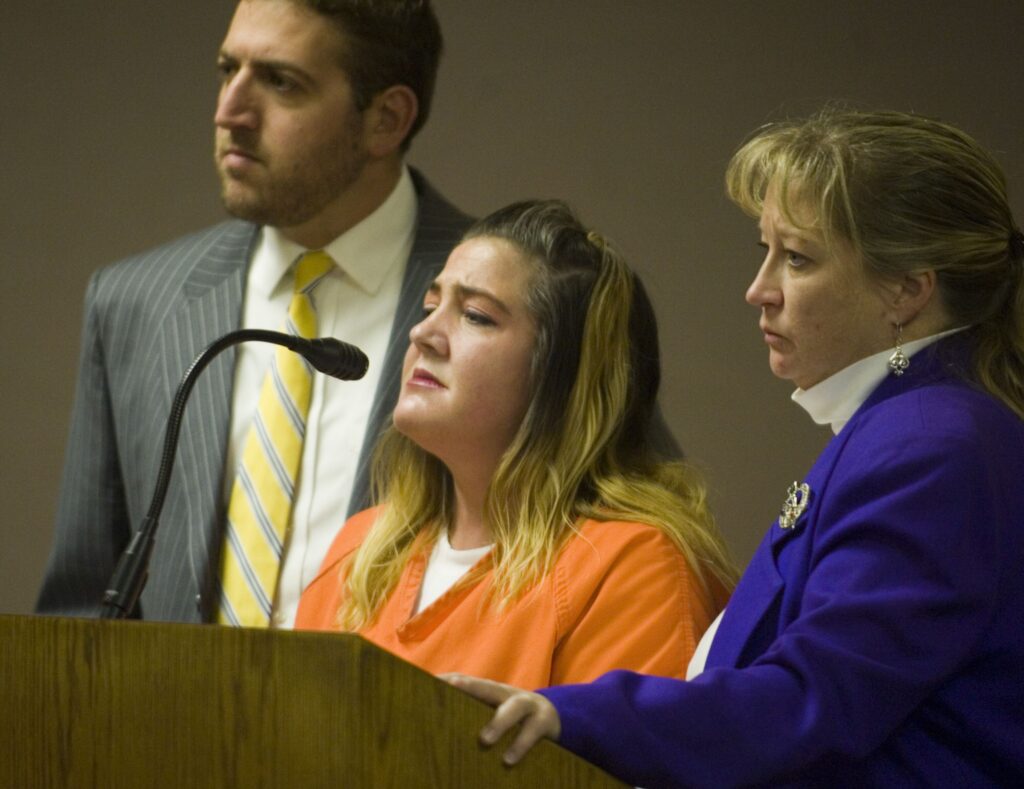
Colorado Springs mother Deborah Nicholls’ murder conviction overturned
Nick Smith
nick-smith@coloradopolitics.com
Updated 2 days ago
A Colorado Springs mother convicted in 2008 of murdering her three children in a house fire might get a new trial after a judge ruled that prosecutors withheld key evidence that could have impacted the jury’s verdict. Deborah Nicholls, whose...
PREV
PREVIOUS

Colorado's updated water master plan draws criticism for not going far enough
Coloradans want the state’s top water planning document to mandate faster action, be more accountable, require equitable drought responses between the Front Range and Western Slope, and to specifically include the crisis on the rapidly drying Colorado River in its estimates of future water shortages. More than 1,300 individuals and agencies submitted public comments on […]
OUT WEST ROUNDUP | Lawsuit alleges fire retardant drops polluted waterways
MONTANA US sued for pollution from retardant drops on wildfires BILLINGS – An environmental group filed a lawsuit on Oct. 11 against U.S. Forest Service officials that alleges they polluted waterways during their campaigns against wildfires by inadvertently dropping large volumes of chemical flame retardant into streams. Government data released earlier this year found aircraft […]