

SONDERMANN | In defense of the political center
Question: What is the only thing you find these days in the middle of the road?
Answer: A dead armadillo.
That bit of humor points to what is increasingly and problematically our political condition. The political center is vanishing as the country further pulls to its embattled poles.
Clearly, one’s perception of just where that center lies depends largely on where they fall along the political spectrum. The farther one sits toward the left or the right, the more distant is that middle axis.
In recent weeks, a friend significantly to the left suggested that my views are well to the right of center. That came just days after another friend with leanings to the right conveyed his sense that my repeated criticism of Donald Trump calls into doubt any centrist credentials.
Personally, I take considerable satisfaction in knowing that many on the right think of me as some stealth progressive, while what seems like an equal number to the left regard me as a conservative in disguise.
When true believers on both sides are upset and dismissive, I must have found something close to a center lane.
As the nation further divides, as political identity is a defining statement, as ticket-splitting wanes and tribalism reigns, let me humbly suggest that those who try to hold onto some political midpoint become even more valuable.
Decades in the past, the distance between the two parties was substantial but not vast. Democrats used to occupy the left-hand 40-yard line, while Republicans set up camp on the right-hand 40. Sure, there were always fanatics and those advocating more radical paths – committed socialists on one side and John Birch Society types on the other.
But in most periods, those on the extremes were marginalized and establishment interests held sway in both parties.
That is decidedly not the case in this modern age.
Starting with the Gingrich revolution of the mid-90s, then to the Tea Party reaction to Barack Obama and culminating in the Trump presidency and post-presidency, today’s Republican Party would be unrecognizable to Ronald Reagan, much less Richard Nixon or Dwight Eisenhower.
The movement on the Democratic side may be somewhat less dramatic, though it has been still pronounced.
The Trumpification of the GOP yielded an animating reaction among Democrats as well. As the Tea Party served as a radicalizing force for Republicans, Democrats had their own Chai Party. Core elements of the Democratic Party maintain more influence and have won more primaries than their Republican counterparts. Nonetheless, the Democratic agenda is being increasingly set by those on the activist, progressive left, and the party’s epicenter inarguably has moved hard in that direction.
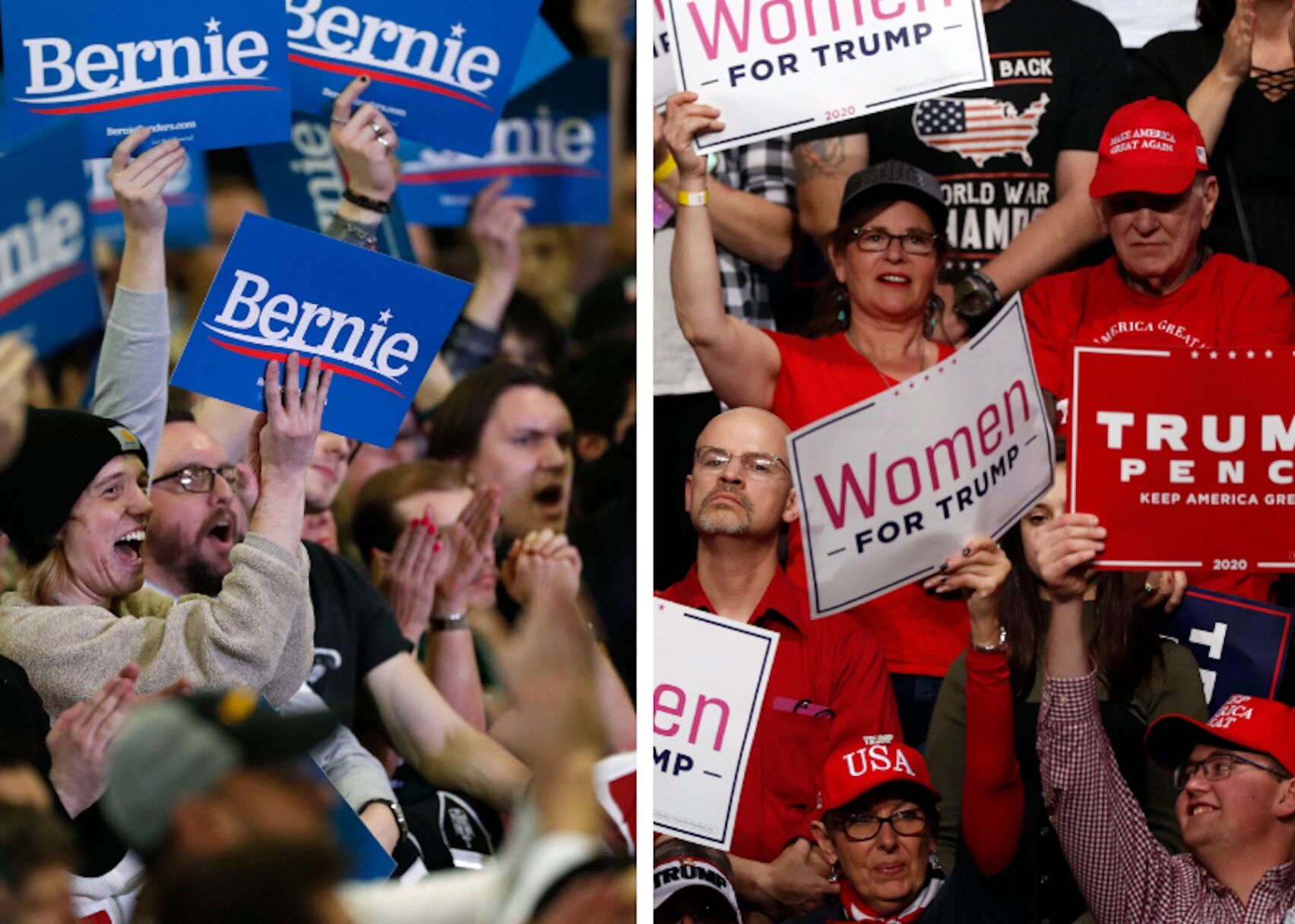
Hillary Clinton and Joe Biden may have emerged with the party’s two most recent nominations, but Bernie Sanders won the battle for hearts and minds.
Instead of those positions near mid-field, Democrats now often play from the left goal line, while Republicans have set up camp in the right-hand endzone when not out in the distant parking lot.
To be clear, political moderation is not code for some kind of absence of belief or convictions. It is not a milquetoast, split-the-difference approach to policy questions. Nor does it involve an equivalent attribution of responsibility for the mess that has become of our political system.
Rather, a centrist political orientation encompasses a belief that neither side has a monopoly on worthy ideas and that compromise need not be a dirty word. It rejects political tribalism and the growing, accompanying hatred. It takes issues on a case by case basis and respects the lessons of history. It finds wholly wanting the preoccupation with political gamesmanship. It pushes back on the notion that every political disagreement is Armageddon.
At its best, moderation entails grace and an acknowledgement that sometimes you come up on the short end of a decision or vote. What a novel concept these days.
Above all, this reasoned, grounded approach puts a premium on independence over blind loyalty and the expectations, even assumptions, of team play.
It is no accident that unaffiliated voters, call them independents, far outnumber either Democrats or Republicans in Colorado and many other states. Even if many among the unaffiliated ranks carry a default preference for one party or the other, this is an indication that voters as a whole might not be as hopelessly polarized as the loudest voices and the political class.
But our party system, propelled by various forces, is increasing disdainful on both sides of those who opt for the middle ground.
Witness the animus among the Democratic faithful to the likes of Joe Manchin, even as he is the only Democrat who could be elected from a state that Trump carried by 39 points.
Likewise, witness the largely successful campaign among Republicans to rid themselves of any and all who dared to cross their dear leader.
So-called Blue Dog Democrats used to be a powerful part of the Democratic coalition. Same for New England style Weicker or Rockefeller Republicans. Both have become a dying breed, killed off one by one by ideologically driven voters in party primaries. Folks, such as Manchin and Maine’s Susan Collins, are the rare exceptions that prove this rule.
In both parties, the welcome sign now reads, “True believers only.”
Here in Colorado, the centrist ranks may be growing. A number of legislators of distinction and intellectual integrity over the past decade have decided that the price of party loyalty is too steep.
Republicans Rob Witwer, Cole Wist, Ellen Roberts and Al White renounced their party in favor of independent status after leaving office. Democrats Kathleen Curry and Cheri Jahn did so while still in their legislative seats.
Hooray for them and for statements of principle.
Years ago, David Kopel, my friend and television colleague even as we differ on some issues, referred to me as, “the most radical moderate in Colorado.” Or words to that effect. It is a badge that I wear with honor.
Eric Sondermann is a Colorado-based independent political commentator. He writes regularly for Colorado Politics and the Gazette newspapers. Reach him at?EWS@EricSondermann.com; follow him at @EricSondermann

Registered voters on the eve of the 2026 primaries | Cronin & Loevy
Tom Cronin Bob Loevy
tom-cronin-bob-loevy@coloradopolitics.com
Updated 2 days ago
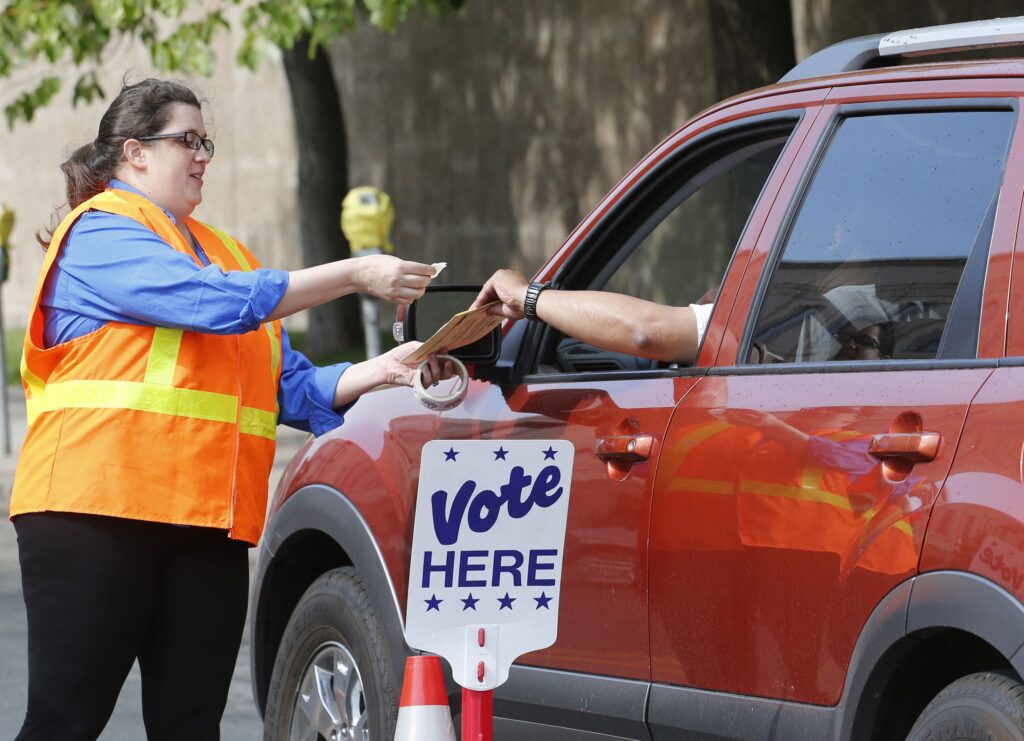
The Colorado Secretary of State’s Office has published the latest voter registration figures for the state and its counties as of June. Colorado ranks among the highest states for independent, or unaffiliated, voters. Only Alaska and Massachusetts have more. New Hampshire, New Jersey, Maine and Oregon also rank highly. So here...
Democratic candidates DeGette, Kiros and James clash in CD1 forum
Marissa Ventrelli
marissa.ventrelli@coloradopolitics.com
Updated 1 day ago
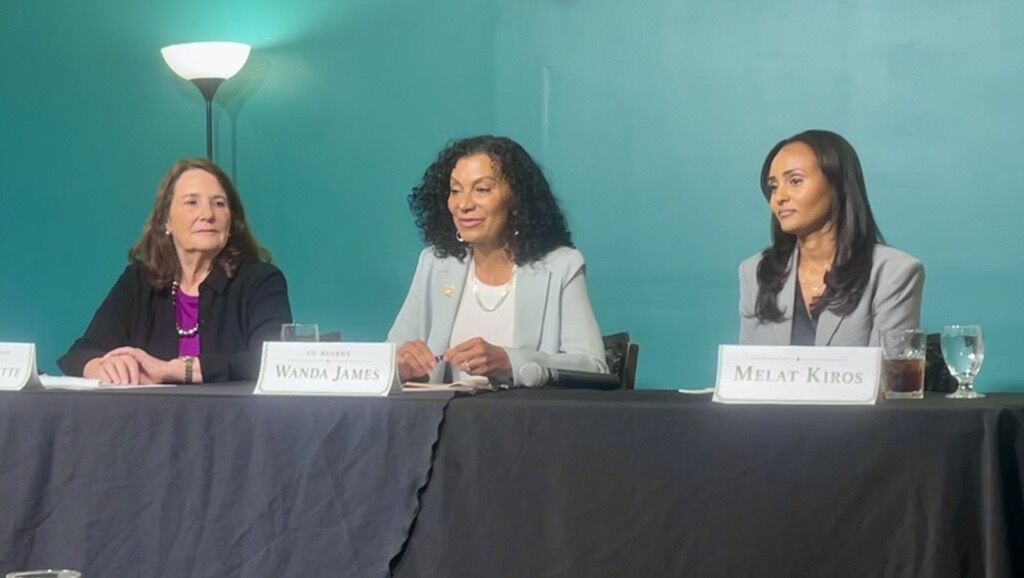
The three Democratic candidates for Colorado’s 1st Congressional District clashed on Friday night over a host of issues, even as they expressed frustration with their party. The candidates — U.S. Rep. Diana DeGette, doctoral student Milat Kiros and university regent...
Rep. Jeff Crank thinks Democrats are too focused on Trump, not enough on Colorado Springs | Vince Bzdek
Vince Bzdek
vince.bzdek@gazette.com
Updated 10 hours ago
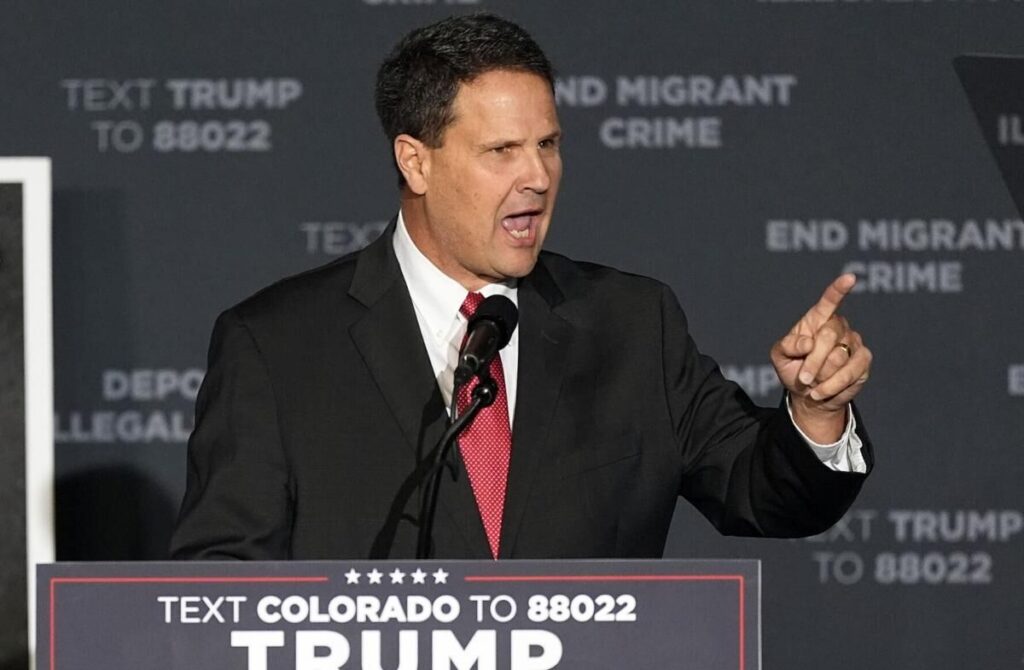
For U.S. Rep. Jeff Crank, who’s unopposed in the Republican primary for the 5th Congressional District but the main target of both candidates in the lively Democratic primary, the big question in the midterms is not who will stand up...
Bernie Sanders endorses DeGette challenger Melat Kiros in Colorado’s 1st CD Democratic primary
Ernest Luning
ernest.luning@coloradopolitics.com
Updated 2 days ago
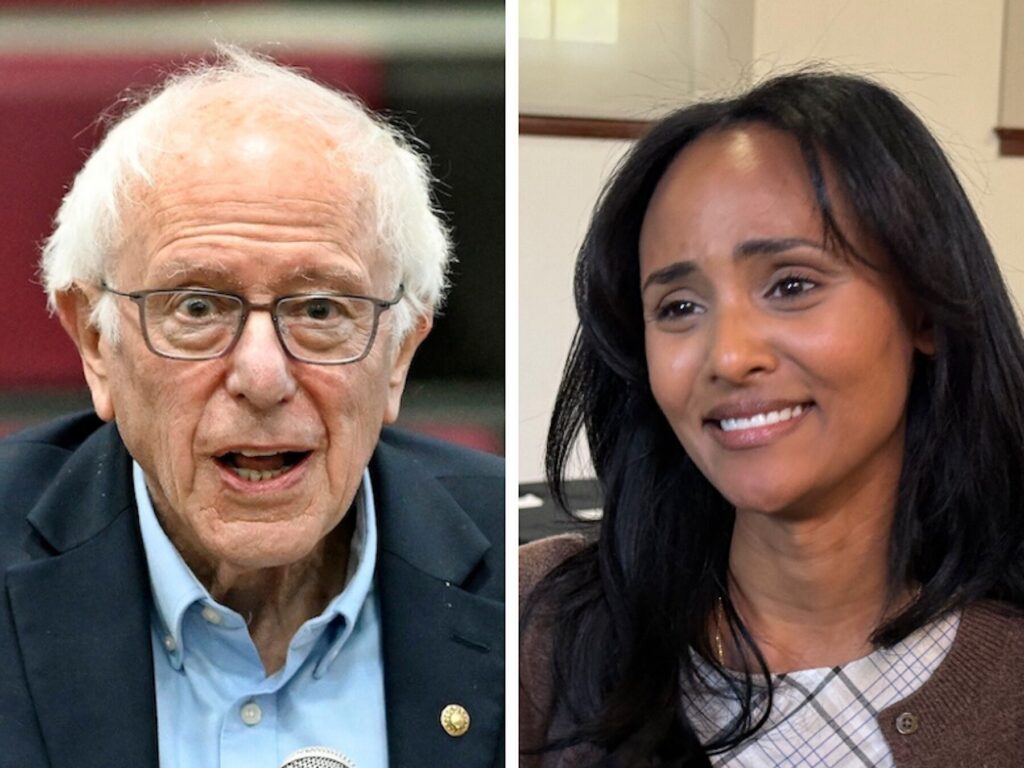
U.S. Sen. Bernie Sanders on Friday endorsed congressional candidate Melat Kiros, one of two Democrats challenging 15-term U.S. Rep. Diana DeGette in Colorado’s June primary. Sanders, a Vermont independent who caucuses with the Democrats, called the 29-year-old Kiros “exactly the...
Democratic ballots outpace Republicans’ as Colorado’s primary vote starts to trickle in
Ernest Luning
ernest.luning@coloradopolitics.com
Updated 2 days ago
With less than two weeks left before ballots are due in Colorado’s primary election, election officials have logged in ballots from just under 6% of the state’s 4 million active, registered voters, the Colorado Secretary of State’s Office said Thursday....
Amid public pressure, Colorado candidates tackle social media regulations for minors
Bethany Johnson
bethany.johnson@denvergazette.com
Updated 14 hours ago
Following the accidental overdose of her daughter in 2020, Patti Lujan pursued a lawsuit against Snapchat, the social media platform that, she claimed, connected her daughter with a drug dealer. In a news release announcing the lawsuit, Lujan alleged that...
Colorado state Senate: Meet the primary election candidates
Marianne Goodland
marianne.goodland@coloradopolitics.com
Updated 4 days ago
Colorado’s June 30 primary features a slate of state Senate contests, with several incumbents stepping aside and competitive fields emerging in both parties. These are some of the races to watch as voters begin to submit ballots. Senate District 3:...
Hickenlooper raises $900K since April, heads into primary with almost $3 million on hand
Ernest Luning
ernest.luning@coloradopolitics.com
Updated 4 days ago
U.S. Sen. John Hickenlooper raised just over $900,000 for his reelection bid in the 10-week pre-primary reporting period, the Colorado Democrat’s campaign said Wednesday. The campaign finished the period with almost $3 million in the bank, with more than 80%...
Bennet’s gubernatorial ads say U.S. Senate committee paid for them
Marianne Goodland
marianne.goodland@coloradopolitics.com
Updated 4 days ago
Update: as of Wednesday morning, at least one of the ads, featuring Colorado’s Democratic congressional delegation, has been changed to include the disclaimer “paid for by Bennet for Governor.” A series of TV commercials for U.S. Sen. Michael Bennet’s gubernatorial...
A graduated tax plan could undercut Colorado’s business competitiveness, analysis warns
Marissa Ventrelli
marissa.ventrelli@coloradopolitics.com
Updated 3 days ago
A proposal to move Colorado to a graduated income tax — taxing individuals and businesses at different rates based on their earnings — could generate more than $2 billion in its first year, but it could also weaken the state’s...
PREV
PREVIOUS
A LOOK BACK | 'Red Smear' attack in U.S. Senate race condemned
Sixty Years Ago This Week: Democratic Party leadership expressed their displeasure over what they deemed had been an “ill-advised” attack against Democrat incumbent U.S. Sen. John Carroll. Yale-trained lawyer, Army Air Corps WWII veteran and founding partner of Holland and Hart law firm, Peter Dominick was challenging Carroll, a former Denver District Attorney and WWII […]

OUT WEST ROUNDUP | Forest service restarts burns after runaway New Mexico blaze
NEW MEXICO US restarts burns of forest fuel, paused after runaway blaze SANTA FE – The U.S. Forest Service is resuming its practice of intentionally lighting fires to clear brush and small trees from forested areas nationwide after a three-month hiatus to review the risks of runaway wildfires under increasingly severe climate conditions, the agency […]