

Ganahl unveils transportation plan focused on roads, wants to ask voters to replace fees with taxes
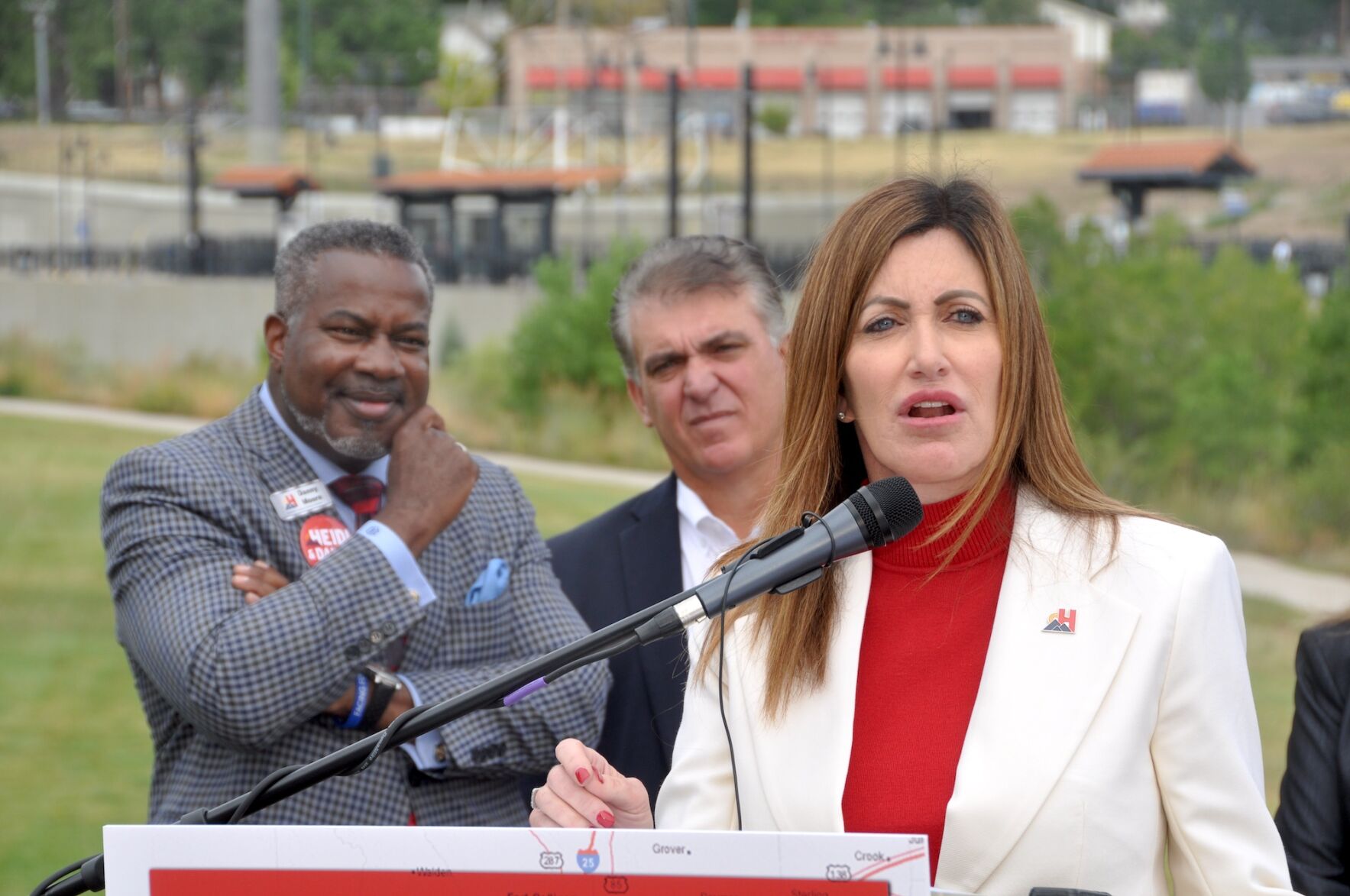
Republican gubernatorial candidate Heidi Ganahl on Thursday unveiled a plan to spend billions on improving and expanding roads across Colorado while rolling back state spending on other forms of transportation.
Flanked by Republican state lawmakers and supporters, Ganahl said she wants to ask voters to convert a package of transportation-related fees signed into law last year by Gov. Jared Polis into taxes to provide a portion of the $10 billion she proposes spending over a decade.
Her plan also relies on matching funds from the state’s general fund and an aggressive approach to public-private partnerships, which typically result in toll lanes to fund highway expansion.
Democrats dismissed Ganahl’s proposal as a half-baked “wish list” of projects that are mostly already underway.
“I’ve seen first-hand how broken our transportation system is,” Ganahl said at a press conference near the Colorado Department of Transportation headquarters in Denver. “Our roads are not safe or well-maintained, and hardworking Coloradans sit on congested highways, just like this morning, wasting both their time and hard-earned money.”
Ganahl said her plan will address environmental concerns by reducing the time Colorado drivers spend stuck in traffic, wasting an estimated 100 million gallons of gasoline a year, according to a CDOT estimate.
“Jared Polis’ vision for Colorado transportation is a nightmare,” she said. “He wants you to ride an electric bus everywhere, which is just not feasible for most Coloradans.”
Added Ganahl: “Jared Polis is stealing one of our basic freedoms. Driving gives you the freedom to go where you want, when you want.”
Ganahl criticized the Polis-appointed Colorado Transportation Commission, which voted unanimously shortly after Ganahl spoke to approve changes to the state’s 10-year list of project priorities by cutting plans to widen some major highways, including a stretch of Interstate 25 through central Denver.
Under the revised set of priorities – intended to reduce greenhouse gas emissions in accord with a 2019 climate law signed by Polis – the state plans to accelerate construction of dedicated bus lanes on some congested routes.
“Right now, inside that building, they’re attacking that freedom,” Ganahl said, waving toward CDOT headquarters, where commission members were meeting. “All this leads us to a need for a different plan, a common sense solution that reduces carbon emissions by alleviating traffic and helping Coloradans travel our state safety and on time.”
In order to fund her plan, Ganahl said she hopes to raise $3.5 billion over 10 years if voters OK a ballot measure to undo a 2021 transportation funding bill that created a set of fees, including at the pump and on deliveries to pay for roads, bridges, mass transit and electric vehicle charging stations, among other transportation projects.
Another $3.5 billion would have to be approved by the legislature, though Ganahl didn’t say what programs she would propose cutting in order to free up the funds.
Noting that the figure amounts to about 3% of the state’s general fund, Ganahl said: “I’m confident that the General Assembly can find that room in the existing budget, let alone as we work to shrink the size of government and bureaucracy and find waste and fraud. This funding will be a priority of my administration. If the people of Colorado are going to approve the funding from the voters, the General Assembly must meet the people halfway.”
Her plan also includes $3 billion in private funding, which former CDOT executive Johnny Olson, a Ganahl supporter, said is available for the types of projects Ganahl is proposing.
Ganahl said her transportation plan doesn’t include any new taxes, though the ballot measure she described would ask voters to convert the 2021 law’s schedule of fees into taxes set to expire after 10 years.
Campaign staffers said she intends to get the measure on the ballot by petition, since at least one chamber of the legislature is likely to remain in Democratic control, reducing the likelihood lawmakers would send the question to voters by referendum.
Although Ganahl initially said she plans to ask voters to approve the funding plan in 2024, a campaign spokeswoman later said the measure will likely go to the ballot next year.
While Colorado voters have rejected transportation funding measures in recent elections by wide margins, Ganahl’s campaign said she’s confident she can rally support, in part by listing the projects that will be built.
On the list released by her campaign: $3 billion to build bus rapid transit and toll lanes from Castle Rock to Fort Collins on I-25, $1 billion for a rural pavement program, $1 billion directed to Interstate 70 in the mountains, and $1 billion distributed to cities and counties for local projects.
A spokeswoman for Polis’ campaign declined to comment. The Colorado Democratic Party called Ganahl’s plan “a collection of vague transportation ideas” that don’t add up.
“Heidi’s first plan is more like a wish list … of things the governor is already doing,” party spokeswoman Kailee Stiles said.


Colorado, some Coloradans make appearances in the Epstein Files
RACHAEL WRIGHT Special to The Gazette
rachael-wright-special-to-the-gazette@coloradopolitics.com
Updated 23 minutes ago
With the U.S. Department of Justice’s release of 3 million more files pertaining to convicted sex felon Jeffrey Epstein, multiple written mentions of alleged connections to Colorado towns and business owners have come to light. A word search of the documents for “Colorado” generates 1,485 hits, with inquiries for cities including Denver and Aspen generating several thousands more. Chad...
New Mexico launches ‘truth commission’ investigation into Jeffrey Epstein’s ranch | OUT WEST ROUNDUP
The Associated Press
the-associated-press@coloradopolitics.com
Updated 4 days ago
NEW MEXICO State investigates Epstein’s ranch SANTA FE — State legislators in New Mexico launched an investigation on Feb. 17 into past activity at a secluded desert ranch where financier and sex offender Jeffrey Epstein once entertained guests and whether...
Colorado’s federal judges maintain approach to immigration detentions while escalating warnings
Michael Karlik
michael.karlik@coloradopolitics.com
Updated 12 hours ago
Colorado’s federal judges are maintaining their view that the government’s assertion of broad immigration detention authority is unlawful, casting aside a recent appellate decision to the contrary as “unpersuasive” and out of step with the predominant interpretation by the judiciary....
In a meeting Colorado GOP chair Brita Horn calls ‘illegal,’ Republicans vote to demand her resignation
Ernest Luning
ernest.luning@coloradopolitics.com
Updated 13 hours ago
Roughly half the membership of the Colorado Republican Party’s state central committee on Saturday voted overwhelmingly to approve a resolution expressing “no confidence” in state GOP Chairman Brita Horn’s leadership and calling for her immediate resignation in an online meeting...

Colorado Medicaid probe uncovers millions of dollars in alleged transport fraud ring
Nico Brambila
nico.brambila@denvergazette.com
Updated 17 hours ago
Colorado Medicaid officials detected $25 million in abnormal billing over just four months two years ago — a surge that prompted a new state law and the suspension of dozens of providers in what authorities now describe as an organized...
One small step for dialing back the partisanship | SONDERMANN
Eric Sondermann
eric-sondermann@coloradopolitics.com
Updated 3 days ago
Much ink, including a good deal of my own, has been spilled on the excesses of super-charged, toxic partisanship in this current era. Except for true believers along with those who profit from this all-consuming poison, there is broad agreement...
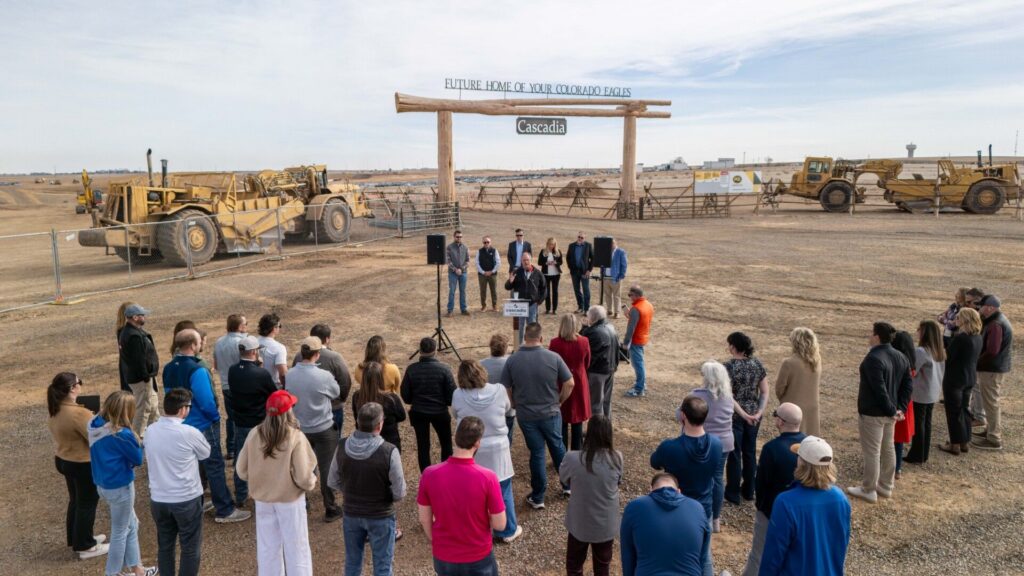
Greeley voters to decide fate of project that includes minor league hockey arena
Hap Fry, Special to The Gazette
hap-fry@gazette.com
Updated 18 hours ago
GREELEY • The fate of the Cascadia development — and quite possibly the future direction of the city — is in the hands of Greeley voters this Tuesday during a special city election on whether the landscape-altering project should be...
Colorado Politics Calendar Feb. 23-Mar. 1
Rachael Wright, Special to Colorado Politics
rachael.wright@coloradopolitics.com
Updated 4 days ago
CoPo’s weekly political calendar helps you find political and public policy events throughout Colorado. It includes candidate and issue campaign events, public policy meetings, court hearings, state and local party conventions, assemblies, debates, rallies, parades, speaking engagements, traveling dignitary appearances,...
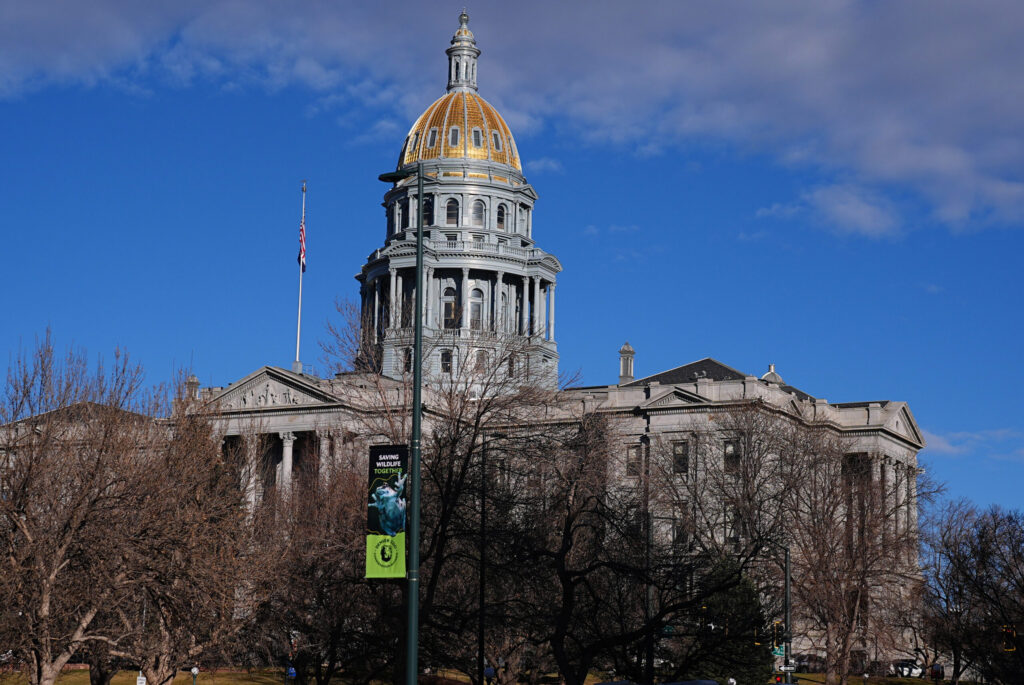
Meeker rancher leads one of Colorado’s earliest attempts to transfer federal lands | A LOOK BACK
Rachael Wright, Special to Colorado Politics
rachael.wright@coloradopolitics.com
Updated 3 days ago
Forty-Five Years Ago This Week: Former state Rep. Nick Theos, R-Meeker, was one of several people testifying before the Senate Agriculture Committee on Senate Bill 81-170, which would transfer ownership of public lands from the federal government to state control....
Democrats Michael Bennet, Phil Weiser make their cases to be Colorado’s next governor ahead of primary
Ernest Luning
ernest.luning@coloradopolitics.com
Updated 2 days ago
Nearly eight months before ballots will be counted in Colorado’s race for the its open gubernatorial seat, voters are lining up behind two of the state’s leading Democrats, who are facing off in a primary that will likely determine which...
PREV
PREVIOUS
Audit: Denver's public safety agency left nearly $400,000 in co-responder funds unspent
The Denver Police Department and Department of Public Safety failed to spend nearly $400,000 that was awarded to the city to fund the co-responder police program. An audit released Thursday found $383,000 of grant funds from the Caring for Denver Foundation unused, granted to the city to pay for its co-responder program, which sends licensed […]
Colorado appeals court says Joe Salazar's lawsuit against Public Trust Institute can move forward
The Colorado Court of Appeals has ruled that a lawsuit by a former legislator alleging malicious prosecution by the Public Trust Institute and its former director can move forward. The ruling came with a first-ever determination that an administrative proceeding, which could form the basis for a malicious prosecution claim, must be “quasi-judicial.” In this […]