

Q&A with US Sen. John Hickenlooper | Finding common ground in Washington

When Democrat John Hickenlooper launched his campaigns for president and the U.S. Senate in 2019, politicians and pundits alike derided the Coloradan’s contention that he could break the logjam in Washington with an approach he cultivated as a barkeep, Denver mayor and governor to bring opposing sides to the table in an effort to reach common ground.
“Have you met Mitch McConnell?” incredulous media personalities deadpanned.
But in the wake of a flurry of legislative activity — including passing major infrastructure, gun safety, climate change, health care and industrial policy bills, some with key contributions from Hickenlooper — Colorado Politics asked the first-term senator in an exclusive interview if he thinks his method has made a difference.
The interview, conducted on Aug. 10, has been lightly edited for length and clarity.
Colorado Politics: When you first ran for president and then when you jumped to the Senate race, you talked about an approach you hoped to bring to Washington, being able to sit down and talk with people who disagreed and try to reach agreement, like you said worked in Colorado on things like FasTracks with the metro-area mayors and drafting methane rules with energy companies and environmental groups. That was met with a great deal of skepticism from Democrats and in the national press, who said, sorry, Washington doesn’t work that way. But with your role helping pull the reconciliation bill across the line, and a year ago working with a group of senators to get the infrastructure bill written and passed, maybe what you were saying isn’t so out there. Has it turned out that the Senate is more amenable to the approach than critics suggested?
TRAIL MIX | Would Washington drink President Hick's brew?
John Hickenlooper: I will say the biggest surprise to me about the Senate is that is that I like it, and it really is pretty much what I hoped it would be, in that sense that you go deeper and build relationships with your allies but also the people you disagree with. And by not trying to force people to change their minds, but really hearing them, you can find common ground and actually get major legislation passed. If you look at the last, I don’t know if it was nine months or 12 months, if you include the bipartisan infrastructure bill but the CHIPS and Science bill, the PACT Act for the veterans, the Safer Communities Act — the gun safety bill, the first bipartisan gun safety bill in three decades — all this stuff. The biggest climate investments in world history. That all came from just more and more discussion and getting a certain amount of relationship-building done with both Republicans and Democrats.
I tried for the first year to go out to visit a different senator, mostly Republicans, but tried with a different senator every week and just go visit them and hear who they are, why they got into politics, what really compels them. And I was impressed by even the people that I thought I wouldn’t agree with on anything. It turns out when you actually take the time to get to know them, they have interesting reasons for why they believe what they believe. And you don’t always agree, but a lot of times it softens your response and allows you to choose an avenue that actually can lead to something.
COVER STORY | Colorado's Joe Neguse, John Hickenlooper play key roles bringing infrastructure bill to life
CP: On the budget reconciliation bill that just passed the Senate, you’ve been credited with helping helping keep Sen. Joe Manchin at the table and helping bring Sen. Kyrsten Sinema on board. How did that happen?
Hickenlooper: With Joe Manchin, five days after I got elected, Robin and I flew to Washington for what they call an orientation, and Manchin somehow heard that I was coming, and they had me and Robin and also Mark Kelly, from Arizona, who’s also a freshman senator, he had us come on to this boat. He doesn’t have an apartment, he lives on this, kind of a so-called yacht — the joke being, it’s falling apart. But anyway, it’s his home, and he had us for beer and pizza, and he spent a couple hours just getting to know me. And I think Sen. Kelly and myself were being interviewed as to could we work with Republicans, could we work on bipartisan issues in a way that Joe Manchin believes gets better legislation? I guess we passed that test because he put us on the bipartisan infrastructure bill.
Joe Manchin negotiated the inflation Reduction Act. Chuck Schumer and Joe Manchin — and ultimately Kyrsten Sinema came in — but they’re the ones who really negotiated it. I think my role was more to keep the positive pressure — when everyone else kind of gave up and Joe was very frustrated, he said it was done, and I saw him a couple of days after that. This was maybe a month ago. And I said, ‘Are you really done?’ and we just talked. I thought we were pretty close on almost everything. He said, ‘No, I’m just fed up, but I’m not done.’ And so my job then was just to go and make sure that Democrats around the Senate and around the country didn’t lose faith.
I kept talking to Joe and kept talking to anyone who would listen and being optimistic, saying, ‘Hey, we’re closer than we’ve ever been. We don’t have an alternative. We can’t quit this now. We just can’t do it.’ The great thing about Joe Manchin is he’s very consistent, and he’s been saying since last January that he had a real issue with inflation. We were sitting in my office, my chief of staff Kirtan Mehta, he and I were saying, ‘Well, who does Joe care about?’ Kirtan used to work for Joe Manchin, and he said, ‘Well, he uses Penn Wharton business school sometimes to do economic modeling; maybe we should talk to them and see whether it really is inflation-driving or not.’ And we did, and that was one more small point of persuasion that I hope helped get Joe to that point.
Hickenlooper credited with keeping Manchin at table to reach deal on climate, budget package
But mostly, I feel that the key to it all was not to give up. We convened a group of executives from large companies — we had the chief engineer and chief operating officer from DuPont, and we had senior executives from Pacific Gas Electric and the head of the Nature Conservancy, all these big organizations. And the message to everybody was, ‘Hey, let’s not give up. You guys have mailing lists of other companies in your industry or in your frame of work. Let’s get all of them to be calling Chuck Schumer to be calling Joe Manchin and Kyrsten Sinema, saying we can’t afford to give up. Don’t give up. If you can’t get it done in time before the August recess, let’s stay in session, even if we have to stay extra days in session, let’s make sure we get this done without just walking away.’
And it’s funny, a lot of people just got a little more excited. A lot of times you just need to have a little bit of a positive attitude and other people will pick it up from you.
CP: It was a suggestion you made that helped get Sen. Sinema to support the package, wasn’t it?
Hickenlooper: So, I was in (Democratic Majority Leader) Chuck Schumer’s office with Michael Bennet and Mark Warner, and Michael Bennet was talking about water. Sen. Sinema had mentioned that water was an issue, and Michael wanted to make darn sure that the Upper Basin states, which is Wyoming, Utah and Colorado, that we didn’t get to get the short end of the stick. But Schumer was saying, ‘Well, she’s not going to support any of the carried interest exemption.’ And that was a key part of the bill. It was only about $14 billion, but there were other things that had to be fixed anyway, so you’re up to $60 or $70 billion that we were short. And Joe Manchin — I agreed with him and supported this from the beginning, that we wanted to put $300 billion towards lowering the national debt. You can’t just always spend. You’ve got to look at trying to lower the debt whenever you have the chance. Anyway, I was one that made the suggestion that — I knew that last summer, when we originally had Build Back Better. One of the the pay-fors in the mix was to have a one-time-only 1% excise tax on stock buybacks. This could be a way we could make up the gap, since Sen. Sinema opposed getting rid of the carried interest exemption. So, Schumer at the time said, ‘I’m not sure that’s gonna fly, and I don’t think Manchin is going to go for it.’ I said, ‘Well, can I at least talk to him, and let’s put it out there?’ And in the end, that’s the thing that they used to fill up the missing space.
CP: And that turned out to be more money than getting rid of the carried interest exemption would have brought in?
Hickenlooper proposal helped seal deal with Sinema on Democrats' budget reconciliation bill
Hickenlooper: It helped solve other problems in the bill. You’re always striving to be fair, and these are such large bills and so general sometimes that it’s hard. You always find these industries that weren’t supposed to be affected, and you’re trying to figure out ways that they can get get around it, get some benefit. That meant it was more than just the carried interest — we had about another $40 billion we had to figure out how to pay for it.
CP: You talked on the campaign trail about sitting down with the metro-area mayors, who hated Denver, and getting them to sign on to FasTracks. Working with Democrats is one thing, even Sens. Manchin and Sinema, who might be less inclined to agree with other Democrats. What has your experience been working with Senate Republicans?
Hickenlooper: If you step back and look at the gun safety bill, it was bipartisan. We rolled back — Trump got rid of the methane regulations that were put in during the Obama administration, that were basically copies of Colorado’s methane regulations. So, we got those methane regulations reinstated on a bipartisan level. The PACT Act, in the end, after the Republicans kind of had a little anger fit — but in the end we had 91 votes to do the PACT Act, to protect our veterans from exposure to toxic burn pits. The CHIPS and Science bill, the semiconductors and making sure that we can compete with China successfully, to make sure that we are once again and continue to lead the world in innovation and new inventions. The money for Ukraine — we’ve spent now almost $40 billion helping Ukraine defend itself. Those are all bipartisan.
It’s not just me there. There are probably five or six Democratic senators that make a real effort to build relationships and get to know the Republicans. Everyone’s heard about Lisa Murkowski and Susan Collins and Mitt Romney — they’re very moderate, and they will often vote with Democrats. But there’s a whole second tier there of people — like Todd Young from Indiana, Mike Rounds from South Dakota, Kevin Kramer from North Dakota, John Hoeven from North Dakota, Bill Cassidy from Louisiana — I’ve become pretty good friends with. Tom Tillis from North Carolina, very moderate guy, surprisingly open to hear anything, to really look at, ‘How do we get these bills passed?’ So, I’ve been pleasantly surprised by how many Republicans — I’d say there are like 20 or 22 — that I think I can work with.
Some will be more likely to work on immigration solutions. Some are more willing to take on gun safety. One of the things, now that we’ve gotten this bill done, maybe we start working on a price on carbon. That’s something that everyone said was impossible when I first got here. Even the Democrats, climate hawks like Sheldon Whitehouse and Martin Heinrich and Tina Smith, they all said, ‘No, you’re never gonna get there with that.’ But look at what we’ve already done.
There’s no question in my mind, what we’ve done is not the end, it’s the beginning. I think when we look back 30 years from now, at what happened here in 2022, people will look at this as the beginning of the great transition. This is where we dramatically transformed how we get energy, how we utilize energy. Look at the automobile manufacturers. They’re all saying that they’re going to be done making new gasoline vehicles much sooner than they thought. Some of them are saying that in countries where they have enough recharging stations and enough green energy transmission, they think that they’ll be able to have all the vehicles that they sell in 2030, even, could be electric. Car manufacturers say they’re not trying to be green, their customers are demanding it. That electric vehicles are more fun to drive, they have less moving parts, a lot fewer repairs. Once they get better batteries and a little more range, I think there’ll be a stampede for electric vehicles, just because people like them more.
CP: Does it feel like there’s a thaw from the partisan gridlock people describe in the Senate?
Hickenlooper: You know, when we did FasTracks with all the Republican mayors, we didn’t just stop at FasTracks, right? When I was running for mayor, I said it was stupid for municipalities — one city against another —to offer tax incentives to lure a business to move from Lakewood to Denver, or from Wheat Ridge to Aurora. I said that’s an expressway to the bottom, and what we should do is within our metropolitan area, offer incentives for companies that move businesses here from out of state, but we should never poach from each other. And within six months after we did FasTracks, we had the entire metro area — we’re the only metropolitan area in the country where there’s no poaching. No one offers an incentive to a company from a neighboring municipality to move their jobs into a different municipally. And that came from following FasTracks. Whether it’s immigration or better apprenticeships, or some new ideas around education, I think these are things that we can look forward to as part of the thawing process.
CP: Did you ever get to have a beer with Mitch McConnell?
Hickenlooper: I did go introduce myself to him. And he’s very polite. They have a spouses’ dinner once a year, and he said, ‘John Hickenlooper, who’s been doing such a great job the freshman senator and his wife, his spouse, is remarkably capable.’ And they said, ‘She’s the vice president of a large holding company, she does this and that, she’s on the board of Chipotle.’ And they pause and say, ‘And of course, she used to be a Republican,’ and the whole room laughed. Although just for the record, she was a Democrat long before she met me. She volunteered to walked precincts in Greeley, Colorado, when Barack Obama was running for president in 2008. She’s a real Democrat. But anyway, he said it in such a charming way that I’ve again never criticized him. I’ve never gone out of my way to pick a fight with him. I went and introduced myself, made sure he knew who I was.
I have a much better relationship just because I have more in common with Chuck Grassley, who’s the elder senator of the Republican Party. He knew my great uncle Burke Hickenlooper, who was an Iowa senator back in the 1960s. That’s getting into history. But Chuck Grassley says, ‘Have you been at the Iowa lately? We’d love to have you back.”
CP: So, perhaps some fruitful relationships down the road with those Republican senators?
Hickenlooper: I think both Chuck Grassley and Mitch McConnell are very high up in the food chain, and they have to kind of stick with — they are party leadership. But I think there’s a lot of — literally, 20 Republican senators who believe in smaller government, they believe in lower taxes, but they also recognize climate change. They also believe in civil rights. Many of them — they won’t say it publicly — but many of them believe Roe v. Wade established a fairly reasonable compromise around issues of a woman’s access to her own health care and control over her own health care. I think that over time, we’ll see. I’m hopeful that we can do things on voting rights and Roe v. Wade, and continue to work with Republicans.
I think it’s a muscle. You said it was a thawing. I almost feel like — and I felt this way back after FasTracks — I feel like it’s a muscle that has not been used for so long that it atrophies. And so the first few times you use it, it’s uncomfortable and it doesn’t feel natural, but with a little bit of use, the muscle gets stronger and all of a sudden you can do more things. Just imagine what this country could be if we could get back to where Republicans and Democrats work together to find solutions that both sides could agree to.


Colorado schools receive $24 million to fully implement Healthy School Meals for All
Marissa Ventrelli
marissa.ventrelli@coloradopolitics.com
Updated 4 minutes ago
The Colorado Department of Education is providing Colorado schools with nearly $24 million in grant funding to fully implement the Healthy School Meals for All program. Approved by voters in 2022, the Healthy School Meals for All provides free breakfast...
Secret Service agent placed on administrative leave after arrest for near-deadly hazing ritual
Claire Carter
claire.carter@washingtonexaminer.com
Updated 33 minutes ago
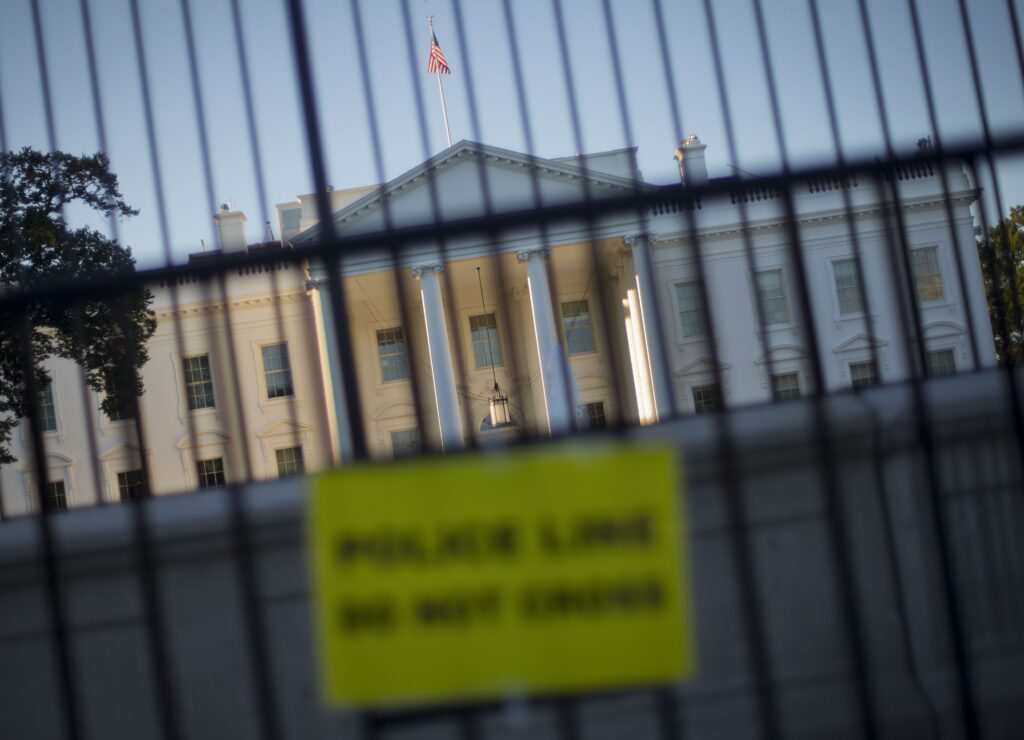
A Miami Secret Service agent in Florida was placed on administrative leave following his arrest on Sunday in connection with a near-deadly hazing incident at a University of Miami fraternity. Marquez Christopher Pinder, 29, was arrested alongside two other individuals...
Forest fire west of Sedalia prompts evacuations in Douglas County
Nicholas Fogleman
nicholas.fogleman@denvergazette.com
Updated 3 hours ago
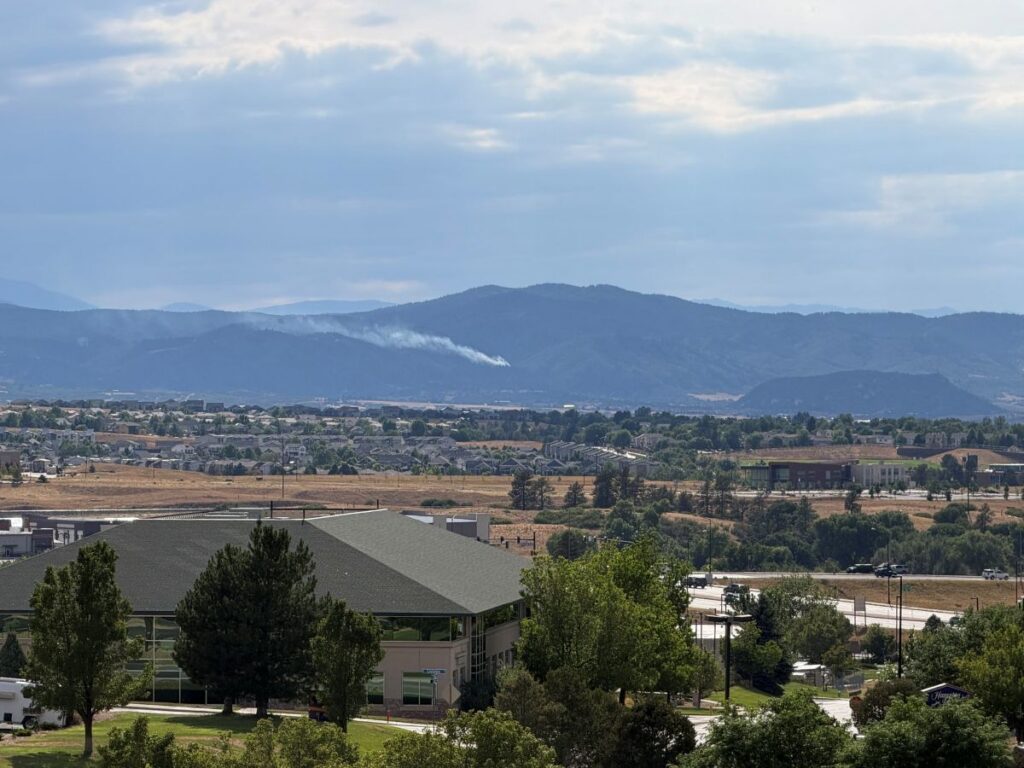
Emergency crews are responding to a forest fire burning west of Sedalia, prompting evacuation orders for nearby residents Sunday afternoon. At about 5 p.m. Sunday, the Douglas County Sheriff’s Office issued an evacuation order for residents within a 2-mile radius...
‘Be prepared to march in the streets’ | Miller Hudson
Miller Hudson
miller-hudson@coloradopolitics.com
Updated 3 days ago
It was early in 1974 when I first met Tim Wirth as he announced his candidacy for Congress, challenging Republican incumbent Don Brotzman. Although I had only resided in Colorado two years, I was drafted to serve as a Democratic...
A Colorado history lesson for Victor Marx | Dick Wadhams
Dick Wadhams
dick-wadhams@coloradopolitics.com
Updated 3 days ago
Victor Marx, who narrowly won the Republican nomination for governor by one half 1% after boasting of a massive 44-point lead, is just as misguided on Colorado political history. During the primary, Marx made a clumsy attempt to denigrate his...
Weiser’s leadership crucial for rural win-win | Rachel Gabel
Rachel Gabel
rachel-gabel@coloradopolitics.com
Updated 3 days ago
Attorney General Phil Weiser is going to win the gubernatorial election. That said, Colorado agriculture and rural communities have a 30-year track record of finding the win-win be it for species or industries or habitat. Former Governor Roy Romer possessed...
Airstrikes have paused and talks are pressing forward. But can the US and Iran take the off-ramp?
The Associated Press
the-associated-press@coloradopolitics.com
Updated 3 hours ago
WASHINGTON (AP) — The U.S. military has paused its airstrikes on Iran after nearly two weeks of intensifying bombing, while diplomatic efforts have pushed forward to try to avert a return to all-out war. But it remains to be seen...
Penrose fortune paved the way for Colorado Springs to be a military, space and sports town
Mary Shinn
mary-shinn@coloradopolitics.com
Updated 3 hours ago
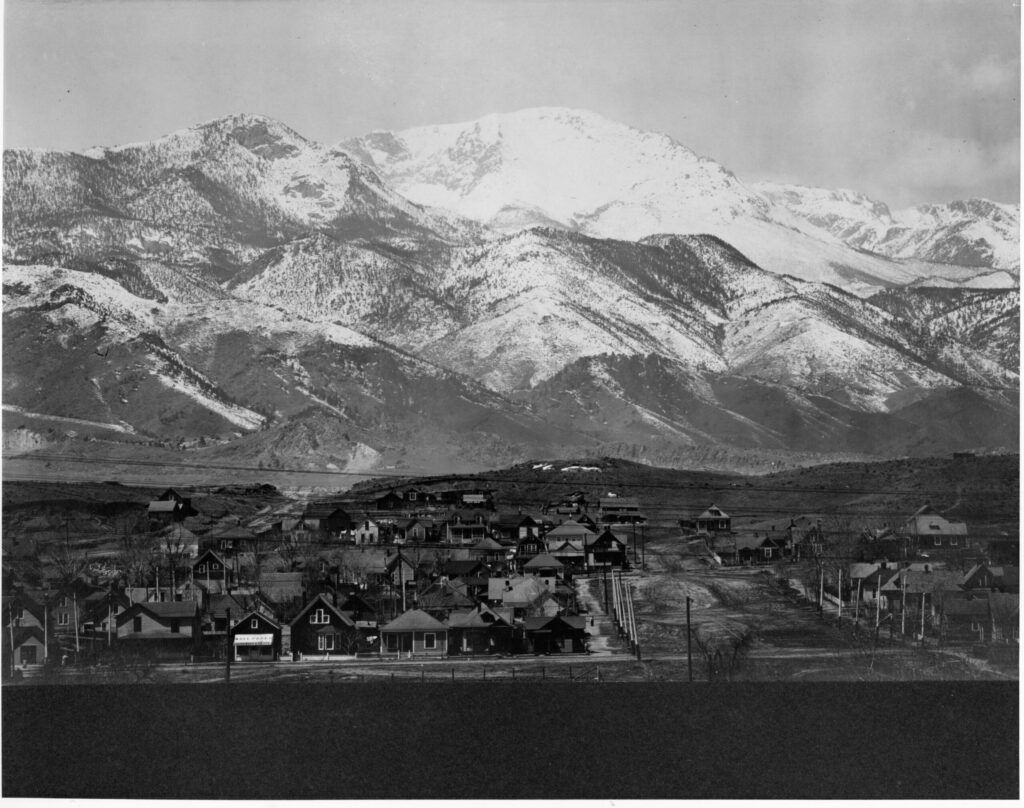
Colorado Springs is always working to catch the next big economic wave. “We’re always trying to figure out what the next thing is going to be,” explained Matt Mayberry, director of the Colorado Springs Pioneers Museum. In the early days,...
‘CoCo’ would take taxpayers for a ride | Jon Caldara
Jon Caldara
jon-caldara@coloradopolitics.com
Updated 11 minutes ago
Colorado wants taxpayers to spend another $4.73 billion on passenger rail. Don’t worry. They have a plan. Which is a little like your brother-in-law announcing he’s launching another exciting restaurant venture after his last three restaurants ended in bankruptcy. Please....

Colorado Politics Calendar July 27-Aug. 2
Rachael Wright, Special to Colorado Politics
rachael.wright@coloradopolitics.com
Updated 5 days ago
CoPo’s weekly political calendar will help you find political and public-policy events throughout Colorado. It includes candidate and issue campaign events, public policy meetings, court hearings, state and local party conventions, assemblies, debates, rallies, parades, speaking engagements, traveling dignitary appearances,...