

HUDSON | Analyzing abortion in America

Miller Hudson

Fifty-five years have elapsed since a group of Planned Parenthood-supporting Republican Protestants in the Colorado Senate joined a young Denver Democrat in the House named Richard Lamm to make the Centennial State first in the nation to formally legalize abortion. It would be another five years before the United States Supreme Court extended a similar guarantee nationwide with its Roe v. Wade decision. Nearly a dozen times since, anti-abortion forces have asked voters to roll back Colorado’s abortion access either all or in part. Each time voters rejected these requests with inexorably growing majorities. The only Republican governor elected during the past half century was Bill Owens, a Catholic who offered lip service to pro-life zealots but avoided significant lifting to assist proponents.
Colorado Democrats roused themselves as it became apparent earlier this year that the newly ensconced conservative majority on the Supreme Court, courtesy of former President Donald J. Trump and the Federalist Society, appeared prepared to reverse its longstanding constitutional abortion ruling by returning responsibility for setting abortion policy to each state. A coalition of female legislators firmly codified the privacy of personal medical decisions through the Reproductive Health Equity Act (HB 22-1279). Following the finding that Roe v. Wade as well as Pennsylvania v. Casey were “wrongly decided,” Governor Jared Polis issued an executive order last week directing all state agencies to safeguard access to abortion services. There is substantial irony in the vocabulary used in the Governor’s order which assiduously avoids gender designation for “…a pregnant person’s right to choose.” The Supreme Court’s decision addressed Dobbs v. Jackson Women’s Health Organization.
Mississippi abortion services were assumed to be targeted for women. There is also sloppy word-smithing in the executive order that may become grist for disputes in future court challenges. By way of example, “Colorado is experiencing a workforce shortage in many professions, and disqualifying people because they were prosecuted for taking actions in other states that are fully legal under Colorado law would hurt our economy and our state,” is meant to prevent precisely what? Presumably, prosecutions elsewhere should not be allowed to prejudice employment decisions in Colorado, but that’s a guess. It’s not difficult to imagine a lawsuit brought by Mississippi Right-to-Life v. Polis or, more likely, Texas v. Polis, where the state legislature has authorized bounty hunting. Bounty systems are designed to avoid the rule of law, substituting vigilante justice for the courtroom.
When “Wanted” posters on the American frontier advertised bounties ‘”dead or alive,” it was understood that dead was usually better. As more than one wag has noted, though it is true that history rarely repeats itself, it has a propensity for rhyming. The members of Congress who supported the Fugitive Slave Compromise of 1850, including Daniel Webster, had no idea the Dred Scott decision in 1857, followed by Ableman v. Booth in 1859, would elect Abraham Lincoln, a little known one-term congressman, president and ignite a Civil War.
As Michael Trachtman notes in his book, “The Supremes’ Greatest Hits,” the Dred Scott decision is viewed today “…as the poster child for those who decry judicial activism,” for having gone well beyond the issues of ownership and involuntary manumission. Chief Justice Roger Taney and a majority on the court overturned the Missouri Compromise of 1820, stripping all blacks, both freemen and enslaved, of their right to citizenship by establishing the supremacy of federal law over state statutes. Chief Justice John Roberts suggested his colleagues also stretched their authority with Dobbs.
Denying black Americans access to state or federal courts enabled slave hunters to kidnap freedmen and sell them to bondage. For several years prior to the Civil War, more free blacks were being dragged to slave states than were actually escaping. I review this sordid history since it is entirely possible Republican majorities in both chambers of Congress might legislate a universal ban on abortions and, once signed by a Republican President, would reprise the fugitive slave fiasco with the pursuit of pregnant women. I can’t imagine anything more likely to precipitate a meltdown between red and blue states.
Democrats should have codified Roe v. Wade when they controlled the White House and majorities in Congress. It’s entirely possible the unanimous decision in Ableman v. Booth asserting the supremacy of federal courts on issues of federal law would be brandished by the originalist majority steering our current Supreme Court. Several weeks ago, I waited in a checkout line at Target. A young woman ahead of me was purchasing a Plan B treatment with several other items. The clerk asked her whether she’d ever used Plan B before? When she replied no, the clerk whispered, “Don’t worry about it. You’ll just have a heavy period.” Bio-technology has outfoxed theological precepts. A government that fails to control fentanyl, isn’t likely to control Plan B either.
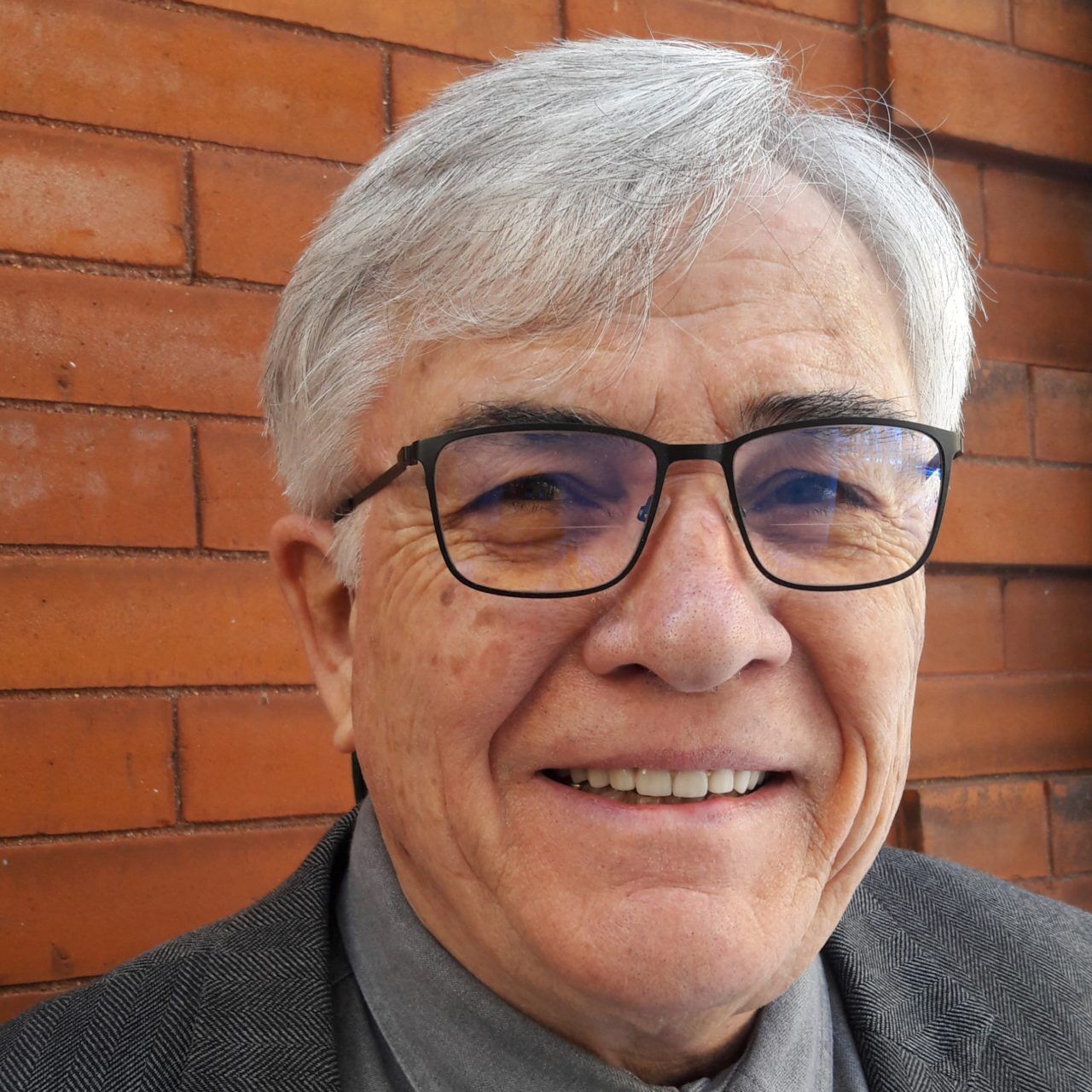
Miller Hudson is a public affairs consultant and a former Colorado legislator.


Colorado has a playbook for youth mental health — our next governor must use it | GUEST COLUMN
Colorado Politics
colorado-politics@coloradopolitics.com
Updated 1 day ago
By Karen Ron-Li Liaw From the rural communities on the western slope to the eastern plains, to the major urban regions on the Front Range, Colorado families are navigating an all-too-familiar crisis: kids are struggling, and Colorado’s mental health system...

Pigs engineered to fight alpha-gal syndrome | Rachel Gabel
Rachel Gabel
rachel-gabel@coloradopolitics.com
Updated 1 day ago
If I were an evil genius trying to hamstring animal agriculture, I would create a fly that eats livestock alive and a tick whose bite and spit causes some people to have an allergic reaction to meat. (Insert evil laugh...
Registered voters on the eve of the 2026 primaries | Cronin & Loevy
Tom Cronin Bob Loevy
tom-cronin-bob-loevy@coloradopolitics.com
Updated 3 days ago
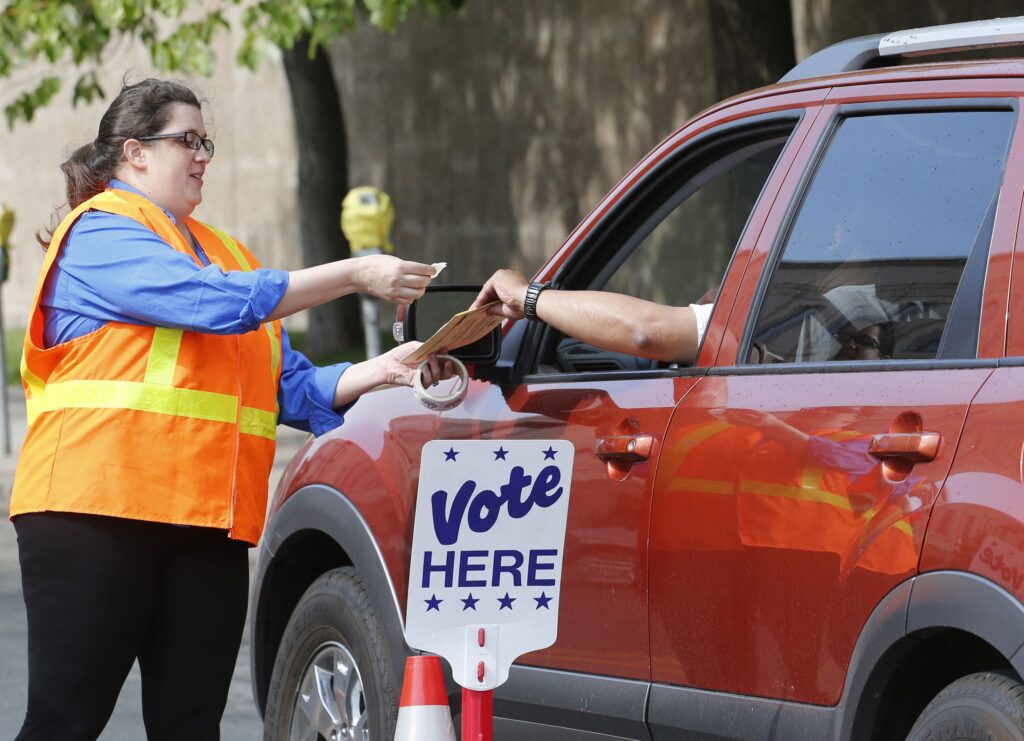
The Colorado Secretary of State’s Office has published the latest voter registration figures for the state and its counties as of June. Colorado ranks among the highest states for independent, or unaffiliated, voters. Only Alaska and Massachusetts have more. New Hampshire, New Jersey, Maine and Oregon also rank highly. So here...

A room for Sundance, a reality check for big-government Boulder | Jon Caldara
Jon Caldara
jon-caldara@coloradopolitics.com
Updated 5 days ago
There are few things more satisfying to watch than socialists getting mugged by reality. The Sundance Film Festival is invading my hometown of Boulder early next year. Sundance drew 85,000 attendees last year in Park City, Utah. Boulder’s hotel room...
Rep. Jeff Crank thinks Democrats are too focused on Trump, not enough on Colorado Springs | Vince Bzdek
Vince Bzdek
vince.bzdek@gazette.com
Updated 2 days ago
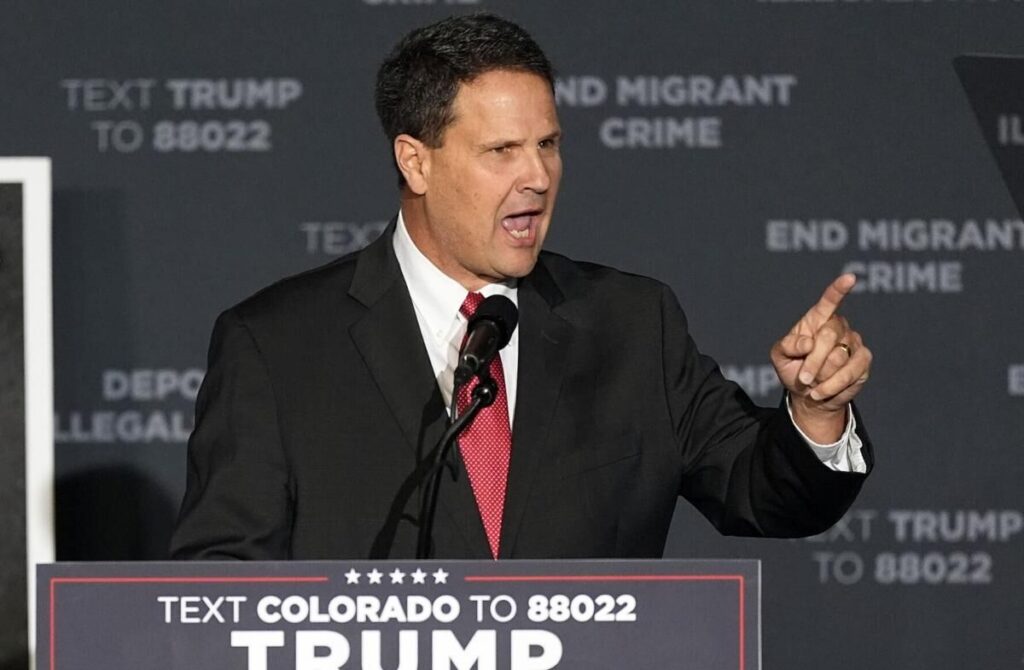
For U.S. Rep. Jeff Crank, who’s unopposed in the Republican primary for the 5th Congressional District but the main target of both candidates in the lively Democratic primary, the big question in the midterms is not who will stand up...
Does character matter anymore? | SONDERMANN
By Eric Sondermann
by-eric-sondermann@coloradopolitics.com
Updated 6 days ago
The last few weeks have been illuminating in the manner of a headlamp pointing the way to some deep, dark, murky netherworld. Graham Platner, a hero to the populist set on the Democratic side, became his party’s Senate nominee in...

Private equity has no place in health care | GUEST COLUMN
Colorado Politics
colorado-politics@coloradopolitics.com
Updated 5 days ago
By Miah Ntepp Of all the financial pressures placed on working people in this country, the skyrocketing costs of health care rank near the top. As families struggle under the cuts to Medicaid made by the Trump administration, they are...
Some pointed questions for the gubernatorial hopefuls | George Brauchler
George Brauchler
george-brauchler@gazette.com
Updated 6 days ago
Earlier this month, the Republican and Democratic candidates for governor participated in a televised interview moderated by well-known, left-leaning legacy media folks. Predictably, the questions asked of the GOP candidates were more aggressive, pointed, biographical and almost entirely disconnected from...
Chaotic funding throws monkey wrench into governor’s-race money madness | Paula Noonan
Paula Noonan
paula-noonan@coloradopolitics.com
Updated 6 days ago
Chaos Monkey, Inc., gave a trifle $20,000 donation to Rocky Mountain Way (RMW), the independent expenditure committee (IEC) supporting U.S. Sen. Michael Bennet for Colorado governor. But why, Coloradans should ask, would a guy who has assigned his contributor name...

Lindsay Datko on school safety, misconduct and transparency in Jeffco schools | The OpEdge Podcast
Tony Olivero
tony.olivero@gazette.com
Updated 1 week ago
Jeffco Kids First founder Lindsay Datko joins The OpEdge to explore concerns about school safety, staff misconduct and transparency in Jefferson County Schools. Datko tells host and investigative columnist Jimmy Sengenberger why she believes Colorado’s second-largest district has too often...
PREV
PREVIOUS

CALDARA | Polis 'bucks' the climate lobby
Jon Caldara Jared Polis’s charm offensive continues outside Colorado. National media continues to fall for a Potemkin Polis that is libertarian, pro-business and anti-tax. The normally sober Wall Street Journal editorial page recently proclaimed, “Jared Polis bucks the climate lobby,” and lauded his bravery for vetoing one single bill to mandate new parking lots have […]

GABEL | An eye roll at Polis on 'Cow Appreciation Day'
Rachel Gabel I do not like citing social media posts made by anyone in my coverage in print or on radio. It feels akin to citing Wikipedia or repeating gossip. Last night, when a dear friend who is also a Denver radio host and commentator who has his thumb on the pulse of rural Colorado, […]