

TRAIL MIX | Colorado Democrat pitches state as prime candidate for party’s early primary slate

If Colorado joins the rarified ranks of states whose primaries play an outsized role choosing the Democratic Party’s next presidential nominee, it won’t be because Howard Chou dazzled national party officials with anything but the strength of his arguments.
Unlike most of the state and territory delegations of Democrats who showed up in Washington, D.C., last week with various combinations of senators, soundtracks and local delicacies in tow, the first vice chair of the Colorado Democratic Party appeared by himself, armed only with data and a conviction that Colorado belongs in the spotlight.
Chou was among party officials and political luminaries from 16 states and one territory who told the Democratic National Committee’s rules committee why they deserve to be among the first to cast votes in the party’s 2024 presidential nominating process.
The committee voted in April to consider shuffling the states that get first crack at picking the presidential nominee, spurred in part by concerns that the two states that have held the earliest positions for decades — Iowa with its caucuses and New Hampshire with its primary — aren’t diverse enough to reflect either the party at large or the nation’s electorate.
Difficulties and delays tabulating results under the Iowa caucus’s complex rules contributed to a sense that it could be time to mix up the contests. There also appears to be a sentiment to remove states that hold caucuses instead of primaries from the early contests, since the method excludes many voters from participating.
“Presidential candidates would be better equipped to campaign in the rest of the states by listening to and learning from the different regions, people and needs in our state,” Colorado Democratic chair Morgan Carroll wrote in a May 5 letter notifying the DNC that the state intended to apply. “In so many ways, we are the new model for American optimism and engagement in the political process.”
Under the current calendar, Iowa and New Hampshire are followed in February by caucuses in Nevada and a primary in South Carolina before the bulk of states begin to cast votes in March, including on Super Tuesday, which included Colorado’s primary last cycle.
States in the existing early line-up, which has only been in place since the 2008 presidential election, have to apply and win approval to keep their status, along with the dozen other states and territories still in the running. Following the rules committee’s decision earlier this month not to advance applications from New York, Nebraska and Democrats Abroad, the finalists are Colorado, Connecticut, Delaware, Georgia, Illinois, Iowa, Maryland, Michigan, Minnesota, Nevada, New Hampshire, New Jersey, Oklahoma, Puerto Rico, South Carolina, Texas and Washington.
The rules committee is planning to discuss last week’s presentations on July 8 and then meet again Aug. 5 and 6 to the winnow the list to four or five early states, with the full DNC scheduled to vote on the final recommended slate in early September.
It’s part of the normal, quadrennial process that sets the delegate selection and convention rules, though it’s the first time in a while that the early states have been up for grabs.
Colorado hits the mark on all three of the DNC’s stated criteria for “early window” status, Chou told Colorado Politics — its broad diversity, the state’s competitiveness and the feasibility of conducting a presidential campaign there.
“I made a really strong case for Colorado’s diversity,” he said after the presentation. “We’re a shining example of a lot of different things.”
The state boasts three of the 100 most diverse cities in the country, Chou told the committee, pointing to Denver, Aurora and Colorado Springs. Aurora in particular, he noted, is one of the leading cities populated by immigrants, with 20% of its residents born outside the United States and 160 languages spoken within its boundaries.
“I broke it into every possible diversity I could think of, not just ethnic and cultural diversity,” he added, including economic and industrial diversity spanning agriculture, manufacturing, mining, tourism and tech, and geographic diversity from the Eastern Plains to the Rocky Mountains and the Western Slope.
In addition, Chou noted that the range of Coloradans’ educational backgrounds is similar to the country’s as a whole, and the state counts 20 military bases, which is about the national average.
While the state has trended blue in recent years, Chou told the committee that it remains competitive, since Democrats don’t outnumber Republicans by much — 28% of active registered voters, compared to 25% — with elections determined by the state’s large share of unaffiliated voters, making up 45% of the electorate.
With one large and two smaller TV markets — Denver, Colorado Springs and Grand Junction — and most of the state’s population arrayed in what Chou characterizes as an easily traversed T-shape, running up and down the Front Range and across the state on Interstate 70 from the plains into the mountains — candidates can campaign in Colorado as easily as just about anywhere, easily meeting the feasibility threshold, Chou said.
Importantly, the state’s prevailing political winds are more aligned with the national Democratic Party’s leanings than many other states are, Chou argued, calling Colorado an “epicenter” and “inflection point” for key issues important to the party’s voters, including environmental and climate concerns, election integrity and approaches to gun violence and social justice.
Chou suggested that Colorado’s recent status as a bellwether state — five of the last six winning presidential candidates carried Colorado — mean candidates who perform well in the state have a better chance of doing well nationally.
Chou had a turn of his own in the spotlight two years ago when he announced Colorado’s delegate vote during the virtual roll call at the 2020 Democratic National Convention. Surrounded by family members clad in campaign T-shirts and holding signs, Chou delivered the vote in a video segment taped at the iconic Red Rocks Amphitheater in the foothills west of Denver. Colorado’s delegation, he said, cast 42 votes for Joe Biden and 36 votes for Bernie Sanders, who won the state’s March 3 presidential primary, with one abstention.
While nearly all the major presidential candidates made stops in Colorado ahead of the state’s 2020 presidential primary — its first in 20 years after switching from caucus — few spent more than a day or two in the state, and by the time mail ballots were due, the sprawling field had narrowed to only a handful of candidates in addition to Biden and Sanders.
“When you bring the excitement here, you get all the candidates before people start dropping out,” Chou said.
“People in Colorado feel we’re an afterthought,” he added, comparing last cycle’s campaign season in Colorado to the solid year more than a dozen candidates spent crisscrossing Iowa and New Hampshire.
Chou acknowledged that some of the rules committee’s members could be swept up by the “romance” surrounding New Hampshire, whose snowy tableaus have figured in presidential nominations for generations, despite its lack of diversity and the sense other states might deserve a turn.
“It’s kind of funny how quickly the whole landscape of politics changes, so people using tradition as a reason to be an early state is kind of a moot point because these calendars have changed a lot over the years,” he said.
He also acknowledged that some other finalist states have as good of a claim to early state status as Colorado, including Minnesota, Michigan and Georgia, diverse states that have emerged as critical presidential battlegrounds in recent cycles.
“I think Colorado has a shot — and if they open it to five states, there’s a possibility,” Chou said.
“Even though I gave them a lot of great data, I’m not sure if they’ll vote based on that. I think I made a good impression, giving them the facts. Whether the decision is based on that, that will be an entirely different question.”

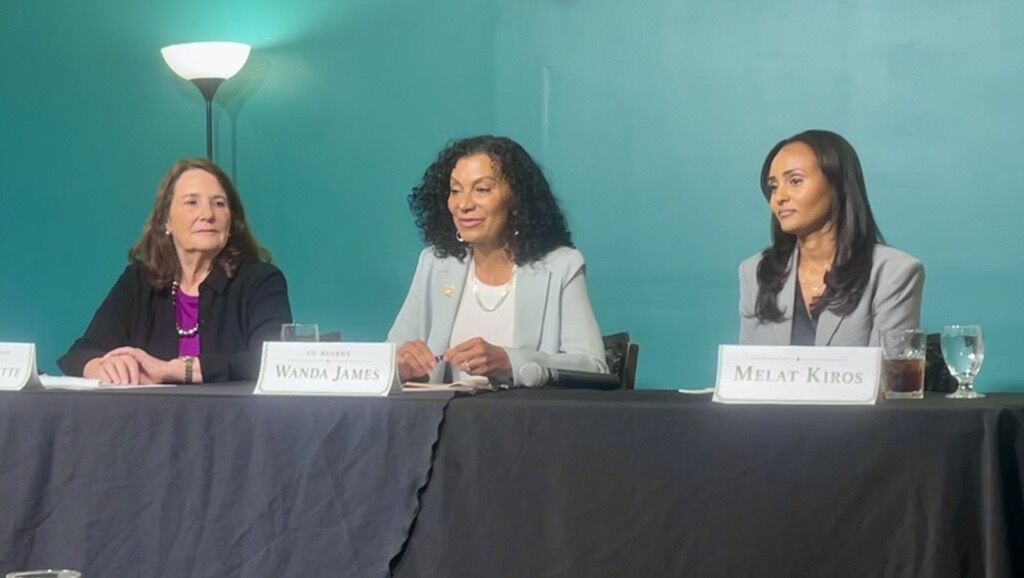
Democratic candidates DeGette, Kiros and James clash in CD1 forum
Marissa Ventrelli
marissa.ventrelli@coloradopolitics.com
Updated 14 minutes ago
The three Democratic candidates for Colorado’s 1st Congressional District clashed on Friday night over a host of issues, even as they expressed frustration with their party. The candidates — U.S. Rep. Diana DeGette, doctoral student Milat Kiros and university regent...
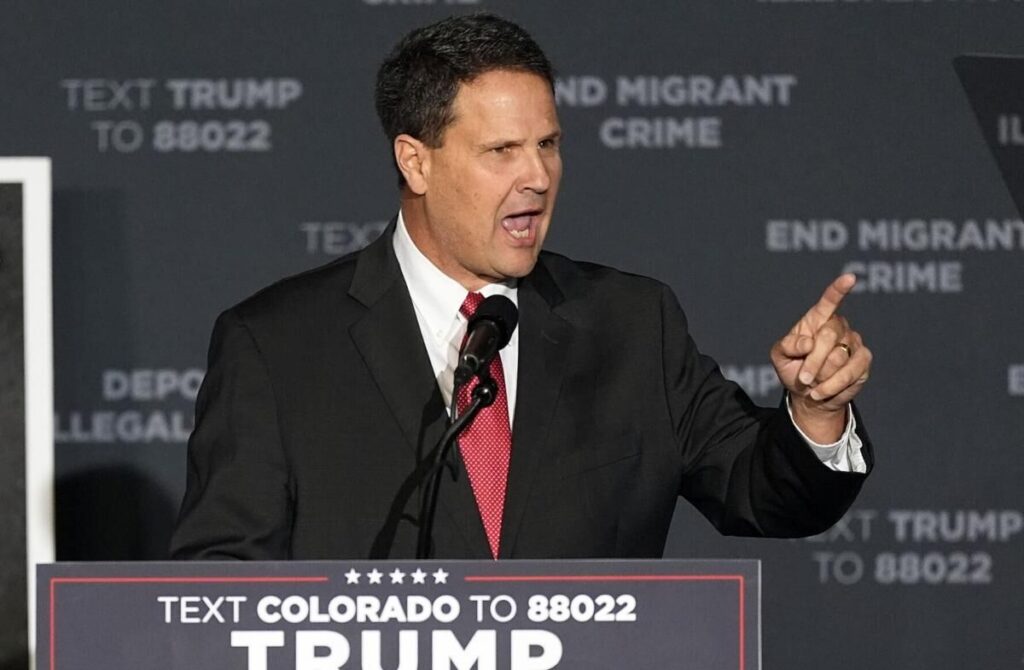
Rep. Jeff Crank thinks Democrats are too focused on Trump, not enough on Colorado Springs
Vince Bzdek
vince.bzdek@gazette.com
Updated 11 hours ago
By Vince Bzdek For Congressman Jeff Crank, who’s unopposed in the Republican primary for the 5th Congressional District but the main target of both candidates in the lively Democratic primary, the big question in the midterms is not who will...
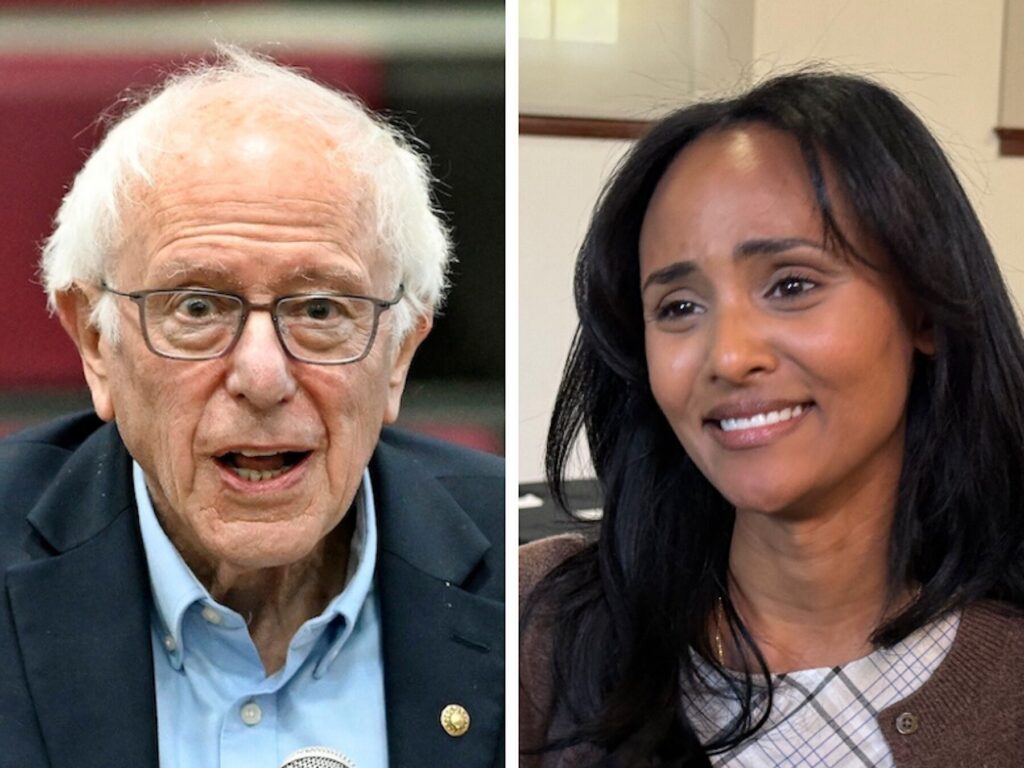
Bernie Sanders endorses DeGette challenger Melat Kiros in Colorado’s 1st CD Democratic primary
Ernest Luning
ernest.luning@coloradopolitics.com
Updated 16 hours ago
U.S. Sen. Bernie Sanders on Friday endorsed congressional candidate Melat Kiros, one of two Democrats challenging 15-term U.S. Rep. Diana DeGette in Colorado’s June primary. Sanders, a Vermont independent who caucuses with the Democrats, called the 29-year-old Kiros “exactly the...
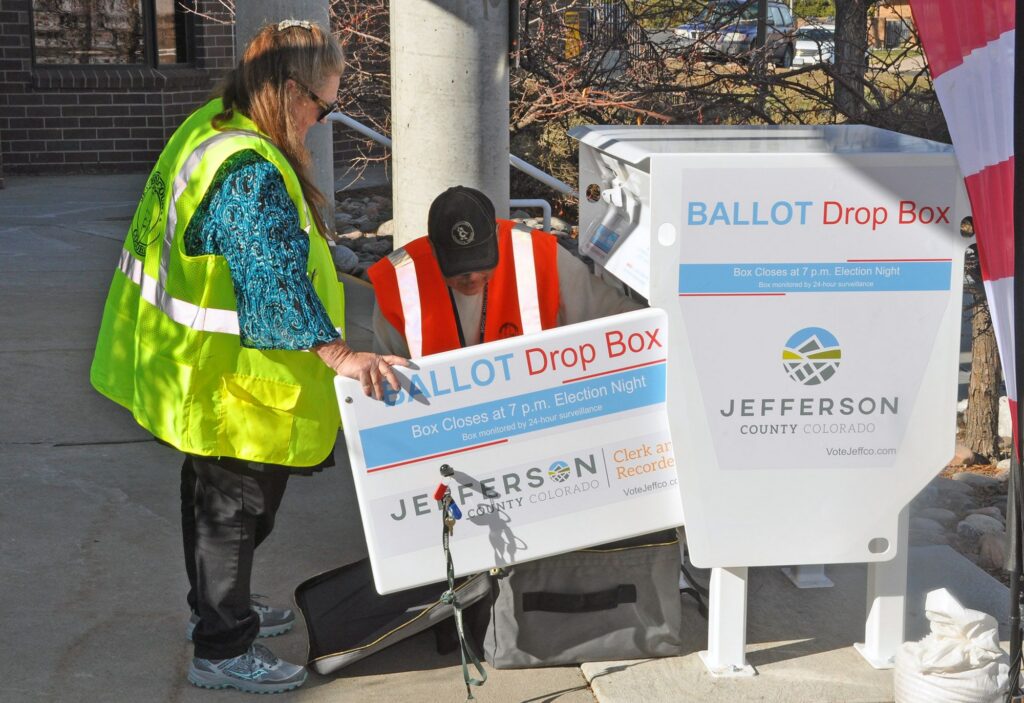
Democratic ballots outpace Republicans’ as Colorado’s primary vote starts to trickle in
Ernest Luning
ernest.luning@coloradopolitics.com
Updated 14 hours ago
With less than two weeks left before ballots are due in Colorado’s primary election, election officials have logged in ballots from just under 6% of the state’s 4 million active, registered voters, the Colorado Secretary of State’s Office said Thursday....

Amid public pressure, Colorado candidates tackle social media regulations for minors
Bethany Johnson
bethany.johnson@denvergazette.com
Updated 13 hours ago
Following the accidental overdose of her daughter in 2020, Patti Lujan pursued a lawsuit against Snapchat, the social media platform that, she claimed, connected her daughter with a drug dealer. In a news release announcing the lawsuit, Lujan alleged that...
Colorado state Senate: Meet the primary election candidates
Marianne Goodland
marianne.goodland@coloradopolitics.com
Updated 3 days ago
Colorado’s June 30 primary features a slate of state Senate contests, with several incumbents stepping aside and competitive fields emerging in both parties. These are some of the races to watch as voters begin to submit ballots. Senate District 3:...
Hickenlooper raises $900K since April, heads into primary with almost $3 million on hand
Ernest Luning
ernest.luning@coloradopolitics.com
Updated 3 days ago
U.S. Sen. John Hickenlooper raised just over $900,000 for his reelection bid in the 10-week pre-primary reporting period, the Colorado Democrat’s campaign said Wednesday. The campaign finished the period with almost $3 million in the bank, with more than 80%...
Bennet’s gubernatorial ads say U.S. Senate committee paid for them
Marianne Goodland
marianne.goodland@coloradopolitics.com
Updated 3 days ago
Update: as of Wednesday morning, at least one of the ads, featuring Colorado’s Democratic congressional delegation, has been changed to include the disclaimer “paid for by Bennet for Governor.” A series of TV commercials for U.S. Sen. Michael Bennet’s gubernatorial...

A graduated tax plan could undercut Colorado’s business competitiveness, analysis warns
Marissa Ventrelli
marissa.ventrelli@coloradopolitics.com
Updated 2 days ago
A proposal to move Colorado to a graduated income tax — taxing individuals and businesses at different rates based on their earnings — could generate more than $2 billion in its first year, but it could also weaken the state’s...
1st Congressional District Democratic primary: Meet candidates Diana DeGette, Milat Kiros and Wanda James
Thelma Grimes
thelma.grimes@coloradopolitics.com
Updated 4 days ago
Voters in Colorado’s 1st Congressional District will face an unusually competitive choice on this year’s Democratic primary ballot, where Rep. Diana DeGette, who has represented the area for nearly three decades, is being challenged by two candidates who successfully qualified...
PREV
PREVIOUS

Who spent the most by primary night? In Colorado, it wasn't always those who won their contests
It isn’t always who spends the most that determines who prevailed in Colorado’s 2022 primary election, though most of those in the winning column also spent the most. There were, however, some outliers that showed money doesn’t always make the difference. Pam Anderson, the GOP candidate for Colorado Secretary of State in November, spent $134,712 […]

Ranked choice voting floated as option to increase turnout in Colorado Springs races
Could rank choice voting increase dismal voter turnout numbers in Colorado Springs? During the last Colorado Springs City Council election in April 2021, about 27% of active registered voters participated, a drop from about 32% turnout in 2017, a comparable non-mayoral race. “Our people are not voting,” Councilman Bill Murray said Monday, during an informal […]