

Denver adopts volume-based trash program in split vote, implementation to begin Jan. 1

Denver will implement a new pay-as-you-throw waste services program at the start of 2023 after council adopted the program in a 8-5 vote Monday night.
Council members in support of the program reiterated that there was no time to waste in acting against climate change, while those who voted against were greatly concerned about the impacts of an additional fee on the cost of living for the city’s most vulnerable residents, as well as a lack of a strong education campaign.
Some council members said they have heard overwhelming comments from constituents asking for weekly recycling while others said they’ve heard overwhelming comments against the new fee.
The expanded waste services program will charge residents in single-family homes and small multifamily buildings a monthly fee based on the size of trash bin they need. The fee structure will charge $9 for a small trash bin, $13 for a medium one and $21 for a large one. Recycling and composting will be included at no additional cost, with weekly pickup services on top of other solid waste services.
Currently, weekly trash and bimonthly recycling services are funded by the city’s general fund — to which everyone in the city contributes — with an additional charge for composting. Under the new program, residents will pay based on what they send to the landfill as opposed to what they divert from it. The fees aren’t intended to generate new revenue, but rather to pay for the cost of the program.
The program will kick off on Jan 1, 2023, with a $3 inconvenience credit rebated to city residents who won’t yet have their composting services in place throughout the first half of the year as the city rolls out the program.
The program also includes an affordability program that would provide qualifying households instant rebates on their invoices. Eligibility is based on area median income, with households making 60% of the AMI getting a 50% rebate, those making 50% of the AMI getting a 75% rebate and those making 30% of the AMI getting a 100% rebate.
Council member Jamie Torres said she agreed with a speaker at council’s courtesy public hearing Monday night who said that everyone will pay the price eventually, but it won’t be about money. It will be about the climate.
Torres said while the fee will be difficult for many to navigate, the future without climate action will only be worse. She said she supported the program knowing that the outreach required will be significant, both in educating the public about the program’s operations and also on making sure those who qualify for the instant rebates are able to easily sign up.
Council member Paul Kashmann said he struggled greatly with the bill because while he understands the struggles constituents are having with the cost of living, he also sees the news about climate change getting more and more bleak every day. He said Denver is a national leader.
“If we move forward with this bill, people will follow us and our contribution to reduce climate change will be magnified,” Kashmann said. “If we fail to lead, if we fail to act, it will give justification to some people to not act and again we reduce our efforts to control climate change.”
Council member Kevin Flynn reiterated that he and his fellow council members who are voting against the program are doing so only based on the fee, not the principle of climate action, which Council President Stacie Gilmore also reiterated as a wildlife biologist. Multiple council members asked why the Department of Transportation and Infrastructure never considered providing free composting in an attempt to improve diversion rates.
Other dissenting votes came from Council members Candi CdeBaca, Chris Herndon and Deborah Ortega.
“This is tough for me tonight living in the most polluted zip code in America that also happens to be one of the most vulnerable to involuntary displacement,” CdeBaca said. “Every fee matters. I don’t want to support an ordinance that makes the most vulnerable an afterthought as usual.”
The program roll out gradually at the start of 2023 as DOTI continues work to hire more drivers as well as hiring inspectors to put the program in the best position for success.


The public health hazards in sports betting | PODIUM
Colorado Politics
colorado-politics@coloradopolitics.com
Updated 9 hours ago
By Brandon Zelasko As Colorado lawmakers revisit sports betting policy this session, the state has an opportunity to widen the lens. Beyond revenue projections and regulatory frameworks lies a critical question: Are we fully reckoning with the human effect of...

Colorado’s public lands are not for sale | OPINION
Colorado Politics
colorado-politics@coloradopolitics.com
Updated 9 hours ago
By Jonathan Houck Our state is defined by its public land. It shapes our communities, our economy and our Colorado way of life. Just driving through Gunnison County, where I have lived for more than 30 years, sometimes I can’t...

Colorado Supreme Court signals intervention in dispute over treatment for trans children
Michael Karlik
michael.karlik@coloradopolitics.com
Updated 16 hours ago
The Colorado Supreme Court ordered Children’s Hospital Colorado on Tuesday to explain why it should not direct the organization to resume providing certain types of services to transgender children in compliance with the state’s non-discrimination law. Last month, a Denver...

Trump faces first domestic test on Iran conflict with Senate war powers vote
Ramsey Touchberry, Washington Examiner
ramsey.touchberry.washington.examiner@gazetteedit.wpenginepowered.com
Updated 17 hours ago
Administration officials are scrambling to sell members of Congress on President Donald Trump’s military operations in Iran ahead of bipartisan attempts to limit his war powers in the Middle East without approval from lawmakers. The Senate and House are set...
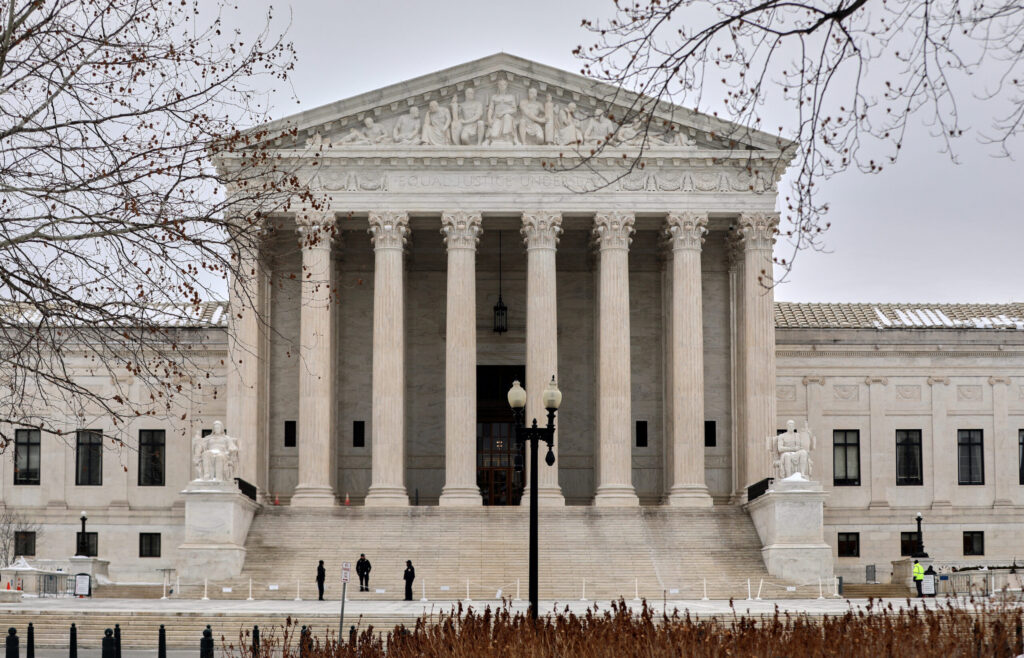
Supreme Court hands California parents win over secret gender transition policy
Jack Birle, Washington Examiner
jack.birle.washington.examiner@gazetteedit.wpenginepowered.com
Updated 17 hours ago
The Supreme Court gave California parents a significant victory late Monday when it kept in place a lower court’s block of the Golden State’s public school policy hiding students’ gender identity and preferred pronouns from parents. A 6-3 majority on...

Judge nixes latest policy requiring 7 days’ notice for Congress members to visit ICE facilities
Michael Kunzelman
michael.kunzelman@associatedpress.com
Updated 15 hours ago
WASHINGTON • A federal judge agreed on Monday to temporarily suspend the latest version of a Trump administration policy that requires members of Congress to provide a week’s notice before they can visit immigration detention facilities. U.S. District Judge Jia...
Judge nixes latest policy requiring 7 days’ notice for Congress members to visit ICE facilities
Michael Kunzelman
michael.kunzelman@associatedpress.com
Updated 17 hours ago
WASHINGTON (AP) — A federal judge agreed on Monday to temporarily suspend the latest version of a Trump administration policy that requires members of Congress to provide a week’s notice before they can visit immigration detention facilities. U.S. District Judge...

Gov. Polis, Upper Basin states criticize federal draft plan for managing the Colorado River
Marianne Goodland
marianne.goodland@coloradopolitics.com
Updated 18 hours ago
With no agreement among the seven Colorado River states and federal deadlines now passed, the Upper Colorado River Commission on Monday sharply criticized the U.S. Department of the Interior’s draft plan for managing the river after current guidelines expire this...

Ballot access, dual-office ban bills move swiftly through Colorado legislature
Marianne Goodland
marianne.goodland@coloradopolitics.com
Updated 18 hours ago
With an eye on the 2026 election cycle and mounting tensions with the Trump administration, Colorado lawmakers are fast-tracking a pair of election bills they say will protect the state’s mail ballot system and tighten rules for elected officials. The...

Colorado GOP chair Brita Horn loses ‘no-confidence’ vote, vows to refocus on ‘mending that divide’
Ernest Luning
ernest.luning@coloradopolitics.com
Updated 3 hours ago
The Colorado Republican Party’s state central committee approved a resolution expressing “no confidence” in state chair Brita Horn in a landslide late Monday night near the end of an online meeting marked by rancor and confusion. Almost 80% of the...