

COURT CRAWL | State Supreme Court comes back for arguments, significant turnover on Denver bench

Welcome to Court Crawl, Colorado Politics’ roundup of news from the third branch of government.
The Colorado Supreme Court will be back this week for its final oral arguments before summer break, and there are numerous upcoming judicial vacancies throughout the state, with a large set of retirements in Denver particularly.
Supreme Court finishes its business
? Before the state Supreme Court takes its summer break from issuing decisions and holding oral arguments, it will have a busy couple of days. Six cases are scheduled for argument on Tuesday and Wednesday on a variety of criminal, civil and other matters. Here is what’s coming:
People in the Interest of E.A.M.: When do judges overseeing child welfare proceedings have reason to know someone appearing before them is an “Indian child” under the longstanding federal law that protects the interests of tribal nations? The state’s Court of Appeals has been split on the issue in recent months.
In the Matter of Brenda Storey: This is an attorney discipline appeal involving multiple violations of the rules of professional conduct for lawyers.
Brown v. Walker Commercial, Inc.: The justices will weigh in on a fee dispute between a developer and the City of Aurora.
Gorostieta v. People: This is an appeal of a 2-1 decision out of the Court of Appeals, asking what level of proof is needed to establish a defendant has a prior felony conviction.
People v. Turner and People v. Cruse: The two defendants were tried together and at one point, the judge excluded Christopher Cruse’s wife from the courtroom. Did doing so violate the men’s Sixth Amendment right to a public trial?
Other Supreme Court business
? The justices have agreed to look at the state laws against felony animal abuse and felony failure to register as a sex offender, both of which implicate a defendant’s prior convictions. The question is whether those two laws require prior offenses be proven to a jury beyond a reasonable doubt to secure the felony conviction, or if trial judges on their own can use priors to elevate what would normally be a misdemeanor crime to a felony.
? Prosecutors may charge arsonists for each building damaged, person endangered, or set of personal property destroyed in a fire, the court concluded. A majority of justices also believed that fire itself doesn’t count as a “deadly weapon” under the arson law.
? A Park County judge ordered two siblings to visit with their brother, who was in the middle of child welfare proceedings. The Supreme Court said that order had no basis in law, considering the two siblings weren’t a part of the court case and the judge had no jurisdiction over them.
? A pipeline in Weld County is not a public utility that falls under the regulation of the state’s Public Utilities Commission.
Appeals aplenty
? Under state law, trial judges may order defendants to pay monetary restitution to victims. There are certain guidelines for doing so, implicating the scope and the timeliness of restitution orders. The Court of Appeals, however, recently found four trial judges across the state had issued faulty orders running afoul of several aspects of the restitution law.
? An Adams County sheriff’s deputy decided to pat down a jaywalker for weapons, but found meth instead. The Court of Appeals reversed the man’s conviction for drug possession, saying the deputy may well have gotten weird vibes during the interaction, but had no reason to suspect the defendant was armed, dangerous and merited a search.
? A judge in La Plata County didn’t believe working smoke detectors would have prevented two children from being burned in a Durango house fire. The Court of Appeals said actually, the information suggests the opposite.
? Trial judges need to consider children’s age and maturity when deciding whether a kid committed unlawful sexual contact, the Court of Appeals said. The court explained that adult behaviors, done for purposes of sexual gratification, may not have the same sexual intent when a child does them.
? Denver school officials didn’t violate the constitutional guarantee against unreasonable searches and seizures when they continued performing daily searches of a student pursuant to an open-ended “safety plan.”
Vacancies and appointments
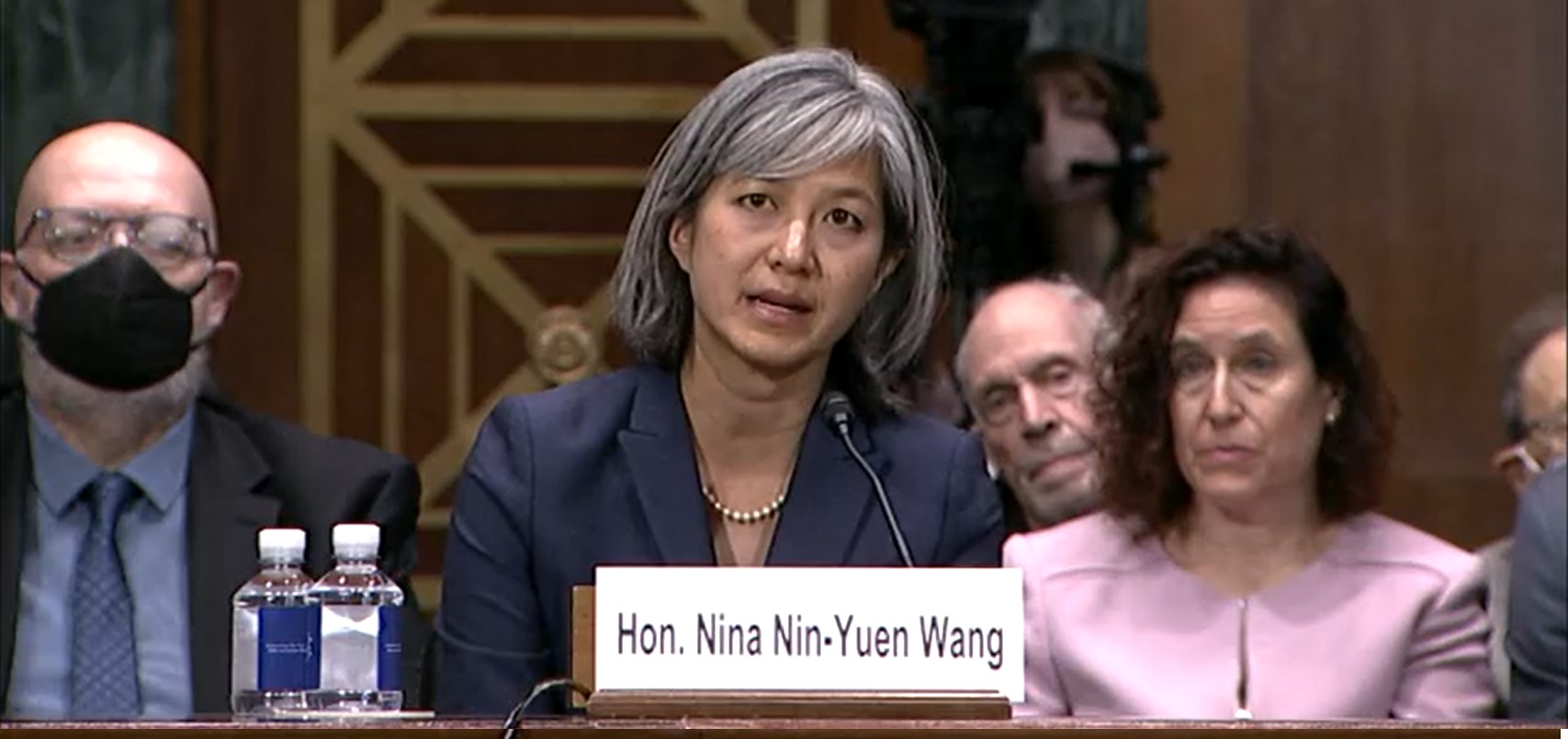
? U.S. Magistrate Judge Nina Y. Wang, currently under consideration for a federal district court vacancy, received an 14-8 vote in the U.S. Senate’s judiciary committee last week, setting her up for the full Senate’s confirmation.
? Big changes are underway at the Denver District Court. Chief Judge Michael A. Martinez and Judges Michael J. Vallejos and Edward D. Bronfin have already announced their retirements, and the judicial nominating commission has selected eight finalists for the governor’s consideration. They are: Michael W.V. Angel, Mark T. Bailey, Arnold A. Beckman, Heidi L. Kutcher, Andrew J. Luxen, Anita M. Schutte, Demetria E. Trujillo and Emily M. Fleischmann.
? Now, two more Denver district judges have announced they will also be stepping down: Brian R. Whitney and Ross B.H. Buchanan. The retirements of these five men will result in approximately 20% of the district court bench turning over in a relatively short time. Applications are due by July 6 for the second set of vacancies.
? There is also a Garfield County Court vacancy following the retirement of Judge Paul Metzger (applications are due by July 5); vacancies on the Weld County district and county courts triggered by the retirements of Judge James F. Hartmann and Judge Charles Unfug, respectively (applications are due in early July); and a Bent County Court vacancy following Judge Samuel S. Vigil’s elevation to the district court (applications are due by June 28).
? There are six finalists before the governor vying for two district court seats in the 11th Judicial District (Chaffee, Custer, Fremont and Park counties). The candidates are Donald F. “Chip” Cutler IV, Amanda J. Hunter, Jeffrey D. Lindsey, Riley A.R. Selleck, Kaitlin B. Turner and Jason R. Young. The appointees will succeed retiring Judges Stephen E. Groome and Ramsey Lama.
? Finally, the governor has three candidates for a Montrose County Court vacancy following the resignation of Judge Bennet A. Morris: Rachel J. Allen, Kurt M. Beckenhauer and Laura E.H. Harvell.
Miscellaneous decisions
? The Denver Gazette reported that the Colorado Judicial Department has refused to comply with a subpoena from the state’s judicial discipline commission, which has been investigating an alleged coverup of misconduct.
? Convicted Boston Marathon bomber Dzhokhar Tsarnaev challenged multiple restrictions placed on him during his incarceration in Colorado. A federal judge dismissed Tsarnaev’s claims over his inability to mail certain items, but his claims about the prohibition on contacting his nieces and nephews are moving forward.
? A federal magistrate judge recommended dismissing the constitutional rights claim of a University of Colorado employee who was told to briefly stay away from campus because of a faulty COVID-19 alert.
? A Clear Creek County sheriff’s deputy slammed a drunk driver’s head into a metal door frame, causing profuse bleeding and a seizure. The U.S. Court of Appeals for the 10th Circuit said the deputy acted reasonably and deserved qualified immunity.


10th Circuit upholds finding of no misconduct against Colorado federal judge
Michael Karlik
michael.karlik@coloradopolitics.com
Updated 6 hours ago
A judicial committee for the Denver-based federal appeals court upheld the chief judge’s finding last week that a federal judge in Colorado did not engage in misconduct by handling a civil case involving other attorneys and judges in the state....
SCOTUS whisperer? Justice Carlos Samour may get second opportunity to turn state dissent into national precedent
Michael Karlik
michael.karlik@coloradopolitics.com
Updated 10 hours ago
For the second time in two years, Justice Carlos A. Samour Jr. occupies an unusual position: Having his dissent in a Colorado Supreme Court case potentially forming the basis of U.S. Supreme Court precedent. Earlier this week, the nation’s highest...
10th Circuit appoints ex-Colorado solicitor general to argue issue after federal government declines
Michael Karlik
michael.karlik@coloradopolitics.com
Updated 1 day ago
The Denver-based federal appeals court took the unusual step earlier this month of appointing an attorney to independently argue a key issue in a criminal sentencing appeal after the government indicated it would not contest the defendant’s view of the...
Daniel Domenico to take over as Colorado’s chief federal judge
Michael Karlik
michael.karlik@coloradopolitics.com
Updated 10 hours ago
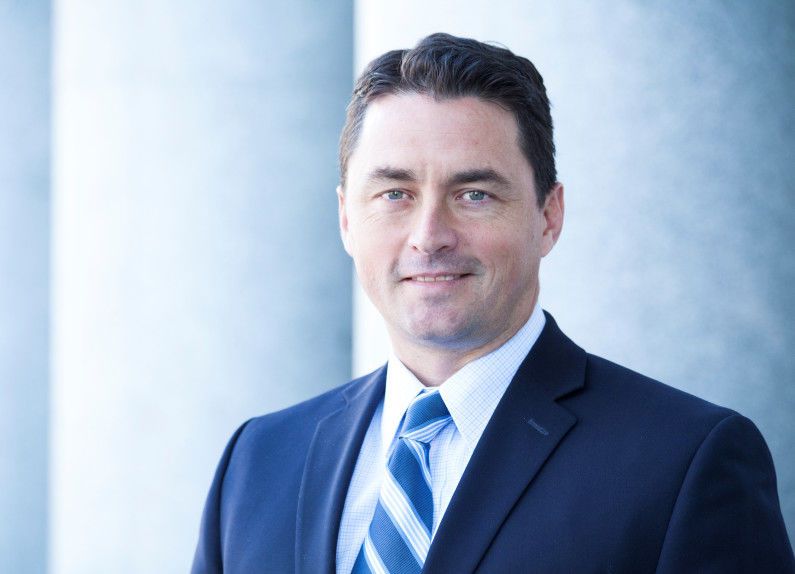
Daniel D. Domenico will become the new chief judge of Colorado’s federal trial court next week, a role that encompasses the administration of the court as well as a judicial caseload. Under federal law, the chief judge of a U.S....
10th Circuit upholds violations, sanctions against Colorado Springs mental health hospital
Michael Karlik
michael.karlik@coloradopolitics.com
Updated 1 day ago
The Denver-based federal appeals court agreed earlier this month that the government properly cited and penalized a Colorado Springs psychiatric hospital for failing to protect its staff from known risks posed by patients. The Occupational Safety and Health Administration inspected...
Appeals judges tell Boulder students about workload, ‘attack mode’ during school visit
Michael Karlik
michael.karlik@coloradopolitics.com
Updated 1 day ago
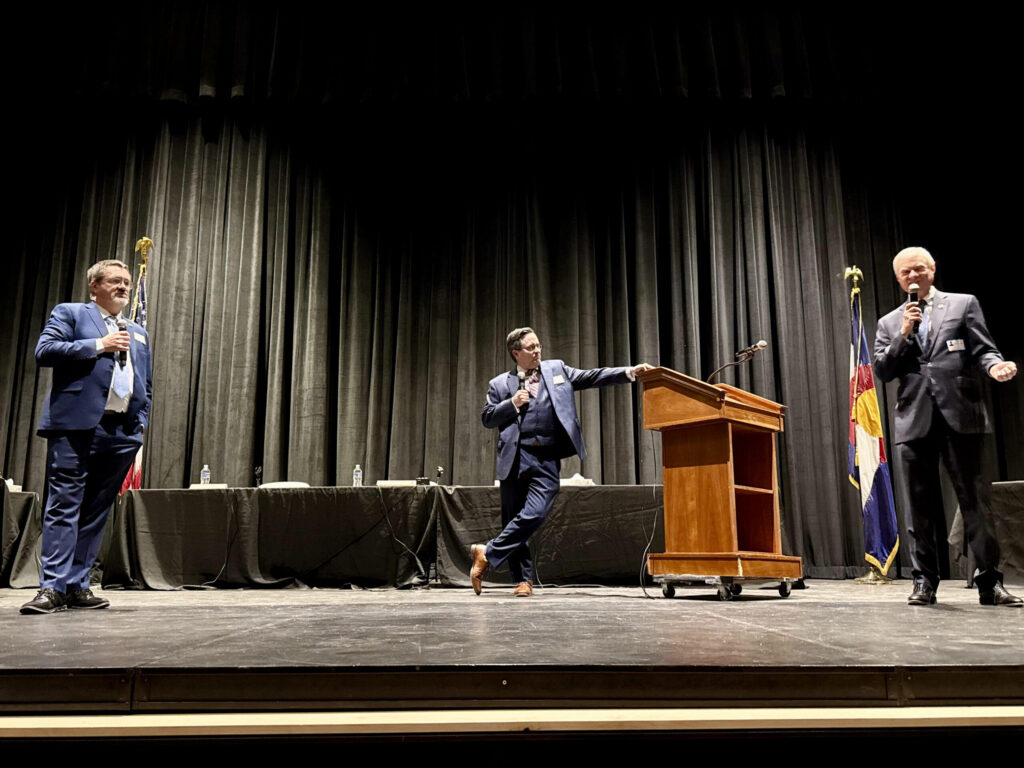
Three judges on Colorado’s second-highest court traveled to Boulder on Tuesday to hear oral arguments in real cases and field questions from students about their professional paths, their workload on the Court of Appeals, and their approach to interacting with...
Judge: CBI ordered to provide access to thousands of DNA cases
Jenny Deam
jenny-deam@coloradopolitics.com
Updated 1 day ago
Boulder County District Judge Nancy W. Salomone on Monday ordered the Colorado Bureau of Investigation to provide access to thousands of cases where past DNA analysis could be in question or show a pattern. The ruling came in a pre-trial...

Trial delayed for former Fountain city councilwoman accused of public assistance theft
Nick Smith
nick-smith@coloradopolitics.com
Updated 1 day ago
The trial for a former Fountain City Councilmember accused of stealing over $37,000 in public assistance funds has been pushed to July. Detra Duncan, 55, resigned in mid-September 2025 after El Paso County investigators say they found forged documents that...
Judge Timothy Tymkovich to step aside, create Colorado-based vacancy on 10th Circuit
Michael Karlik
michael.karlik@coloradopolitics.com
Updated 1 day ago
Judge Timothy M. Tymkovich of Colorado has announced his intent to step aside as an active member of the Denver-based federal appeals court, creating the first vacancy for President Donald Trump to fill in his second term. In a Feb....
Divided appeals court reverses murder convictions due to faulty self-defense instruction
Michael Karlik
michael.karlik@coloradopolitics.com
Updated 1 day ago
Colorado’s second-highest court concluded last week that an incomplete self-defense instruction required the reversal of an El Paso County defendant’s murder convictions. Demetrius Montez Martin was among those present late at night at a club in Colorado Springs. An argument...
PREV
PREVIOUS

El Paso County opens more voter service and polling centers
Four additional voter service and polling centers opened Monday in El Paso County, and will stay open through Election Day for the primary elections June 28. Five locations are now open, including the main office at the El Paso County Clerk’s Office at 1675 W. Garden of the Gods Road. The centers that opened Monday […]

Auditors: Denver doesn't check whether it's overpaying Denver Water for services
Denver “overrelies” on Denver Water’s rate and fee calculations without checking whether the city is overpaying for services, city auditors concluded in a report released Monday. Specifically, auditors found that the city does not verify whether Denver Water applies a discounted governmental water rate in compliance with the city’s charter; that Denver’s Department of General […]