

LIVE UPDATE: Colorado Senate, House agree to compromise, approve fentanyl bill
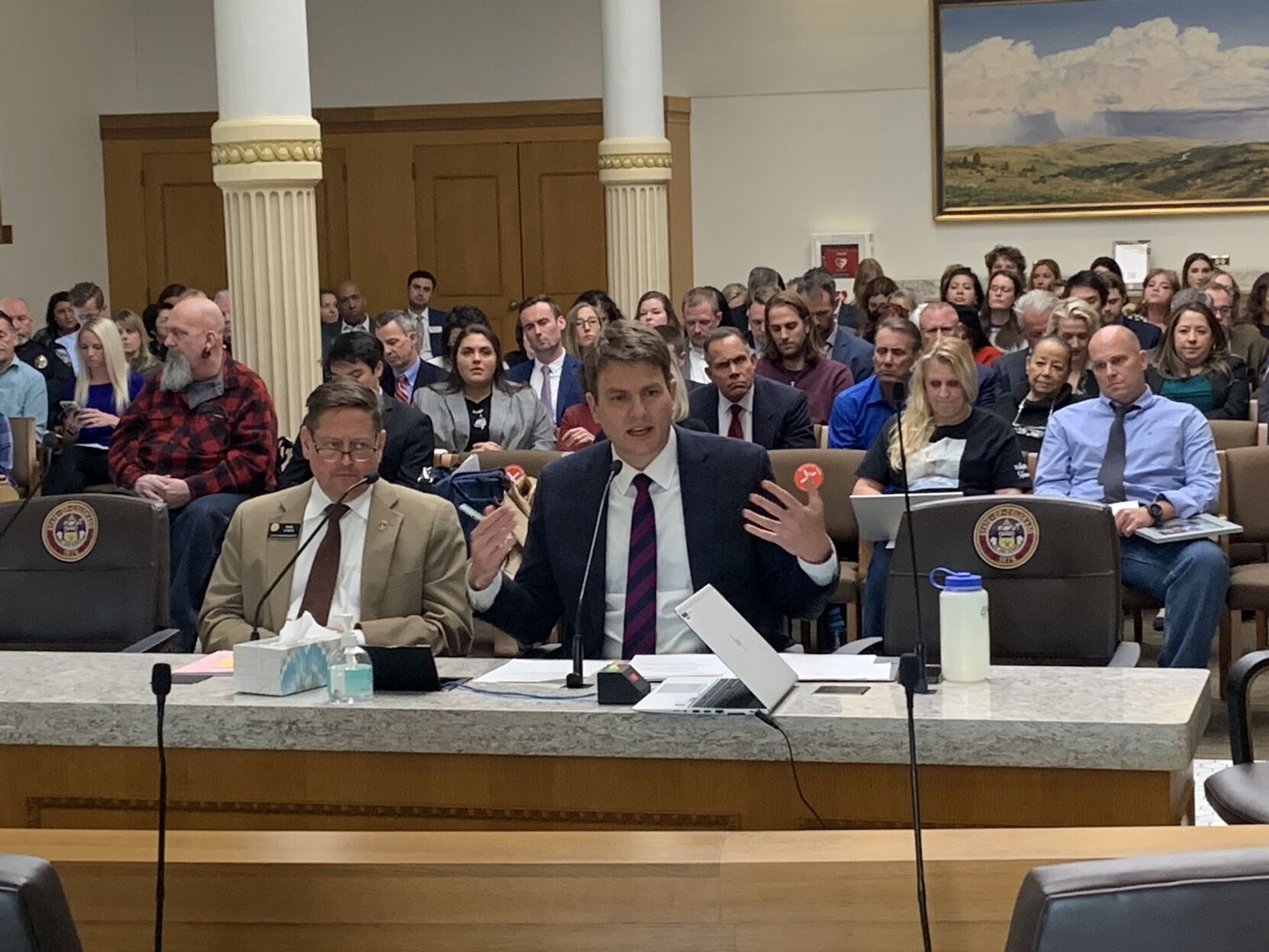
LATEST: Senate, House agree to compromise, approve fentanyl bill
Colorado’s legislators, who for months disagreed on a strategy to confront the state’s spiraling fentanyl crisis, finally settled on a compromise and approved this year’s most contentious legislation with barely more than an hour to spare before they’re constitutionally required to end the 2022 session.
To escape the gridlock, the House and Senate appointed a conference committee, which came up with compromise language to close the divide between the chambers’ competing solutions.
The House and Senate then gave the compromise their final approval, sending the measure to Gov. Jared Polis, who is expected to sign the measure. The vote in the Senate wasn’t easy – 10 of the 15 Senate Republicans voted against the compromise crafted by the conference committee.
House Bill 1326 ultimately cleared the Senate on a 27-8 vote with seven Republicans and Sen. Julie Gonzales, D-Denver, voting against.
The House debated the compromise for an hour, but finally approved it on a 46 to 18 vote. The bill’s final vote in the House was 35 to 30.
Rep. Mike Lynch, R-Wellington, the bill’s original co-sponsor, then asked to have his name removed from the bill, which now goes to the governor.
Senate adopts conference committee report and passes fentanyl bill
Shortly before 9 p.m., and with less than three hours left in the 2022 session, the Senate adopted the compromise language on the fentanyl bill.
The compromise drew complaints from Republicans, including Sen. Bob Gardner, who said it would not give prosecutors the tools they desired.
The Senate vote on the conference committee report was 25-10, with all 10 “no” votes coming from Republicans.
The bill’s final Senate vote was 27-8, with seven Republicans voting “no,” along with Sen. Julie Gonzales, D-Denver. The bill is now awaiting the House’s decision.
Conference committee unanimously approves compromise language
A conference committee adopted compromise language that closes the divide between the House and Senate over their competing solutions to the state’s fentanyl crisis, reaching the agreement with less than five hours to go in the 2022 session.
If adopted by both chambers, the compromise avoids what has been raised in the past few days – the possibility of the fentanyl bill dying and necessitating a special session, perhaps as soon as next week, to hammer out an agreement and pass the legislation.
The compromise eliminates a three-year automatic repeal of the felony charges for simple possession of 1 to 4 grams of fentanyl, one of the many sticking points.
The most contentious issue revolved around what’s known as intent – whether users knew or should have known that what they possessed contained fentanyl in it.
The bill that came out of the House included language that said if users didn’t know, they couldn’t be charged with a felony. The Senate struck that language, setting off the dispute between the two chambers.
Rep. Kerry Tipper, D-Lakewood, a member of the conference committee, said the compromise would still allow law enforcement to arrest and charge someone who has 1 to 4 grams of fentanyl with a felony. It would be up to a jury to decide, through processes already in place, whether the defendant knew they possessed fentanyl.
Rep. Leslie Herod, D-Denver, who has been among the bill’s strongest advocates for adopting the House version, told Colorado Politics she supports the compromise.
“It’s a good standard. It keeps the prosecution having to prove someone knew they had fentanyl. It still allows someone who didn’t know they had fentanyl and still have a pathway to justice. They won’t have the felony or that record. The big parts of the bill remain intact: high level dealers get higher offenses for having fentanyl; the harm reduction and treatment in this bill are unparalleled,” she said.
Medically-assisted treatment will be available in jails, and that will save lives, she added.
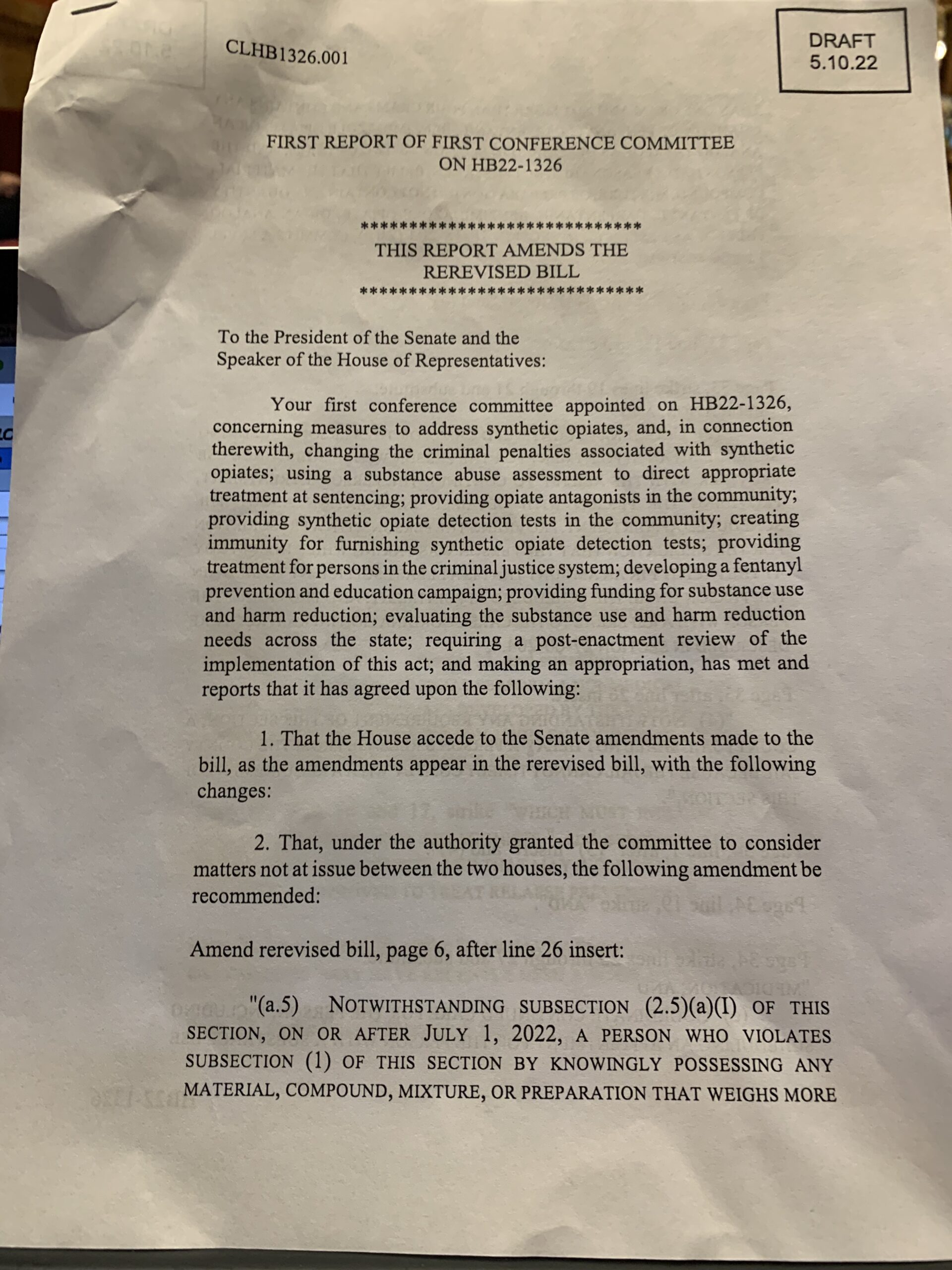
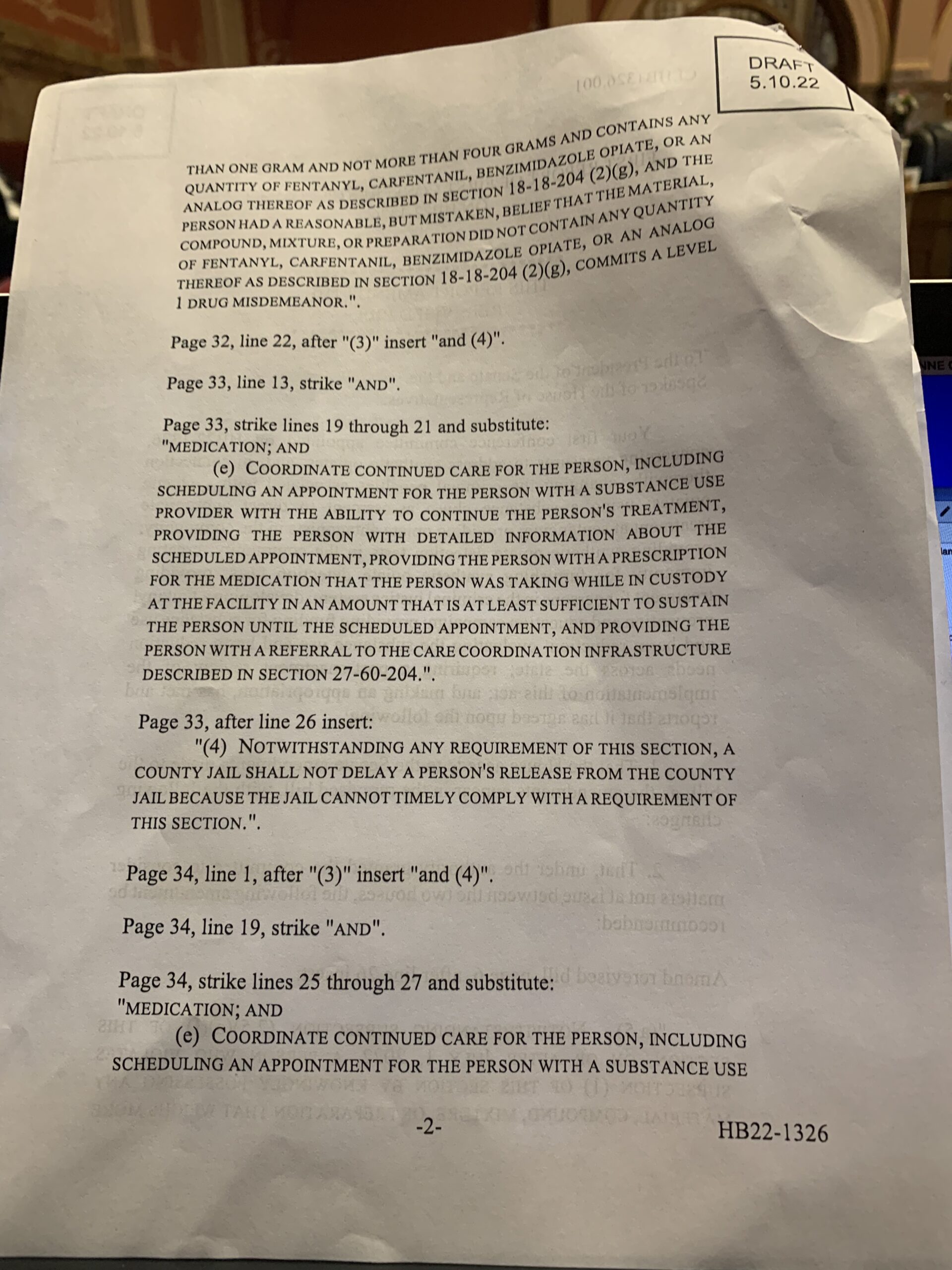
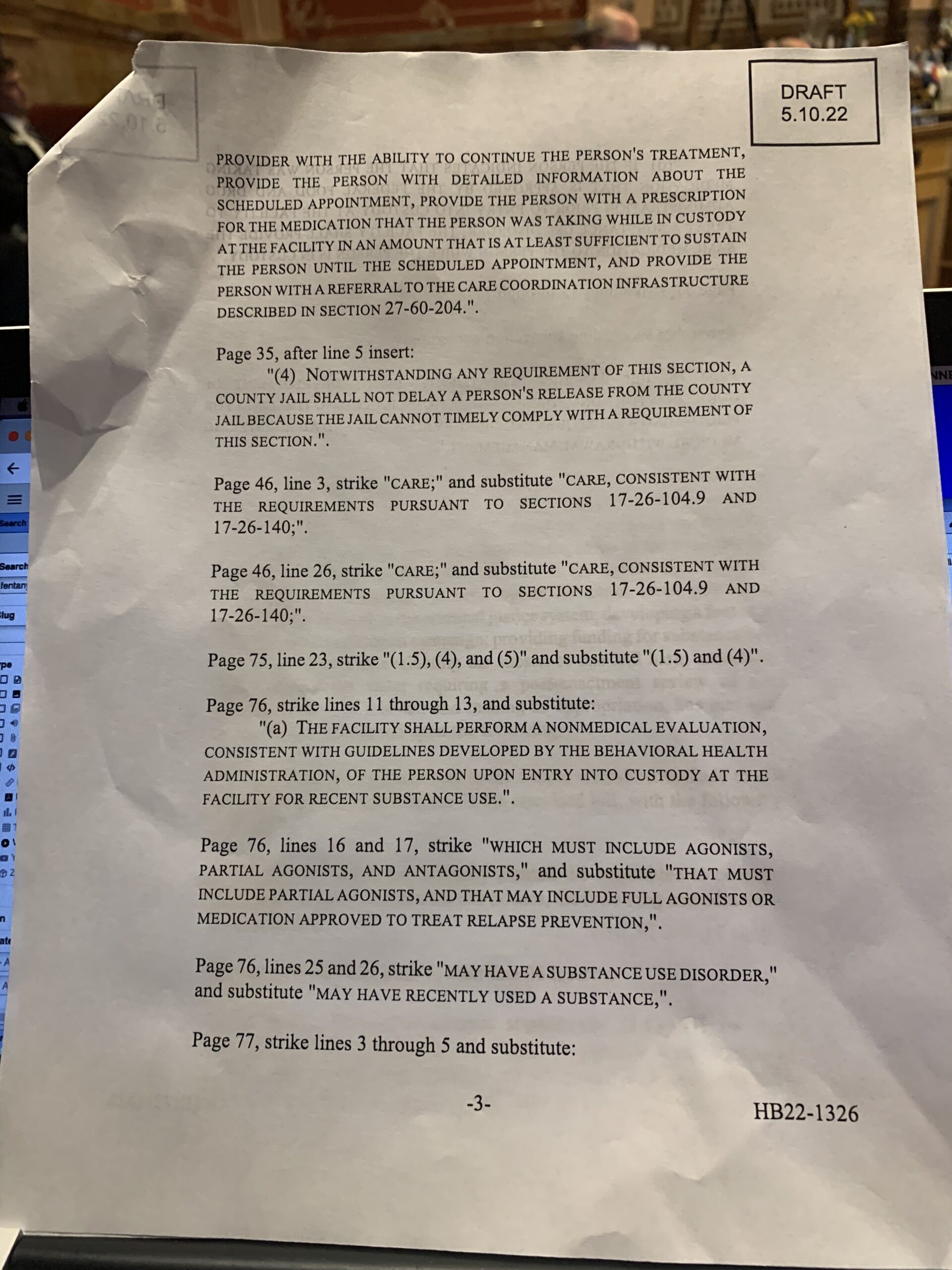
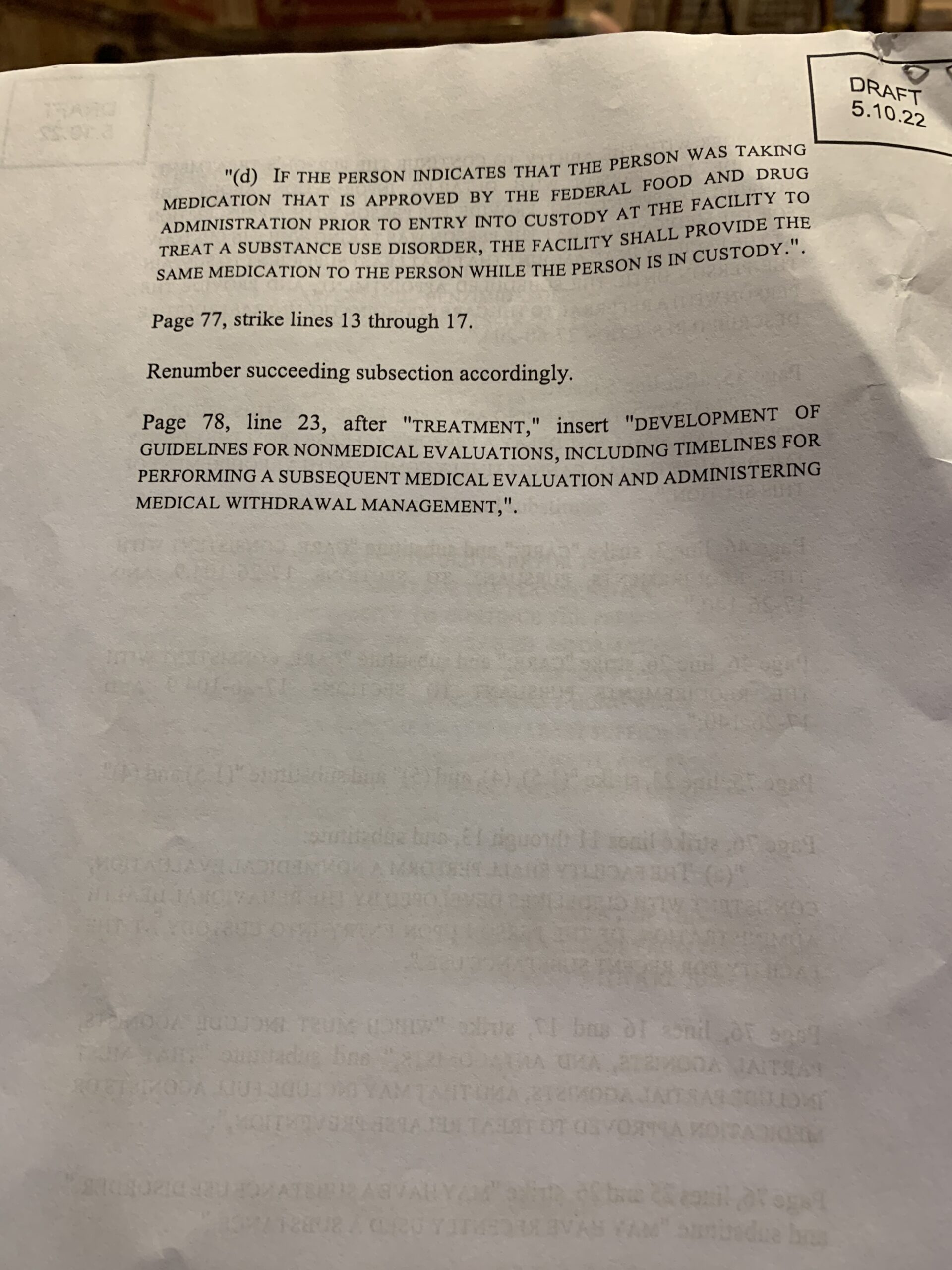
The Colorado legislature’s sweeping bill to address the state’s growing fentanyl crisis still awaits reconciliation between different versions offered by the Senate and House. The two chambers have sent legislators to a conference committee that’s trying to hash out an agreement palatable to both sides.
Compromise language deals with treatment, repeal and “knowing”
So far, the conference committee is tackling an amendment that deals with medication-assisted treatment. It does not appear to deal with a contentious provision that triggers a felony charge for possession of an illicit substance only when users knew or should have known the drug has fentanyl in it.
The compromise also includes getting rid of three-year repeal of the felony provision.
Committee members adopted the conference report unanimously.
Senate agrees to meet with House to try and find compromise language
The House earlier turned down Senate amendments to the bill.
At 6 p.m., Sen. Bob Gardner, R-Colorado Springs, called for the Senate to adhere to its position – meaning insist on the bill’s version that came out of the chamber – moments after Senate President Steve Fenberg, D-Boulder, announced Senate appointees to a conference committee, where the two chambers will try to reconcile their differences.
The Senate’s conference committee appointees are bill sponsors Sen. Brittany Pettersen, D-Lakewood, and John Cooke, R-Greeley; and, Chris Hansen, D-Denver.
Hansen was one of three Democrats who voted to strip out the language at the heart of the dispute between the House and Senate – whether someone knew or should have known what they possessed contained fentanyl.
However, Hansen voted against adhering to the Senate’s position. The motion to adhere failed on a 17-18 vote, and the Senate granted its conference committee permission to go beyond the scope of differences between the House and Senate versions.
The House earlier approved a conference committee and gave their representatives – Speaker Alec Garnett, Rep. Mike Lynch, R-Wellington, the bill’s sponsors; and, Rep. Kerry Tipper, D-Lakewood – permission to go beyond the scope of differences, which would allow discussion of more than just the Senate amendments. In theory, this means the conference committees could modify other parts of the bill not covered by the Senate amendments or add entirely new elements to the legislation.
The Senate had several options: to adhere to its version of the bill, in effect rejecting the House request for a conference committee. At that point, the bill would go back to the House, and the chamber, in turn, has two options: to recede to the Senate, effectively accepting the latter’s version, or to adhere to the House’s version. The latter would kill the bill for this session. The Senate chose option B: to go to a conference committee.
Senators earlier amended House Bill 1326 to delete language that would have required prosecutors to prove users knowingly possessed the drug in order to charge them with a felony offense. District attorneys and law enforcement officials said that provision would render any intended teeth in the legislation “practically meaningless” and “almost useless.”
The issue is a major sticking point in the different versions adopted by the House and Senate.
Lynch supported the Senate’s change but failed to find 33 votes in the House to affirm it.
The House voted just before midnight on Tuesday to reject the Senate amendments, although Lynch did request a vote on concurrence, which failed on a 30-35 vote.
Garnett said that there have been times during the process when he and Lynch haven’t agreed. The speaker called for a “no” vote on the language around whether someone knew or should have known what they possessed had fentanyl in it.
“What do you do if you don’t know fentanyl is in the drug?” Garnett said, though he acknowledged concerns by law enforcement and district attorneys.
Garnett said he spent the weekend working out a solution – give defendants a chance to prove to the court that they had no idea fentanyl was present, including in compound mixtures.
Lynch noted the bill expanded from 43 pages to 90 pages, a reflection of the scope of the problem and the work put into the legislation. The Senate dealt with more than 200 amendments, Lynch noted, and the concession that came from the Senate was the removal of the “knowing” language, which he said inhibits law enforcement and prosecutors from shutting down the dealers.
Lynch also noted the fragile compromise crafted in the Senate.
The vote to reject the Senate amendments and go to a conference committee won by a 40-25 margin.
marianne.goodland@coloradopolitics.com

Federal judge dismisses ex-Colorado judicial discipline director’s conspiracy lawsuit
Michael Karlik
michael.karlik@coloradopolitics.com
Updated 11 hours ago
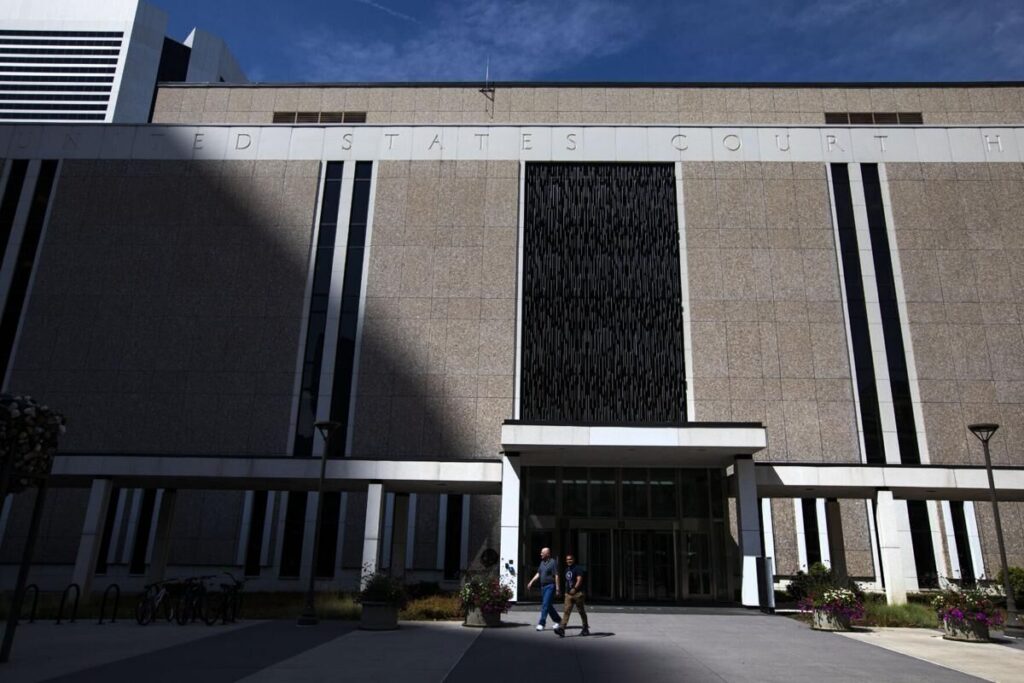
A federal judge dismissed a lawsuit from Colorado’s former judicial discipline director on Tuesday, finding that he failed to adequately state claims for conspiracy or constitutional violations. Christopher S.P. Gregory, who served as the executive director of the Colorado Commission on Judicial...
Federal judge allows retaliation claims to proceed against prison officials
Michael Karlik
michael.karlik@coloradopolitics.com
Updated 9 hours ago
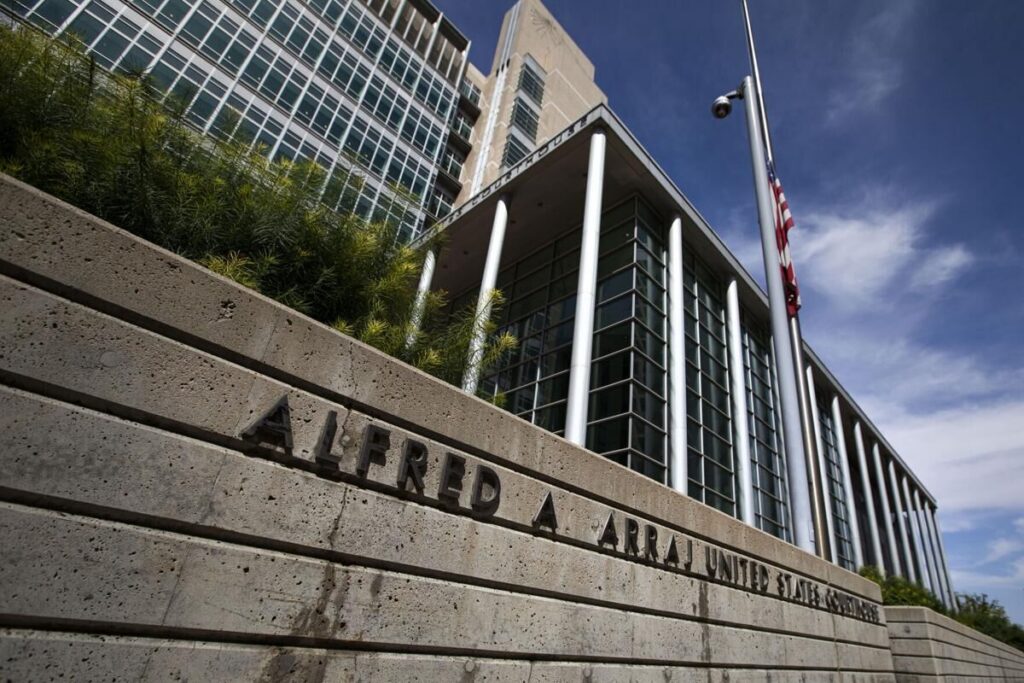
A federal judge agreed last week that a man incarcerated at Sterling Correctional Facility had credibly alleged that employees retaliated against him for filing grievances, including by taking away his disability accommodations and turning off his electricity. Louis Peoples Jr.,...
Treasury releases five-step guidance for employers to make contributions to Trump Accounts
Christian Datoc
christian-datoc@coloradopolitics.com
Updated 16 hours ago
Treasury Secretary Scott Bessent published new guidance Tuesday outlining the specific steps employers must take to contribute to employee Trump Accounts. The accounts, one of the most popular provisions included in President Donald Trump’s One Big Beautiful Bill Act, are...

Denver schools to refinance bonds to create capacity for future borrowing
Nico Brambila
nico.brambila@denvergazette.com
Updated 12 hours ago
Less than two years after voters approved a record $975 million school bond, Denver Public Schools is refinancing older debt — a move district officials say will save taxpayers money while creating capacity for another bond election. The district has...

Russia frees imprisoned US Marine over health concerns
Brady Knox
brady-knox@coloradopolitics.com
Updated 16 hours ago
Russia freed former U.S. Marine Robert Gilman upon the urging of U.S. officials so he could receive medical care in the United States. Gilman, 32, was released after 1,666 days in prison, having been arrested on Jan. 17, 2022. Eric...

Colorado students push AI task force as schools navigate new tech era
Marissa Ventrelli
marissa.ventrelli@coloradopolitics.com
Updated 9 hours ago
A group of students is urging lawmakers to establish a task force on artificial intelligence in education to advise districts on how to ensure that pupils and educators use the technology effectively without becoming overly reliant on it. The students...

Parker data center could get $19M tax rebate from Douglas County
Nicholas Fogleman
nicholas.fogleman@denvergazette.com
Updated 18 hours ago
At a time when Denver and Front Range governments are restricting or banning data center development, Douglas County commissioners are poised to approve a $19.3 million tax rebate agreement Tuesday for a new data center under construction in Parker. The...

Denver City Council rejects contract that would have given video maker 8-year deal
Deborah Grigsby
deborah.smith@denvergazette.com
Updated 21 hours ago
Denver’s Office of Human Resources will have to get creative to attract new city employees and place them in “hard-to-fill” jobs after a proposed five-year contract extension, valued at $600,000, failed to gain favor with the Denver City Council. The...
Denver Mayor Mike Johnston files to run for reelection in 2027
Michael Braithwaite
michael.braithwaite@gazette.com
Updated 21 hours ago
Denver Mayor Mike Johnston officially filed his paperwork Monday to run again for Denver’s mayoral office next year. The filing comes weeks after Johnston confirmed to The Denver Gazette that he would seek reelection as he focuses the final year...

U.S. Rep. Lauren Boebert’s son arrested, faces charges of sexual exploitation of minor
Matt Kyle
matt.kyle@denvergazette.com
Updated 1 day ago
U.S. Rep. Lauren Boebert’s son Tyler Jay Boebert has been arrested and accused of recording and sharing a video depicting himself having intercourse with a minor, according to court records. The case originated in Garfield County in Western Colorado and...
PREV
PREVIOUS

Appeals court reinstates man's challenge to murder conviction in Colorado Springs cold case
A man convicted of a 1976 homicide at a Colorado Springs hotel may be able to present his argument for a new trial after the state’s second-highest court ruled that an El Paso County judge must appoint an attorney to pursue his claims of innocence. In 2014, a jury convicted Robert W. Baillie of murdering […]

BY THE NUMBERS: The Colorado General Assembly's last-day crunch
With about 14 hours to go in the 2022 General Assembly session, the Colorado House of Representatives will be a busy place. The Colorado Senate, less so. The agenda for the 120th day shows just 88 bills still remaining on the calendar, down from 199 on Tuesday. The Senate is where the action has been […]