

Collective bargaining finally wins House approval
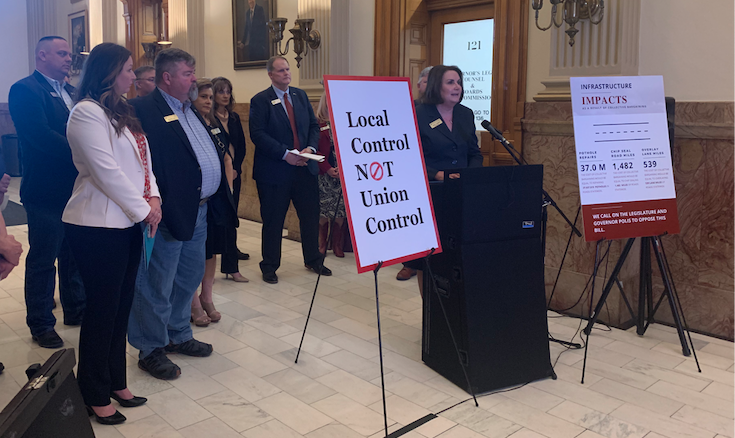
The bill that became the centerpiece for lengthy delays in the final weeks of the 2022 legislative session won final approval from the House on the session’s final day.
Senate Bill 230 was amended prior to that final vote, the result of negotiations between House Republicans and Democrats that resolved the gridlock in the House. That led to an all night session on Monday that ended at 6:30 a.m. Tuesday with the first signs of the agreement that narrowed the bill even further.
The House adopted the bill on a strict party line, 41-24 vote.
As amended, Senate Bill 230 largely made it optional for county commissioners to agree to collective bargaining contracts with their employees.
The bill has been in the works for two years. It started out as an attempt to unionize all public sector workers, including in municipalities, K-12 education and higher education. The bill was narrowed to higher education and counties earlier this year and down to just counties upon its introduction in April.
Colorado Counties, Inc., which represents 62 of the state’s 64 counties, and a majority of county commissioners, opposed the bill. A small coalition of mostly Democratic commissioners, known as Commissioners and Counties Acting Together, supported it and were part of the bill’s early negotiations. Not one county employee who wasn’t already in a union testified during two committee hearings that they wanted a union in either the House or Senate. The sheriff of Arapahoe County, an elected official, testified that his employees wanted a union but none of them testified.
The Senate watered down the bill to drop requirements that counties had to negotiate and come to agreement with bargaining units, making that optional. It also exempts home rule counties, which primarily applied to Weld County, the only home rule county that does not already have a collective bargaining agreement with its employees. Denver and Broomfield are also exempted since they are both cities and counties. An amendment adopted on Wednesday exempted the 22 counties of up to 7,500 in population.
Lawmakers made no changes to language on whether employees could strike, which most county commissioners said is vague. The bill bans an “exclusive representative” from calling for a strike, sickout or other work stoppage. Commissioners said that could keep a union leader from calling for a strike, but left county workers to their own devices on whether to do so. Sponsors, including Majority Leader Daneya Esgar, D-Pueblo, said, however, that an “exclusive representative” is actually the entire bargaining unit.
Esgar said that a state law is necessary to affirm the right of county employees to form unions, although there are already five counties that have those agreements: Adams, Pitkin, Pueblo, Las Animas and Summit, where the agreement is only with transit workers.
SB 230 now goes back to the Senate for review of amendments, and it must win final passage no later than midnight Wednesday, the mandated adjournment for the session.
marianne.goodland@coloradopolitics.com

With the deadline missed, Bureau of Reclamation plans to move forward on Colorado River operations
Marianne Goodland
marianne.goodland@coloradopolitics.com
Updated 16 hours ago
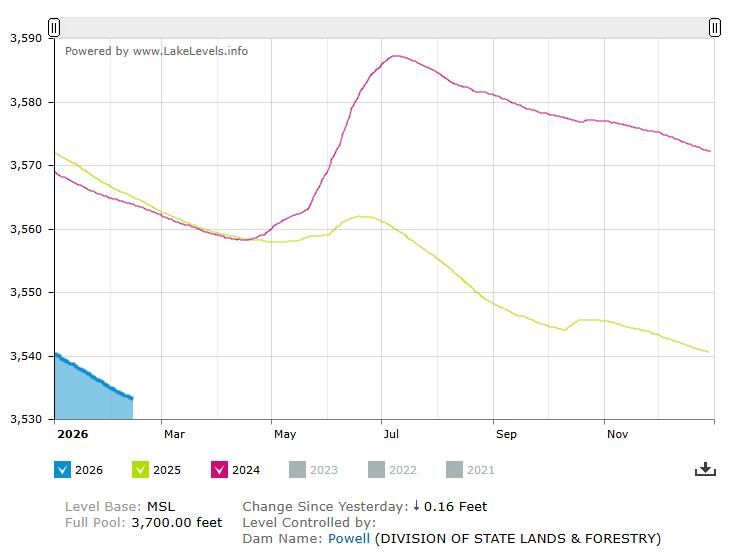
Feb. 14 was no Valentine for the seven states of the Colorado River, which failed to come up with an agreement by that deadline on how to manage the river beginning Oct. 1. The Department of the Interior and the...

Democrat Shannon Bird qualifies by petition for primary ballot in Colorado’s toss-up 8th CD
Ernest Luning
ernest.luning@coloradopolitics.com
Updated 14 hours ago
Former state Rep. Shannon Bird has qualified for the Democratic primary ballot in Colorado’s hotly contested 8th Congressional District by submitting a sufficient number of petition signatures, state election officials said this week. The winner of the Democrats’ June 30...
Colorado Supreme Court accepts cases about reliability of gun-to-bullet matching
Michael Karlik
michael.karlik@coloradopolitics.com
Updated 16 hours ago
The Colorado Supreme Court announced on Monday that it will hear two cases questioning the reliability of expert testimony that purports to identify whether a specific bullet was fired from a specific gun. At least three of the court’s seven...

State Rep. Peña outlines significant inequalities in Colorado’s school finance law | A LOOK BACK
Rachael Wright, Special to Colorado Politics
rachael.wright@coloradopolitics.com
Updated 4 days ago
Forty-Five Years Ago This Week: In a guest column published in The Colorado Statesman, House Minority Leader Rep. Federico Peña, D-Denver, wrote that his greatest disappointment with the legislative process was “the inability, or unwillingness, of the General Assembly to...

Colorado Politics Calendar Feb. 16-22
Rachael Wright, Special to Colorado Politics
rachael.wright@coloradopolitics.com
Updated 3 days ago
CoPo’s weekly political calendar will help you find political and public-policy events throughout Colorado. It includes candidate and issue campaign events, public policy meetings, court hearings, state and local party conventions, assemblies, debates, rallies, parades, speaking engagements, traveling dignitary appearances,...

Michael Bennet and ‘the question’ | SONDERMANN
Eric Sondermann
eric-sondermann@coloradopolitics.com
Updated 12 hours ago
The train usually runs only one way. The route goes from the state Capitol to Washington, D.C. State legislators become members of Congress; governors become senators. See Hickenlooper, John. Including our junior senator, no matter his years, a total of...

Colorado District Attorneys unveil 2026 legislative priorities | WHAT’S YOUR AGENDA?
Marissa Ventrelli
marissa.ventrelli@coloradopolitics.com
Updated 2 days ago
Welcome to What’s Your Agenda?: The Colorado Politics’ weekly publication of trade association priorities for the state’s 2026 legislative session. The Colorado District Attorneys’ Council provides training, resources, and legislative support to every prosecutor in the state. In order to...

A day in the life of the Capitol: Capitol M | Week of Feb. 14, 2026
Marianne Goodland
marianne.goodland@coloradopolitics.com
Updated 2 days ago
The lighter side of the Capitol, usually. If you were walking around the Capitol on Feb. 12, there was plenty to see and to be amused (or delighted) by. Let’s start with the high school kids from Greeley’s District 6....
Appeals court clarifies what materials judges may rely on for postconviction decisions
Michael Karlik
michael.karlik@coloradopolitics.com
Updated 1 day ago
Colorado’s second-highest court clarified on Thursday that trial judges who are deciding whether to grant relief to convicted defendants may rely on the materials attached to, or referenced in, the parties’ arguments. In contrast to direct appeals of criminal convictions,...

Here’s what to know about the Homeland Security shutdown starting this weekend
Deborah Grigsby
deborah.smith@denvergazette.com
Updated 1 day ago
Another shutdown for parts of the federal government is expected this weekend, following an impasse over funding for the U.S. Department of Homeland Security amid a push by Democrats for changes in immigration enforcement. Funding for the federal agency is set to...
PREV
PREVIOUS

10th Circuit rules Mesa County workers cannot be sued for infant's foster care death
Three child welfare workers in Mesa County did not commit a constitutional violation when they helped place an infant in the care of a foster mother who ultimately killed her, the federal appeals court based in Denver has ruled. After studying its options, the Mesa County Department of Human Services recommended Angel Place be moved […]
Bill to fund independent judicial discipline commission heads to Polis, chairwoman recuses from investigation
A bill that independently funds the Colorado Commission on Judicial Discipline and surveys additional changes to how judges are investigated and disciplined is headed for Gov. Jared Polis’ desk. Senate Bill 22-201 puts $1.14 million in taxpayer dollars toward the commission, which until now had been funded entirely through attorney registration fees controlled by the […]