

BIDLACK | Free speech to say nothing at all?
I’ve written before about how the protection of our fundamental rights can often be found in the tiny corners of our judicial system. Over the years, the courts have proven vital in enforcing our rights, often in seemingly small and out-of-the-way cases.
Clarence Gideon was a drifter with a long criminal record. When he was arrested yet again, this time for felony theft back in 1961 for breaking into a pool hall, he went to trial a poor and uneducated man. He wanted a lawyer but since he couldn’t pay for one, he didn’t get one. He was convicted and sent to prison, and it was from his prison cell that he wrote a handwritten letter to the US Supreme Court, stating that he thought he should have been able to have a lawyer regardless of his ability to pay. The Supreme Court agreed.
Today we are all familiar with the phrase in the Miranda warning (Miranda being another important example of this type of case) wherein a suspect is told that he has a right to an attorney, and he gets one even if he can’t afford to pay for one. It was, in the opinion of the Court, a fundamental right.
Back in 1927, Anita Whitney found herself arrested under a California law for the offense of helping to organize the Communist Labor Party. The existing law held that such an effort would inevitably lead to violence, hence her arrest. A unanimous Supreme Court ruled that her conviction was overturned, because she has a right to free speech that did not present a clear, present and immediate danger to public safety. She had the right to speak.
But what about your right not to speak?
A recent Colorado Politics story caused me to muse about Gideon and Whitney and other such cases. It seems security guards at the federal courthouse in Denver routinely ask those entering what their business was in the building that day. One visitor to the building did not care for those questions.
Tiffany Grays was asked why she was coming to the courthouse and replied briefly that she was coming to court. When asked which courtroom, she declined to expand upon her answer. It was not their business, in her view. Depending upon whom you believe, Grays then either became or did not become belligerent. The CP story explains the details of what happened next, and as is nearly always the case, there are sharp differences in recollections from the security personnel and from Ms. Grays.
Grays raised freedom of speech concerns to the judge involved and he recently ruled that a person visiting the courthouse does not, in fact, have a right to keep silent as to his or her business in the building. Simply put, there are basic “courtesy questions” based on immediate safety concerns and that can reasonably be asked of those seeking entry. Such questions, the judge ruled, do not create any constitutional problems.
As I’ve oft stated from atop my rickety soapbox of idealism, there are no truly unlimited rights in the United States. Your right to whatever religious beliefs you choose to hold or not to hold do not allow you to burn down the churches of other faiths. Free speech protections do not allow Ford Motor Company to claim that their new car gets 1,000 miles-per-gallon. And the Second Amendment doesn’t mean you get to have an anthrax cannon. Rights are limited. And so, the Court ruled that the Grays case is no Gideon or Whitney. Simply being asked her business in a courthouse is not an infringement of any basic freedom.
I confess, I’m a tad conflicted on this one. As a former military cop, I’m aware of the limits on police actions. Cops cannot, for example, just stop someone walking down the street because they don’t like the way the person is dressed. But law enforcement can stop that same pedestrian if there has been a crime and the cops can reasonably think the person they see walking might be connected to the crime. There are lots and lots of ways this can go wrong for both sides, but you see my point.
Given that we now live in a society where a federal building can reasonably be seen as at risk (remember Oklahoma City) I guess I’m OK with a person having to explain why they want entry into a courthouse, but I also admit to being a tad uneasy with that rule as well.
I suspect we’d all agree that a guard at, say, a grocery store has no right to ask us which groceries we intend to buy when we enter the store. And I suspect we also agree that someone seeking to enter the White House grounds without being willing to say why is rather suspicious. I don’t doubt that this case was properly decided, but on any issue of free speech, I tend to get nervous when the government gets to decide what is and what is not allowed.
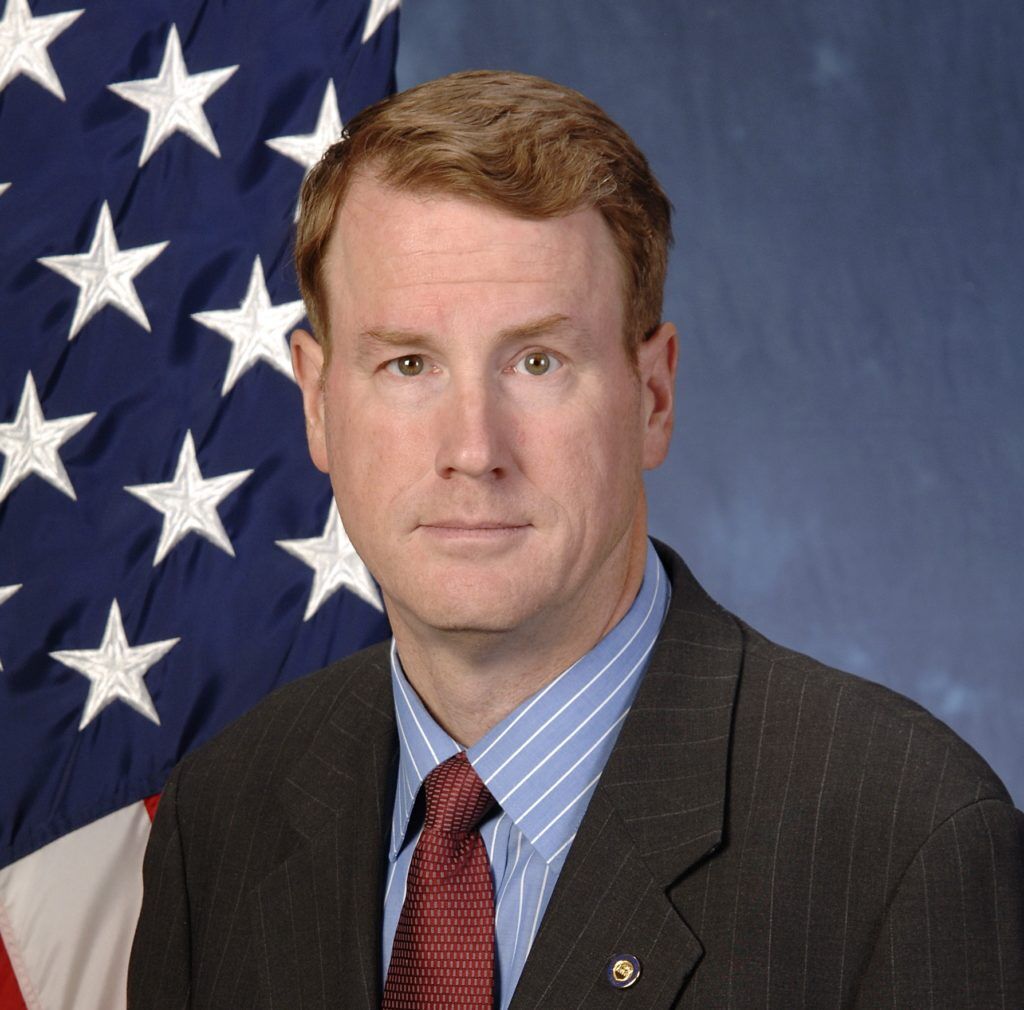
Hal Bidlack is a retired professor of political science and a retired Air Force lieutenant colonel who taught more than 17 years at the U.S. Air Force Academy in Colorado Springs.

It’s time to let unaffiliated voters caucus | Vince Bzdek
Vince Bzdek
vince.bzdek@gazette.com
Updated 5 hours ago
There’s no getting around it: Colorado’s 3,000 county caucuses, which just wrapped up recently, left half the electorate out in the cold. Since unaffiliated voters now make up 51% of all Colorado voters, a majority of Colorado electors are barred...
A Mile High, again: Capitol M | Week of March 21, 2026
Marianne Goodland
marianne.goodland@coloradopolitics.com
Updated 3 days ago
The lighter side of the Capitol, usually…. Local Journalism Day, except they forgot their very own local journalists. The state Senate on Thursday, March 19, passed a resolution recognizing Local Journalism Day. Everyone voted for it, which is good, because...
The insular bubble of caucuses and assemblies | SONDERMANN
Eric Sondermann
eric-sondermann@coloradopolitics.com
Updated 2 days ago
Nearly 30 years ago, then-Federal Reserve Chairman Alan Greenspan coined the term “irrational exuberance” to describe the overheated stock market. That descriptive phrase could also apply to much of the political realm. The hype in politics often grossly exceeds the...
Set appropriate state guidelines for critical surveillance technology | OPINION
Colorado Politics
colorado-politics@coloradopolitics.com
Updated 2 days ago
I admit it: I’m worried. I’m hearing a lot about surveillance in the public arena. I hear cameras are capturing my car’s license plate wherever I drive, my face as I go in and out of stores and health facilities,...
Puppy trafficking bill promotes inhumane breeding | OPINION
Colorado Politics
colorado-politics@coloradopolitics.com
Updated 2 days ago
By Patti Strand When Justice Thurgood Marshall wrote “The Constitution does not prohibit legislatures from enacting stupid laws,” he wasn’t wrong. He was referring to a political process sometimes ill-equipped to deal with complex issues that require subject-matter knowledge and a...
Penny wise but foolish by pounds | Paula Noonan
Paula Noonan
paula-noonan@coloradopolitics.com
Updated 2 days ago
Leadership of Colorado’s General Assembly introduced the Fiscal Year 2026-2027 Legislative Appropriation bill, HB26-1333, at $75.72 million. That will be the budget to run the state legislature next year. About $74 million comes out of the general fund and the...
Proposed evictions bill fails to improve housing stability while threatening higher rents | OPINION
Colorado Politics
colorado-politics@coloradopolitics.com
Updated 3 days ago
No landlord wants to evict a tenant for non-payment of rent. That is true for large housing providers, small “mom-and-pop” owners and nonprofit housing rental providers alike. Evictions are financially and emotionally costly for everyone involved. But when rent goes unpaid, eviction...

Prevention works — invest in conflict prevention with wolves | FEEDBACK
Colorado Politics
colorado-politics@coloradopolitics.com
Updated 2 days ago
The recent reporting on Colorado’s wolf depredation payouts exceeding $700,000 highlights a critical problem with the current approach to wolf recovery: current mainstream systems focus on compensation and ineffective reactive non-lethals. These systems are not designed to prevent conflict but attempts...
Colorado’s clean-energy future must be affordable for older adults | PODIUM
Colorado Politics
colorado-politics@coloradopolitics.com
Updated 2 days ago
By Jason DeaBueno Last winter, one of the older adults we serve at Silver Key shared something that has stayed with me. She begun turning her heat down at night — not because she wanted to, but because she was...
Why Denver should care about conservation easements — even if you’ve never set foot on a ranch | OPINION
Colorado Politics
colorado-politics@coloradopolitics.com
Updated 3 days ago
By Jason Swann I live in Denver. I drink tap water from my kitchen sink, hike close to home when I can, worry about wildfire smoke every summer, and try, like many families, to keep up with the rising cost...
PREV
PREVIOUS

Electric-grid roadmap a win for rural Colorado
Aaron Zimola “You’re going to have to put the pole back up yourself.” Linda sat on the other end of the phone in shock, “What do you mean? 20 miles of electric poles went down due to high winds, and you’re saying you won’t put my pole back up?” “That’s right.” Linda Winter is the […]
Denver Gazette: Disarming Denverites in the crime fight
Denver City Hall needs all the help it can get in fighting our epic crime wave. And according to police records, 10,792 Denverites stand ready to lend a hand. In fact, they’re already doing so. They are the trained, background-checked, fingerprinted, law-abiding locals who hold permits to carry a concealed weapon. While the need for […]