

Public employees cannot jettison ex-spouses from retirement benefits, state Supreme Court says

Retired public employees cannot unilaterally change their retirement plan to stop their ex-spouses from receiving benefits, the Colorado Supreme Court decided last week.
Robert J. Mack of Colorado Springs, who retired from government work in 2012 and designated his then-wife as the beneficiary of his retirement benefits, argued to the Supreme Court that the trial judge overseeing his divorce was essentially compelled to honor his request to alter his retirement plan and allow the benefits to flow directly to Mack.
But in an April 11 opinion, Chief Justice Brian D. Boatright indicated that while a retiree may make the request, Colorado law “does not obligate the court to carry out the retiree’s wishes.”
There are three options under the Colorado Public Employees‘ Retirement Association for workers to choose the structure of their benefits upon retirement. Option 1 directs benefits to the retiree only, and the benefits cease upon that person’s death. Option 2 allows for the designation of a beneficiary who receives one-half of the benefit for life after the retiree dies. Option 3 is similar, except the beneficiary receives the full amount upon the death of the retiree.
In options 2 and 3, if the beneficiary dies first, the retiree’s plan converts to Option 1. If a retiree undergoes a divorce, a judge “shall have the jurisdiction to order or allow” the retiree to remove his or her spouse and convert the plan to Option 1. The judge in Mack’s divorce, however, determined the PERA benefits under Mack’s Option 3 plan were marital property to be divided between the couple.
Mack, who took the uncommon step of representing himself before the Supreme Court, argued the trial court should either honor an agreement between spouses to change the plan or, where spouses disagree, accept the retiree’s request and issue an order for PERA to remove the ex-spouse.
“There’s nothing in the statute or anywhere else in the law that says there’s a limitation on this right as granted by the legislature to the retiree,” Mack said during oral arguments. “This is a situation where the legislature has chosen to grant a limited jurisdiction to the court to do one of two things: either allow or order the retiree to remove the spouse as beneficiary.”
“Are you saying the moment it is requested, the court shall order or allow?” asked Justice Monica M. Márquez. Mack responded in the affirmative.
The attorney for Mack’s ex-wife countered that nothing in the law gave judges a directive to rubber stamp the wishes of a retiree.
Boatright, in the court’s opinion, agreed the law’s statement that judges “shall have jurisdiction” merely indicated the courts have the discretion to order a plan change.
“If, as Husband urges,” Boatright wrote, “‘shall’ indicated that the court was obligated to do the retiree’s bidding, the statute would more naturally read, ‘Upon the retiree’s request, the court shall enter an order allowing the retiree to remove the former spouse as cobeneficiary and convert to option 1 benefits.’ That, of course, is not how the statute reads.”
The case is In re Marriage of Mack.

Federal judge proposes sanctions against Mike Lindell’s lawyers for continued fake citations
Michael Karlik
michael.karlik@coloradopolitics.com
Updated 31 minutes ago
A federal judge is once again pursuing sanctions against lawyers for MyPillow CEO Mike Lindell for continuing to cite to court cases that do not exist, likely based on the faulty output of artificial intelligence tools. Last year, a jury...

Susan Blanco signals views on role of appellate courts in first opinion as Colorado justice
Michael Karlik
michael.karlik@coloradopolitics.com
Updated 4 hours ago
Justice Susan Blanco’s first solo opinion as a new member of the Colorado Supreme Court made clear her view of the guardrails that keep the state’s highest court tethered to the issues it is asked to decide. On Monday, the...

Colorado leaders weigh next steps after Supreme Court rejects state ban on ‘conversion therapy’
Marissa Ventrelli
marissa.ventrelli@coloradopolitics.com
Updated 21 hours ago
Colorado leaders said they are weighing next steps after the U.S. Supreme Court on Tuesday rejected the state’s ban on “conversion therapy” for children, as critics and supporters cheered or lambasted the ruling. The court’s near-unanimous decision called the Colorado...
Federal judge dismisses U.S. government lawsuit against Colorado, Denver’s ‘sanctuary’ laws
Michael Karlik
michael.karlik@coloradopolitics.com
Updated 21 hours ago
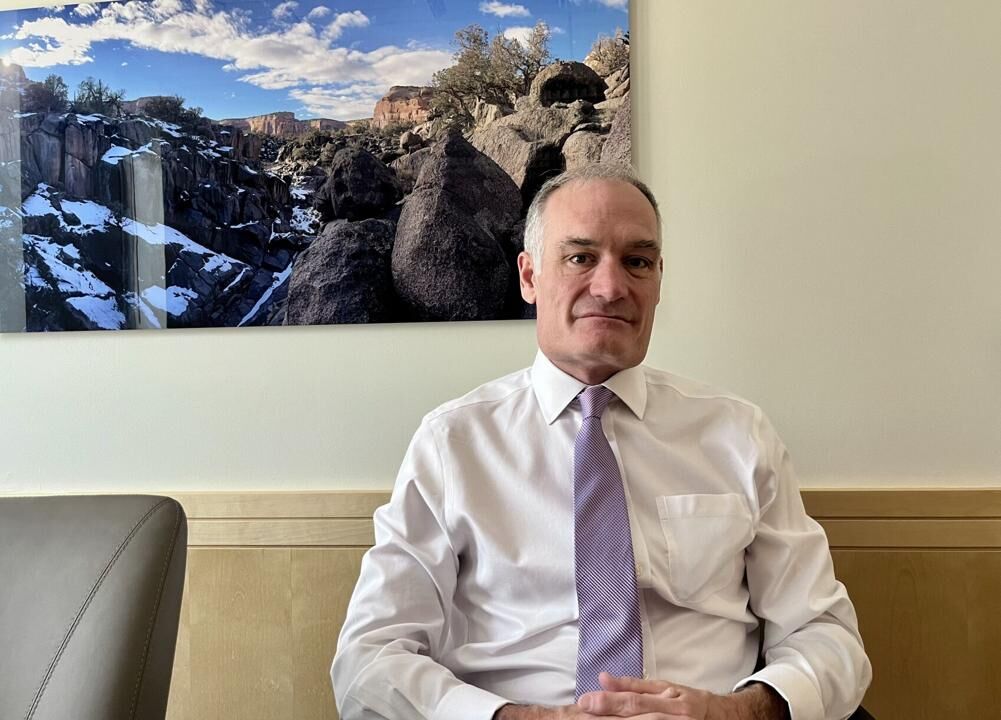
A federal judge dismissed the U.S. government’s lawsuit against Colorado and Denver on Tuesday, which alleged that various local policies impermissibly infringed on federal immigration enforcement. U.S. District Court Judge Gordon P. Gallagher followed the lead of judges in Illinois...

Federal judge finds DOJ adequately searched for, disclosed records related to Bidens
Michael Karlik
michael.karlik@coloradopolitics.com
Updated 1 day ago
A federal judge determined on Friday that the U.S. Department of Justice adequately searched for and disclosed records to a Colorado attorney in response to his request for documents related to former President Joe Biden’s son and brother. In November...

10th Circuit warns lawyers after finding fake case in filing
Michael Karlik
michael.karlik@coloradopolitics.com
Updated 19 hours ago
The Denver-based federal appeals court warned attorneys to be more careful last month after discovering one lawyer cited a fake case in his arguments. In recent months, federal and state judges in Colorado have begun cautioning lawyers explicitly about the...

10th Circuit rules cognitively impaired man’s risk of lobotomy, mistreatment in Mexico not ‘torture’
Michael Karlik
michael.karlik@coloradopolitics.com
Updated 2 days ago
The Denver-based federal appeals court concluded last month that a man’s risk of mistreatment or forced lobotomy in his native Mexico did not amount to “torture” that should shield him from deportation. A three-judge panel of the U.S. Court of...
Colorado justices side with news organizations for disclosure of high-level child abuse data
Michael Karlik
michael.karlik@coloradopolitics.com
Updated 22 hours ago
The Colorado Supreme Court ruled on Monday that the state must disclose the number of child abuse reports at individual group living facilities in response to an open records request, as the addresses are already in the public domain. The...
Divided Colorado Supreme Court finds Denver detective did not violate defendant’s Miranda rights
Michael Karlik
michael.karlik@coloradopolitics.com
Updated 2 days ago
The Colorado Supreme Court determined on Monday that a Denver detective did not improperly resume questioning of a defendant in custody after he invoked his right to counsel. By 4-3, the justices reversed a trial judge’s order that found a...

Out-of-state judges address ex-discipline director’s lawsuit, Colorado justices accept federal invitation | COURT CRAWL
Michael Karlik
michael.karlik@coloradopolitics.com
Updated 2 days ago
Welcome to Court Crawl, Colorado Politics’ roundup of news from the third branch of government. A pair of out-of-state judges got down to business in a lawsuit brought by Colorado’s former judicial discipline director, plus the state Supreme Court has...
PREV
PREVIOUS

Lamborn challenger Dave Williams sues to add anti-Biden phrase to his name on primary ballot
Republican congressional candidate Dave Williams wants voters in Colorado’s upcoming primary election to know how he feels about President Joe Biden when they see his name on the ballot. On Monday, the state lawmaker from Colorado Springs, one of three Republicans challenging U.S. Rep. Doug Lamborn in the June primary, filed a lawsuit to force […]

Rep. Jason Crow calls for increased aid to Ukraine after return from trip to Eastern Europe
U.S. Rep. Jason Crow said Monday that the U.S. must provide more support to Ukraine as Russia’s invasion enters a new phase and framed the conflict as a test of American resolve to stand up to “dictators and autocrats.” Speaking from Washington with reporters after returning from a recent trip to Poland, Romania and Slovakia with […]