

TRAIL MIX | Colorado’s 2022 primary ballot takes shape as deadlines loom

Colorado is in that brief, awkward stage between the deadline for Republicans and Democrats to declare their candidacies for statewide and congressional offices and the deadline for the state’s top election official to certify this year’s primary ballot.
During this roughly six-week stretch, from the middle of March to the end of April, the next stage of the 2022 election year – the two-month sprint to the June 28 primary – is still taking shape, its general outlines mostly clear but with plenty of detail still left to fill in.
The candidates who have already qualified for the primary – by turning in a sufficient number of valid petition signatures or by winning support from at least 30% of delegates to the party assemblies that precede the Democrats’ and Republicans’ state assemblies – can celebrate and relax for a moment, though some have already shifted gears from chasing signatures or delegates to chasing voters, including an unknown number of unaffiliated Coloradans, who can vote in either major party’s primary.
Others are in limbo until they know who all of their primary opponents will be, since as of end of business on April 7, petitions submitted by seven congressional candidates – and four legislative candidates – were still under review by election officials.
By now, we’ve known for weeks which candidates are running for what offices, barring 11th-hour surprises at the handful of party assemblies scheduled for this weekend. All the petitions have been circulated and all the assembly delegates have been chosen, but the primary ballot won’t be set in stone for another few weeks.
That’s because even after the final round of party assemblies have adjourned and the Elections Division at the Colorado Secretary of State’s Office has rendered verdicts on the last stack of petitions undergoing verification, candidates have a brief window to contest the results in court.
The primary ballots have been growing since March 2, when eight-term U.S. Rep. Doug Lamborn received word he had qualified for the primary by petition at the same time precinct caucuses were kicking off around the state. The Colorado Springs Republican has since been joined on the GOP ballot by two more candidates: Navy veteran and former third-party nominee Rebecca Keltie and state Rep. Dave Williams, who earned top-line in the primary by winning the lion’s share of delegate votes at the district assembly. A fourth Republican, political newcomer Andrew Heaton, is waiting to hear whether his petitions had enough valid signatures.
The deadlines come with a little wiggle room.
March 15 is generally understood as the last date Colorado candidates can launch a 2022 campaign and appear on the major parties’ June primary ballots. It’s also, not coincidentally, the day nominating petitions were due – though candidates taking the caucus and assembly route to the ballot can wait until the very last minute and be nominated from the floor in hopes of securing a spot in the primary.
While rare, that has happened often enough in recent years to warrant a notice – including in 2016, when Lamborn was nearly kept off the ballot by young activist Calandra Vargas, who surprised the incumbent when she received almost 70% of the delegate vote, which would have prevented Lamborn from being nominated at all. Since that close call, Lamborn has circulated petitions to ensure he’ll make the primary – though even that method is no sure thing, as Lamborn found out in 2018 when he had to rely on federal judges to rule his petitions had earned him a spot on the ballot after the Colorado Supreme Court ruled they hadn’t.
By the time this column lands in the hands of many of its readers, most of the remaining names will have been added to the primary rosters, but a few stragglers could still make it on by April 29, the last day for the secretary of state to transmit the certified list of primary ballot candidates to county clerks.
While the clerks must act quickly at that point, – ballots still have to be printed before they start going in the mail to military and overseas voters, which has to happen this year by May 14 – even that date isn’t ironclad, as voters discovered in 2016 when the status of one of the four Republicans who petitioned their way onto the U.S. Senate primary ballot was still up in the air when ballots went to the printers.
That year, Ryan Frazier won an injunction requiring officials to include his name on the ballot even though he was still awaiting a court ruling on whether a small number of signatures on his petitions were valid. If it turned out they weren’t, a judge ordered, votes for Frazier wouldn’t be counted, but the harm would be irreparable if the court ruled in his favor after his name had been omitted from the ballot. As it turned out, Frazier prevailed in court, though he finished fifth in the field of five primary candidates.
At this writing, Republicans are looking at primaries up and down the ticket and across the state, for the U.S. Senate, governor and secretary of state, and in at least three congressional districts – the 5th, 7th and 8th districts – along with a potential primary in the 3rd District.
In each of the races with GOP primaries on deck, some candidates have already made the primary – by petition in most cases – with more candidates certain to emerge from the state assembly, while additional candidates whose petitions could land them in the congressional primaries are awaiting word.
GOP U.S. Senate candidate Joe O’Dea, who easily qualified by petition, will face the candidate or candidates who emerge from the state assembly, where six Republicans are vying for support.
Gubernatorial candidate Heidi Ganahl, an at-large member of the University of Colorado Board of Regents, is on the ballot by petition and will likely be joined by at least one additional candidate out of the assembly. She’s competing with as many as 11 other declared candidates for delegate votes, with the top vote-getter also receiving top-line on the ballot.
Secretary of State candidate Pam Anderson, a former Jefferson County clerk, is also already on the ballot by petition. Two other hopefuls, including Mesa County Clerk Tina Peters, who is facing felony charges related to her attempts to prove the 2020 election was rigged, is going through assembly, along with first-time candidate Mike O’Donnell, an economic development specialist.
Republican attorney general candidate John Kellner, the 18th Judicial District’s district attorney, and state treasurer candidate Lang Sias, a former state lawmaker and the GOP’s 2018 nominee for lieutenant governor, are unopposed for the nomination.
In the 5th CD, the Republican candidates already on the ballot – Lamborn, Williams and Keltie – are waiting to hear if Heaton will also be listed.
Republican Tim Reichert, an economist and business owner, is so far the only primary candidate in the 7th CD, but four more candidates are in the wings, with two of them vying for tickets out of assembly – former legislative candidate Laurel Imer and newcomer Erik Aadland, who switched at the end of last year from the U.S. Senate primary – and two more with petitions undergoing verification – construction company owner Carl Andersen and attorney Brad Dempsey.
In the 8th CD, four Republicans are already on the ballot: Weld County Commissioner Lori Saine, who qualified at assembly, and Thornton Mayor Jan Kulmann, political novice Tyler Allcorn and state Sen. Barb Kirkmeyer, who all made it by petition. Business owner Giulianna “Jewels” Gray hasn’t heard yet whether her petition passes muster.
Finally, U.S. Rep. Lauren Boebert, the Silt Republican seeking a second term, could face a primary if first-time candidate Marina Zimmerman gets enough votes at the district’s assembly and if state Sen. Don Coram’s petition has enough valid signatures, with both determinations pending.
Colorado Democrats, meanwhile, won’t have nearly as many primaries for statewide offices, since their candidates are all incumbents seeking another term: U.S. Sen. Michael Bennet; Gov. Jared Polis and his running mate, Lt. Gov. Dianne Primavera; Secretary of State Jena Griswold; Attorney General Phil Weiser; and State Treasurer Dave Young.
Additionally, the Democratic candidates in the state’s two open congressional districts appear to have cleared the field, with state Sen. Brittany Pettersen winning the nomination unopposed in the 7th CD and state Rep. Yadira Caraveo prevailing in the primary in the 8th CD.
Democrats are, however, faced with a primary in the 3rd CD, where at least three candidates have qualified – newcomer Alex Walker and former Aspen City Councilman Adam Frisch by petitions and Pueblo community organizer Sol Sandoval at assembly – and a fourth, activist Scott Yates, is awaiting a ruling on his petitions.
Two Democratic candidates are running in the 5th CD for the chance to run for the seat held by Lamborn: David Torres and Michael Colombe, who were both sent to the ballot at last weekend’s district assembly.
And in the 1st CD, 12-term U.S. Rep. Diana DeGette could have a primary on her hands if activist Neal Walia qualifies by petition.


Colorado bill to fund mental health care with alcohol taxes defeated in House committee
Marissa Ventrelli
marissa.ventrelli@coloradopolitics.com
Updated 51 minutes ago
A second measure proposing that alcohol producers and wholesalers in Colorado help fund mental health care treatment in the state was narrowly defeated in the House Health and Human Services Committee on Wednesday. House Bill 1301, sponsored by Rep. Bob...

Trump switches endorsement back to Jeff Hurd, says Hope Scheppelman is ending run in Colorado’s 3rd CD
Ernest Luning
ernest.luning@coloradopolitics.com
Updated 8 minutes ago
In a surprise twist, President Donald Trump on Friday said he was again endorsing Republican U.S. Rep. Jeff Hurd after pulling his support from the Grand Junction Republican last month and instead backing Hurd’s primary challenger in Colorado’s 3rd Congressional...

Conservation Colorado proposes measures aimed at oil and gas companies
Marissa Ventrelli
marissa.ventrelli@coloradopolitics.com
Updated 24 hours ago
The environmental group Conservation Colorado has introduced four ballot measures it says are in response to an initiative that aims to enshrine Colorado businesses’ and consumers’ right to purchase and sell natural gas in the state’s Constitution. Filed with the...
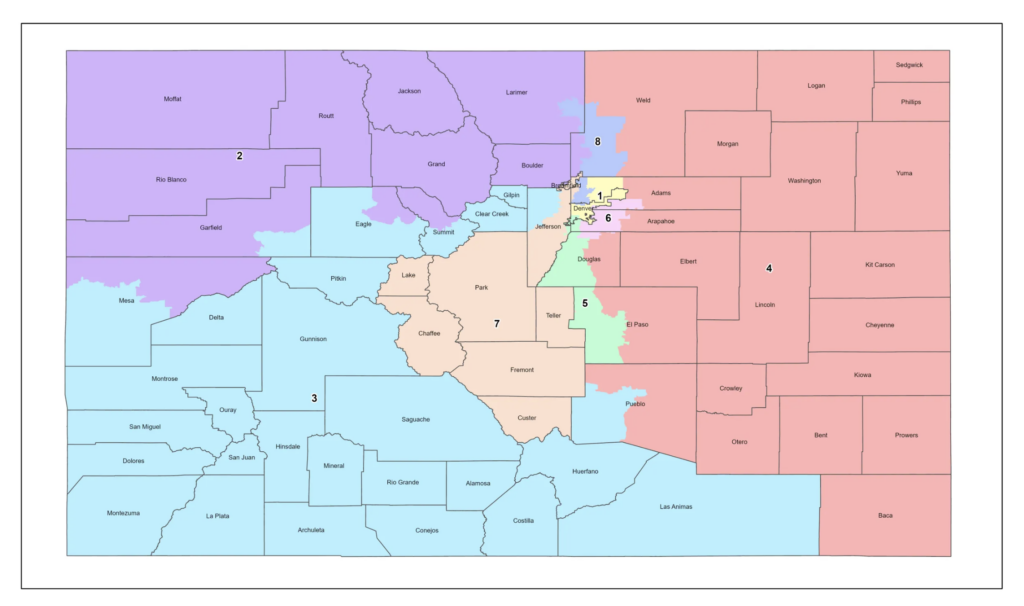
Colorado Title Board advances competing redistricting proposals, revised Pinnacol measure
Marianne Goodland
marianne.goodland@coloradopolitics.com
Updated 1 day ago
With just two meetings left before an April 15 deadline, the state’s Title Board on Wednesday pushed through a slate of ballot measures, including a revised proposal to privatize Pinnacol Assurance and dueling plans to redraw Colorado’s congressional map. The...

Democrat Matt Cavanaugh ends campaign in Colorado’s 5th CD, says petition firm came up short
Ernest Luning
ernest.luning@coloradopolitics.com
Updated 1 day ago
Democratic congressional candidate Matt Cavanaugh said Wednesday that he was ending his bid to challenge Republican U.S. Rep. Jeff Crank in Colorado’s 5th District because the firm his campaign hired to gather petition signatures failed to deliver. Cavanaugh, an Army...
Colorado voters to decide whether to ban gender surgeries for minors
Marissa Ventrelli
marissa.ventrelli@coloradopolitics.com
Updated 2 days ago
Colorado voters will decide this November whether to prohibit gender surgeries for minors and bar public funding or insurance coverage for procedures that alter children’s biological sex characteristics. The measure qualified for the ballot amid a push by the federal...

DeGette challenger Melat Kiros trounces 15-term Democratic incumbent in Denver delegate vote
Ernest Luning
ernest.luning@coloradopolitics.com
Updated 5 days ago
The 28-year-old, first-time candidate challenging Democratic U.S. Rep. Diana DeGette in this year’s primary soundly defeated the 15-term incumbent in a delegate preference poll conducted Saturday at a county party assembly in Denver. Melat Kiros, the daughter of Ethiopian immigrants...

Army veterans Jessica Killin, Joe Reagan qualify for Democratic primary ballot in Colorado’s 5th CD
Ernest Luning
ernest.luning@coloradopolitics.com
Updated 5 days ago
Democratic congressional candidates Jessica Killin and Joe Reagan secured spots Saturday in Colorado’s June primary to decide who will run against Republican U.S. Rep. Jeff Crank in a district that’s only ever sent GOP lawmakers to Congress. The two Democrats,...

Boebert challenger Eileen Laubacher joins lawsuit aimed at blocking her from Democratic assembly
Ernest Luning
ernest.luning@coloradopolitics.com
Updated 7 days ago
A Denver District Court judge on Thursday permitted Democratic congressional candidate Eileen Laubacher to join a lawsuit filed by one of her primary opponents seeking to prevent Laubacher from participating in the party’s assembly process in a bid to qualify...

Colorado GOP chair Brita Horn says she’ll resign next month, points to ‘divide within our party’
Ernest Luning
ernest.luning@coloradopolitics.com
Updated 1 week ago
Colorado Republican Party Chair Brita Horn said Thursday that she will resign her position next month following the GOP’s state assembly, citing what she described as an “enduring divide” within the party “marked by vitriol and hostility.” Horn’s announcement came...
PREV
PREVIOUS

District 11 Board of Education votes to dissolve equity department
Less than two years after Colorado Springs School District 11 adopted an equity policy and instituted a Department of Equity and Inclusion, the district’s Board of Education has voted to shut down the department. After a contentious discussion during a work session Wednesday, the board voted 4-2 not to fund the department in the 2022-2023 […]
Appeals court tosses man's conviction due to trial outside of legal deadline
The state Court of Appeals has overturned a man’s criminal convictions and 4.5-year sentence because a Pueblo County judge and prosecutors failed to bring him to trial in time. Although the U.S. Constitution guarantees defendants the right to a speedy trial, Colorado law is more specific. If the government does not ensure that a defendant […]