

10th Circuit gives Denver officer immunity for tasing surrendering, unarmed man
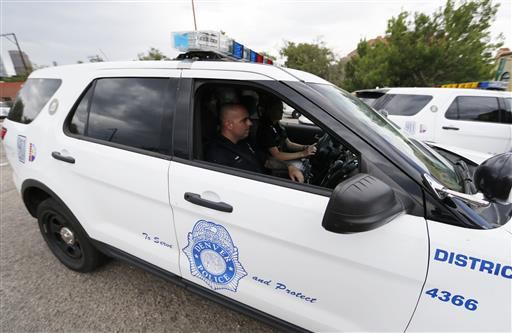
A trial judge mischaracterized body-worn camera footage showing a Denver officer tasing a surrendering, unarmed man, the federal appeals court based in Colorado determined on Tuesday. Consequently, the U.S. Court of Appeals for the 10th Circuit granted the officer immunity in the excessive force lawsuit against him.
The attorney for plaintiff Gregory Heard argued in favor of upholding U.S. District Court Senior Judge Robert E. Blackburn’s decision allowing Heard’s claim against Officer Greg Dulayev to proceed to a jury trial. Blackburn had determined, after reviewing video of the encounter, that a jury could plausibly decide Dulayev violated Heard’s rights by tasing him without sufficient warning.
“Mr. Heard was never given a reasonable opportunity to surrender peacefully and comply with Officer Dulayev’s bang-bang commands. At no time did Mr. Heard appear agitated or aggressive toward Officer Dulayev,” Blackburn wrote in declining to dismiss the lawsuit. “His arms were at his sides and his body language clearly indicated he was in no way trying to fight or attack the police officer.”
But a three-judge panel for the 10th Circuit found the body-worn camera video “blatantly contradicted” Blackburn’s analysis. Even though the interaction took place over a matter of seconds, Judge Allison H. Eid, writing for the panel, indicated it was untrue that Heard “never” got to respond to Dulayev’s commands before the tasing.
“Heard had an opportunity to surrender before he took those additional steps in the direction of Dulayev,” she wrote.
Because the 10th Circuit and the U.S. Supreme Court have not explicitly ruled that an officer violates someone’s constitutional rights by giving them rapid commands and tasing them when they fail to respond quickly enough, the panel found Dulayev is entitled to qualified immunity.
Nancy Leong, a law professor at the University of Denver, said it was notable that the appellate judges substituted their own interpretation of the body-worn camera footage for the trial judge’s.
“The judges spent time watching the video of the incident themselves instead of giving the kind of deference appellate courts normally give to a district court judge’s description of the facts,” she said. “It’s really unusual for appellate courts to do that.”
Dulayev and fellow Officer Adrian Enriquez responded to the 1900 block of North Clarkson Street in June 2016 after someone reported Heard was fighting with another man. Dulayev’s video shows the officer exiting his vehicle and walking up to a bush. The fight was over and Heard was by himself on the ground in the bushes. He displayed his empty hands to the officer.
Dulayev pointed his taser at Heard and said, “Crawl out on your hands and knees or I’ll f—-g tase you.” Heard crawled out and began to stand up, prompting Dulayev to order: “Stop right there. Stop.”
Approximately one second later, as Heard stood up straight and said, “No, no, listen,” Dulayev tased him.
Heard collapsed, after which Dulayev and Enriquez swarmed him, yelling, “stop resisting,” and pushing his face into the ground.
Heard filed a lawsuit against Dulayev, alleging excessive force in violation of the Fourth Amendment. Because Heard was exiting the bushes, not attempting to flee and not posing a safety threat, Dulayev’s use of the taser was unreasonable, Heard alleged. He also advanced one claim against the City and County of Denver for failing to train and supervise its officers on the use of force.
In September 2018, Blackburn rejected the defendants’ request to dismiss the lawsuit. While Blackburn agreed that the severity of the offense to which Dulayev and Enriquez were responding – a suspected assault – made it reasonable for an officer to use force, the judge concluded that Heard did not pose an immediate threat to Dulayev nor was he resisting.
Dulayev had asked Blackburn to find he was entitled to qualified immunity, which shields government employees from civil liability unless they violate a clearly-established legal right. Qualified immunity in principle protects police from being sued when they act reasonably, but in practice, there typically needs to be a prior court decision under very similar circumstances for a judge to decide that a clearly-established right has been violated.
Blackburn concluded there were no previous cases identical to Heard’s but similar court rulings have established that a suspect who disobeys some orders from an officer does not necessarily merit the use of force.
“Those cases, considered as a whole, establish that use of a taser against a suspect constitutes excessive force when the suspect is not armed, does not appear to be reaching for a weapon, is not fleeing, has made no verbal threats, has not made physical movements that reasonably can been seen as threatening, and has not made other movements or gestures that reasonably can be seen as threatening,” Blackburn wrote.
One year later, after more evidence came to light, Blackburn found the issues in the case were “legally and factually close calls,” but stood by his earlier decision and put the case on track for a jury trial. Dulayev then appealed to the 10th Circuit.
Dulayev’s attorneys argued that because he was forced to make a “split-second decision,” Dulayev did not act unreasonably under the U.S. Constitution by forcibly responding to a suspect moving closer to him.
“Officer Dulayev could not afford to wait until Mr. Heard got even closer before using the Taser to stop his advance because at that point, if Mr. Heard attacked, the Taser may have been ineffective and Officer Dulayev would have no option but to try to physically defend himself from a 250-pound man. This is not what the law requires,” wrote the Denver City Attorney’s Office to the 10th Circuit.
Erica T. Grossman, representing Heard, countered that during the course of the lawsuit, it came to light that Dulayev allegedly lied in the internal affairs investigation. Dulayev had claimed Heard threatened he would “f— (Dulayev) up”, when the body-worn camera footage did not support that assertion.
“You can’t tase people who are peacefully surrendering. And so (Dulayev) tried to make (Heard) aggressive,” Grossman told the 10th Circuit panel. “He wasn’t given time to comply. He was given multiple conflicting commands within seconds.”
In addition to finding that Heard did have time – albeit little more than one second – to respond to Dulayev’s commands, the 10th Circuit decided Blackburn misstated another part of the evidence. Dulayev did not, Eid wrote, shove Heard’s face into the dirt. (It was Enriquez, the other officer, who did.)
Although other decisions of the 10th Circuit established that the police use of a taser is unconstitutional under certain circumstances, the panel determined Heard’s decision to keep moving toward Dulayev was the crucial factor that made his case distinct.
“These cases contain material differences from the facts here, and those differences prevent us from concluding the law was clearly established that the use of a Taser is not justified where an assault suspect continues to step toward that officer at close proximity despite an officer’s repeated warnings and orders to stop,” Eid wrote.
The panel granted Dulayev qualified immunity, but declined to address Heard’s sole remaining claim against the city. It returned the case to Blackburn for further proceedings.
Leong, the University of Denver professor, said it is possible the city will be watching another lawsuit currently headed to the 10th Circuit on appeal. In October, a federal jury found the City of Boulder liable for failing to train its police on how to handle probation violators, even though the officers involved in the case received qualified immunity.
“The city of Denver will be waiting to see what the 10th Circuit is thinking about municipal liability right now,” she said.
The Denver Police Department confirmed that Dulayev is still employed with the city.
The case is Heard v. Dulayev et al.

Gov. Jared Polis moves to end ICE subpoena fight over Colorado workers’ personal data
Marianne Goodland
marianne.goodland@coloradopolitics.com
Updated 20 hours ago
The effort by Gov. Jared Polis to comply with an administrative subpoena from U.S. Immigration and Customs Enforcement for information held by several state agencies is over. Polis, in a motion filed Feb. 20, asked for a permanent injunction and...

Ex-Colorado Sen. Sonya Jaquez Lewis avoids prison, gets probation for forged ethics letters
Marianne Goodland
marianne.goodland@coloradopolitics.com
Updated 19 hours ago
Former state Sen. Sonya Jaquez Lewis, D-Longmont, was sentenced Friday to two years of supervised probation and 150 hours of community service, and a $3,000 fine, to be waived if she completes an additional 100 hours of community service. The...

Toll to sexual assault survivors rises if they feel blamed and disbelieved
Jenny Deam
jenny-deam@coloradopolitics.com
Updated 1 day ago
Natalie, a single mother, dropped off her son at daycare, went to therapy and then returned home. She swallowed a fistful of pills, washing them down with a six-pack of beer. She was ready to end her life. “I just...

Colorado rape cases rarely result in an arrest and prosecution
Jenny Deam
jenny-deam@coloradopolitics.com
Updated 1 day ago
Authorities say they are especially difficult cases. In Colorado, most go nowhere. Over the past decade, for every 10 reports of rape, there is only one arrest. Warning: This story contains descriptions of sexual violence. Kiersten May remembered a fuzziness...
10th Circuit upholds finding of no misconduct against Colorado federal judge
Michael Karlik
michael.karlik@coloradopolitics.com
Updated 2 days ago
A judicial committee for the Denver-based federal appeals court upheld the chief judge’s finding last week that a federal judge in Colorado did not engage in misconduct by handling a civil case involving other attorneys and judges in the state....
SCOTUS whisperer? Justice Carlos Samour may get second opportunity to turn state dissent into national precedent
Michael Karlik
michael.karlik@coloradopolitics.com
Updated 1 day ago
For the second time in two years, Justice Carlos A. Samour Jr. occupies an unusual position: Having his dissent in a Colorado Supreme Court case potentially forming the basis of U.S. Supreme Court precedent. Earlier this week, the nation’s highest...
10th Circuit appoints ex-Colorado solicitor general to argue issue after federal government declines
Michael Karlik
michael.karlik@coloradopolitics.com
Updated 20 hours ago
The Denver-based federal appeals court took the unusual step earlier this month of appointing an attorney to independently argue a key issue in a criminal sentencing appeal after the government indicated it would not contest the defendant’s view of the...
Daniel Domenico to take over as Colorado’s chief federal judge
Michael Karlik
michael.karlik@coloradopolitics.com
Updated 15 hours ago
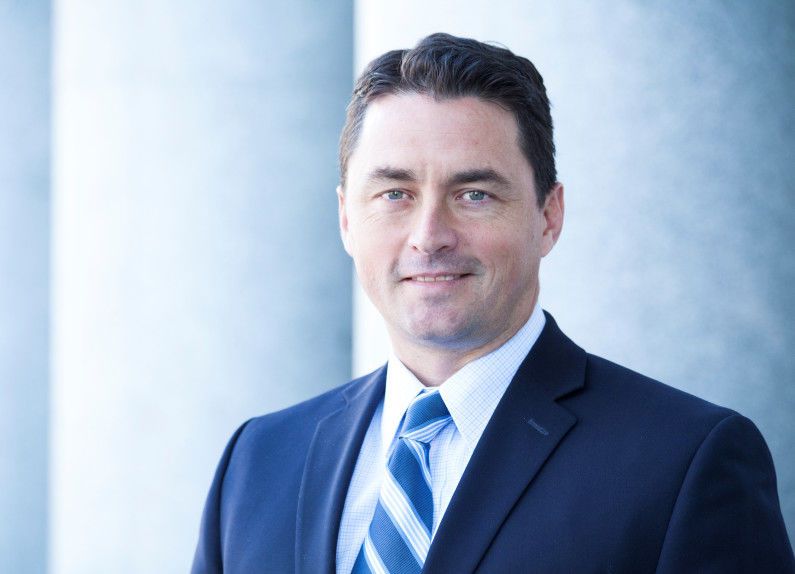
Daniel D. Domenico will become the new chief judge of Colorado’s federal trial court next week, a role that encompasses the administration of the court as well as a judicial caseload. Under federal law, the chief judge of a U.S....
10th Circuit upholds violations, sanctions against Colorado Springs mental health hospital
Michael Karlik
michael.karlik@coloradopolitics.com
Updated 3 days ago
The Denver-based federal appeals court agreed earlier this month that the government properly cited and penalized a Colorado Springs psychiatric hospital for failing to protect its staff from known risks posed by patients. The Occupational Safety and Health Administration inspected...
Appeals judges tell Boulder students about workload, ‘attack mode’ during school visit
Michael Karlik
michael.karlik@coloradopolitics.com
Updated 3 days ago
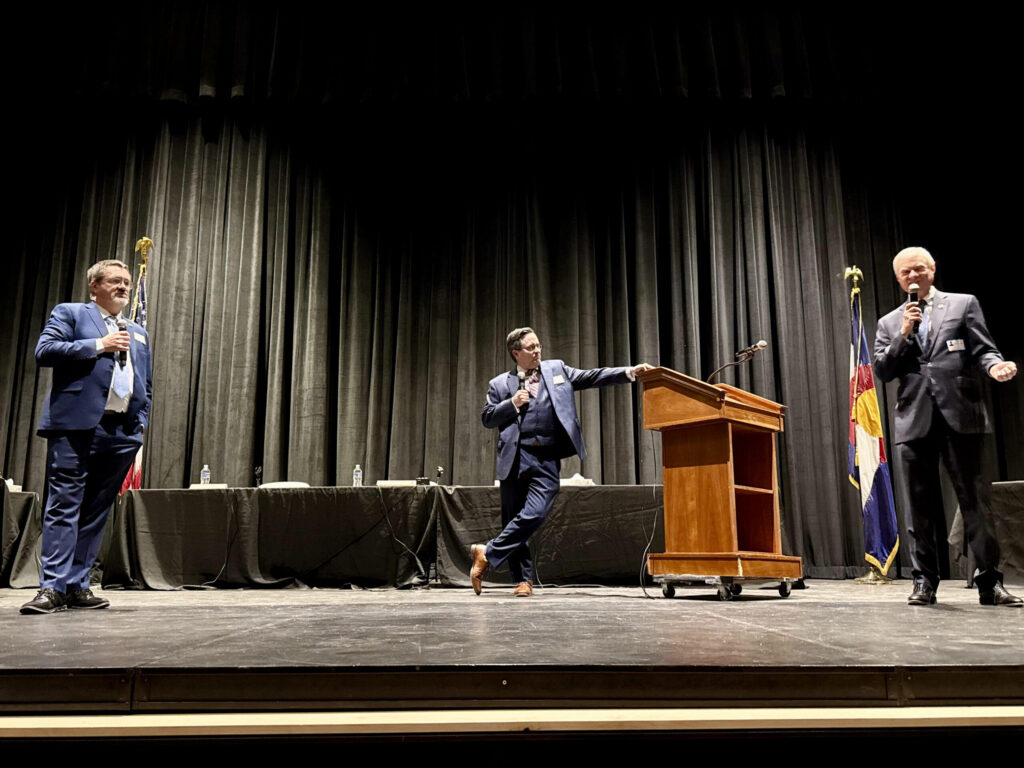
Three judges on Colorado’s second-highest court traveled to Boulder on Tuesday to hear oral arguments in real cases and field questions from students about their professional paths, their workload on the Court of Appeals, and their approach to interacting with...
PREV
PREVIOUS

Xcel gets permission to bill customers more than $182M
The Colorado Public Utilities Commission approved a settlement agreement earlier this month that allows Xcel Energy to impose an additional $182,235,418 on its customers, amounting to a 6.44% increase, or an average of $5.24 per month for residential customers and a 6.24%, or $6.64 increase for the average commercial customer starting April 1. This increase […]

Douglas County school board attorneys call ethics allegations baffling, urge judge to dismiss suit
The legal team representing the Douglas County school board and its four leaders urged a judge to dismiss a lawsuit alleging the board broke open meeting laws, describing the opposition’s accusations of ethics violations as baffling. Attorneys representing the board had asked Douglas County District Judge Jeffrey Holmes to dismiss the lawsuit brought by county […]