

TRAIL MIX | The chilling tale of the politician with a skeleton in his petitions, not his closet
For Colorado candidates petitioning their way onto this year’s primary ballot, all that’s left is the waiting. And possibly some curing. And maybe, if things don’t go their way, a trip to court.
Two months after candidates started circulating petitions in mid-January, all the signatures have been gathered – at record-high prices for campaigns that hired petition firms – and candidates have submitted their completed petitions to the Colorado Secretary of State’s Office, where election officials are in the process of determining whether hopefuls will receive the coveted statements of sufficiency, certifying that they collected enough valid signatures and will appear on the June 28 ballot.
Some of the candidates who initially fall short will have an opportunity to cure signatures that appear to belong to voters but don’t match the signature on file in a statewide voter registration database – similar to the ability Colorado voters have to cure signature mismatches on their mail ballots after Election Day.
Experts say it isn’t unusual for the same person’s signature to look different depending on numerous factors, in part due to the near-extinction of personal checks, which used to require that account-holders affix their carefully crafted, handwritten name to the paper documents at least several times a week. Not only have ATM cards and digital payment methods mostly banished the household checkbook to the back of the drawer, but years of scrawling on electronic signature pads at checkout – sometimes even with a finger instead of a stylus – has further distanced many a John Hancock from its original, distinctive form.
Add to that the unusual circumstances many voters face when they’re signing petitions – in a hurry outside a grocery store, balancing a pen or other device on a handheld clipboard or tablet computer, often in frigid temperatures – and it’s a wonder more petition signatures don’t wind up in the cure pile.
Prior to the passage of a 2017 state law that changed the way candidate nominating petitions are handled, election workers only verified that voters’ names and addresses matched entries in the statewide voter registration database but didn’t compare voters’ signatures with the ones on file to see if they bore a resemblance.
Legislators voted unanimously to add the requirement after one of Colorado’s leading 2016 U.S. Senate candidate became embroiled in a forgery scandal that dominated the state’s political news for more than a month and knocked the early favorite for the nomination to also-ran status by the time the votes were counted.
When grizzled petition gatherers and weathered political consultants haul out their spookiest stories around a Colorado campfire, there’s a good chance the yarn that elicits the most blood-curdling shrieks involves the dapper, young military intelligence officer whose promising campaign was derailed by a tiny, telltale loop that kept appearing in signature after signature, including one autograph seemingly penned from beyond the grave.
It’s a cautionary tale passed down through the generations, illustrating how even the most well-oiled campaign can hit a bump that sends a candidate careening into a fiery conflagration, extinguishing a once-bright political future.
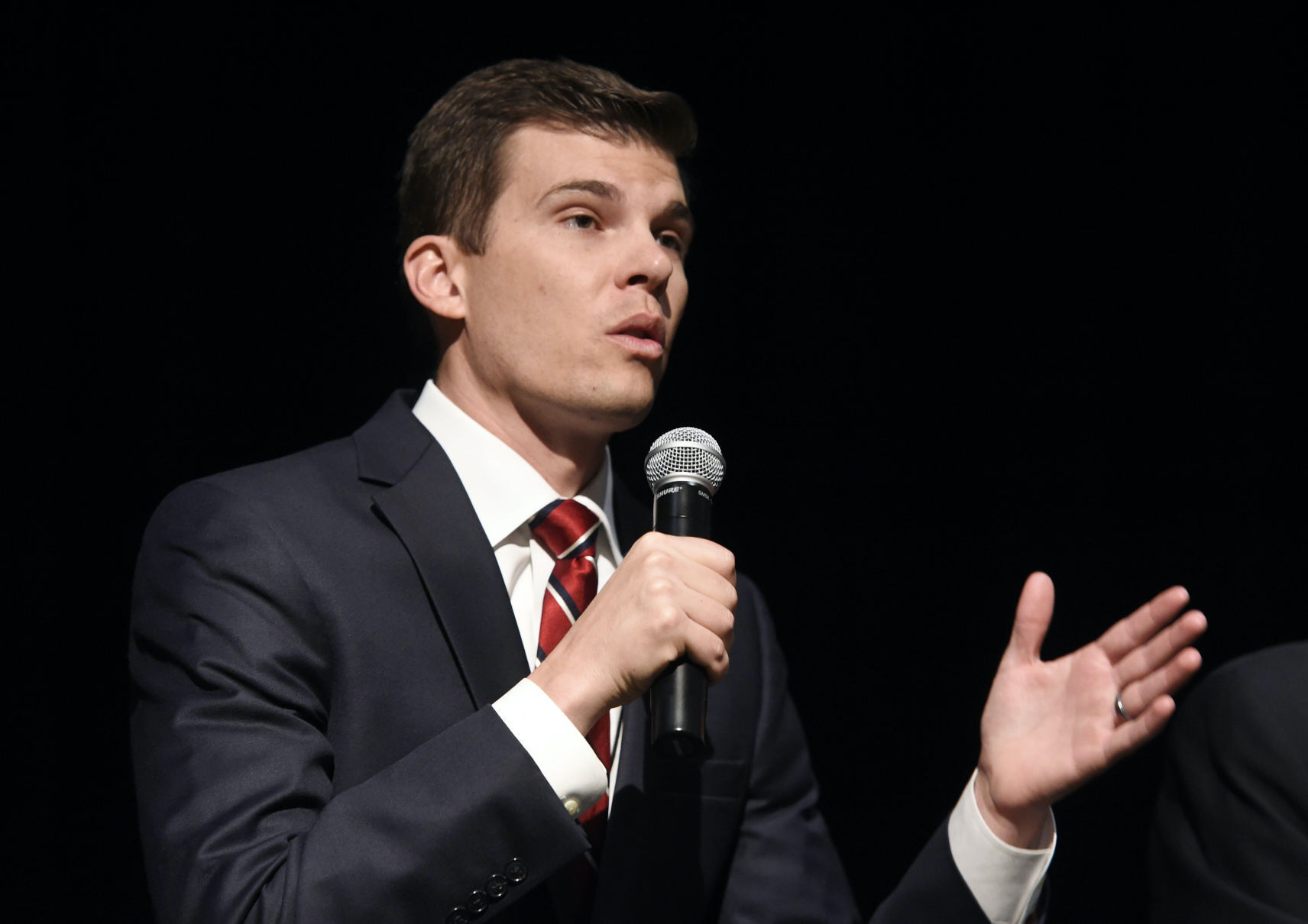
Over six excruciating weeks, Republican Jon Keyser, a decorated combat veteran who gave up his seat representing a Jefferson County legislative district to join the crowded field of Republicans challenging U.S. Sen. Michael Bennet, endured a steady drip of horrendous headlines featuring words no candidate likes to see associated with his or her name, including “fraud,” “forgery” and “arrested on felony charges.”
Throw in the dead voter and a 165-pound Great Dane named Duke, and it was a political scandal for the ages.
Some politicians have skeletons in their closets. Keyser, it turned out, had at least one in his petitions.
Considered the most vulnerable incumbent Democratic senator on the ballot in 2016, Bennet faced at least 15 potential GOP opponents. Five of them made it into the primary, including Keyser, one of four Republicans who qualified for the ballot by petition, though it wasn’t easy for most of them.
That’s the year that Darryl Glenn, the El Paso County commissioner, had been traveling the state for more than a year, making his case for the nomination to Republicans at Lincoln Day dinners and remote cafes. After delivering a knockout speech at the GOP state assembly, the persistent underdog set the state’s political world on its ear by winning 70% of the delegate vote and becoming the sole candidate to emerge from the assembly.
Meanwhile, several Republicans bypassed the assembly and circulated petitions, and four of them turned them in by the deadline. In addition to Keyser, the petitioners were former CSU athletic director Jack Graham, Colorado Springs businessman Robert Blaha and former Aurora City Councilman Ryan Frazier. Graham made it onto the ballot unscathed, but the others required at least one trip to court before they qualified.
Like many a chilling Colorado political tale, this one begins in the basement of the state Capitol.
Alan Franklin, the political director at liberal advocacy organization ProgressNow Colorado, held a press conference there to unveil what the group had found after scouring the petitions submitted by Graham and Keyser. It turned out, Franklin said, that the Secretary of State’s Office had missed a handful of duplicate signatures that appeared on both candidates’ petitions, which under Colorado law shouldn’t have counted for the petitioner who submitted their signatures later.
But that wasn’t the blockbuster news.
The handwriting and signatures belonging to a Littleton woman who apparently signed both Graham’s and Keyser’s petitions didn’t look anything alike on the two documents, suggesting that one was a forgery.
That afternoon, Denver7 reporter Marshall Zelinger contacted the woman, who said she’d never heard of Keyser and denied she’d signed his petition.
“It’s fraud,” she said in an explosive on-camera interview. “It’s definitely fraud.”
After examining more signatures gathered by the same paid petition gatherer, Zelinger noticed that a number of them looks like they were written in the same handwriting – including a distinctive loop that appeared consistently at the top of some letters – and then figured out that the handwriting looked like that of one of the paid circulators. He soon identified 10 voters whose signatures appeared to be the same as the circulator’s.
Two days after Zelinger’s devastating report aired, the Keyser campaign was sticking with its initial response, which was that ProgressNow’s “stunt” only emphasized how “scared” Bennet and his liberal allies were of Keyser, claiming the candidate was “Sen. Bennet’s worst nightmare.”
That afternoon, at a GOP candidate forum in Lakewood moderated by Fox 31’s Joe St. George and yours truly, representing The Colorado Statesman, Keyser entered nightmare territory of his own.
First, St. George pressed Keyser to say whether he knew the signatures had been forged, but Keyser responded with variations on the same phrase four times: “I’m on the ballot, and I’m going to beat Michael Bennet.” It evoked groans from the audience, but it wasn’t until a break in the forum that Keyser took part in what a Politico reporter called a “[l]eading candidate for the most cringe-y interview by a Senate hopeful so far this year.”
While the other candidates stretched their legs, Zelinger asked Keyser the same question posed by St. George – eight times – and got the same rote answer each time, earning a comparison from the Washington Post’s political blog to then-presidential candidate Marco Rubio’s robotic responses during a recent debate.
But that was just the start.
Keyser repeatedly called Zelinger “Mitchell,” even after the reporter reminded the candidate his first name was Marshall, and at one point asked whether Zelinger had been the one “creeping around my house yesterday.” After Zelinger acknowledged that he had knocked on Keyser’s door, Keyser asked, “Did you get to meet my dog?” and proceeded to extol his 165-pound Great Dane.
“He’s a great dog,” Keyser said. “He’s bigger than you are – he’s huge. He’s a big, big guy. Very protective.”
After the excruciating exchange went viral, events followed quickly.
Authorities soon determined that petition circulator Maureen Moss had faked numerous signatures and arrested the Aurora woman on 34 felony forgery charges. Days later, the Secretary of State’s Office revealed that a Broomfield woman whose signature appeared on petitions circulated by Moss had died more than a week before Keyser’s campaign began gathering signatures.
A group of voters sued to prevent votes for Keyser from being counted – since after subtracting all the forgeries, his petitions wouldn’t have had enough signatures in one congressional district – but a judge dismissed the lawsuit, saying the plaintiffs had waited too long to file it.

Moss was later sentenced to four years probation and ordered to perform 250 hours of community service on two felony forgery charges.
Beset with bad news and deserted by many of his backers, Keyser finished the primary in fourth place. Glenn won the GOP nomination but lost to Bennet four months later by about 6 points.

U.S. House probes reports of fraud, waste in Colorado’s Medicaid program
Marianne Goodland
marianne.goodland@coloradopolitics.com
Updated 10 hours ago
A congressional committee is probing reports of waste, fraud and abuse in Colorado’s Medicaid program, citing recent stories outlining over-billing in transportation spending and alleged improper payments in autism services. The U.S. House Committee on Energy and Commerce has sent...
Colorado’s congressional redistricting proposal could flip three Republican House seats | ANALYSIS
Michael Braithwaite
michael.braithwaite@gazette.com
Updated 13 hours ago
A Democrat-backed proposal to redraw Colorado’s congressional map for the 2028 election could flip three Republican districts. The proposal, introduced by a group called Coloradans for a Level Playing Field, is yet another development in a national redistricting debate after...

Appeals court overturns Douglas County vehicular homicide conviction due to faulty jury instructions
Michael Karlik
michael.karlik@coloradopolitics.com
Updated 19 hours ago
Colorado’s second-highest court overturned a defendant’s vehicular homicide conviction and 12-year prison sentence on Thursday after determining a Douglas County judge omitted key language from the jury instructions that could have resulted in a different outcome. James Paul McDonald was...
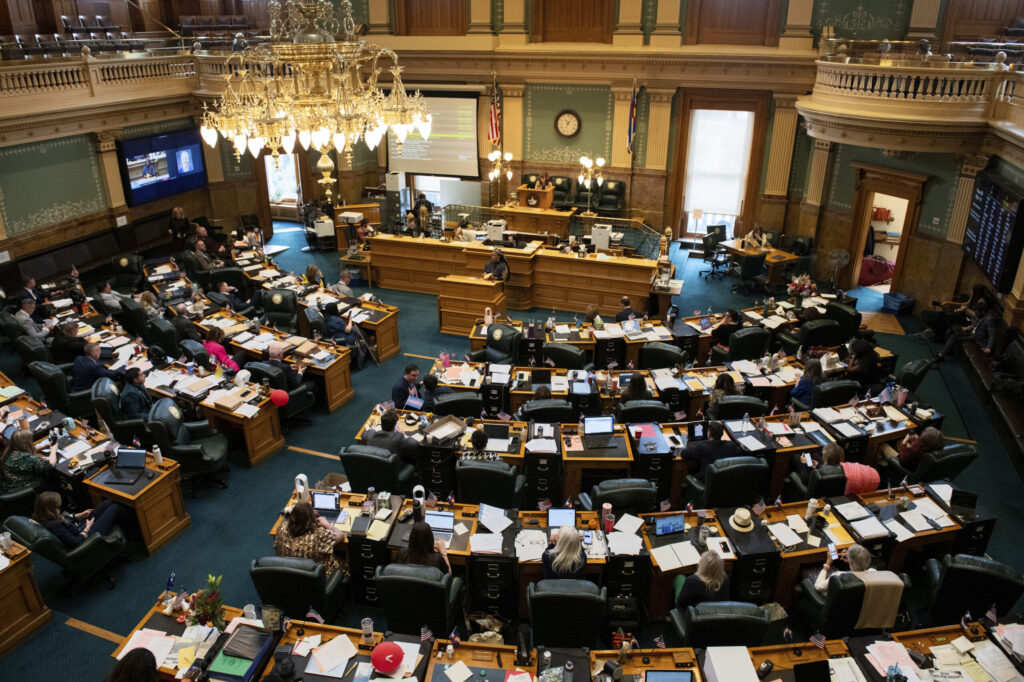
Colorado lawmakers’ speeches on immigration, Iran draw worries about decorum, grandstanding
Marianne Goodland
marianne.goodland@coloradopolitics.com
Updated 18 hours ago
Several speeches from Colorado legislators this week have raised new worries about decorum and grandstanding in the state House after two members talked about immigration and Iran using what’s called a “point of personal privilege.” Under the rules of the...
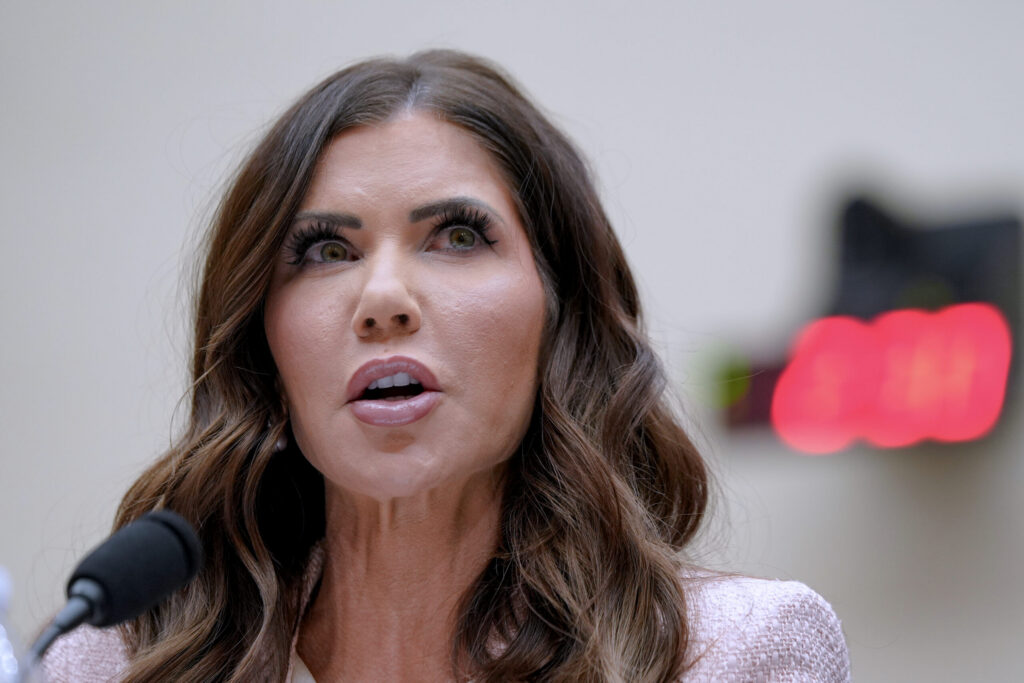
Trump fires Homeland Security Secretary Noem after building criticism over immigration enforcement
Michelle L. Price
michelle.l..price@associatedpress.com
Updated 19 hours ago
WASHINGTON (AP) — President Donald Trump on Thursday fired his embattled Homeland Security Secretary Kristi Noem and said he will nominate in her place Oklahoma Republican Sen. Markwayne Mullin. Trump made the announcement on social media on Thursday, two days...
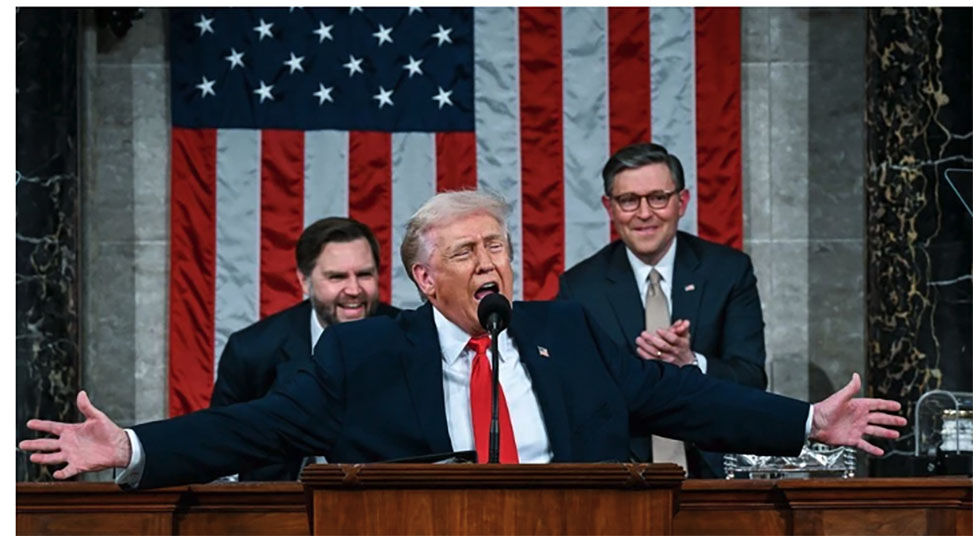
Trump wants to be personally ‘involved’ in picking next Iranian leader: Report
Christian Datoc, Washington Examiner
christian.datoc.washington.examiner@gazetteedit.wpenginepowered.com
Updated 20 hours ago
President Donald Trump told Axios Thursday that he wants to be personally involved with picking Iran‘s next leader, despite multiple senior administration officials repeatedly declaring that “regime change” is not a stated objective of Operation Epic Fury. Trump conducted an...

Iran widens regional war with first strike into Azerbaijan
Brady Knox, Washington Examiner
brady.knox.washington.examiner@gazetteedit.wpenginepowered.com
Updated 20 hours ago
Iran spread the growing regional war to the Caucasus with its first drone strike into Azerbaijan, hitting an airport terminal and damaging a nearby school. A video recorded by someone at Nakhchivan International Airport showed one of the drones exploding...
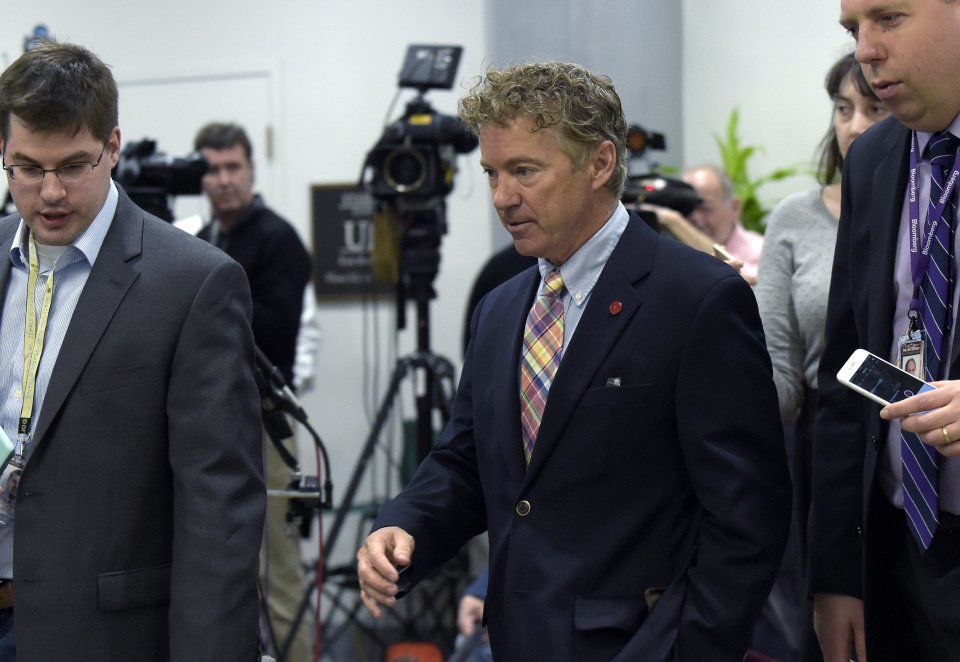
Rand Paul excoriates Congress for failure to pass War Powers Resolution: ‘Should be ashamed’
Claire Carter, Washington Examiner
claire.carter.washington.examiner@gazetteedit.wpenginepowered.com
Updated 20 hours ago
Sen. Rand Paul (R-KY) blasted his colleagues for failing to pass a resolution aimed at limiting President Donald Trump’s military campaign in Iran. The Kentucky Republican made the remarks in an opinion column published on Fox News a day after...
DOJ quietly closes autopen investigation targeting Biden and aides
Kaelan Deese, Washington Examiner
kaelan.deese.washington.examiner@gazetteedit.wpenginepowered.com
Updated 20 hours ago
The Department of Justice has quietly closed an investigation into former President Joe Biden’s use of an autopen to sign official documents, according to a source familiar with the matter. DOJ pardon attorney Ed Martin, the former “weaponization” czar, opened...

Colorado legislators eye changes to credit card ‘swipe fees’
Marianne Goodland
marianne.goodland@coloradopolitics.com
Updated 18 hours ago
Colorado legislators are proposing to eliminate “swipe fees” on sales taxes, a move that proponents say would save businesses tens of thousands of dollars a year but which will likely revive counter-arguments that those fees help create a stable and...
PREV
PREVIOUS

Testimony from Denver police's patrol chief closes out city's defense in trial over 2020 protests
Taking the stand Thursday as the final witness in the ongoing trial against the city, Denver police’s chief of patrol said he believes the department made mistakes in some aspects of its response to the 2020 George Floyd protests. But he painted a picture of a police department caught off guard by the intensity of […]
WATCH: COLORADO POLITICKING | Previewing a groundbreaking white-collar trial in Denver
This week on Colorado Politicking, reporters Michael Karlik and Ernest Luning join host Pat Poblete to preview the upcoming three-week criminal trial of Denver-based DaVita, Inc. and its former leader, Kent Thiry, which will begin on Monday morning. Read previous coverage on our stories here: To see previous episodes, click here. politicking