

Denver 911 struggles to balance increased call volume amid staffing shortages

Denver 911 saw its highest call volume in at least five years in 2021 amid severe staffing shortages.
Police dispatchers in Denver are 71% staffed. For emergency communication technicians – the people actually answering the phone when someone calls 911 – Denver is 60% staffed. There are 13 technicians in training and when they graduate at the end of the summer, staffing will be closer to 75%.
Andrew Dameron, director of Denver 911, told the Denver City Council’s Safety, Housing, Education & Homelessness Committee on Wednesday that his department was greatly impacted by “The Great Resignation” of 2021. Many who left the department cited stress of the job and backlash or verbal abuse from callers. He also said with an increase in violent crime, the jobs just became more intense on a daily basis – and because of limited staffing, mandatory overtime has become a normal part of the job.
MacKenzie Scott donates $20M to Planned Parenthood of the Rocky Mountains
Dameron said the city also struggled to recruit for its academy classes with annual applications down 35% in 2021. He also said hiring was hampered by the difficulties of taking a two- to three-hour proctored exam from home with intense requirements to make the exam as secure as possible. He said 70% of the academy’s applicant pool is lost at the testing phase.
Because of this, the department was able to temporarily remove the exam from its requirements, which he said he believes won’t impact the quality of dispatchers and technicians. Dameron said the department has no data showing that completing the exam leads to a higher quality technician.
“The test is designed to identify the skills needed to be successful within 911,” Dameron said. “However, our academy, which is rigorous and six months long because it has to be, also identifies those skills. If you don’t have them then, you’re not gonna make it through the academy.”
Looking at call volume, Denver tries to answer 90% of all 911 calls within 10 seconds and 95% within 20 seconds. Denver 911’s service levels dropped out of this range while struggling with staffing losses throughout the summer of 2021.
Preliminary hearing set for ex-Greenwood Village police officer accused of killing Aurora teen
“When you combine critical staffing losses, difficulty backfilling those positions with an increase in call volume, what you get is a decrease in our service level to the people of Denver,” Dameron said. “… We simply don’t have enough people to answer the phone fast enough. And to be clear and unequivocal, this is an unacceptable level of service to the people of Denver. Everything we are doing is to overcome the challenges that are leading to this.”
Efforts to improve staffing include raising starting pay to $24 an hour, fostering ways to improve workplace wellness, visits from the city’s nurse liaisons sharing city resources for staff and the creation of a new position intended to decrease 911’s workload.
This position is a work from home communications technician for nonemergency calls. Dameron said 57% of 911’s call volume in 2021 was from the nonemergency line, and offloading these calls to folks who don’t need as intense training can free up 911 dispatchers for emergencies.
Looking for other ways to improve call mitigation, Dameron said Denver is also supporting a state task force looking to improve and find more appropriate responses to mental and behavioral health issues, providing training and education on Denver’s STAR program.
Dameron said he’s also excited to look further into expanding nurse line programs within 911. Many times, he said folks will call 911 when they’re in need of medical attention that isn’t an emergency, and sending an ambulance for an emergency room visit isn’t necessarily the best way to respond. He said they get about 1,600 of these alpha-level medical calls a month,
Colorado lawmakers poised to introduce legislation tackling fentanyl crisis
“These are calls where there is no immediate danger, there’s no immediate threat to life, but the only option we have currently is to send an ambulance to the person’s house and get them checked out,” Dameron said. “A lot of times it’s an ambulance ride into the emergency room, and this is more response than these people generally need.”
He said some cities have partnered with organizations like Uber or Lyft to provide someone in this situation with a ride to an urgent care facility rather than an ambulance ride to the emergency room. He said this could save folks up to $1 million in unnecessary medical bills monthly and free up ambulances for emergencies.
“The calls that fit this profile come most from the lowest income parts of our city,” Dameron said. “…These are folks who can least afford an ambulance ride to the emergency room, and often are calling 911 because they don’t have a better option. They just need to go see their doctor, but they don’t have a ride. They don’t have family, they don’t have a car, so they’re calling 911 because they know we’ll come get them.”


Colorado, some Coloradans make appearances in the Epstein Files
RACHAEL WRIGHT Special to The Gazette
rachael-wright-special-to-the-gazette@coloradopolitics.com
Updated 1 hour ago
With the U.S. Department of Justice’s release of 3 million more files pertaining to convicted sex felon Jeffrey Epstein, multiple written mentions of alleged connections to Colorado towns and business owners have come to light. A word search of the documents for “Colorado” generates 1,485 hits, with inquiries for cities including Denver and Aspen generating several thousands more. Chad...
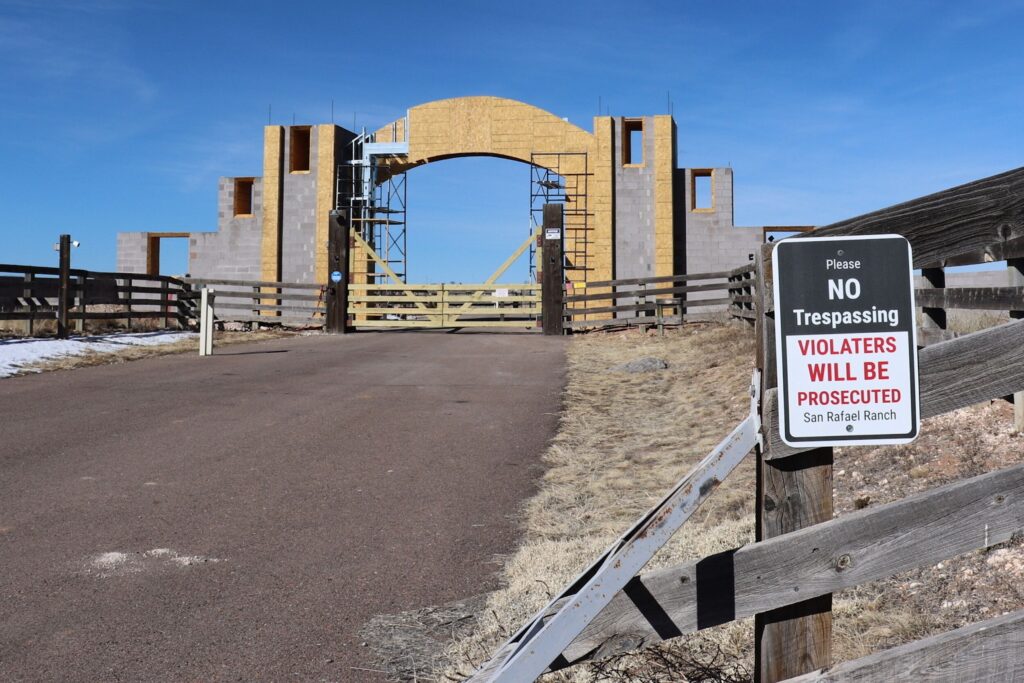
New Mexico launches ‘truth commission’ investigation into Jeffrey Epstein’s ranch | OUT WEST ROUNDUP
The Associated Press
the-associated-press@coloradopolitics.com
Updated 4 days ago
NEW MEXICO State investigates Epstein’s ranch SANTA FE — State legislators in New Mexico launched an investigation on Feb. 17 into past activity at a secluded desert ranch where financier and sex offender Jeffrey Epstein once entertained guests and whether...
Colorado’s federal judges maintain approach to immigration detentions while escalating warnings
Michael Karlik
michael.karlik@coloradopolitics.com
Updated 12 hours ago
Colorado’s federal judges are maintaining their view that the government’s assertion of broad immigration detention authority is unlawful, casting aside a recent appellate decision to the contrary as “unpersuasive” and out of step with the predominant interpretation by the judiciary....
In a meeting Colorado GOP chair Brita Horn calls ‘illegal,’ Republicans vote to demand her resignation
Ernest Luning
ernest.luning@coloradopolitics.com
Updated 14 hours ago
Roughly half the membership of the Colorado Republican Party’s state central committee on Saturday voted overwhelmingly to approve a resolution expressing “no confidence” in state GOP Chairman Brita Horn’s leadership and calling for her immediate resignation in an online meeting...

Colorado Medicaid probe uncovers millions of dollars in alleged transport fraud ring
Nico Brambila
nico.brambila@denvergazette.com
Updated 18 hours ago
Colorado Medicaid officials detected $25 million in abnormal billing over just four months two years ago — a surge that prompted a new state law and the suspension of dozens of providers in what authorities now describe as an organized...
One small step for dialing back the partisanship | SONDERMANN
Eric Sondermann
eric-sondermann@coloradopolitics.com
Updated 3 days ago
Much ink, including a good deal of my own, has been spilled on the excesses of super-charged, toxic partisanship in this current era. Except for true believers along with those who profit from this all-consuming poison, there is broad agreement...
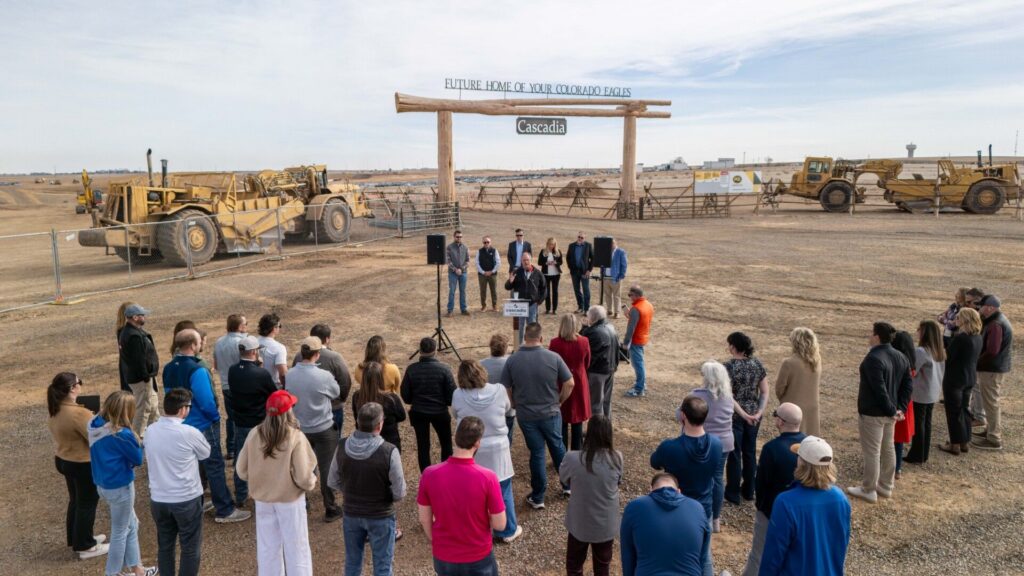
Greeley voters to decide fate of project that includes minor league hockey arena
Hap Fry, Special to The Gazette
hap-fry@gazette.com
Updated 18 hours ago
GREELEY • The fate of the Cascadia development — and quite possibly the future direction of the city — is in the hands of Greeley voters this Tuesday during a special city election on whether the landscape-altering project should be...

Colorado Politics Calendar Feb. 23-Mar. 1
Rachael Wright, Special to Colorado Politics
rachael.wright@coloradopolitics.com
Updated 4 days ago
CoPo’s weekly political calendar helps you find political and public policy events throughout Colorado. It includes candidate and issue campaign events, public policy meetings, court hearings, state and local party conventions, assemblies, debates, rallies, parades, speaking engagements, traveling dignitary appearances,...
Meeker rancher leads one of Colorado’s earliest attempts to transfer federal lands | A LOOK BACK
Rachael Wright, Special to Colorado Politics
rachael.wright@coloradopolitics.com
Updated 3 days ago
Forty-Five Years Ago This Week: Former state Rep. Nick Theos, R-Meeker, was one of several people testifying before the Senate Agriculture Committee on Senate Bill 81-170, which would transfer ownership of public lands from the federal government to state control....

Democrats Michael Bennet, Phil Weiser make their cases to be Colorado’s next governor ahead of primary
Ernest Luning
ernest.luning@coloradopolitics.com
Updated 2 days ago
Nearly eight months before ballots will be counted in Colorado’s race for the its open gubernatorial seat, voters are lining up behind two of the state’s leading Democrats, who are facing off in a primary that will likely determine which...
PREV
PREVIOUS

Polis, top legislators tout proposed prescription to fentanyl crisis; others say legislation falls short
A draft bill that seeks to address Colorado’s fentanyl crisis received a chorus of praise from state officials Wednesday, with the governor saying he’s pleased to see increased criminal penalties and a top lawmaker noting its comprehensive approach to confronting the deadly drug. But others aren’t buying the proposal, with some worrying the increase […]

El Paso County health officials discuss fentanyl crisis: 'It really has to involve all of us'
The El Paso County Board of Health met Wednesday to discuss the rising fentanyl crisis in the community and the downscaling of the county’s response to COVID-19. Accidental fentanyl overdoses killed 102 people within El Paso County in 2021 compared to five years ago, when four died, according to data from the El Paso County […]