

More than half of Republican bill package struck down in Colorado legislature
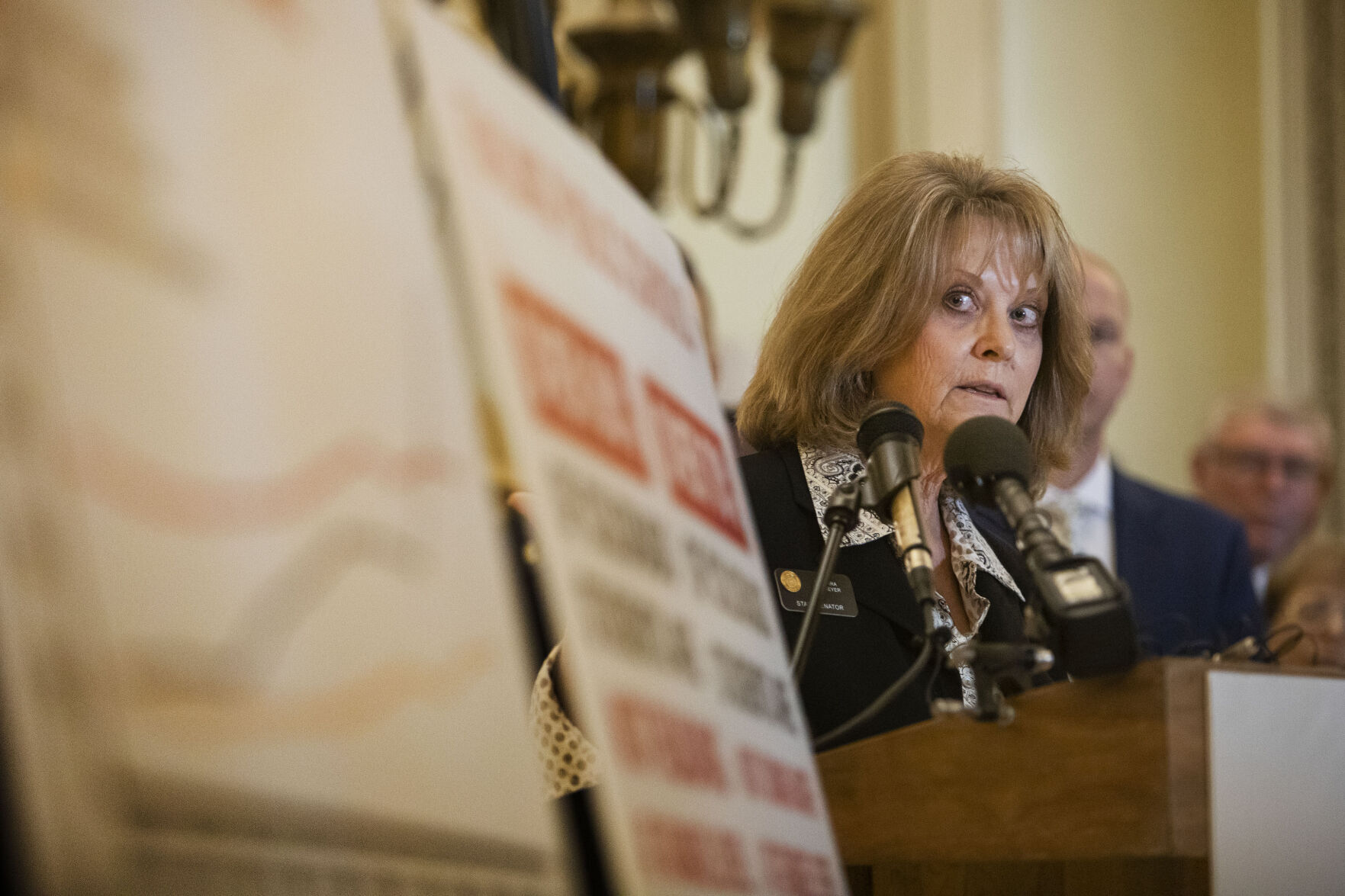
Halfway through this year’s session, the Republican legislative agenda is not looking good, with more than 50% of the party’s “Commitment to Colorado” bill package already dead.
Republican lawmakers unveiled the 44-bill package in January to address three core goals: affordability, education and public safety. As of Monday, Democrat-controlled committees have rejected 25 of them. Only five of the bills have advanced so far, with 11 still awaiting their first committee votes and three not yet introduced.
Democrats hold the majority in both the state Senate and House of Representatives, with Republican lawmakers accounting for only 39 of the 100-member legislature. Of the 25 bills indefinitely postponed, 21 were rejected along strict party-line votes.
Here’s a look at which bills from the package were struck down and which still have a shot:
Affordability
Republicans and Democrats alike listed affordability as a main priority this legislative session. As the cost of living rapidly rose in Colorado in recent years, Republicans have blamed Democratic policies, such as tax and fee increases, and vowed to reverse the policies.
One of the biggest bills in the package, House Bill 1062, has yet to be voted on. If passed, the bill would exempt all food from sales tax to lower the costs of groceries. It was introduced at the beginning of the session and assigned to the House Finance Committee, though its first hearing has not been scheduled. The bill has garnered support from restaurants and other eateries, but opposition from local governments.
Another highly publicized bill, Senate Bill 93 sought to double property tax exemptions for seniors and veterans but was voted down last month. Other proposed tax changes include House Bill 1125, which seeks to temporarily reduce income tax by 0.05%, and House Bill 1021, which decreases the income tax from 4.55% to 4.4%. Both bills died in committee on Monday.
Republicans are still promising a bill to repeal SB21-260, though it hasn’t been introduced yet. SB21-260, which the legislature passed last session, is a $5.4 billion, 10-year plan from Democrats to build out Colorado’s roads and bridges, create more electric vehicle charging stations, boost mass transit and mitigate air pollution. Republicans say their bill would repeal and replace parts of SB21-260, redirecting the funds to transportation infrastructure projects.
Education
The focus on education comes as the COVID-19 pandemic has disrupted schools, resulting in K-12 students struggling through online classes and criticism from many Republicans regarding the quality of public education.
The most successful bill so far – House Bill 1057 is the only measure in the GOP package passed by the House and Senate – is now on its way to Gov. Jared Polis’s desk.
If enacted, the bill would temporarily waive the limit on days a retired teacher can work as a substitute to help address teacher shortages during the pandemic. House Bill 1126, which creates an income tax credit for classroom expenses, is also moving forward, after having received approval from the House Finance Committee on March 3.
Five of the 10 education bills have met their end, including House Bill 1066, which would have required schools to post their curriculums, House Bill 1069, which sough to allow parents to request reforms for low-performing schools, and Senate Bill 39, which tried to give $723 million to the state education fund, fully repealing the budget stabilization factor starting in 2023. The budget “factor” is a budgeting tool that proportionally reduced the amount of total funding for each school district. The factor reduces state aid to districts.
Two planned education bills have not yet been introduced. The first, a Senate bill, would create the means for equitable funding for all charter school students. The second, a House bill, would provide $5,000 vouchers for students to leave “failing” public schools and instead attend private or charter schools.
Public safety
Spurred by rising crime rates nationally and statewide, public safety is at the forefront of public consciousness this session. Polis, for example, unveiled a $113 million public safety package, which is currently advancing through the legislature.
One of the bills in the Republican package, a grant program to hire police, combined with a similar Democrat-backed grant program to create the bipartisan Senate Bill 145. The bill seeks $30.5 million for three law enforcement grant programs to fund the following: crime prevention and intervention in high-crime areas; law enforcement recruitment, retention, tuition and training; and, improving law enforcement diversity. The bill is scheduled for the Senate Local Government Committee on March 22.
Meanwhile, Senate Bill 67 would designate $50 million for a safe neighborhoods grant program to provide critical incident training to local law enforcement agencies. The Senate Judiciary Committee skipped tackling the bill on March 3, and it has not yet been rescheduled for a vote.
The other three public safety bills under the package have all been killed. This includes Senate Bill 41 to establish a mandatory cash bail for repeat or violent offenders, Senate Bill 101 for $5 million to hire school resource officers and Senate Bill 111 to expand the Nursing Home Innovations Grant Program.
Others
In addition to its core three goals, “Commitment to Colorado” also features secondary priorities, including environmental conservation, employment and protecting the right to vote on new taxes.
The package contains three bills on alternative energy: Senate Bill 73 to study the feasibility of using small nuclear reactors for energy, Senate Bill 118 to reclassify geothermal energy to match solar energy and House Bill 1140 to add green hydrogen as a state-defined renewable energy resource. Lawmakers voted down SB-73 last month, but advanced SB-118 to a second committee. HB-1140 hasn’t been voted on yet.
On employment, Senate Bill 116 aims to bolster Colorado’s workforce by making it easier for people coming from other states with a military occupational specialty to be credentialed here. The Senate approved the bill, and it is scheduled for its first House committee on March 23. Other employment bills were rejected, including Senate Bill 88, which sough to create a $650,000 scholarship program for trade education.
Finally, House Bill 1059 is still on the table. The bill aims to require two-thirds approval from legislators for the creation or increase of any fee. Introduced at the beginning of the session, the bill is scheduled for its first vote on March 21 in the House State, Civic, Military & Veterans Affairs Committee.


As Lake Powell shrinks, marinas are having to adapt to dwindling water levels | OUT WEST ROUNDUP
The Associated Press
the-associated-press@coloradopolitics.com
Updated 4 days ago
ARIZONA Reservoirs near record lows PAGE — The Colorado River’s Lake Powell, the second largest reservoir in the U.S., is shrinking. A record-dry winter and extreme heat — as well as decades of overuse, chronic drought and climate change —...

A new day? Colorado’s troubled guardianship office pursues ‘cultural reset’
Marianne Goodland
marianne.goodland@coloradopolitics.com
Updated 3 days ago
Colorado’s guardianship program, long criticized for mismanagement and high staff attrition, is undergoing a “cultural reset,” as its new director works to repair partnerships and prepare for a major expansion under recent legislation. Created by lawmakers in 2017, the Office...
U.S. Senate OKs funding bill to avoid government shutdown
Wire Services
wire-services@coloradopolitics.com
Updated 20 hours ago
Hemp provision became point of contention WASHINGTON • The U.S. Senate in an overnight vote Saturday approved a short-term measure to fund federal agencies into early December and avoid a government shutdown during the middle of campaign season. The late-summer...

The relevance of Watergate more than a half-century later | SONDERMANN
By Eric Sondermann
by-eric-sondermann@coloradopolitics.com
Updated 4 days ago
It was the scandal for which all other scandals are now named. In June 1972, a small group of Cuban burglars with high-level connections broke into the headquarters of the Democratic National Committee. Those headquarters were located in the Watergate...

Wirth downplays Social Security disaster talk | A LOOK BACK
Rachael Wright, Special to Colorado Politics
rachael.wright@coloradopolitics.com
Updated 3 days ago
Forty-five years ago this week: “As time goes on,” said Democratic U.S. Rep. Tim Wirth, of the 2nd Congressional District, “we are finding that the safety net, which was proposed earlier this year, has some very large holes in it,”...

Colorado Politics Calendar Aug. 10-16
Rachael Wright, Special to Colorado Politics
rachael.wright@coloradopolitics.com
Updated 3 days ago
CoPo’s weekly political calendar will help you find political and public-policy events throughout Colorado. It includes candidate and issue campaign events, public policy meetings, court hearings, state and local party conventions, assemblies, debates, rallies, parades, speaking engagements, traveling dignitary appearances,...

Democratic group aims Spanish-language TV ad at Gabe Evans in Colorado’s battleground 8th CD
Ernest Luning
ernest.luning@coloradopolitics.com
Updated 1 day ago
A national group tied to House Democratic leadership launched a six-figure Spanish-language TV ad in Colorado this week targeting Republican U.S. Rep. Gabe Evans and the GOP’s signature budget legislation. The 30-second spot is part of $15 million in new...

Colorado School of Mines lands major share in Trump’s $100M mining-education plan
Thelma Grimes
thelma.grimes@coloradopolitics.com
Updated 1 day ago
President Donald Trump on Friday named the Colorado School of Mines among roughly a dozen institutions that will share in a $100 million commitment “to train the next generation of American miners.” Paul Johnson, the university’s president, said he is...
Local party leaders, incoming judge among members of judicial performance commission that violated law
Michael Karlik
michael.karlik@coloradopolitics.com
Updated 14 hours ago
A local Democratic leader and 2024 presidential elector. A legislative aide and leader in the Young Republicans. An incoming county court judge freshly appointed by the governor. They are among the eight members of the northeastern Colorado judicial performance commission...
Judge dismisses lawsuit seeking records from Colorado Democratic group
Marianne Goodland
marianne.goodland@coloradopolitics.com
Updated 2 days ago
A lawsuit seeking to obtain records from Democratic lawmakers affiliated with a caucus has been thrown out by a Denver District Court judge. On July 17, Judge Ericka Englert dismissed the April lawsuit filed by progressive activist Derrick Blanton, who...
PREV
PREVIOUS
Lawmaker drops gun while rushing to vote, speaker says that created 'dangerous situation' at Colorado Capitol
Rep. Richard Holtorf, R-Akron, on Monday dropped a gun in the lobby outside the House chambers as he was rushing in to cast a vote on an amendment to a state House bill that would affirm the right to abortion in state law. The gun did not go off and no one was injured, according […]

Deeply divided House rejects bill to grant physician assistants more practice authority
A deeply divided House on Tuesday rejected a bill that would have given physician assistants more authority to practice without supervision. House Bill 1095 was up for a final vote in the House last week, but lacking the votes to pass it, the sponsors won permission to send it back to second reading debate in […]