

Gov. Jared Polis announces roadmap to guide Colorado into post-COVID future
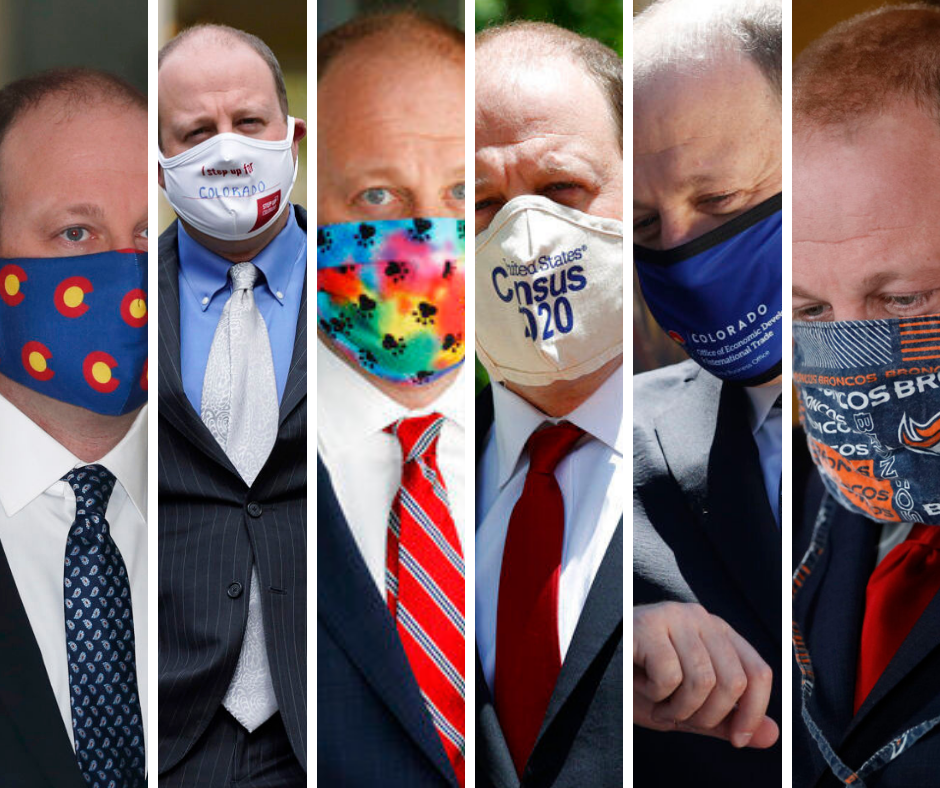
Gov. Jared Polis on Friday announced the state’s next chapter in dealing with COVID-19, a new plan that he calls a “roadmap” to keeping the state prepared for dealing with COVID surges while life in Colorado goes back to normal.
Polis told Colorado Politics on Thursday that the roadmap will include a set of recommendations that he hopes will keep Colorado – and the rest of the country – from being caught flat-footed in the future by the novel coronavirus.
“We want to avoid that happening again, whether it’s this virus” or another one, he said.
The state’s COVID situation has changed dramatically in the past two weeks, the governor noted. The risk of death for those who have received all three doses of the vaccine is 96% lower, and for those with two doses, 85% lower. These are game-changers, and the message for those who have been vaccinated is to go back to normal, Polis said.
“Our hospitals have obviously been under a huge amount of stress the past two years,” said Scott Bookman, the state’s COVID incident commander. “But we have also come out of this (most recent variant) very rapidly,” with hospitalizations down to 371 from more than a thousand just two weeks ago.
People still need to remain aware that the virus is out there, Polis said.
But with so many Coloradans either vaccinated or immune from the virus, the state has entered into an “endemic state.” The virus is present, but not disruptive the way a once-in-a generation pandemic is, the governor said in a news release. New modeling by state experts projects that 90% of the state is immune to the dominant omicron variant, which should keep cases and hospitalizations low for at least the next few months.
And that means that the population-level strategies the state has employed to suppress transmission, as well as the ongoing strain on the health care system, are no longer necessary.
Officials across the state have been unwinding pandemic responses throughout the past month. Mask orders have ended in Denver, Adams, Arapahoe, Boulder, Larimer, Broomfield and Jefferson counties, and Denver pulled the plug on its vaccine mandate for public and high-risk workers.
Part of that unwinding also includes folding mass testing and vaccination efforts into the broader health care system. Under Polis’s plan, providers – particularly in outpatient settings – will take over testing, vaccinations and distribution of medications to combat COVID going forward.
“It’s not normal to get tested in a parking lot,” Bookman said earlier this month. “It’s not normal to receive therapeutics in a bus. it’s not normal to get your vaccine in a drive-thru site. And so we need to start thinking about how we evolve this back to our normal health care system while continuing to make sure that we have a robust public health infrastructure to ramp up a response again.”
Polis pointed out that crisis standards of care – which the healthcare system uses to allocate scarce resources in staffing and emergency medical services – were deactivated for hospital staffing and ambulance services by the Colorado Department of Public Health and Environment on Feb. 17.
“More targeted approaches can be used to provide protection to vulnerable Coloradans” in the near future, Polis said.
But the state must also be at the ready should a new, concerning variant emerge or immunity wanes, Polis said in the news release. That’s where the roadmap comes in, one that will make the state better prepared as well as build a stronger and more resilient healthcare system, according to the administration.
The four points in the roadmap include:
- Establishing hospital readiness standards, surge planning and normalizing COVID patient care in traditional medical settings
- Ensuring public health readiness and surge capacity
- Investing in health care workforce stabilization and expansion
- Engaging the federal government in national endemic response, pandemic readiness and other needed reforms
The roadmap states that severe economic restrictions in the spring of 2020, including stay-at-home orders, “were driven by a lack of national preparedness,” which included a lack of personal protective equipment, testing supplies and technology, large-scale public health capacity, and access to staffed hospital beds and ventilators.
Those restrictions, while necessary to save lives, had long-term consequences for health, education and welfare, the roadmap states. “We strive to never have to institute similar restrictions” in the future, it adds.
However, the federal and state governments have not passed laws or regulations to ensure the readiness that would prevent another spring 2020 crisis.
The other issue is the workforce: Colorado entered fall 2021 and the emergence of omicron with as many as 600 fewer staffed hospital beds. That’s a statewide average of 1.9 hospital beds per 1,000 residents, below the national average of 2.4 hospital beds per 1,000 residents. The total number of hospital beds in Colorado fell by 19% at the end of 2021, state health officials said at a meeting earlier this month because so many providers had left the industry.
Burnout and exhaustion have thinned the ranks of hospital and long-term care facilities, particularly in the latter part of last year. Shortages in long-term care centers meant some hospital patients couldn’t be moved to step-down facilities, and infections among staff during the omicron wave further exacerbated the situation.
The workforce issue is among the most serious issues the health care system faces. The recent omicron variant stretched both hospital capacity and staff to the breaking point, forcing many facilities to further rely on traveling nurses and other high-cost agency support. In November, roughly 18 months into the pandemic, hospitals were at their most-stressed point ever: There were regularly only 80 or fewer intensive care beds left in the entire state on any given day. State officials rewrote crisis planning in case hospitals were overwhelmed, which modeling indicated they very well could’ve been by the end of December.
There’s been a lot of burnout in every sector, Polis said, but workers in hospitals and other healthcare facilities have been hit especially hard.
“It’s one of the areas where we want to do more as a state,” as well as asking the federal government to do more, he said.
Among the ideas is attracting new healthcare workers to the state, breaking down barriers to entering health care professions, helping facilitate career changes in health care, and building career pipelines and relationships between providers and the state’s colleges and universities. Polis called this medium- and long-range planning.
The workforce issue – and concerns around Colorado’s hospital capacity and stability in general – is an enduring one. While hospital volumes have been exacerbated recently because of COVID surges, providers have also reported seeing more patients than usual who are also sicker than usual, the product of months of delayed care from the beginning of the pandemic. Those problems will endure beyond the end of the immediate COVID crisis.
Then there’s what the state should expect from the federal government on endemic readiness. That includes looking at interstate price-gouging for staffing agencies.
Polis said he plans to present these and other ideas to the White House in the coming days. He also plans to share his ideas with fellow governors, hoping for a coordinated response in the areas that the governors can agree on.
There’s no time to waste, Polis said.
“The sooner, the better, because these things take time,” he said.
Gazette staff writer Seth Klamann contributed to this report.
Editor’s note: This story will be updated.


Colorado Politics Calendar July 27-Aug. 2
Rachael Wright, Special to Colorado Politics
rachael.wright@coloradopolitics.com
Updated 4 days ago
CoPo’s weekly political calendar will help you find political and public-policy events throughout Colorado. It includes candidate and issue campaign events, public policy meetings, court hearings, state and local party conventions, assemblies, debates, rallies, parades, speaking engagements, traveling dignitary appearances,...

The through line from Donald Trump to Victor Marx | SONDERMANN
By Eric Sondermann
by-eric-sondermann@coloradopolitics.com
Updated 4 days ago
Over 10 years ago, before Donald Trump could ever defeat Hillary Rodham Clinton, he had to first engineer a hostile takeover of the Republican Party. Prior to his descent of that golden escalator, the previous seven Republican presidential nominees had...

Colorado districts prepare for school year amid mental health cuts. But will less cellphone distractions help?
Marissa Ventrelli
marissa.ventrelli@coloradopolitics.com
Updated 2 days ago
The signs of a new school year are everywhere — buses in the shop, teachers unpacking boxes, families ticking through supply lists — but behind the familiar rituals, Colorado districts are preparing for a year defined less by routine than...
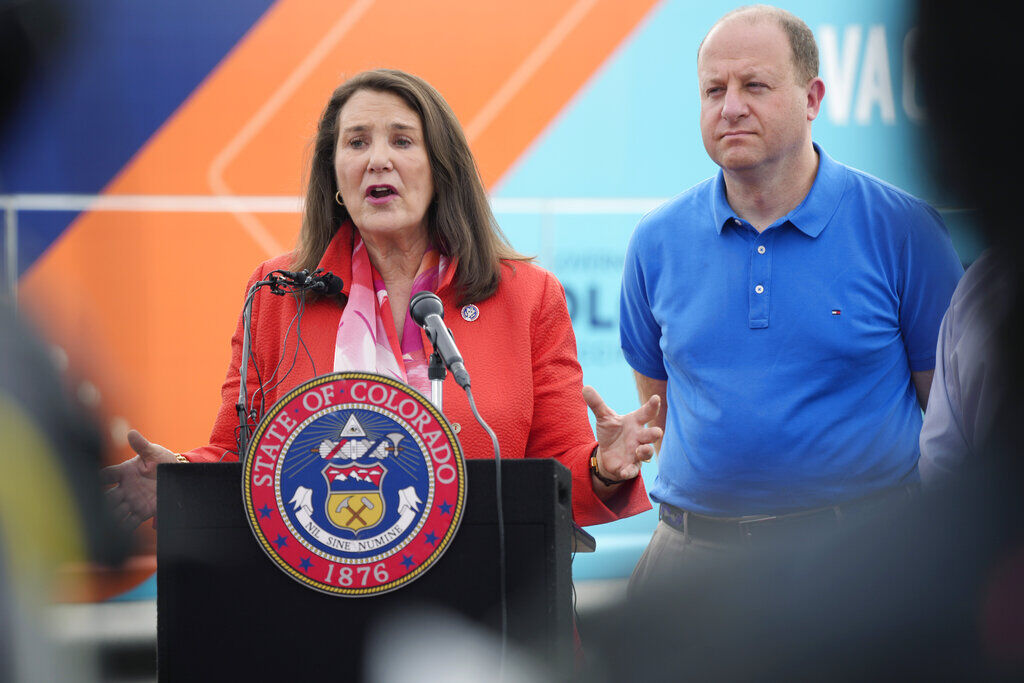
Armstrong staffer considers congressional bid, DeGette angers rural communities with wilderness act | A LOOK BACK
Rachael Wright, Special to Colorado Politics
rachael.wright@coloradopolitics.com
Updated 3 days ago
Forty-five years ago this week: If the lines were drawn just right, Republican Sen. Bill Armstrong stood the chance of losing his office manager, Ruth Fountain. Fountain admitted she was seriously thinking about running for Colorado’s new congressional seat in...
10th Circuit dismisses woman’s lawsuit following 10-year attempt to undo restraining order
Michael Karlik
michael.karlik@coloradopolitics.com
Updated 2 days ago
The Denver-based federal appeals court rejected a woman’s challenge on Friday to a restraining order imposed on her more than a decade ago, finding that she cannot credibly claim she will be prosecuted for violating the restraining order through her...
10th Circuit dismisses woman’s lawsuit following 10-year attempt to undo restraining order
Michael Karlik
michael.karlik@coloradopolitics.com
Updated 2 days ago
The Denver-based federal appeals court rejected a woman’s challenge on Friday to a restraining order imposed on her more than a decade ago, finding that she cannot credibly claim she will be prosecuted for violating the restraining order through her...

Surprise candidate Shimon Blau cleared to face off against Melat Kiros in November
Ernest Luning
ernest.luning@coloradopolitics.com
Updated 2 days ago
Unaffiliated congressional candidate Shimon Blau, a Denver doctor, has qualified by petition for the general election in Colorado’s 1st District, where Democrat Melat Kiros defeated 15-term U.S. Rep. Diana DeGette in last month’s primary, the Colorado Secretary of State’s Office...

Colorado produce not tied to nationwide cyclospora outbreak, agriculture officials say
Marissa Ventrelli
marissa.ventrelli@coloradopolitics.com
Updated 1 day ago
There is no indication that the recent outbreak of cyclospora, a fecal parasite that has contaminated food and water across nearly every state, can be linked to produce grown in Colorado, according to the state’s Department of Agriculture. “Colorado growers...

UNC opens College of Osteopathic Medicine
Marissa Ventrelli
marissa.ventrelli@coloradopolitics.com
Updated 2 days ago
The University of Northern Colorado held a grand opening for its new College of Osteopathic Medicine on Friday, with Gov. Jared Polis in attendance to celebrate the culmination of a two-year, $127.5 million project. The project was funded through legislation...
Colorado equal pay law does not require plaintiffs to allege gender-based retaliation, appeals court finds
Michael Karlik
michael.karlik@coloradopolitics.com
Updated 22 hours ago
The 2019 Colorado law aimed at rooting out pay discrimination on the basis of sex does not require a plaintiff to allege their employer retaliated against them for sex- or gender-related reasons, the state’s second-highest court decided on Thursday. Lawmakers...
PREV
PREVIOUS

State Rep. Tim Geitner announces he won't seek reelection to 3rd term
Assistant House Minority Leader Tim Geitner won’t seek a third term in the legislature this fall, the Falcon Republican announced late Thursday. Geitner, who holds the No. 2 House GOP leadership spot, said in an email to supporters that he wants to spend more time with the two sons he and his wife, El Paso […]

Colorado Senate unanimously supports Ukraine, calls for action against Russia
Members of the Colorado Senate on Friday came together in support of Ukraine, unanimously passing a joint resolution to stand alongside Ukraine and condemn Russia. On Thursday, Russia launched an invasion of Ukraine, hitting cities and military bases with airstrikes in what Ukraine’s government has called a “full-scale war.” At least 137 people were killed […]