

PODIUM | Colorado needs better abortion data

As an OB-GYN physician, submitting data and filing reports was not a favorite activity. For every live and still birth, data is collected as required by the National Vital Statistics System. There are at least 48 data items that are recorded, not including subsections. Though this is a lot of data, the purpose of collecting data for vital statistical analysis is critical to identify trends in health, to identify needs and disparities, to determine the impact of strategies and programs on health, and for the development of programs to improve health and health care.
We measure what we care about. I know that we all care about women and their health. Both the American College of OB-GYN (ACOG) and Guttmacher Institute, a reproductive health and rights research and policy organization, support and recommend improved abortion reporting. ACOG specifically notes that accurate data is necessary to improve “quality (of medical care), access to care, racial, ethnic, and socioeconomic disparities on maternal and infant health care.” However, research quality depends on the accuracy of the data collected. Garbage in, garbage out.
Colorado has required abortion reporting of only nine items, but the current system has not been effective. Abortion data may also be voluntarily reported to the Guttmacher Institute; their abortion data for Colorado are 40% higher than Colorado Department of Public Health and Environment (CDPHE) data, and rates for later-term abortions can vary as much as 55% from year to year, suggesting inaccurate reporting. The most prominent late-term abortion provider in Colorado has not reported their data for years.
Though there are currently fees that might be assessed for non-reporting, there remains non-compliance. Bill HB22-1075 adds a referral for unprofessional conduct, as an additional impetus for reporting. The individual woman’s identity is protected and not included. The data may only be released for research and public-policy purposes.
Bill HB 22-1075 would add only two items to the nine data items that are already required: the reason(s) the woman chose to pursue abortion, using reasons previously published by Guttmacher Institute, and the family planning method being used, if any.
How would this data be helpful? Understanding why women choose to pursue abortion is especially important when many women say they felt they had “no choice,” and may have chosen otherwise if they had support and resources available. How can we help, so that women have true choice? What will be the impact of paid-family-leave in Colorado on abortion rates? One of the great racial disparities in health care is preterm birth, with black women experiencing a rate three times as high as white women, and a similar disparity in abortion frequency. Are late-term abortions and/or multiple abortions associated with subsequent preterm births? What forms of contraception are most recently used for each age group? How might that information improve programs and education for prevention?
Another area data collection could significantly impact is human trafficking and sexual abuse. Colorado, like all states, has the hidden scourge of human trafficking, with an estimated $60 billion in annual profits in Denver alone. Human trafficking exists within the web of economic distress, drugs and abortion. How can we identify and help these women? We start by requiring abortion providers to inquire about the circumstances that have led the women to seek an abortion, which is part of HB22-1075.
Colorado is not alone in collecting data on abortion; other states include Arizona, Minnesota, Oklahoma and Louisiana. Countries with similar abortion data collection include the United Kingdom and Finland, which is able to link abortion data to longitudinal health outcomes due to the single-payer health-care system.
Bill HB22-1075 is about collecting health-care data. Regardless of how one feels about abortion, I believe we can all agree that improving women’s health and health care matters. Helping women have expanded options in their decision making is a worthy endeavor. This requires data collection, and is standard in all fields of health care. Eleven data items, by a simple electronic form, are not onerous to the provider. There is precedent in other states and countries. There is evidence for great benefit. What is the downside? Why would we not want accurate data?
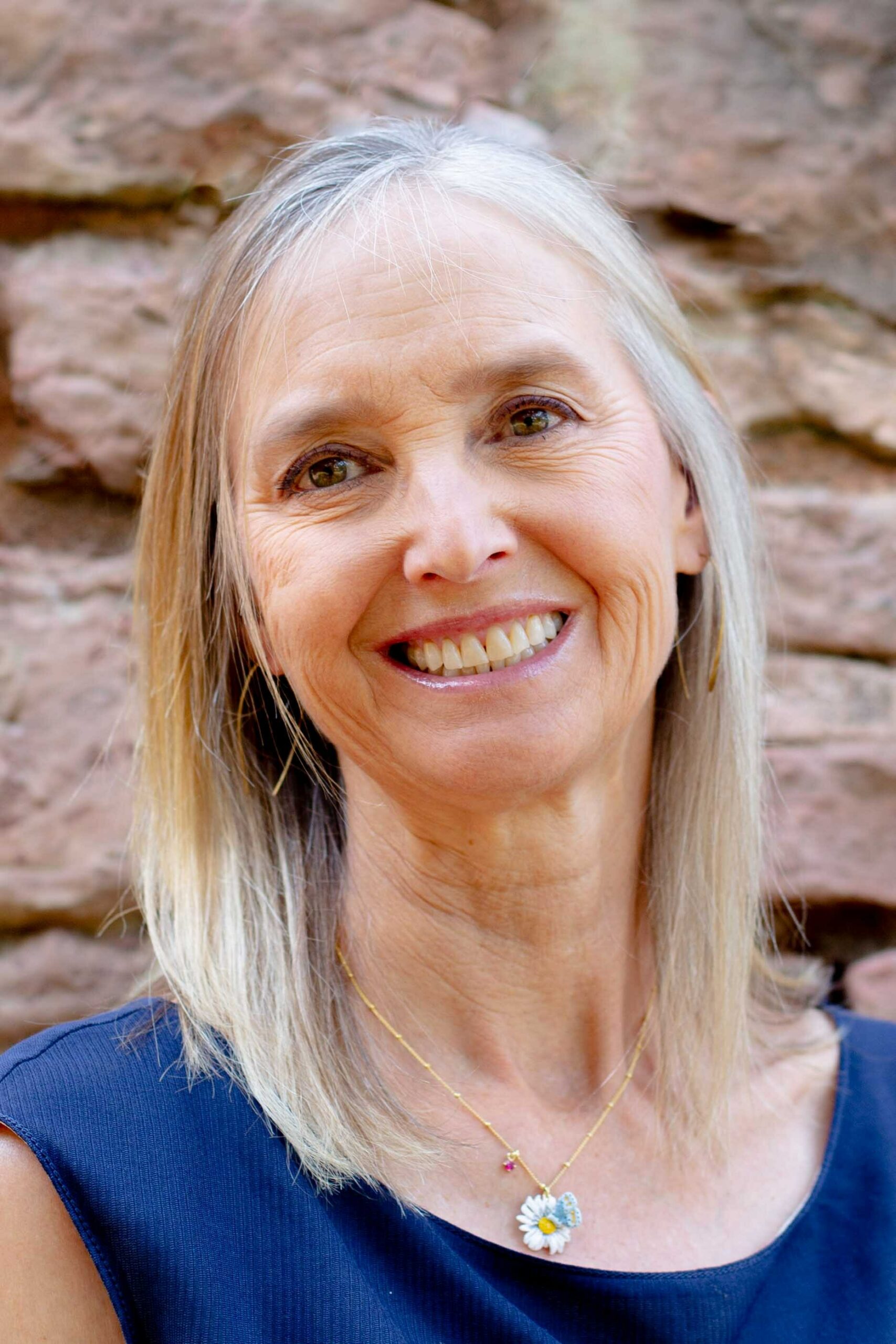
Catherine J. Wheeler, MD, of Divide, is a board-certified Ob/Gyn physician, with 24 years of practice experience.

Yet again, when rights are in conflict | Hal Bidlack
Hal Bidlack
hal-bidlack@coloradopolitics.com
Updated 6 hours ago
I admit, it is going to take quite a bit of self-control to not have this entire column end up being yet another screed about a certain president who continues to shock the world in his race to the bottom...

Turn blueprint into action with the Outdoors Opportunities Act | OPINION
Kent Thiry
kent-thiry@gazette.com
Updated 6 hours ago
Nearly a year has passed since Gov. Jared Polis, Colorado Parks and Wildlife, the Colorado Department of Natural Resources, Colorado’s Outdoor Recreation Industry Office and other key partners finalized the visionary Colorado Outdoor Strategy, establishing the framework to ensure Colorado’s...
Let Colorado’s communities govern their own neighborhoods | OPINION
Colorado Politics
colorado-politics@coloradopolitics.com
Updated 6 hours ago
By Jeff Bailey and Cindy Bailey Coloradans have always done things their own way. From how we manage our land to how we build our economies, the instinct to govern locally — to trust mayors, councils and commissioners over distant...

Threats inside and out loom for Colorado’s Republicans | Dick Wadhams
Dick Wadhams
dick-wadhams@coloradopolitics.com
Updated 2 days ago
Colorado Republicans made strides in 2024 despite an insidious state chairman who tried to defeat successful Republican candidates. Newly elected U.S. Reps. Gabe Evans, Jeff Hurd and Jeff Crank fought off unethical opposition from their own state party chairman, making...
Is it time for both parties to bail on Colorado’s political nominating system? | Miller Hudson
Miller Hudson
miller-hudson@coloradopolitics.com
Updated 2 days ago
Cracks are beginning to appear in Colorado’s political nominating system. Recently, Mario Nicolais, a formerly Republican-leaning pundit, and Doug Friednash, former Democratic legislator, have opined regarding the imminent demise of the caucus/assembly framework which controls partisan candidate selection. There has...
Recognizing the value of generational work | Rachel Gabel
Rachel Gabel
rachel-gabel@coloradopolitics.com
Updated 2 days ago
The Lesser Prairie Chicken habitat in southeastern Colorado is a swath of prairie that begins in Cheyenne and far-southeastern Lincoln counties and moves south and east into Kiowa, Prowers and Baca counties. This is cattle country where the short grass...

Why the controversy with mail-in ballots? | Cronin & Loevy
Tom Cronin Bob Loevy
tom-cronin-bob-loevy@coloradopolitics.com
Updated 2 days ago
Most Coloradans enjoy the right to vote “by mail” at election time. Most Americans favor this process. But U.S. President Donald Trump is trying to federalize (nationalize) this practice and shift the supervision of voting from county clerks to the...

Who are the kings being crowned here in Colorado? | Jon Caldara
Jon Caldara
jon-caldara@coloradopolitics.com
Updated 4 days ago
Though most of us celebrate “No Kings Day” on July 4, the Trump-deranged got a head start last weekend with rallies around the state. Attendees bravely fought oppression by blocking traffic for people with jobs. Rally-goers demanded freedom from tyranny,...
An April Fool’s Day to remember | Capitol M | Week of April 4, 2026
Marianne Goodland
marianne.goodland@coloradopolitics.com
Updated 15 hours ago
The lighter side of the Capitol, and if light were weight, the Capitol would have lifted off better than the Artemis II rocket on April Fool’s Day. There was a plethora of Fools at the Capitol for April Fool’s Day...

Democrats rebounding without learning necessary lessons | SONDERMANN
Eric Sondermann
eric-sondermann@coloradopolitics.com
Updated 3 days ago
“When we fight, we win!” That, reportedly, was the chant heard over and over again at the Colorado Democratic Assembly a week ago. It suggests that pugilism has been the piece missing from the Democratic toolkit. Perhaps it was just...
PREV
PREVIOUS

FEEDBACK | Paper recycling is a model for all recycling
The Feb. 11 article “Bill to mandate industry-paid recycling poised to surface in Colorado House” failed to note that all materials are not created equal, nor are they recycled at the same rates. In fact, more paper by weight is recycled from municipal waste streams every year than plastic, glass and aluminum combined. And an extended producer […]

SENGENBERGER | At last, the kids can see faces
Jimmy Sengenberger On Thursday, the board of Denver Public Schools – one of Colorado’s last holdouts for forced K-12 school masking – is expected to hold to its plan to eliminate their mask mandate starting Monday, Feb. 28. That’s because, with reality setting in, school mask mandates are now politically untenable. Providing DPS doesn’t turn back the […]