

NOONAN | Teacher-assessment bill best for educators
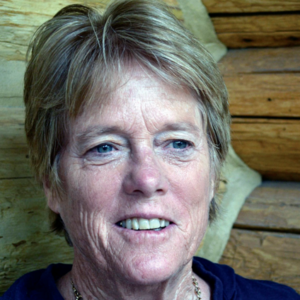
Once again, the education rift among legislators on educator performance evaluation will hit the State Capitol. Senator Tammy Story will present her bill, SB22-044, to substantively change the criteria for classroom teacher assessment.
The bill addresses the ongoing deficiencies of SB10-191. That bill passed more than a decade ago, ostensibly to improve student academic performance by putting 50% of the measurement of a teacher’s classroom instruction under the high-performance lens of the Colorado Measures of Academic Success (CMAS) standardized test program. What a mess that has proven to be.
As educators explained at the time, because the self-named “education reform” movement had sway over the governor’s office and state legislators – due in large part to Wall Street PAC money coming from that direction – SB10-191, consequently, diverted financial and time resources from classroom instruction. What teacher has time and energy to create enthusiasm and excitement among students for learning when the CMAS standardized tests loom? What hope is there for creativity and innovation in curriculum when CMAS tests structure instruction design and implementation?
And of course, SB10-191 didn’t anticipate the COVID epidemic that exposed the legislation for the disaster it is. If anyone wants to explore how CMAS test results, at 50% of a teacher’s evaluation, are integrated into performance assessments, check out the model at the Colorado Department of Education. This indecipherable example and any variation will do absolutely nothing to ensure Colorado’s kids receive great education.
The Colorado Department of Education has qualitative standards that currently represent the other 50% of teacher evaluations. These standards cover what teachers do and break the elements into reasonable and understandable levels by adding skill sets that represent teacher growth as educators. They’re observable and achievable. They should be used as the basis for 100% of teacher evaluation.
SB22-044 does not discount testing. Obviously testing is important to help teachers and schools figure out what’s working in curriculum development and implementation. But the value of tests for schools is in that realm supporting grade-level collaboration, articulation from grade to grade and overall understanding of learning challenges schools may face.
It’s important for teachers, students and parents to interpret individual CMAS results as well, but this aspect shouldn’t affect teacher assessment. CMAS testing occurs in spring, performance evaluations occur at the end of the school year, but CMAS test results don’t arrive until summer. No employee in the private sector would put up with an assessment program in which decisions about performance are based on information that’s not available and not applicable when the performance evaluation is conducted.
To make matters worse, although SB22-044 doesn’t address this issue, the state is increasing its CMAS testing. In 2021, students were tested in English and math in alternating years. In 2022, students will be tested in both subjects from third through eighth grade, doubling the amount of testing time. In 2021, science was tested in grade five. In 2022, science will be tested in grade five, eight and 11. It adds up to students losing about one week of school to testing. Teachers and administrators lose much more time in the preparation process.
Colorado Succeeds and its leader Scott LaBand oppose SB22-044. LaBand was former State Sen. Mike Johnston’s chief of staff when the two guys cooked up their performance-evaluation program in 2010. Former Sen. Mike Johnston will no doubt throw his weight from his top spot at Gary Community Ventures against SB22-044.
The two “ed reform” honchos also launched the failed Proposition 119 to use marijuana taxes for after-school education. That plan would have ultimately undermined public school funding desperately in need of new money for teacher salaries, teacher professional development, special education, mental and behavioral health programs, arts, physical education – get the point?
Ed reformers complain that Colorado’s schools are under-performing. They assert that testing is critical to reducing inequities affecting minorities in Colorado’s schools. They’re wrong.
Here are the facts. Right now, according to Great Ed Colorado sources, Colorado ranks 50th in teacher salary competitiveness, 49th in the number of novice teachers, and 41st in pupil-teacher ratio. We’re among the bottom 10 states in math gaps, reading gaps, poverty gaps and, most critical, state-funding for public schools. Governor and legislators, let’s take care of these problems. Good learning will follow.
Paula Noonan owns Colorado Capitol Watch, the state’s premier legislature tracking platform.


Common-sense guardrails for new data center development benefit people, the planet | GUEST COLUMN
Colorado Politics
colorado-politics@coloradopolitics.com
Updated 3 hours ago
By Joe Antus Colorado’s business leaders are right about one thing: Colorado is at an inflection point. In a recent letter to Gov. Jared Polis, members of the technology and business community argued Colorado’s innovation economy must not only grow,...
The uncharted implications of increasing unaffiliateds ahead of Colorado’s primaries | Paula Noonan
Paula Noonan
paula-noonan@coloradopolitics.com
Updated 1 day ago
The primaries are about 60 days away. The large majority of statewide races will be decided on June 30. Those contests will be between moderate and progressive Democrats and moderate to super-conservative Republicans. Analysis of voter registrations does not look...
All Coloradans should have a say at the Public Utilities Commission | GUEST COLUMN
Colorado Politics
colorado-politics@coloradopolitics.com
Updated 13 hours ago
By Emma Pinter I have a sticky note in my kitchen that reminds me of Xcel Energy’s peak hours, when they charge higher rates for electricity. From 5 p.m. to 9 p.m., I avoid running the laundry or the dishwasher...
Protect patient access to life-saving drugs | GUEST COLUMN
Colorado Politics
colorado-politics@coloradopolitics.com
Updated 16 hours ago
By Leslie Herod Since its inception, Colorado’s Prescription Drug Affordability Board (PDAB) created fear among patients around effects to life-saving medicines and the negative ramifications price controls have on affordability. Five years on, those fears persist. Patients and advocates continue...
Don’t upend Colorado’s ‘healthy balance’ on stream access | PODIUM
Colorado Politics
colorado-politics@coloradopolitics.com
Updated 2 days ago
By Ashley House “The horizon is a perfect line between sky and water.” I heard this line of dialogue waft through my parents’ living room recently as they tuned into one of the newest Taylor Sheridan TV dramas, “The Madison.” As...
Colorado can’t fall behind on refocusing nutrition assistance | GUEST COLUMN
Colorado Politics
colorado-politics@coloradopolitics.com
Updated 2 days ago
By Travis Couture-Lovelady Nutrition assistance should be a safety net — not a source of chronic illness. That was the mindset behind Colorado and 21 other states pursuing waivers from the U.S. Department of Agriculture to prohibit the purchase of...
Homeschool enrichment programs serve vital and cost-effective role | GUEST COLUMN
Colorado Politics
colorado-politics@coloradopolitics.com
Updated 2 days ago
By Richelle McKim The Colorado state legislature is considering the introduction of a measure to strip funding from homeschool enrichment (HSE) programs, which are one of the most cost-effective and impactful educational tools the state currently has to offer. If...
Colorado’s leaders must pass No Kings Act to rein in out-of-control federal officials | GUEST COLUMN
Colorado Politics
colorado-politics@coloradopolitics.com
Updated 2 days ago
By Ariane Frosh In July of 2021, Pikes Peak area activists organized a housing rights march to bring awareness to the region’s increasing unaffordability. Lying in wait, however, was the Colorado Springs Police Department (CSPD); they had been spying on...

Dick Wadhams charts Colorado’s rocky political shifts | The OpEdge Podcast
Tony Olivero
tony.olivero@gazette.com
Updated 3 days ago
In the latest episode of The OpEdge — The Gazette’s new opinion podcast — veteran campaign winner, political analyst and Gazette columnist Dick Wadhams dissects the electoral shifts of Colorado politics with OpEdge host and investigative columnist Jimmy Sengenberger. Wadhams charts...
Kudos for cooperation on critical Colorado water issues related to tribal communities | Hal Bidlack
Hal Bidlack
hal-bidlack@coloradopolitics.com
Updated 3 days ago
Way back in 1997, while I was still an active-duty Air Force officer, I was working a summer temporary duty assignment during the academic break at the Air Force Academy. I ended up doing this work for two summers, and...
PREV
PREVIOUS

Systemic inequalities in health care burden minorities
Kenneth Oja Experiencing a global pandemic has exposed the huge cracks in our country’s broken health-care system. As a nurse and health-care researcher, I’ve seen the effects of the pandemic firsthand. The hospital where I work, and hospitals throughout our country, are overloaded with patients. While nurses and other health-care providers continue to do their […]

SLOAN | What's in it for Russia
Kelly Sloan At the beginning of this week, it seemed all but certain that war was going to break out imminently in the Ukraine. A date of Feb. 16 was even offered up as the day the bombs would start dropping, the U.S. government reduced its embassy in Kyiv to just the ambassador and military […]