

DaVita, Kent Thiry lose bid to dismiss criminal antitrust charges

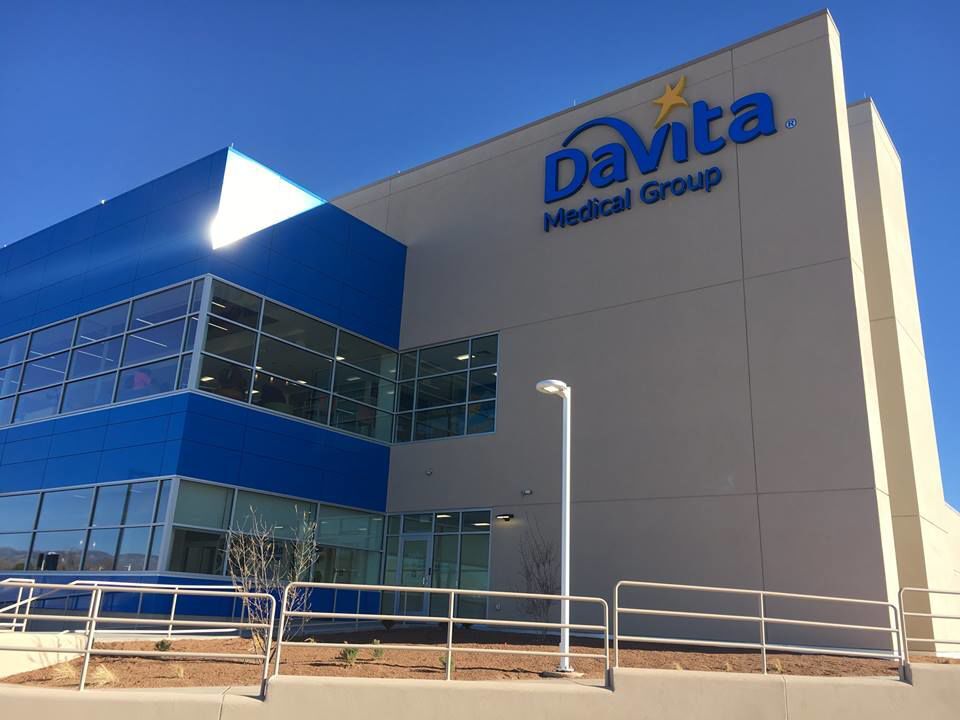
Denver-based DaVita, Inc., and its ex-CEO and chairman, Kent Thiry, have lost their attempt to dismiss the criminal conspiracy charges against them.
On Friday, a federal judge agreed the U.S. Department of Justice had sufficiently alleged that DaVita entered into agreements with competitors that made it more difficult for employees to move between companies. If true, that would violate the century-old Sherman Antitrust Act, which outlaws agreements that unreasonably restrict the market.
The defendants had argued that there was no precedent for using the Sherman Act to criminally prosecute entities for agreements not to solicit each other’s employees. But U.S. District Court Senior Judge R. Brooke Jackson found such alleged conduct clearly fit within existing prohibitions on horizontal market allocation – meaning uncompetitive agreements between rival companies.
“The fact that defendants allegedly allocated the market in a novel way – by using a non-solicitation agreement – does not matter. Defendants had ample notice that entering a naked agreement to allocate the market would expose them to criminal liability, however they did it,” Jackson wrote in a Jan. 28 order.
Cliff Stricklin, an attorney for Thiry, said the defense continues to believe the indictment represents overreach by federal prosecutors.
“It is exceptionally rare for a court to grant a motion to dismiss an indictment, especially since the law requires the court to assume all the allegations in the indictment are true,” he said. “We will show the jury the facts that prove our innocence.”
The penalties for DaVita, a Fortune 500 kidney dialysis company, could be up to $100 million for each count. Thiry could face up to 10 years in prison and a $1 million fine for each offense.
Thiry was the head of DaVita for nearly two decades, beginning in 1999. His political involvement in Colorado has included mulling a run for governor in 2018 and promoting the independent redistricting commissions that redrew congressional and state legislative district boundaries this year. Kaiser Health News reported that in total, Thiry has given at least $5.9 million toward Colorado ballot initiative campaigns since 2011.
Under the prosecution’s narrative, DaVita had agreements with competitors not to solicit or recruit each other’s employees. Allegedly, workers were required to tell their employer if they intended to seek a job with one of the other companies subject to the agreement.
A companion case involving DaVita’s alleged co-conspirator, Surgical Care Affiliates, is pending in a federal court in Texas. Prosecutors referenced an email from an SCA human resources executive to a recruiter saying that DaVita was “off limits.” The CEO of another, unidentified company also reportedly emailed Thiry to say Thiry has “my commitment we discussed that I’m going to make sure everyone on my team knows to steer clear of anyone at DVA [DaVita].”
“If you were looking for a job and you didn’t wanna jump through hoops that the CEOs decided you must jump through to get an offer, all competition ceased,” Justice Department attorney William J. Vigen argued to Jackson in November.
The government charged DaVita and Thiry with “per se” violations of the Sherman Antitrust Act, meaning the alleged actions were so clearly anticompetitive that they fell alongside other established illegal activities, like price fixing. Organizations including the U.S. Chamber of Commerce, Colorado Chamber of Commerce and the National Association of Criminal Defense Lawyers weighed in on behalf of the defendants, pointing out that neither courts nor Congress had clearly defined non-solicitation agreements as unlawful.
“Defendants are right that there are no cases perfectly analogous to this case,” Jackson conceded in his order. “But that is the nature of Section 1 of the Sherman Act: as violators use new methods to suppress competition by allocating the market or fixing prices these new methods will have to be prosecuted for a first time.”
The judge clarified that the government, at trial, will need to prove that the defendants actually had such a non-solicitation agreement, and to prove beyond a reasonable doubt that its purpose was to restrict competition in the labor market.
The case is United States v. DaVita Inc. et al.

10th Circuit grants immunity to officers for fatal Manitou Springs shooting
Michael Karlik
michael.karlik@coloradopolitics.com
Updated 19 minutes ago
The Denver-based federal appeals court ruled on Wednesday that responding officers from Manitou Springs and El Paso County cannot be held constitutionally liable for shooting and killing a man after a 20-minute standoff. Wilford Deweese allegedly pulled out a gun...

10th Circuit rejects invitation for full-court review of tax-avoidance case
Michael Karlik
michael.karlik@coloradopolitics.com
Updated 50 minutes ago
The Denver-based federal appeals court declined to reconsider the standards for holding entities liable for their tax-avoidance schemes, with a majority of judges voting against full-court review on Monday. In April, a three-judge panel of the U.S. Court of Appeals...
Colorado judge blasts state forensics lab in dismissing child sex case
Jenny Deam
jenny.deam@gazette.com
Updated 4 hours ago
In a potentially widely consequential action, a Weld County district judge dismissed a child sexual assault case, citing the ongoing scandal at the Colorado Bureau of Investigation’s forensic lab that “has left a dark mark on the history of Colorado...
10th Circuit sympathetic to Colorado consumer protection law governing interest rates
Michael Karlik
michael.karlik@coloradopolitics.com
Updated 1 day ago
Members of the Denver-based federal appeals court appeared sympathetic on Tuesday to Colorado’s assertion that it can lawfully require certain out-of-state banks to abide by the state’s own ceilings on interest rates when they lend to consumers in Colorado. The...
Colorado justices to decide insurance companies’ obligation to disclose relevant policies
Michael Karlik
michael.karlik@coloradopolitics.com
Updated 4 hours ago
The Colorado Supreme Court announced on Monday that it will decide whether an insurance company violated state law by withholding an at-fault driver’s policy for nearly a year when there was no dispute that the policy was not in effect...

Judicial performance evaluations released, Montezuma County judge disciplined | COURT CRAWL
Michael Karlik
michael.karlik@coloradopolitics.com
Updated 2 days ago
Welcome to Court Crawl, Colorado Politics’ roundup of news from the third branch of government. Colorado’s citizen-led judicial performance commissions released their voter narratives for the judges standing for retention in November, plus a disciplinary panel imposed consequences on a...

DA justifies CSPD officers in fatally shooting man at McDonald’s
Cleo Westin
cleo-westin@coloradopolitics.com
Updated 1 day ago
The deadly shooting of a man by Colorado Springs police officers at a McDonald’s was ruled justified by the 4th Judicial District Attorney’s Office on Monday, the office announced in a news release. The ruling determined officers Daniel White, Mitchell...
Federal judge holds off on dismissing formerly bankrupt medical contractor from Jeffco jail death lawsuit
Michael Karlik
michael.karlik@coloradopolitics.com
Updated 1 day ago
A federal judge declined on Monday to dismiss the formerly bankrupt medical contractor from a lawsuit over a detainee’s death in Jefferson County jail, but indicated she would do so if the plaintiffs’ attorneys go through the process to ensure...
Castle Rock caregiver sentenced after stealing more than $110,000 in jewelry from family
Nicholas Fogleman
nicholas.fogleman@denvergazette.com
Updated 1 day ago
A judge sentenced a Castle Rock caregiver to 90 days in jail after she pleaded guilty to stealing more than $110,000 worth of jewelry from the family of a disabled son under her care. Elsa Montejo-Fuentes, 32, had worked for...
Federal judge green-lights excessive force, retaliation claims for trial against Fort Collins officers
Michael Karlik
michael.karlik@coloradopolitics.com
Updated 4 days ago
A federal judge green-lit a jury trial last week against multiple Fort Collins police officers on claims that they used excessive force on one man who was standing unarmed in his underwear, and retaliated against another man for exercising his...
PREV
PREVIOUS

Colorado’s 2022 economic forecast shines bright, with warnings
Colorado should recover this year all the jobs it lost during the pandemic, and many industries are poised to return to pre-pandemic levels of business, according to panelists at the South Metro Denver Chamber of Commerce economic forecast breakfast Friday. “Most economic activity is getting back, or will be back in 2022 to where it […]

CDOT says season going well despite snowplow driver shortage
Officials across the country are working to address a shortage of snowplow drivers as winter rages on and the Colorado Department of Transportation is among the many agencies impacted. CDOT full team consists of 1,600 road maintenance specialists and frontline supervisors across the state and currently has around 200 openings. This is nearly double the […]