

Colorado lawmakers spar over voting rights resolution

Evoking apartheid-era voting restrictions and warning of a dire end for America’s democracy, Senate Democrats on Tuesday passed a resolution urging Congress to pass comprehensive voting rights legislation to counteract actions by several states they believe have made it more difficult for voters to cast a ballot.
House Democrats replicated the Senate’s action soon after.
“We have never seen a more dangerous attack on our democracy in modern times than what we have seen in the last two years,” Senate Majority Leader Stephen Fenberg, D-Boulder, said.
Sen. Chris Hansen, D-Denver, recounted his time in South Africa shortly after the county began dismantling the apartheid regime and effectively framed America’s debate on voting rights legislation as a choice between learning the lessons of the African nation’s history or embracing its worst manifestations.
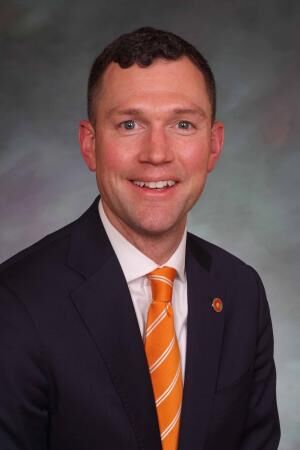
“The top priority for the apartheid government was to restrict the right to vote,” he said, arguing that America’s experiment in representative democracy will not survive if Congress doesn’t act to reverse state laws that he said restrict people’s ability to access the ballot box.
“We cannot move backwards,” Hansen said. “We will not stand by silently while forces act to restrict the right to vote.”
At issue is two voting rights measures, Senate Memorial 1 and House Resolution 4. In addition to pushing for the passage of Freedom To Vote Act and the John Lewis Voting Rights Advancement Act, the resolution also reasserts the “validity of the 2020 presidential election results as legitimate and verified.”
Senate Minority Leader Chris Holbert, R-Douglas County, said he agrees with many points raised by the resolution, notably the passage of the Voting Rights Act of 1965. He would never condone actions that restricted Americans’ ability to cast a ballot, notably subjecting them to poll taxes, literacy tests and intimidation, he said.

What he cannot agree with, he said, is the claim that Colorado’s electoral system “serves as an example to the rest of the nation.”
He said he has two problems with that claim: he cannot agree with a system that sends ballots by mail to addresses where the intended recipients no longer live and which relies on a simple declaration of intent to be able to vote on the same day.
“If you’ve been out walking door to door, have you ever met someone who says that person doesn’t live there anymore?” he said.
He also questioned the presumption that congressional actions are ultimately good for democracy.
“Do you know what Congress would pass? I don’t,” he said.
The measure passed on a 20-13 vote, with Sen. Kevin Priola, R-Henderson, voting with Democrats.
The same debate played out in the House, where Republicans and Democrats brushed aside House Speaker Alec Garnett’s opening day plea that lawmakers avoid using the “well of this chamber as your twitter handle” as they sparred over voting rights.
The conflict centered on HR 4, which took aim at restrictive voting laws adopted in Georgia and Texas. It also cited the Jan. 6 riot, and said “falsehoods and conspiracies regarding the integrity of the 2020 election have run rampant in our media and public discourse.”
The resolution concludes by calling “on the United States Congress, and specifically members of the United States Senate, to pass comprehensive voting rights legislation to protect the fundamental right to vote, which has been the cornerstone of our democracy since the founding of our republic.”
Rep. Tony Exum, a Black Colorado Springs Democrat who sponsored the resolution along with Rep. Kerry Tipper, D-Lakewood, focused on Black Americans’ history with voting disenfranchisement. He said things improved after the passage of the Voting Rights Act, but added that the 2013 Shelby County v. Holder Supreme Court decision “gutted a major part” of the VRA, which, in turn, made “it easier for states to begin passing suppression laws.”
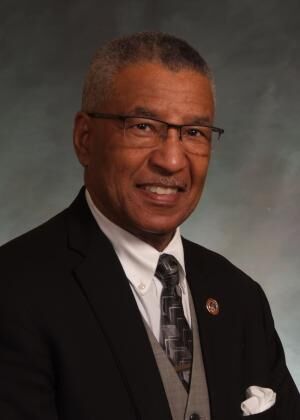
“This is what those laws look like: In 19 states, 34 voter suppression laws are restricting voter registration, eliminating poll locations, cutting back on early voting and reducing voting hours,” Exum said. “They also criminalized and punished people who give food and water to people waiting in line to vote.”
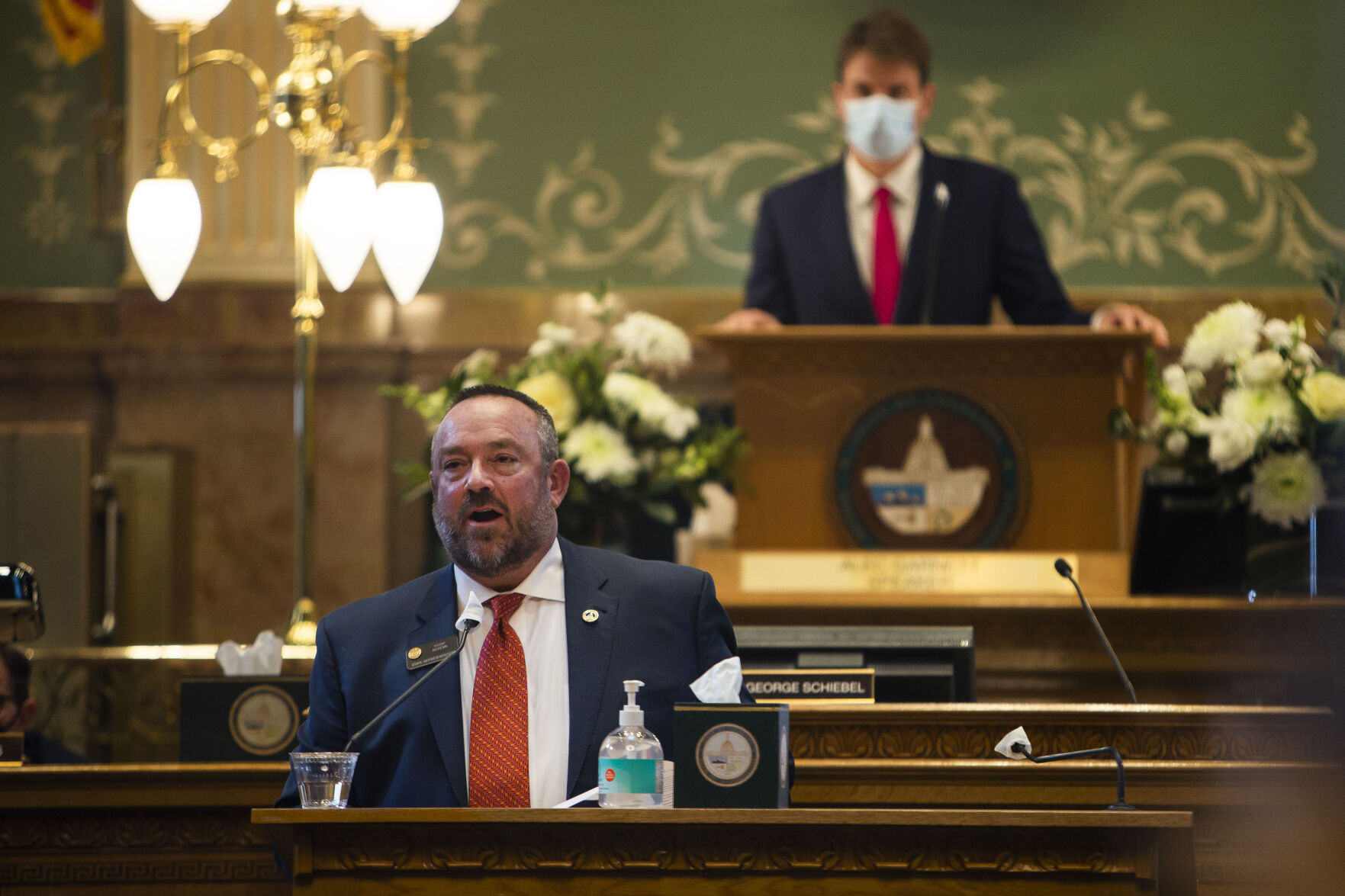
But Republican lawmakers, led by Minority Leader Hugh McKean, R-Loveland, described the resolution as the latest example of “the totalitarian tactics of the Democrats, and their attempts to degrade all that we are.”
“States like Colorado with respected voting systems can shine because state law – not partisan federal edicts – determines how those systems work,” McKean said in a statement ahead of the proposition’s action on the floor. “The last thing we need is the federal government stepping in and nationalizing voting procedures. Democrats can not say in one breath that the system works, and in the next breath claim that we cannot trust and must instead change that same system.”
Republican Rep. Dave Williams of Colorado Springs introduced a series of amendments, but each was shot down. Those included language aimed at preventing dead people and those who are not citizens to vote, provisions Democrats noted are already in state law.
Rep. Ron Hanks, a Cañon City Republican who is seeking the nomination to challenge Democratic U.S. Sen. Michael Bennet, drew criticism during the 2021 session for joking about lynching and arguing that a constitutional provision that treated slaves as three-fifths of a human being wasn’t “impugning anybody’s humanity.”
Hanks’ views on the 2020 elections, a centerpiece of his U.S. Senate campaign, were on full display on Tuesday.
After praising King and civil rights leaders from the 1960s, Hanks dove into “election integrity.” That featured a defense of people who, like Hanks, were in Washington, D.C. for the Jan. 6 riot but did not participate in the violent attack on the U.S. Capitol.
“I am a little offended for some of the people I met in Washington, D.C.,” Hanks said. “These people did nothing wrong. They were afraid for their country.”
Hanks also ran an unsuccessful amendment seeking a non-governmental audit of the 2020 election.
McKean, in his final comments, acknowledged that President Joe Biden won the election in 2020, just as President Donald Trump won in 2016. He also voted against the Williams and Hanks amendments.
One amendment called for supporting Mesa County Clerk Tina Peters, which Garnett said is contrary to opposing election fraud. Another called for supporting the people who stormed the U.S. Capitol on Jan. 6. Garnett said the resolution isn’t partisan or political, but that the amendments offered by Republicans are.
In a speech expressing rare anger, Garnett shouted, “In Colorado we cannot remain silent!”
He added: “The choice is clear between the two groups of elected representatives in this building. You have a choice. Your ability to vote is under threat.”
As he held up one of Republican amendments, the speaker said, “In these words … America, listen up. Your ability to vote is under threat! Pull the records and look at who voted for those amendments!”
House Republicans called for recorded voice votes on the resolution, as well as on their amendments. Roll call votes typically end up in campaign ads.
The House resolution passed on a purely party-line vote.

Meanwhile, state GOP chairwoman Kristi Burton Brown weighed in on the resolution, calling it “a blatant political ploy by Democrats in the Assembly to distract from the fact that they have spent years increasing taxes, passing policies that have led to record levels of violent crime, and putting students and parents last.”
Nico Delgado, the spokesman for the Colorado Democratic Party, said “two-thirds of the Republican House members voted to thank the U.S. Senate front-runner (Hanks), for being an insurrectionist. The GOP showed their true colors with this vote and it’s all part of an extreme agenda that only serves Donald Trump and hurts Coloradans.”


Republican Victor Marx taps George Markert as his lieutenant governor pick in Colorado’s gubernatorial race
Ernest Luning
ernest.luning@coloradopolitics.com
Updated 3 days ago
Colorado Republican gubernatorial nominee Victor Marx named George Markert, a retired Marine colonel, as his running mate for lieutenant governor Friday morning, saying the former U.S. Senate candidate will bring “exceptional character, proven leadership and a lifetime of serving others”...

Democrat Jessica Killin’s internal poll shows dead heat with U.S. Rep. Jeff Crank in Colorado’s 5th CD
Ernest Luning
ernest.luning@coloradopolitics.com
Updated 3 days ago
Jessica Killin, the Democratic nominee in Colorado’s 5th Congressional District, is in a statistical tie with Republican U.S. Rep. Jeff Crank, according to an internal poll released this week by Killin’s campaign. The poll of likely general election voters, conducted...

Victor Marx says he’ll only debate Phil Weiser once in Colorado governor’s race — without a moderator
Ernest Luning
ernest.luning@coloradopolitics.com
Updated 4 days ago
Colorado Republican gubernatorial nominee Victor Marx said on Tuesday that he will participate in only one debate with Attorney General Phil Weiser before the November election — and he challenged the Democratic nominee to hold the event without a moderator....
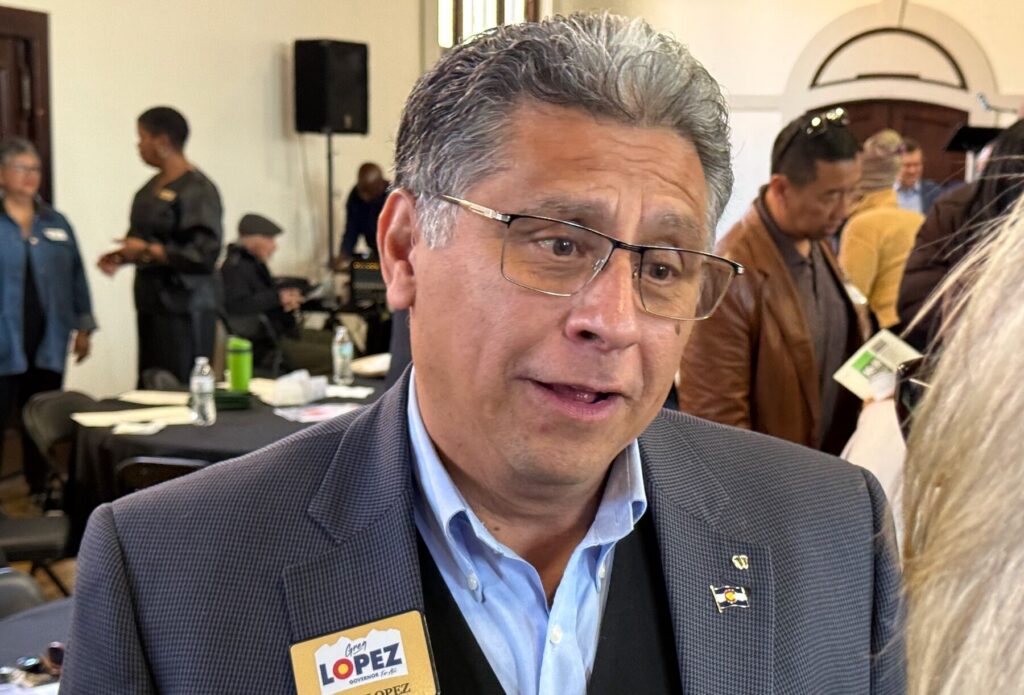
Independent gubernatorial candidate Greg Lopez, a former GOP congressman, qualifies for Colorado ballot
Ernest Luning
ernest.luning@coloradopolitics.com
Updated 6 days ago
Unaffiliated gubernatorial candidate Greg Lopez, a former Republican congressman from Elizabeth who left the GOP to run as an independent, has qualified for the ballot by submitting enough petition signatures, the Colorado Secretary of State’s Office said Tuesday. He’ll face...

Surprise candidate Shimon Blau cleared to face off against Melat Kiros in November
Ernest Luning
ernest.luning@coloradopolitics.com
Updated 1 week ago
Unaffiliated congressional candidate Shimon Blau, a Denver doctor, has qualified by petition for the general election in Colorado’s 1st District, where Democrat Melat Kiros defeated 15-term U.S. Rep. Diana DeGette in last month’s primary, the Colorado Secretary of State’s Office...
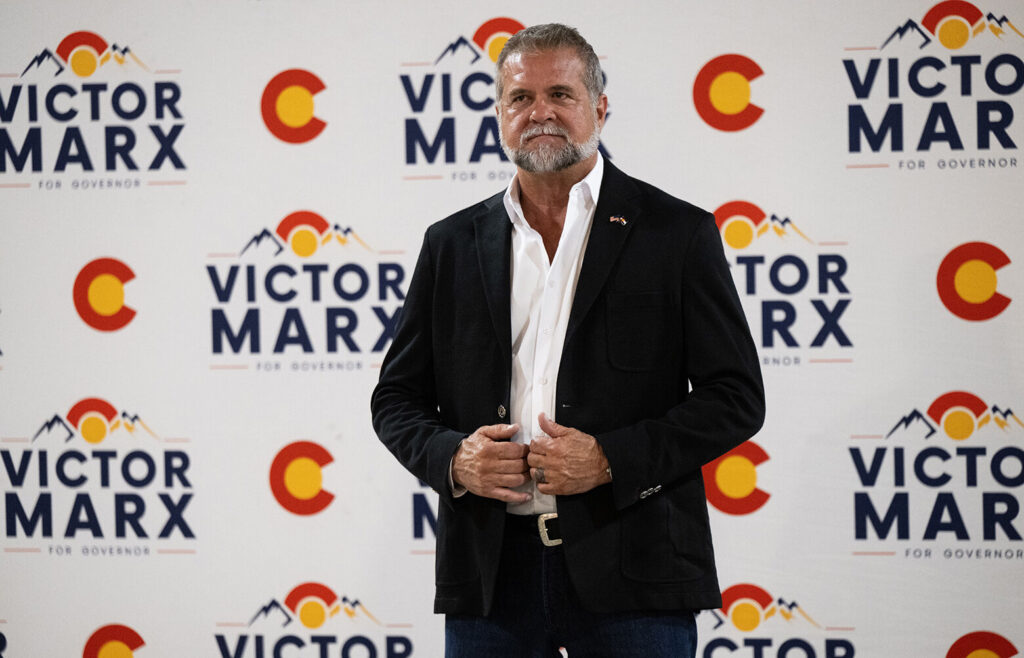
Victor Marx, GOP candidate for governor, faces 100-plus campaign finance complaints
Marianne Goodland
marianne.goodland@coloradopolitics.com
Updated 6 days ago
Victor Marx’s gubernatorial campaign has been hit with more than 140 campaign finance complaints, although most have been consolidated by the state’s election office because they follow similar alleged violations. Marx faces Attorney General Phil Weiser, who won the Democratic...

Jefferson County to fill commissioner vacancy after Dahlkemper tapped for lieutenant governor
Matt Kyle
matt.kyle@denvergazette.com
Updated 1 week ago
Democratic gubernatorial nominee Phil Weiser on Wednesday announced that Jefferson County Commissioner Lesley Dahlkemper would be his lieutenant governor, meaning she would be leaving her commissioner seat open should he win the race in November. However, Dahlkemper’s term was already...
Democrat Phil Weiser names Jeffco Commissioner Lesley Dahlkemper as his gubernatorial running mate
Ernest Luning
ernest.luning@coloradopolitics.com
Updated 2 weeks ago
Colorado Attorney General Phil Weiser, the Democratic nominee for governor, on Wednesday named Jefferson County Commissioner Lesley Dahlkemper to be his lieutenant governor running mate in the general election. Calling her “someone who can be a governing partner,” Weiser said...

Democrat John Hickenlooper hauls in $1.3 million in 2nd quarter in Colorado’s U.S. Senate race
Ernest Luning
ernest.luning@coloradopolitics.com
Updated 2 weeks ago
U.S. Sen. John Hickenlooper’s reelection campaign raised just over $1.3 million in the year’s second quarter and finished the period with $2 million in the bank, leaving the first-term Democrat with nearly 80 times as much cash on hand as...

Campaign launched to redirect $1 billion in TABOR refunds to education
Marissa Ventrelli
marissa.ventrelli@coloradopolitics.com
Updated 2 weeks ago
A coalition that includes the state teachers’ union on Tuesday launched a campaign for a ballot proposal that would reduce more than $1 billion in taxpayer refunds and spend the money on education. The measure is among several campaigns taking...
PREV
PREVIOUS
Appeals court slams failure to document custody of drug evidence in Colorado Springs case
A man will receive a new trial after the state’s second-highest court ruled that prosecutors failed to show Colorado Springs police continuously kept track of a bag of white powder, with one officer acknowledging he retrieved it from the ground and never saw it again until trial. Three judges on a panel of the Court […]

Democratic congressional candidate Brittany Pettersen banks more than $200K in 5 days
Democratic congressional candidate Brittany Pettersen amassed more than $200,000 in the first five days of her bid for the Colorado seat held by retiring U.S. Rep. Ed Perlmutter, her campaign said. The Lakewood state senator had received nearly 500 donations through Sunday since announcing her candidacy a week ago, her campaign said, bringing in $157,325 […]