

10th Circuit tosses Denver sheriff union’s lawsuit against city over dues

Denver’s sheriff does not have the final say over payroll, meaning the union representing sheriff’s deputies could not hold the city liable for his refusal to deduct campaign-related dues from members’ paychecks, the federal appeals court based in Colorado ruled on Thursday.
The Fraternal Order of Police Lodge 27 decided to impose a $50 assessment on sheriff’s deputies for three months in 2018 to fund an initiative for an elected sheriff in Denver. The change would have come about through an amendment to the city charter, given that the mayor has the authority to appoint the sheriff. Ultimately, voters never saw a ballot measure to amend the charter.
When the city declined to process the additional charge to deputies and then-Sheriff Patrick Firman agreed with that decision, the FOP filed a federal lawsuit, alleging Denver violated their free speech rights by limiting their ability to fund a political cause.
But the U.S. Court of Appeals for the 10th Circuit found that Firman was not the ultimate policymaker on payroll issues, so the union could not hold the city liable based on the sheriff’s response.
“Simply put, the Denver City Charter thoroughly constrains the sheriff from wielding authority – much less final policymaking authority – over payroll-deduction-related decisions,” wrote Judge Jerome A. Holmes for a three-member panel of the 10th Circuit.
The FOP had attempted to implement the $50 assessment by notifying the payroll division. The city already deducted FOP dues from employees, and the payroll division initially proceeded with the request. However, Jennifer Cockrum, human resources director for the Department of Public Safety, then informed the FOP that the assessment was not a regular dues payment and the city had no obligation to collect it on behalf of the union without an employee’s consent.
The city reportedly received about 60 objections from sheriff’s employees after the first month’s charge, after which it halted the deduction.
Under the collective bargaining agreement with the union, the FOP president filed a grievance, which made its way to Firman. The sheriff agreed the $50 payment was not part of the union dues and rather “a matter between the FOP and its members.” He denied the grievance.
The union and its board members responded by filing a federal lawsuit claiming a violation of their First Amendment rights.
“By cutting off the funding at the initial stage, defendant was able to stifle the entire campaign,” the union leaders wrote in court filings. “The evidence shows that the decision to cancel the dues deduction was ratified by an employee with final policymaking authority.”
In January 2020, U.S. District Court Judge Christine M. Arguello tossed the lawsuit. She found that Firman was not Cockrum’s supervisor. Instead, the executive director for the Denver Department of Public Safety would have had final policymaking authority over payroll. Liability for Denver, therefore, could not result from how Firman handled the union’s grievance.
On appeal to the 10th Circuit, the attorney for the plaintiffs argued that Arguello’s ruling had provided a “roadmap” for governments to avoid liability for First Amendment lawsuits.
“All they’ll have to do is let a lower-level employee who’s not a final policymaker make a decision, and let a review of that decision be conducted outside of that employee’s supervisory chain of command,” said Lucas Lorenz at oral arguments.
Holmes responded in the opinion that the sheriff may well have been able to weigh in on grievances related to payroll disputes, but that did not mean he had the ultimate say about the policy.
“Notably, the deputies could have pursued their grievance to … an arbitration board. But they elected not to do so,” Holmes wrote in the court’s order. “And their inaction in not pursuing the third and final step could not – through some process of alchemy – transform the sheriff’s step two decision into a ‘final’ one.”
The city maintained it had not discriminated on the basis of the union’s view on the elected sheriff proposal, and instead was concerned about potential liability for withholding employees’ money for the assessment.
The case is Jackson et al. v. City and County of Denver.


10th Circuit dismisses paralyzed man’s claims against Colorado Springs, officer
Michael Karlik
michael.karlik@coloradopolitics.com
Updated 13 hours ago
The Denver-based federal appeals court upheld the dismissal last week of a man’s excessive force claims against the city of Colorado Springs and the officer who tased him, causing him to fall down a sloped surface and break his neck....
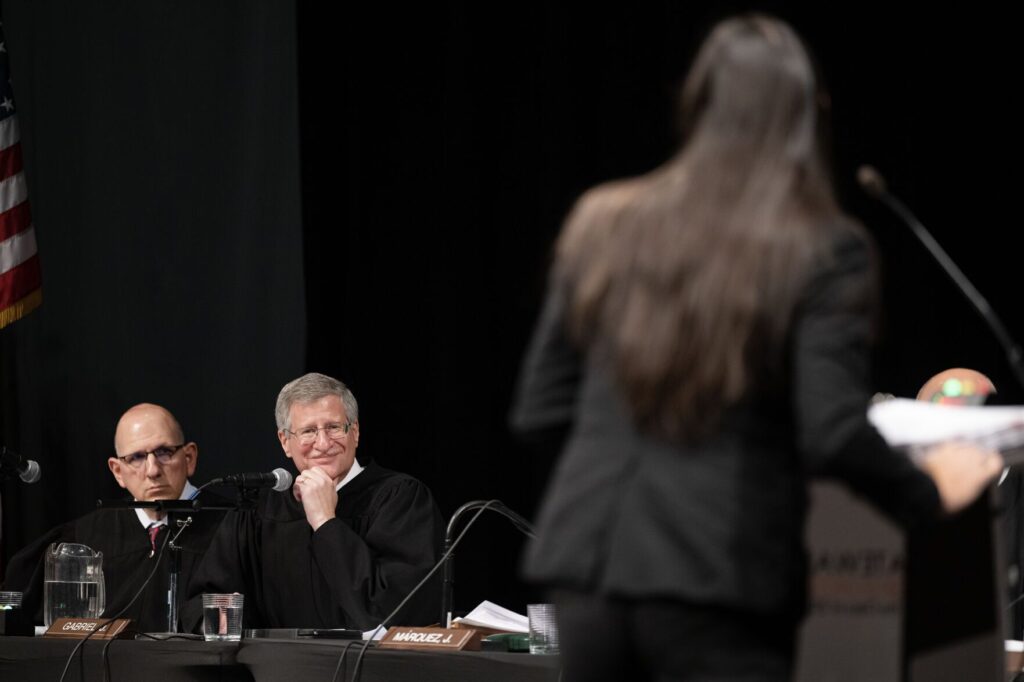
Colorado justices weigh overlap between child prostitution offenses
Michael Karlik
michael.karlik@coloradopolitics.com
Updated 16 hours ago
Members of the Colorado Supreme Court last week appeared willing to uphold a man’s conviction for an attempted child prostitution offense, which the state’s second-highest court previously found to be a violation of his right to equal protection under the...

State Supreme Court holds oral arguments, 10th Circuit revives dormant initiative | COURT CRAWL
Michael Karlik
michael.karlik@coloradopolitics.com
Updated 17 hours ago
Welcome to Court Crawl, Colorado Politics’ roundup of news from the third branch of government. The state Supreme Court heard oral arguments last week in multiple civil and criminal cases, plus the Denver-based federal appeals court is doing something unusual...
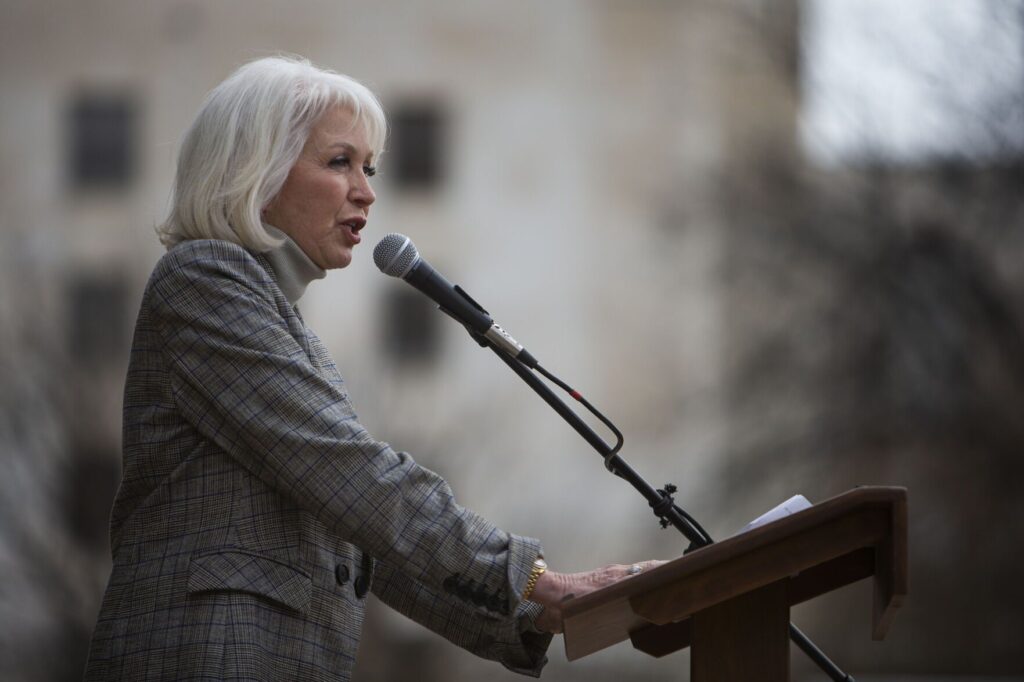
Is a pardon for Tina Peters coming? Colorado governor confirms he is weighing options
The Denver Gazette
the-denver-gazette@coloradopolitics.com
Updated 11 hours ago
Gov. Jared Polis on Friday strongly indicated he is considering clemency for Tina Peters, the former county clerk convicted of a security breach at her election office. When pressed about the matter, Polis didn’t offer an explicit answer, but he...
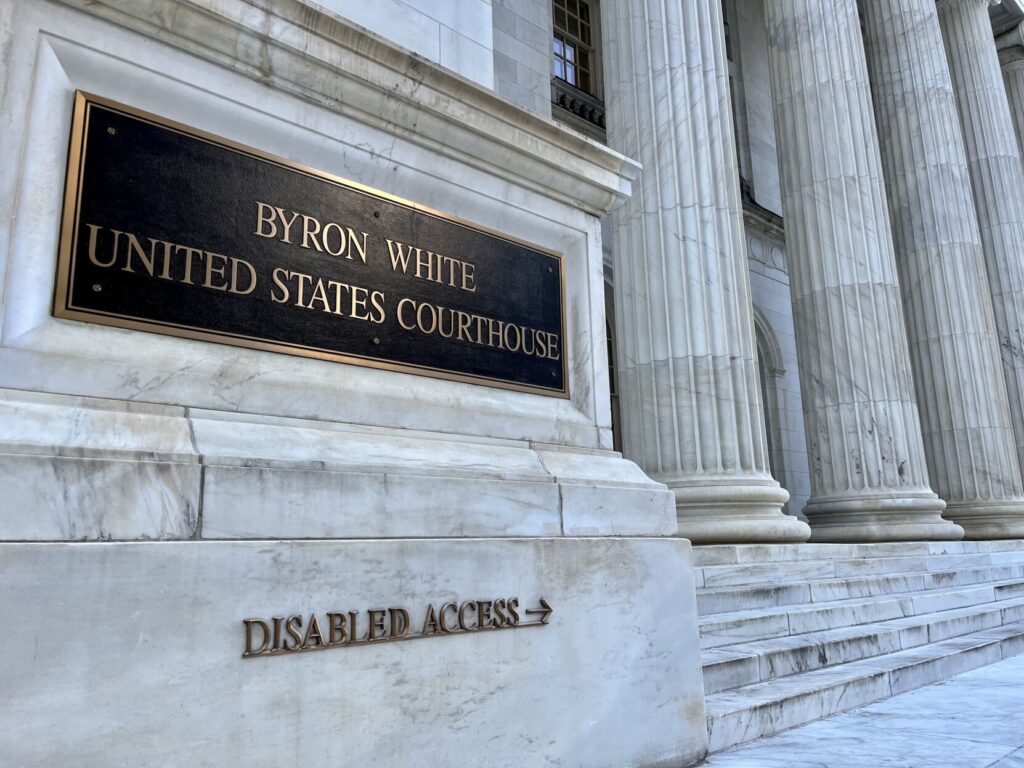
10th Circuit oral arguments to feature trial judges for first time in 12 years
Michael Karlik
michael.karlik@coloradopolitics.com
Updated 4 days ago
When the Denver-based federal appeals court convenes next week to hear oral arguments, six new faces will be staring down from the bench. No, the U.S. Court of Appeals for the 10th Circuit has not added six new members. It...
Federal judge says ICE cannot impose monitoring conditions beyond immigration judge’s order
Michael Karlik
michael.karlik@coloradopolitics.com
Updated 4 days ago
A federal judge told U.S. Immigration and Customs Enforcement on Thursday that it cannot impose additional restrictions or monitoring conditions beyond those ordered by an immigration judge when releasing a person on bond. In November, U.S. District Court Judge Gordon...
Colorado justices weigh constitutionality of student backpack search based on confidential tip
Michael Karlik
michael.karlik@coloradopolitics.com
Updated 3 days ago
The Colorado Supreme Court considered on Wednesday whether a tip submitted through the state’s confidential school safety system provided a Douglas County administrator with reasonable suspicion to search a student’s backpack for drugs. A trial judge blocked evidence from the...
10th Circuit rebuffs Jeffco’s attempt to expand immunity footprint
Michael Karlik
michael.karlik@coloradopolitics.com
Updated 4 days ago
The Denver-based federal appeals court confirmed on Wednesday that it would not treat a judge’s decision to move a civil case forward as the automatic equivalent of denying immunity to governmental officials. The order from the U.S. Court of Appeals...

Colorado Supreme Court to hear cases on witness retaliation, slip-and-fall
Michael Karlik
michael.karlik@coloradopolitics.com
Updated 2 days ago
The Colorado Supreme Court announced on Monday that it will decide whether defendants can be convicted of retaliating against a victim or witness when that person has not yet testified and is not scheduled to testify. At least three of...
Colorado Supreme Court struggles with rubric for significant reductions in parenting time
Michael Karlik
michael.karlik@coloradopolitics.com
Updated 11 hours ago
The Colorado Supreme Court attempted to identify on Wednesday the circumstances under which judges may reduce the number of days a parent spends with their child post-divorce without it rising to the level of a “restriction” that requires more rigorous...
PREV
PREVIOUS
House rules fight over masks brings out debunked information from Republicans
A plan to require masks in committee hearings drew the first fight between Democrats and Republicans in the state House Friday. House Resolution 1003 would allow the Democratic leader of the House to create regulations to protect vulnerable members of the House during a public health emergency. Speaker Alec Garnett, D-Denver, said all the resolution […]

Polis appoints more than 70 individuals to boards, commissions
Fresh from outlining his agenda before the General Assembly, Gov. Jared Polis this afternoon appointed scores of individuals to boards and commissions, notably new members of the Air Quality Commission, judicial nominating commissions and the Towing Task Force, which recommends towing rates to the Colorado Public Utilities Commission. Polis also appointed William Moller as district judge […]