

Q&A with Chief Justice Brian Boatright | Pandemic motivated him to take top judicial job

FAST FACTS:
- Brian D. Boatright has been the chief justice of the Colorado Supreme Court since January 2021.
- He was a 2011 appointee of Gov. John Hickenlooper, and before that a 1999 trial court appointee of Gov. Bill Owens to the First Judicial District in Jefferson County.
- Boatright worked in private practice and as a prosecutor until becoming a judge.
- He was born in Golden, graduated from Jefferson High School and received his law degree from the University of Denver.
Colorado Politics: I’m sure you’re aware that sitting chief justices don’t commonly grant interview requests. I’m curious why you are willing to speak publicly like this.
Boatright: Number one, in light of some of the publicity we’ve received, and number two, I think the judicial system as a whole has been under scrutiny. I do want to put a face to the system and let people know that we’re human beings and care about the public, and we are doing our best to do the job. So, it’s putting a human voice to the system.
CP: Last year, you mentioned to Colorado Politics that your entire focus as chief justice would be to help the judicial branch get through the disruption of the COVID-19 pandemic. Yet here we are, headed into 2022, and the pandemic is still ongoing. What are the big concerns that you still have about COVID-19, and have you been able to focus on other priorities despite the continuation of the health emergency?
Boatright: I think we learned to adjust and to communicate as a branch to try and adjust to the variants. I don’t know all of that has changed, other than we’ve been able to start up jury trials with a few exceptions. There are some jurisdictions that, because of the [COVID-19] numbers, have had to suspend jury trials again.
We’re making progress on that front, but even today we continue to get news of a new variant. I think we all hold our breath to determine what the impact of that will be not only on our system, but our society.
I also had to adjust when some negative news stories came out – that required some focus. But us navigating through and staying open continues to be a priority for us. The one message I would like to convey is how proud I am of our trial court staff and judges for keeping our doors open and our system of justice moving forward.
CP: You told the General Assembly in the “State of the Judiciary” address last year that the backlog of trials was an issue. They enacted House Bill 1309, which gave some flexibility to the speedy trial deadline. The public defenders at the time believed that maintaining a deadline was crucial to getting cases resolved quickly because it encouraged parties to reach a plea deal and perhaps make prosecutors realize they didn’t have the ironclad case they thought they did.
Where do we stand as a state with the trial backlog? And looking at the situation now, do you think the speedy trial legislation was necessary after all? Or did the public defenders have a point?
Boatright: I know that a lot of our jurisdictions have indicated that once we were able to restart the trials, a lot of cases that were in the range that could be settled were settled.
I do know the speedy trial statute has been used, although not extensively, and has been helpful because, again, it indicated things were going to move forward and people need to come to the table and having meaningful discussions about resolving cases.
It’s hard for me to say what the numbers would be if we didn’t have that legislation. I know our judges are working through the backlog and I’m sure different jurisdictions have different situations. We have a Joint Budget Committee meeting coming up, and we’re going to try to get some of those numbers.
CP: Do you have an estimate of how many continuances were granted under HB 1309?
Boatright: I don’t think it was extensive, but that doesn’t mean it wasn’t useful. Even if the number is relatively small, I think it was helpful for the system to have that as a relief valve.
CP: This year, we will have another retention election for judges. How should the voters account for the effect of the pandemic when they look at performance evaluations in 2022, and deciding whether a judge did a good job or not?
Boatright: I think every judge is doing their absolute best under extraordinarily difficult situations and trying to adapt and adjust on the fly. We clearly have seen a change in expectations around virtual hearings and remote hearings. It’s harder to establish relationships and communicate virtually than in person.
I think we do view it [remote participation] as an access to justice question. Right before I joined the Supreme Court I was doing juvenile cases, and we’re asking parents to take three buses to get to court for a 10-minute hearing, then we worry about them keeping their jobs. Virtual check-ins allow parents to stay at work and in many ways, it’s a better way of doing business.
Conversely, when you’ve got 120 criminal cases on a docket, trying to navigate that through WebEx would be extraordinarily difficult. We’ve got to figure out what works and doesn’t work.
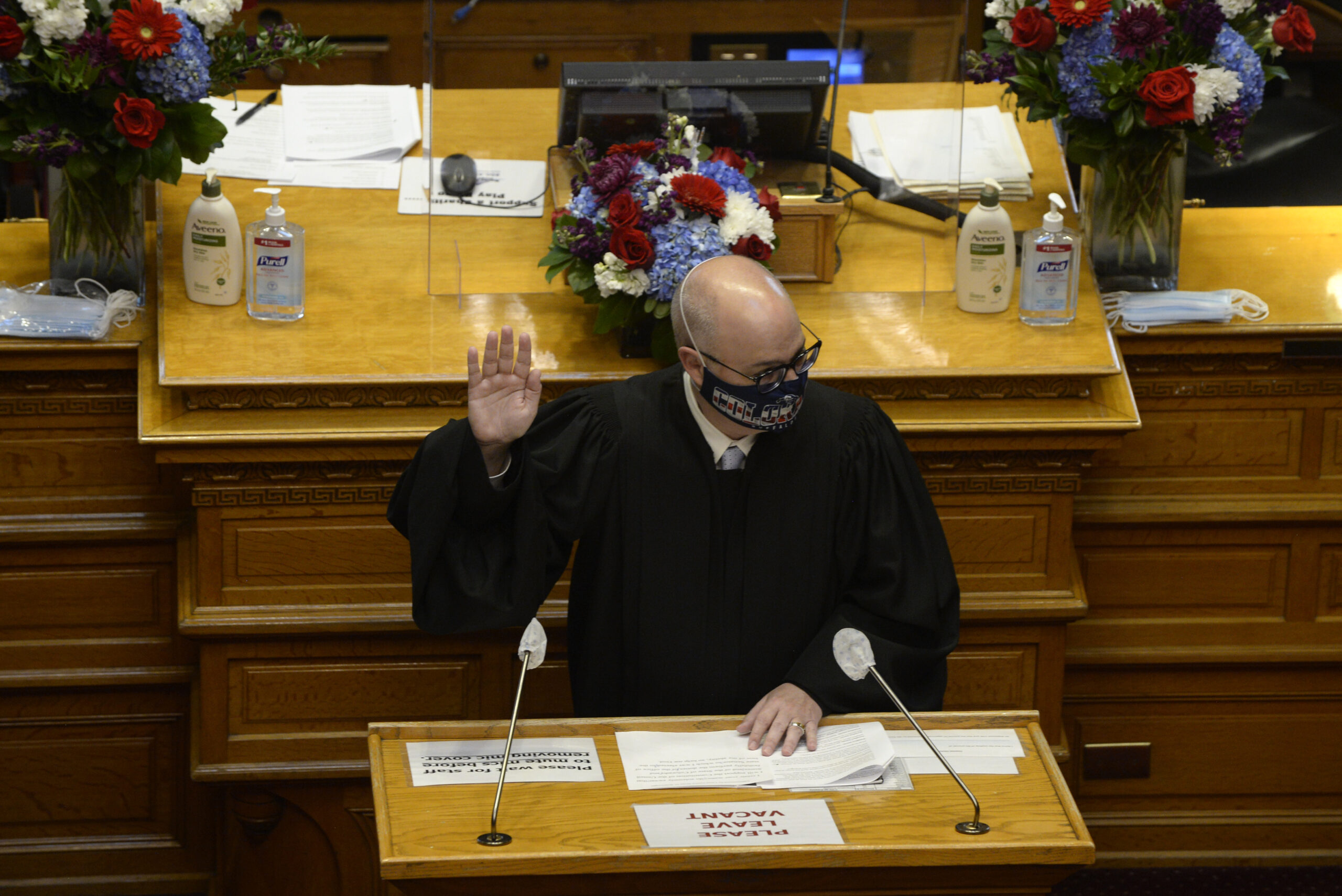
CP: Your first year as chief justice took place under a new protocol where you will rotate out of that seat in a few years. I think the arrangement also involved other members of the Supreme Court serving as liaisons for different aspects of the judicial branch so information is not always concentrated in the chief justice, correct?
Boatright: Absolutely. The liaison part was a change we made in 2019 because we just realized that having different sets of eyes across the branch – and more importantly, we wanted the various parts of the branch to know that the justices cared and were invested in what was going on.
CP: What is your assessment of how that is working out?
Boatright: I think extraordinarily well. We’ve had much more meaningful conversations as a court where we report out on our committee activities. I think we’ve been able to give some focused attention to different parts of the branch that one person didn’t have the time or ability to give the attention to. It’s allowed us to be much more involved and have a greater understanding of what’s going on across the branch.
CP: What was the contrast with your prior decade on the bench where you had, effectively, a powerful chief justice who was involved with all aspects of administration, and now, where the seven of you are responsible and have to share information?
Boatright: What the chief justice tried to do was to insulate the court from decisions that may end up before the court at some point. So there was reporting out as necessary. I don’t want to be critical – the former chief justices took on a lot of additional responsibility with being able to monitor all these different parts of the branch.
It’s almost a 4,000-person entity, and that one person had that concentrated source of information. I would categorize it as one person reported out as necessary, compared to now, where you have different sets of eyes and ears on things, and we are collaborating more on decision-making.
For example, we have a liaison to the human resources department. In the past year, we hired a new HR director. So we were getting weekly reports on how the interviews were going. In the past, we probably would get notification when someone was hired. So we got more ongoing information, which was extraordinarily helpful.
CP: Is it at all a burden on the justices, maybe a distraction from deciding cases, to go in-depth for the various departments and reporting any updates?
Boatright: I think we all view it as an opportunity to serve and be involved in making sure that the branch is running well. We learned back in 2019 that there was a degree of dysfunction that was happening. We’ve gone a long way to removing any impediments to a highly-functioning group.
I would say it’s not impacting our ability to decide cases. We decided as many cases last year as we did in a number of years. We had a lot of our staff working remotely, but we fully functioned during the course of the pandemic to the point where, in December, we have only four oral arguments. That’s because they are the only four that are ready to go. We’re hearing oral arguments as soon as they are ready.
CP: Is that typical? To have so few cases bumping up against the deadline to be heard?
Boatright: Since I’ve been here, I don’t think we’ve ever been in a situation where we’re hearing every case that’s been fully briefed and ready to go as soon as it’s ready. A lot of times, for example, we will fill the December docket with cases that are ready, then some other cases that are ready have to be tossed over to January. But now, we’re just able to hear the cases that are ready.
So I think our court has been tremendously efficient over the last year and a half, in part due to the collegiality of the court. We’ve gone a long way to try to communicate. Before, someone might write an opinion and there would be a dissent. Then someone might revise their majority opinion and you go back and forth. Now we have a conversation about where we might be able to bridge any differences. I think it’s helped us improve our productivity.
CP: Are you saying we are to expect more unanimous opinions than in the past because of the collegiality?
Boatright: No, I think it just improves efficiency. When you have a conversation about where your differences are, you can just be much more efficient in how you write the majority opinion or dissent. Something that took weeks and weeks to get out, now you have a conversation and get it out in less time. You can write a much more focused majority opinion and dissent.
CP: Going back to the rotational term for the chief justice, do you have a better sense of when the seat will rotate to Justice Monica Márquez?
Boatright: It’ll either be 2.5 years from when I started to 3.5 years. The half year is because it’s better to transition in June than in January. We can transition in June and you’re not walking into when the legislative session is starting. The chief then can set their own legislative priorities. Quite frankly, some of it will just depend on where we are with the pandemic. We’re looking at adjustments of three years in the future.
CP: When you talk about the chief justice’s legislative priorities, I’m assuming the other members of the Supreme Court have a bigger influence because they are sources of more information nowadays.
Boatright: Absolutely. That’s a good example of situations that were probably reported out to the other justices [in the past], but now it’s more of a conversation.
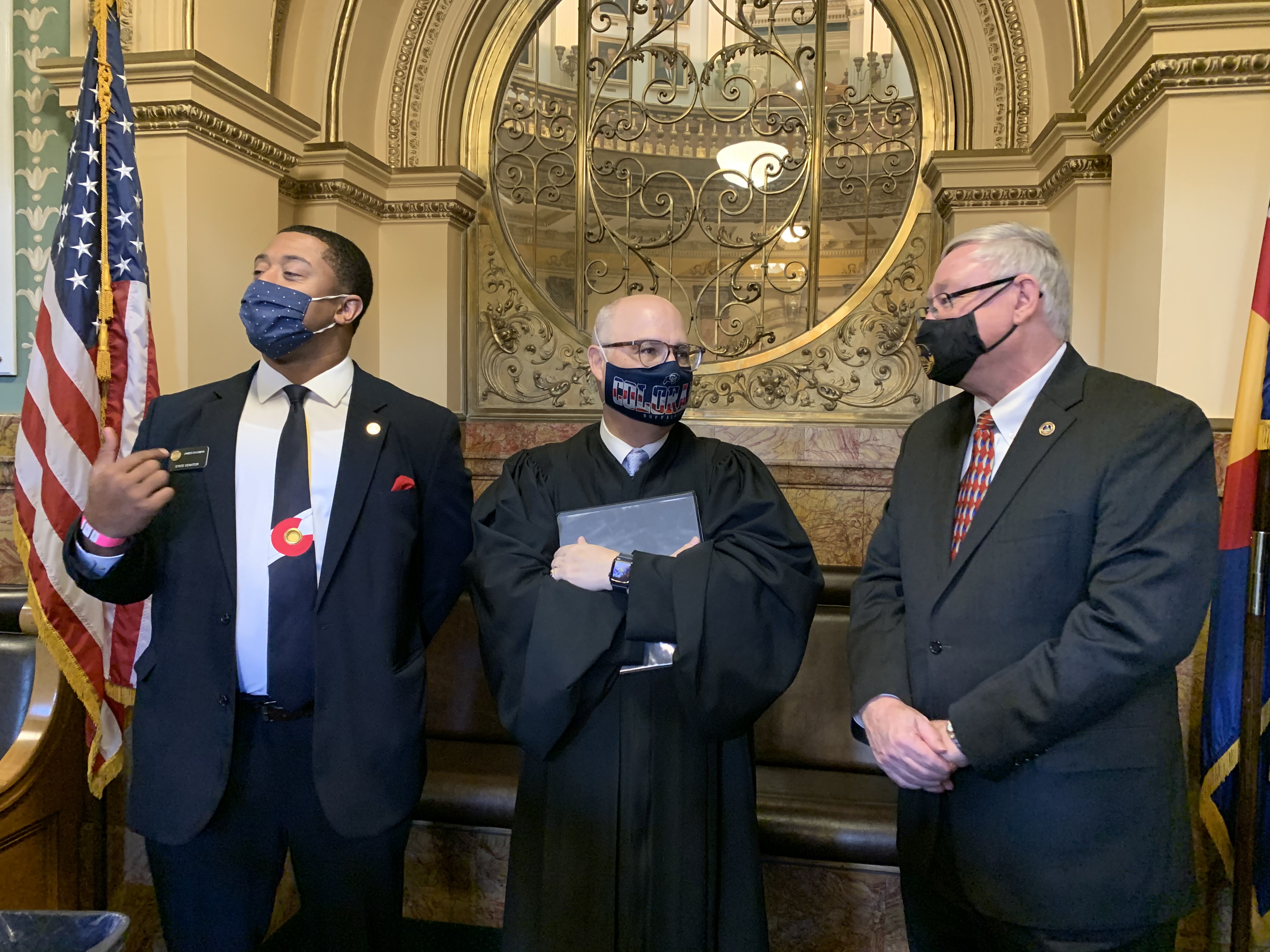
CP: It occurred to me that you all are roughly the same age, between 52 and 59. Was that one of the reasons you wanted to disaggregate the power? So one person couldn’t be the chief for a decade and shut everyone else out of the process?
Boatright: I can talk to my motivations: In my 10 years being here, I served with three chief justices. I really felt like each chief justice was the right person for the time. And if you average that out, each person had 3.5 years. That was a motivating factor in being able to turn things over and keep a fresh set of eyes on things.
Chief Justice [Mary] Mullarkey, I know, wasn’t happy with the rotation. She commented on that before she passed away. I’m sure it’s because she realized that but for her lengthy tenure, we would not have this building [the Ralph L. Carr Colorado Judicial Center] because it was a decade-long process. But I really feel like having a new set of eyes and ears on situations and problems is beneficial.
I don’t know if the other justices – I don’t think it’s safe to assume that every justice has on their bucket list a desire to be chief. It’s a time-consuming and demanding position.
CP: Do you recall when you decided you wanted to do it?
Boatright: Yeah, our state court administrator came in and was talking about the COVID crisis and the fact that we would have substantial cutbacks. It reminded me of when I was a judge in 2003. We went through a similar budget crisis and I felt the communications in the field could have been a lot better. Now, the trials had stopped, we were facing these budget cuts, and I felt at that point I could bring something to the chief’s role as someone who experienced it in the field.
Before that day, it was not on my bucket list.
CP: So without COVID, you wouldn’t be sitting in this seat today?
Boatright: It was what motivated me. I thought it was important to have a chief know what it was like to go through budget cuts in the field, and to have a former trial court judge communicate about how we would go about stopping, starting and conducting jury trials.
CP: I do want to ask about the independent investigation into allegations of an ex-employee alerting the former chief justice and court administrator to sexual misconduct allegations. But instead, they reportedly approved a multimillion-dollar contract to keep those allegations from becoming known. When do you think you will know the outcome of that investigation?
Boatright: They’ve started and we are providing all the information they are requesting. There are two different investigations that are ongoing. There is one into the contract and one into the workplace culture.
We anticipate sharing the results. There will be some things that contractually, we can’t make public because it will expose the branch to liability. But we will share their results publicly.
CP: I’m sure you have heard from other people about the allegations and the media reports earlier this year. If the investigation report comes back and says, “There is nothing illegal or unethical about this, case closed,” are there still specific things you have learned about transparency and accountability that you would like to implement regardless of what the investigation finds?
Boatright: We made a lot of changes about getting the justices involved and changing the model of how the chief justice operates prior to any of those reports. From my perspective, I’m at peace with how the investigation comes out. If there are things that need to be changed culturally, we will do it.
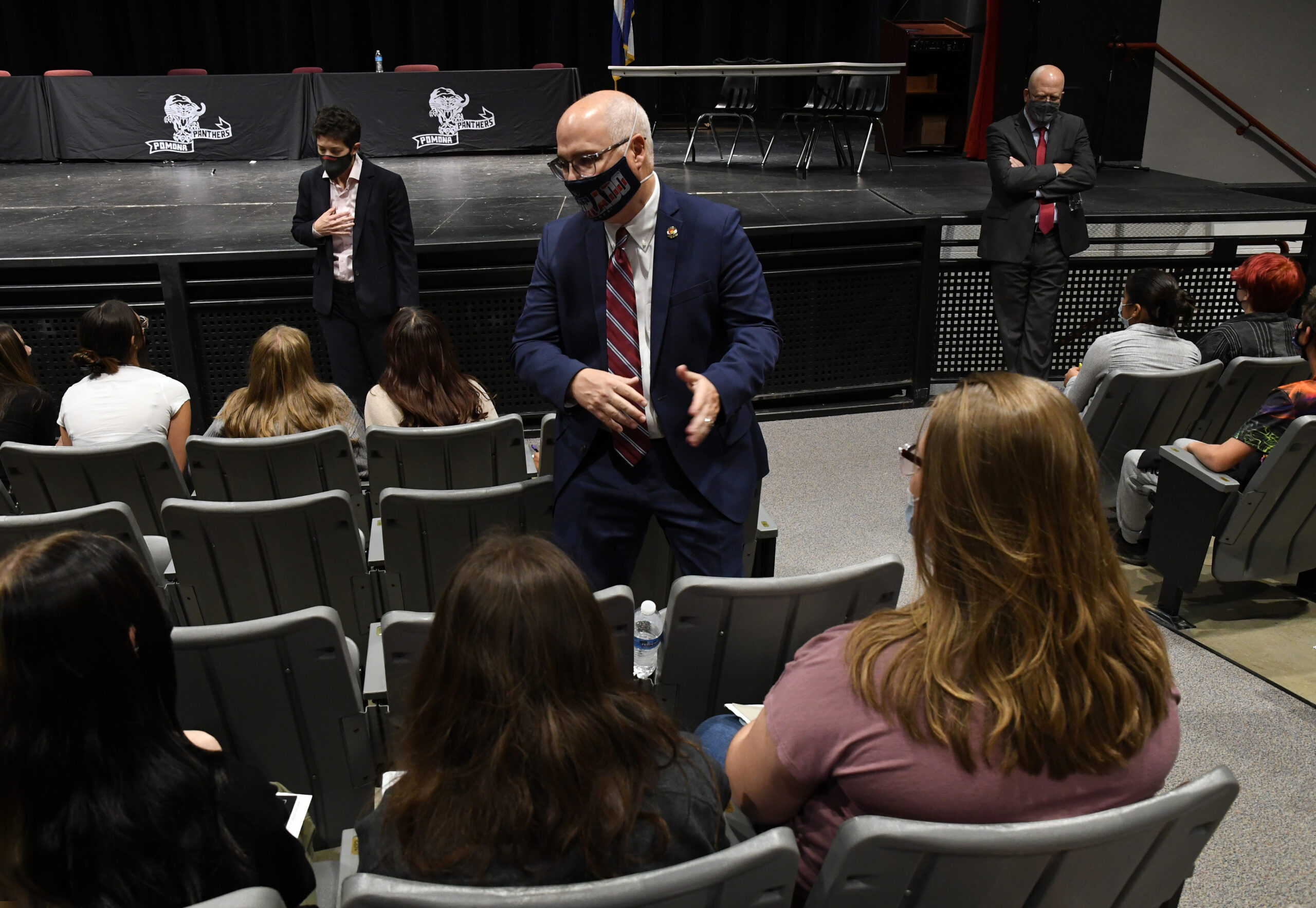
CP: I want to ask you about the U.S. Supreme Court. In the past four years, we’ve had one justice, Brett Kavanaugh, get on the bench despite having allegations of sexual misconduct against him. Another justice, Amy Coney Barrett, was fast-tracked onto the court right before the presidential election. More recently, we’ve seen some of them speak publicly claiming their work is not partisan politics, it’s a legitimate institution and the public should have confidence in what they do.
Do you see people look disparagingly at you all through the lens of what’s happening in Washington, D.C.?
Boatright: I’m assuming some people don’t understand the difference in our systems. For example, if we had a death on our court, we would have a new justice in 45 days because the state constitution requires it. Some of those politics would just not fly with what we do.
I jokingly tell people, I wish there was a reality show for how we select judges. But the reality is no one would watch our show because people use common sense and their integrity. It really is the best system in the world, in my opinion.
CP: Are you familiar with scholarship on the U.S. Supreme Court that discusses the idea of the celebrity justice?
Boatright: I’m not.
CP: It’s this theory that, over time, individual members of the court have focused on their brand instead of the cohesiveness and reputation of the court as a whole. That’s why you get justices speaking in public more often, and there are acerbic dissents that are memorable, which justices’ fans will look at and admire. Is it beneficial to your work that you are able to do your jobs in Colorado in relative anonymity? I guess I’m wondering, is it healthy or is it concerning that there aren’t protestors outside of the Carr Center occasionally when you issue decisions?
Boatright: I kind of view the justices as offensive linemen for the Broncos. If we’re doing our jobs, no one is calling our number. The justices do a large amount of community outreach, speaking at schools, having kids come to court. One of the things our justices have been involved with is recruiting diverse candidates to the bench. There’s a lot of outreach that our judges across the state do that no one reports on, which is fine by us.
CP: I understand there is a trivia contest that exists between the justices’ chambers. When did that start and how does it work?
Boatright: It started when I came here 10 years ago as a way, over the lunch hour on Fridays, that the law clerks and justices could participate in team-building. One chambers puts out the trivia questions and scores it. It’s a part of the week that I think builds a little camaraderie.
CP: Do you know what your ranking is relative to the other justices?
Boatright: This year hasn’t allowed me to participate as much. I know at one time we had the traveling trophy in our chambers, but I don’t think we’re leading the pack. My clerks would’ve told me. Occasionally, if there’s an old-man trivia question, I’ll try to participate, like a question about a movie from the ’80s.


Gov. Jared Polis moves to end ICE subpoena fight over Colorado workers’ personal data
Marianne Goodland
marianne.goodland@coloradopolitics.com
Updated 1 day ago
The effort by Gov. Jared Polis to comply with an administrative subpoena from U.S. Immigration and Customs Enforcement for information held by several state agencies is over. Polis, in a motion filed Feb. 20, asked for a permanent injunction and...

Ex-Colorado Sen. Sonya Jaquez Lewis avoids prison, gets probation for forged ethics letters
Marianne Goodland
marianne.goodland@coloradopolitics.com
Updated 24 hours ago
Former state Sen. Sonya Jaquez Lewis, D-Longmont, was sentenced Friday to two years of supervised probation and 150 hours of community service, and a $3,000 fine, to be waived if she completes an additional 100 hours of community service. The...

Toll to sexual assault survivors rises if they feel blamed and disbelieved
Jenny Deam
jenny-deam@coloradopolitics.com
Updated 1 day ago
Natalie, a single mother, dropped off her son at daycare, went to therapy and then returned home. She swallowed a fistful of pills, washing them down with a six-pack of beer. She was ready to end her life. “I just...

Colorado rape cases rarely result in an arrest and prosecution
Jenny Deam
jenny-deam@coloradopolitics.com
Updated 1 day ago
Authorities say they are especially difficult cases. In Colorado, most go nowhere. Over the past decade, for every 10 reports of rape, there is only one arrest. Warning: This story contains descriptions of sexual violence. Kiersten May remembered a fuzziness...
10th Circuit upholds finding of no misconduct against Colorado federal judge
Michael Karlik
michael.karlik@coloradopolitics.com
Updated 2 days ago
A judicial committee for the Denver-based federal appeals court upheld the chief judge’s finding last week that a federal judge in Colorado did not engage in misconduct by handling a civil case involving other attorneys and judges in the state....
SCOTUS whisperer? Justice Carlos Samour may get second opportunity to turn state dissent into national precedent
Michael Karlik
michael.karlik@coloradopolitics.com
Updated 1 day ago
For the second time in two years, Justice Carlos A. Samour Jr. occupies an unusual position: Having his dissent in a Colorado Supreme Court case potentially forming the basis of U.S. Supreme Court precedent. Earlier this week, the nation’s highest...
10th Circuit appoints ex-Colorado solicitor general to argue issue after federal government declines
Michael Karlik
michael.karlik@coloradopolitics.com
Updated 1 day ago
The Denver-based federal appeals court took the unusual step earlier this month of appointing an attorney to independently argue a key issue in a criminal sentencing appeal after the government indicated it would not contest the defendant’s view of the...

Daniel Domenico to take over as Colorado’s chief federal judge
Michael Karlik
michael.karlik@coloradopolitics.com
Updated 19 hours ago
Daniel D. Domenico will become the new chief judge of Colorado’s federal trial court next week, a role that encompasses the administration of the court as well as a judicial caseload. Under federal law, the chief judge of a U.S....
10th Circuit upholds violations, sanctions against Colorado Springs mental health hospital
Michael Karlik
michael.karlik@coloradopolitics.com
Updated 3 days ago
The Denver-based federal appeals court agreed earlier this month that the government properly cited and penalized a Colorado Springs psychiatric hospital for failing to protect its staff from known risks posed by patients. The Occupational Safety and Health Administration inspected...

Appeals judges tell Boulder students about workload, ‘attack mode’ during school visit
Michael Karlik
michael.karlik@coloradopolitics.com
Updated 3 days ago
Three judges on Colorado’s second-highest court traveled to Boulder on Tuesday to hear oral arguments in real cases and field questions from students about their professional paths, their workload on the Court of Appeals, and their approach to interacting with...
PREV
PREVIOUS

Republican gubernatorial candidate Heidi Ganahl tests positive for COVID-19
Colorado gubernatorial candidate Heidi Ganahl has tested positive for the coronavirus and will be sidelined from campaign events this week, a campaign spokeswoman told Colorado Politics Monday morning. The University of Colorado regent and the leading Republican challenger to Democratic Gov. Jared Polis, is vaccinated and experiencing mild symptoms, Lexi Swearingen said. Ganahl won’t be […]

Colorado courts call off jury trials as COVID-19 infections surge
At least half a dozen of the state’s 22 judicial districts have temporarily halted jury trials, owing to the highly contagious omicron variant and the resulting explosion of COVID-19 infections in Colorado. The Colorado Department of Public Health and Environment’s latest data reported roughly 5,700 new cases of COVID-19, with over 10,000 deaths since the […]