

BIDLACK | ‘Bureaucrat’ is not a dirty word
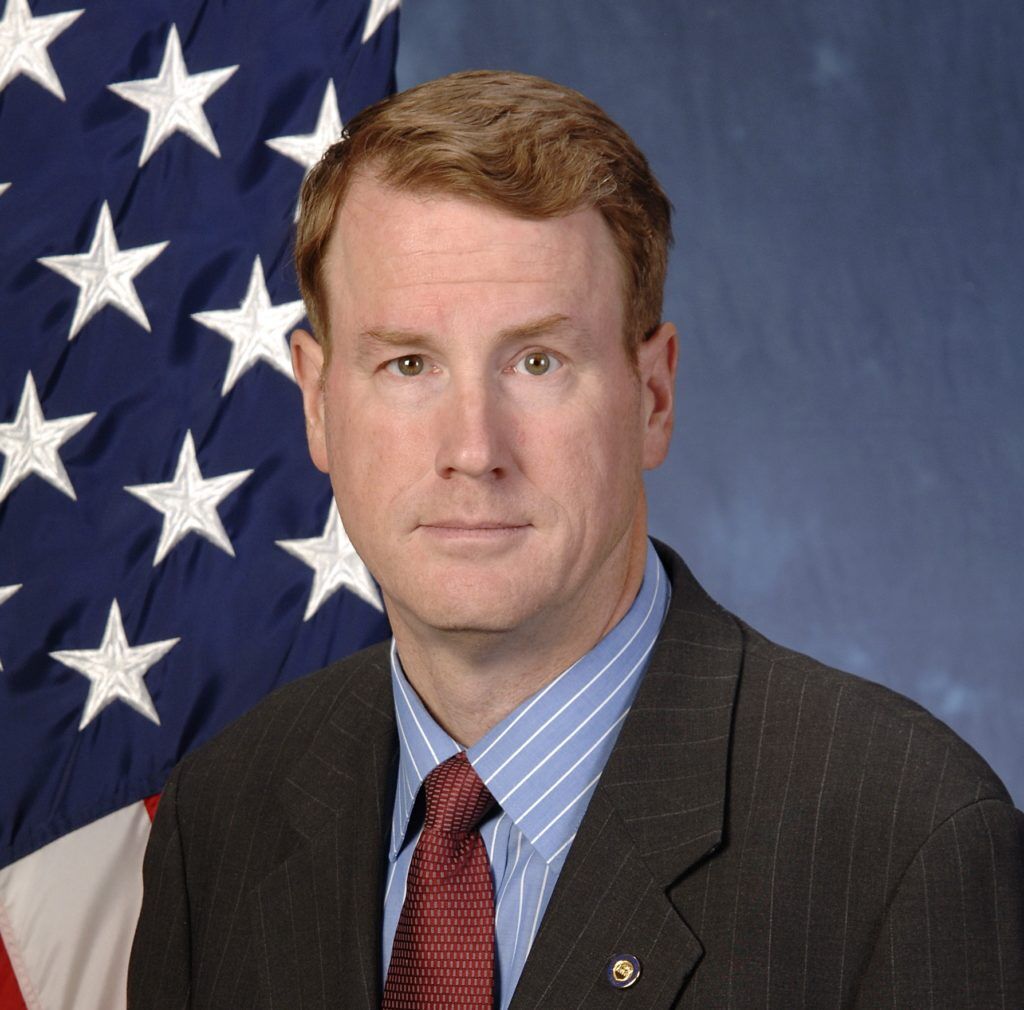
Many years ago, when I was a young captain just starting off as a political science teacher at the US Air Force Academy, I first ran into the challenge of teaching how governance actually works, as opposed to how people think the process works, based on TV and movies. If you watched West Wing or various movies about the presidency, you might well get the impression that governmental workers come to the office, listen to an inspired speech by an elected leader, and then passionately leap into the business of government.
That’s not quite how it happens…
Having had, during my military career, tours that include working on the National Security Council staff at the White House in the late 1990s, tours at the Pentagon and a tour as a military advisor at the Department of State, let me tell you that policy implementation (that is, how things actually get done) are not quite as seen on TV. And this is true at all levels of government.
While lots and lots of attention is paid to those at the top of the heap – the elected officials – the vast majority of policy implementation happens far below those lofty levels. It is the staffs of various governmental agencies that ultimately decide on what any new law passed really means. Oh, and it’s likely that the staff had a lot to do with how the legislation was written in the first place.
At the Academy, we regularly showed cadets a documentary that explained how the very important Clean Air Act was implemented across the nation. Simply (and generally put), the laws passed by legislatures – be they federal or state – tend to be fairly general and lacking in specifics. It is the appropriate state agency (the EPA for the CAA) that ends up writing up regulations that do the actual governance.
The electeds get the credit for creating the laws, but the agency worker bees are the ones that figure out how to actually implement them. An excellent example is my old college roommate, whom I’ll just call DG, who has been a staffer for the legislature in Denver for many years. You don’t know DG, but you owe him big time because he was the guy who actually wrote up the Colorado “Do Not Call” rules that the legislature passed. And while not perfect, your dinner hours are much quieter due to this legislative staffer whom you do not know, but whom you owe big time, rather than the elected official(s) who claims to have come up with the basic idea.
I was reminded of the above when I read this week’s Out West Roundup in Colorado Politics. I encourage you to read that section of CP every week, as it really does help keep you up to date on what’s happening in the neighborhood, as well as illustrating how governance actually works.
In this week’s edition, we learned that officials in Montana have worked out a deal to cull up to 900 bison from the Yellowstone National Park herd, for the overall health of the herd and the area. There were many factors that went into that calculation, including the carrying capacity of the park and the risk of bison (when migrating north into Montana and off of the Park property) transmitting brucellosis to cattle up there. So here, a collection of state agencies and other actors got together to figure out what is best for the overall health of the bison population and the surrounding lands. Perfect solution? No, but likely the least bad one available.
We also learned that New Mexico will be providing business loans, managed by a state agency, to the nascent cannabis industry in that state. Given that the governor signed a new bill into law last spring, legalizing pot along similar lines to Colorado, the agencies that are tasked with actually implementing the law’s features have set up a program to provide small business loans to small-scale operations to help get them off their feet. Again, the legislature made laws, and the bureaucracy now figures out how to practically implement the new rules.
A final important story caught my eye. The Republican governor of Wyoming is calling for significant salary increases for lots and lots of state employees. You know – bureaucrats!
He notes that Wyoming is “hemorrhaging talent and experience” because the wage and benefit packages they can offer are too small to keep good folks from taking other and better paying jobs out of state. Now, this is no liberal giveaway to a bunch of entitled bureaucrats. As noted, Wyoming’s governor is a Republican, and the GOP holds 51 of the 60 seats in the state House, and 28 of the 30 seats in the State Senate. Wyoming is completely and totally controlled by Republicans, yet even they see the value in having a qualified and knowledgeable staff of, well, bureaucrats, to do the day-to-day business of the state. That alone should tell you a great deal about the importance and role of staffers.
So, take a gander at the Out West section regularly. You’ll find all kinds of interesting things about our region, and you likely will also catch a glimpse of how governance actually works.
Hal Bidlack is a retired professor of political science and a retired Air Force lieutenant colonel who taught more than 17 years at the U.S. Air Force Academy in Colorado Springs.


Why the controversy with mail-in ballots? | Cronin & Loevy
Tom Cronin Bob Loevy
tom-cronin-bob-loevy@coloradopolitics.com
Updated 11 hours ago
Most Coloradans enjoy the right to vote “by mail” at election time. Most Americans favor this process. But U.S. President Donald Trump is trying to federalize (nationalize) this practice and shift the supervision of voting from county clerks to the...

Who are the kings being crowned here in Colorado? | Jon Caldara
Jon Caldara
jon-caldara@coloradopolitics.com
Updated 3 days ago
Though most of us celebrate “No Kings Day” on July 4, the Trump-deranged got a head start last weekend with rallies around the state. Attendees bravely fought oppression by blocking traffic for people with jobs. Rally-goers demanded freedom from tyranny,...
An April Fool’s Day to remember | Capitol M | Week of April 4, 2026
Marianne Goodland
marianne.goodland@coloradopolitics.com
Updated 3 days ago
The lighter side of the Capitol, and if light were weight, the Capitol would have lifted off better than the Artemis II rocket on April Fool’s Day. There was a plethora of Fools at the Capitol for April Fool’s Day...

Democrats rebounding without learning necessary lessons | SONDERMANN
Eric Sondermann
eric-sondermann@coloradopolitics.com
Updated 2 days ago
“When we fight, we win!” That, reportedly, was the chant heard over and over again at the Colorado Democratic Assembly a week ago. It suggests that pugilism has been the piece missing from the Democratic toolkit. Perhaps it was just...

The Centennial State’s nuclear energy opportunity | OPINION
Michael Hancock
michael-hancock@coloradopolitics.com
Updated 3 days ago
Colorado was given a clear opportunity earlier this year. On Jan. 28, the U.S. Department of Energy issued a Request for Information (RFI) seeking potential hosts for Nuclear Energy Innovation Campuses — an early-stage process designed to identify states serious...

More pain than gain in upending Colorado’s water-access laws | OPINION
Colorado Politics
colorado-politics@coloradopolitics.com
Updated 3 days ago
By Greg Walcher and Mike King Colorado’s long-standing balance between public recreation and private property along rivers is now under renewed pressure. But changing stream access law would impose significant fiscal and legal costs for relatively limited new recreational benefit....

Guardianship is not a homelessness policy | OPINION
Colorado Politics
colorado-politics@coloradopolitics.com
Updated 3 days ago
By Amelia McKeon The federal government’s proposal to expand guardianship for homeless veterans is being framed as compassionate. It is anything but. It is a dangerous shift toward using one of the most restrictive legal tools we have as a...

Ready to build next-gen clean-energy infrastructure — data centers included | OPINION
Colorado Politics
colorado-politics@coloradopolitics.com
Updated 3 days ago
By Nate Bernstein and Jason Wardrip Colorado has long taken pride in doing things a little differently. We are a state of innovators, entrepreneurs and adventurers, and often lead the nation in new policies and new ideas. For generations, our...
Untraditional education platform makes fool out of state ed department | Paula Noonan
Paula Noonan
paula-noonan@coloradopolitics.com
Updated 3 days ago
It’s April Fool’s week and ERBOCES, Education Re-envisioned BOCES, is one of the state’s biggest jokers. This untraditional education platform authorized through five founding school districts including Falcon School District 49 in El Paso County has played the Colorado Department...

‘Steel for fuel’ — but bill consumers for both | PODIUM
Colorado Politics
colorado-politics@coloradopolitics.com
Updated 3 days ago
By Sarah Montalbano In 2018, Xcel Energy, an investor-owned utility serving millions of customers across eight states, was the first U.S. utility to pledge to deliver 100% carbon-free electricity by 2050. Eight years later, Xcel is pleading with Colorado...